Precision at scale: APKWS counters the threat规模化精准控制:APKWS 应对威胁
BAE Systems’ APKWS laser-guidance kit delivers cost-effective precision strikes and counter-drone defense across aircraft, unmanned systems and ground platforms.
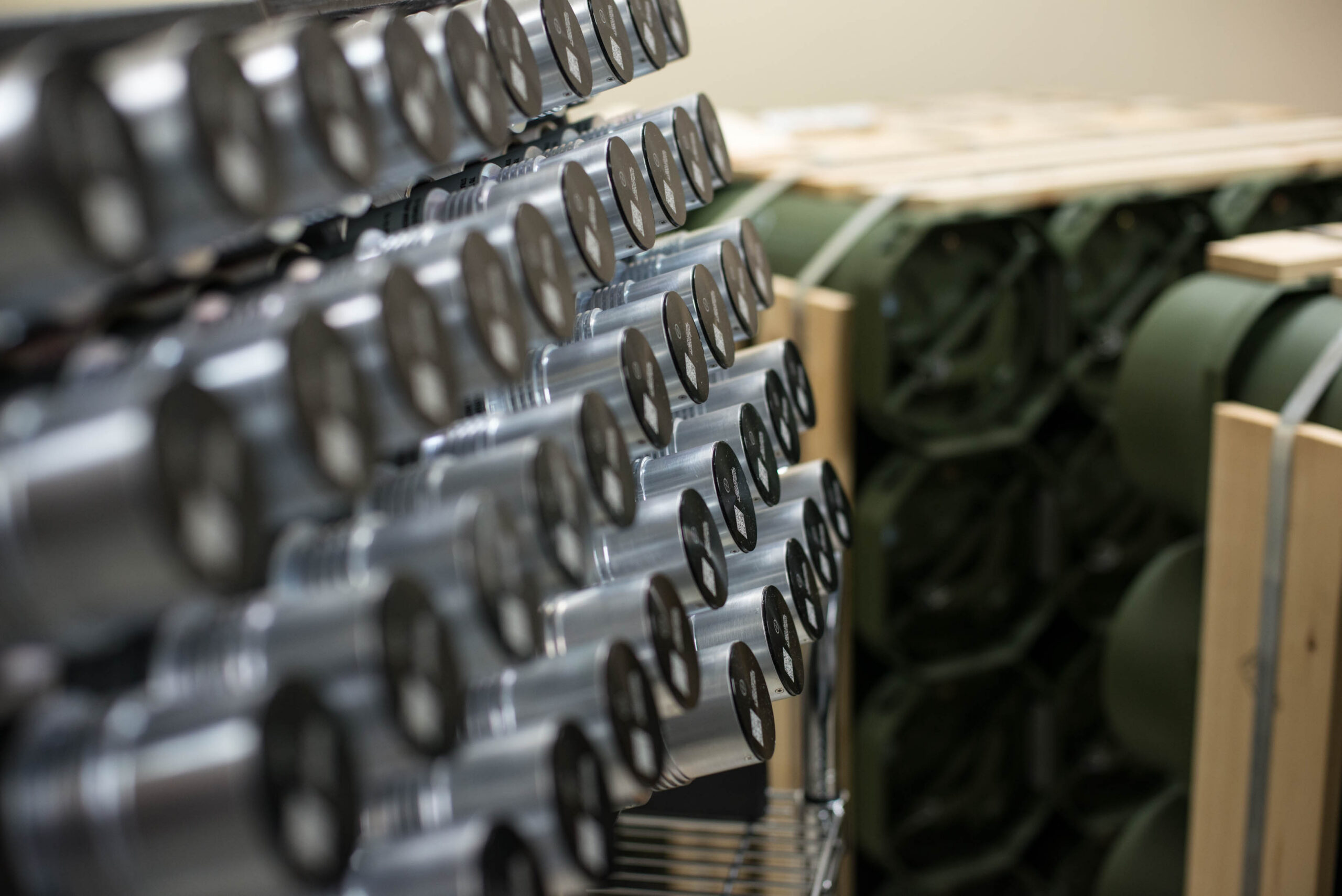
Image courtesy of BAE Systems.
Today’s threat environment is increasingly shaped by low-cost drones, high‑volume attacks that can overwhelm defenses, and diverse air and surface threats. In response, forces need munitions that adapt quickly across mission sets, are upgradable, dependable, and scalable.
BAE Systems’ APKWS laser-guidance kit continues to meet that need by turning widely available 70millimeter rockets into accurate, low‑collateral weapons for counter‑UAS, air‑to‑air, and multi‑mission roles across U.S. and allied forces. Recent operations and tests show units can move from evaluation to live missions rapidly, delivering intercepts at a fraction of the cost of traditional air‑to‑air missiles while providing a cost‑effective way to scale precision strikes across a broad set of targets.
Versatility across missions and platforms
APKWS has more than a decade of high-volume production behind it with a long record of fielding across U.S. services and partner nations. Designed to transform unguided rockets into precision‑guided munitions, it is combat‑proven for air‑to‑surface, surface‑to‑surface, surface‑to‑air, and air‑to‑air employment.
The kit is qualified on a wide range of platforms, including rotary‑wing and fixed‑wing aircraft, unmanned systems, ground launchers, and maritime vessels. Its rapid integration, easy maintenance, dependable performance, and broad platform compatibility allow units to adopt and deploy the capability quickly in multiple theaters.
That flexibility matters as threats evolve.
In 2025, the U.S. Air Force announced its sprint-like effort to integrate and demonstrate APKWS laser-guided rockets on the F-15E Strike Eagle. The integrated developmental and operational flight testing, including live fire at targets over land and water, was an expedited fielding push to deliver capability to the warfighter immediately. The goal of adding this capability to the Strike Eagle’s arsenal was to bring it into the counter-unmanned aerial system fight in a cost-effective way alongside the F-16.
This year, BAE Systems completed a Eurofighter Typhoon test in the United Kingdom that struck a ground target and set up the next phase of air‑to‑air trials, emphasizing a cost‑effective counter‑UAS option for the Royal Air Force’s (RAF) fighter. Rapid collaboration between industry partners, the RAF, and the Ministry of Defence moved the capability from testing to operational deployment in less than two months. Trials included air‑to‑air engagements that demonstrated effectiveness in real scenarios. APKWS is now in operational use on Typhoon, enhancing versatility and supporting persistent air defense while managing costs and resources more effectively.
In parallel with fighter integrations, the same flexibility is being extended to tactical unmanned platforms.
Recent trials achieved the first air‑to‑air engagement of an APKWS‑guided rocket from a multirotor TRV-150, with zero misses across air‑to‑air and air‑to‑ground shots, demonstrating a low‑cost strike and counter‑UAS option for frontline units. A follow‑on event showcased a three‑shot rocket launcher on the TRV-150, part of an industry‑led effort designed to push precision‑strike capability down to the battalion level.
APKWS was also recently demonstrated on the MQ‑9A Reaper, where flight tests featured multiple types and variations of shot profiles, including aerial targets, all executed flawlessly by MQ‑9A crews using laser‑guided rockets and a specialized launcher.
APKWS also enables surface‑to‑air counter‑UAS from mobile and fixed ground launchers, delivering precise, cost-effective intercepts to bolster base and site defense. Field demonstrations and operational use of ground systems firing APKWS have shown rapid integration and effective engagements, with proximity‑fuzed rockets improving kill probability against small aerial targets. The approach leverages widely available 70‑mm launchers and laser designation to scale capability quickly across units, and it is proven across a variety of platforms to support layered air defense.
Agility, capacity, and speed
BAE Systems continues to scale production to meet demand.
In early 2026, the company delivered the 100,000th APKWS guidance kit, a milestone that reflects sustained demand and a mature industrial base. Production from multiple facilities supports high-volume delivery to U.S. forces and allies while continuous upgrades keep pace with evolving mission needs.
With current production capacity of at least 25,000 kits per year and continuing to expand production, BAE Systems is well‑positioned to meet rising demand.
A recent $1.7 billion, multi‑year IDIQ contract from the U.S. Navy further solidifies this capacity. This production capacity is particularly critical as demand surges for C‑UAS interceptors, with BAE Systems able to deliver tens of thousands of cost‑effective APKWS guidance kits, quickly and reliably.
Together, these milestones underscore an innovative, agile guidance kit at scale, backed by a robust supply chain and established manufacturing capacity.
Counter the threat. Control the cost.
Rising domestic and international demand underscores the value of APKWS as a low‑collateral, cost‑effective counter‑UAS and multi‑mission solution. The guidance kit is available to all U.S. armed forces and to allies via foreign defense sales, providing a reliable, affordable option for precision‑strike effects across platforms.
Built on high‑volume manufacturing and dependable performance, APKWS enables rapid, efficient delivery of advanced capabilities to the warfighter at the scale demanded by today’s operations.
图片由 BAE Systems 提供。
当今的威胁环境日益受到低成本无人机、足以突破防御系统的大规模攻击以及多样化的空中和地面威胁的影响。为此,部队需要能够快速适应不同任务、可升级、可靠且可扩展的弹药。
BAE系统公司的APKWS激光制导套件持续满足这一需求,它将广泛使用的70毫米火箭弹转化为精确、低附带伤害的武器,用于美国及其盟军的反无人机、空对空作战和多任务作战。近期作战和测试表明,部队可以快速从评估阶段过渡到实战阶段,以远低于传统空对空导弹的成本进行拦截,同时提供了一种经济高效的方式,可以对多种目标进行大规模精确打击。
跨任务和平台的多功能性
APKWS拥有十余年的大规模生产经验,并在美国各军种及其伙伴国家有着长期的部署记录。它旨在将无制导火箭转化为精确制导武器,并在空对地、地对地、地对空和空空作战中经受了实战考验。
该套件已通过多种平台认证,包括旋翼机和固定翼飞机、无人系统、地面发射器和舰艇。其快速集成、易于维护、性能可靠且平台兼容性强,使各部队能够在多个战区快速部署和采用该技术。
随着威胁的演变,这种灵活性至关重要。
2025年,美国空军宣布将全力推进APKWS激光制导火箭在F-15E“攻击鹰”战斗机上的集成和演示。这项集研发和作战飞行测试于一体的计划,包括对陆地和水面目标的实弹射击,旨在加快部署进程,尽快将作战能力交付给作战人员。将这项能力添加到“攻击鹰”战斗机的武器库中,旨在使其能够以经济高效的方式与F-16战斗机协同作战,参与反无人机作战。
今年,英国航空航天系统公司(BAE Systems)在英国完成了“台风”战斗机的地面目标打击测试,为下一阶段的空对空试验奠定了基础,凸显了其为英国皇家空军(RAF)战斗机提供经济高效的反无人机系统(UAS)选项。工业合作伙伴、英国皇家空军和国防部之间的快速协作,使得该能力在不到两个月的时间内就从测试阶段过渡到作战部署阶段。试验包括空对空交战,验证了该系统在真实场景中的有效性。目前,“台风”战斗机已投入使用APKWS系统,该系统增强了战斗机的多功能性,支持持续的空中防御,同时更有效地控制了成本和资源。
与战斗机集成同步,同样的灵活性也扩展到了战术无人平台。
近期试验中,TRV-150多旋翼无人机首次成功发射APKWS制导火箭进行空对空打击,空对空和空对地攻击均无脱靶,证明了该武器系统为一线部队提供了一种低成本的打击和反无人机系统方案。后续活动展示了TRV-150搭载的三联装火箭发射器,这是由业界主导的旨在将精确打击能力下放到营级单位的项目的一部分。
APKWS 最近也在 MQ-9A“死神”无人机上进行了演示,飞行测试中出现了多种类型和变化的射击轮廓,包括空中目标,所有射击都由 MQ-9A 机组人员使用激光制导火箭和专用发射器完美执行。
APKWS系统还支持从移动和固定地面发射器发射地对空反无人机系统,提供精确、经济高效的拦截,从而加强基地和站点防御。实地演示和地面系统发射APKWS系统的作战应用表明,该系统能够快速集成并有效打击目标,近炸引信火箭提高了对小型空中目标的杀伤概率。该系统利用广泛应用的70毫米发射器和激光指示技术,可快速扩展各部队的作战能力,并已在多种平台上得到验证,能够支持多层防空体系。
敏捷性、容量和速度
BAE系统公司持续扩大生产规模以满足市场需求。
2026年初,该公司交付了第10万套APKWS制导组件,这一里程碑式的成就体现了持续的市场需求和成熟的工业基础。多个生产基地的协同运作支持向美国及其盟国的大规模交付,而持续的升级则满足了不断变化的任务需求。
BAE Systems 目前年产能至少为 25,000 套,并且还在不断扩大生产规模,因此完全有能力满足不断增长的需求。
美国海军近期签署的一份价值17亿美元的多年期无限期交付合同进一步巩固了BAE系统公司的这一产能。随着反无人机拦截器需求激增,这种生产能力尤为关键,因为BAE系统公司能够快速可靠地交付数万套经济高效的APKWS制导组件。
这些里程碑共同凸显了大规模创新、灵活的指导工具包,并拥有强大的供应链和成熟的制造能力作为支撑。
应对威胁,控制成本。
国内外需求的不断增长凸显了APKWS作为一种低代价、高性价比的反无人机系统和多任务解决方案的价值。该制导组件可通过对外军售提供给美国所有武装部队及其盟国,为跨平台精确打击提供了一种可靠且经济的选择。
APKWS 以大批量生产和可靠的性能为基础,能够以当今作战所需的规模,快速、高效地向作战人员提供先进能力。