Army doubles down on autonomy, stakes out Indo-Pacific role: AUSA Day 2陆军加倍强调自主性,明确印太地区角色:AUSA第二天
From a newly redesignated command to long-range fires in the Pacific, Army leaders laid out where they see the service fitting into the future fight.
新闻视频
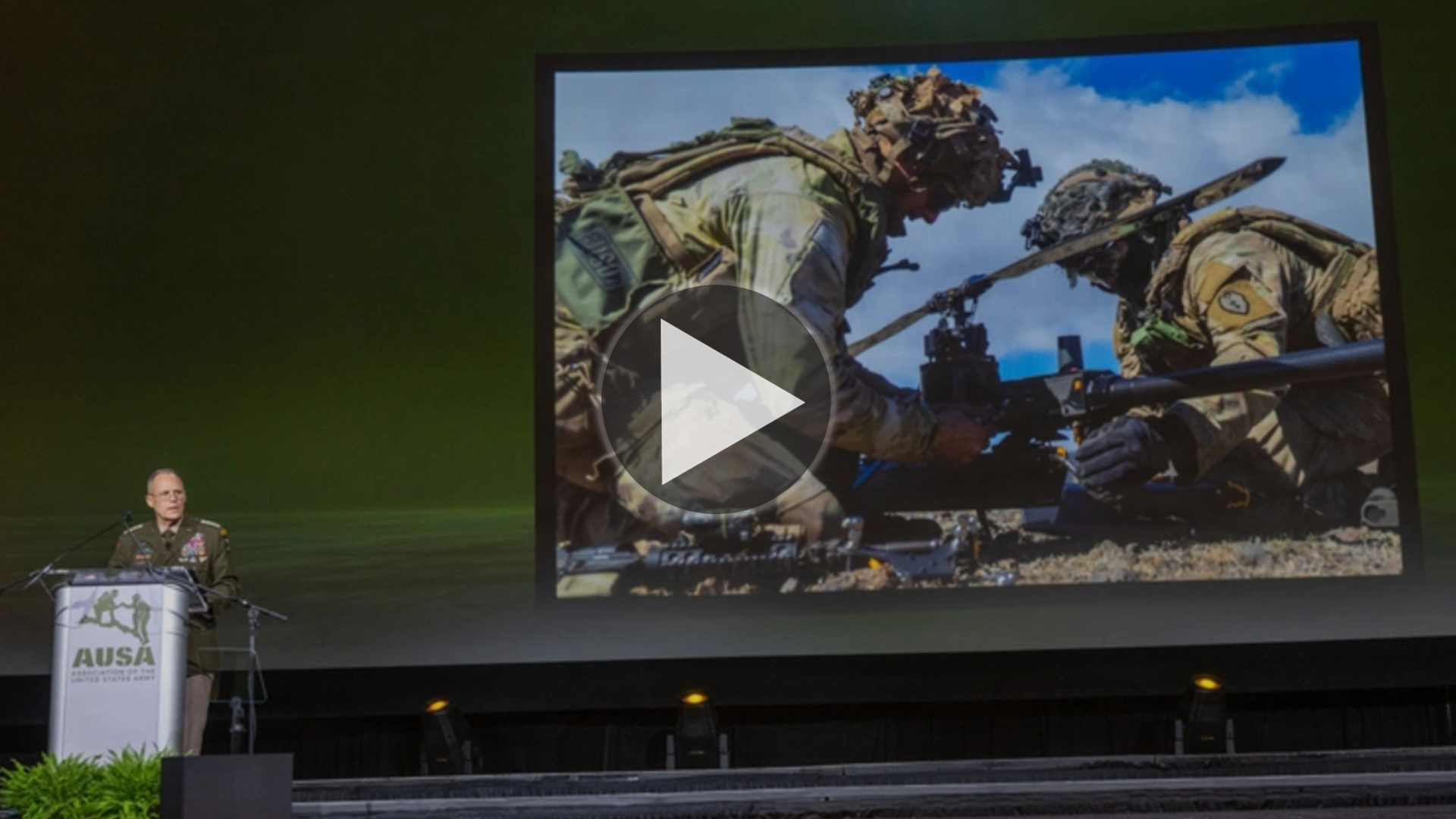
Day two of AUSA 2026 brought another change to the Army’s command structure, with acting Army Chief of Staff Gen. Chris LaNeve redesignating Futures and Concepts Command as the Futures and Autonomous Systems Command , or FASCOM. Breaking Defense Editor-in-Chief Aaron Mehta and Land Warfare Reporter Carley Welch discuss what the move signals about the Army’s emphasis on drones and autonomous systems amid a leadership transition.
Then, Aaron and Carley unpack the Army’s message that it remains the “foundation” of the joint force, including in the Indo-Pacific, where the service is emphasizing capabilities such as long-range precision fires. Finally, they look ahead to day three and Defense Secretary Pete Hegseth’s expected appearance.
Check back daily for more wrap-up videos from the show. And you can find the rest of our coverage here .
2026年美国陆军协会年会第二天,陆军指挥结构再次发生变化。代理陆军参谋长克里斯·拉内夫将军将未来与概念司令部更名为未来与自主系统司令部(FASCOM)。《防务新闻》主编亚伦·梅塔和陆战记者卡莉·韦尔奇探讨了此举在领导层过渡时期对陆军无人机和自主系统的重视程度。
随后,亚伦和卡莉解读了陆军传递的信息,即陆军仍然是联合部队的“基石”,包括在印太地区,陆军正在强调远程精确火力等能力。最后,他们展望了第三天的会议以及国防部长皮特·赫格塞斯的预期亮相。
请每天回来查看更多展会回顾视频。您也可以在这里找到我们的其他报道。