Ukraine declares its first homegrown guided aerial bomb combat-ready乌克兰宣布其首枚国产制导空中炸弹具备作战能力
A 250-kilogram answer to Russia's daily glide-bomb campaign and Kyiv's dependence on Western precision strike capabilities for mid-range targets.
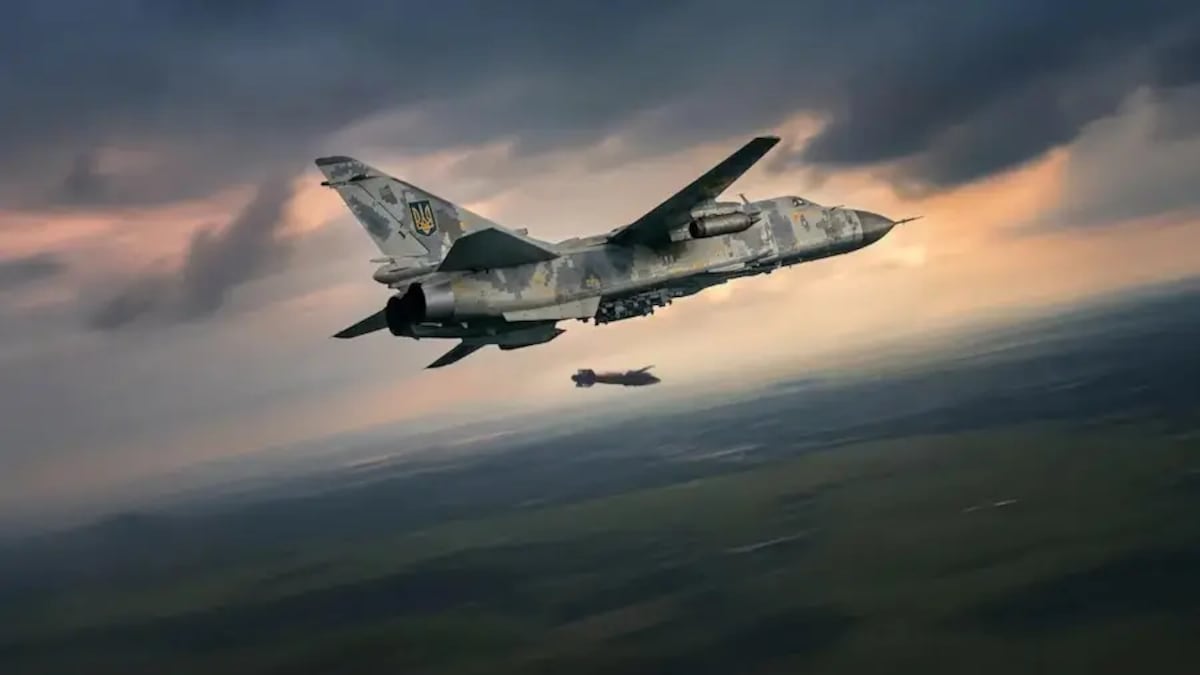
KYIV, Ukraine — A Ukrainian company has produced the country’s first guided aerial bombs capable of striking targets “dozens of kilometers” behind enemy lines with 250-kilogram warheads, giving Kyiv a homegrown equivalent to Russia’s cheap, devastating glide bombs, the Ministry of Defense announced Monday.
The aerial bomb is a winged but engineless weapon that drops from an aircraft at altitude, gliding to its target on the speed and altitude of release, steered by satellite guidance. It costs much less than cruise missiles per shot, carries much larger warheads than most drones and lets aircraft stay outside the densest air defenses.
“The first Ukrainian guided aerial bomb is ready for combat use,” Minister of Defense Mykhailo Fedorov wrote in a Telegram post announcing the milestone, noting the Ministry has already purchased an experimental batch and is gearing up to deploy the bombs on the front.
“Ukraine is moving from importing individual solutions to creating its own high-tech weapons, which systematically strengthen the Defense Forces and provide a technological advantage on the battlefield,” Fedorov said.
Until now, Ukraine had no domestic precision glide bomb. The country has relied on scarce Western donations for strikes beyond the reach of conventional artillery, like American-made JDAM-ERs and ATACMS missiles, British Storm Shadows and French SCALP-EG cruise missiles.
Cheap to produce and free of donor restrictions, the new bombs let Kyiv press the fight at mid-range and conserve scarce longer-range Western missiles for deeper targets — part of a broader Ukrainian push to use tech to change the mathematics of war in its favor after over four years of defending itself against a much larger and richer enemy.
“We are scaling up solutions that increase the range and accuracy of strikes and change the rules of modern warfare,” Fedorov said.
DG Industry, a little-known Ukrainian firm sponsored by the state-backed defense innovation cluster Brave1 , started work on the munition 17 months ago, MoD said.
The team faced a challenging environment, requiring guidance that could survive Russia’s electronic jamming, an airframe that stays stable across release speeds and altitudes and an interface that integrates with whichever aircraft will carry it, according to Brave1.
The result is a system officials say is different from others in its class.
Russia’s UMPK-equipped FAB bombs, for example, are glide kits bolted onto Soviet-era bomb bodies that were never meant to glide. The Ukrainian weapon is purpose-built from the airframe up, not a glide kit.
“This is not a copy of Western or Soviet solutions, but a development of Ukrainian engineers for effective destruction of fortifications, command posts, and other enemy targets tens of kilometers deep after launch,” Fedorov said.
Glide bombs also offer another edge.
Released from standoff distance, they appear over the target only in the last seconds of flight, leaving traditional air defenses little time to react.
They can be harder to detect, too, flying at different speeds, arcs and altitudes than the threats most air defense systems are optimized to track, according to NATO’s Joint Air Power Competence Centre .
Russian Su-34s release the bombs from well beyond Ukrainian air-defense coverage, and once airborne, the bombs themselves are small, unpowered and hard to track.
Ukraine knows from experience how hard they are to stop.
Russia now drops an average of more than 250 guided aerial bombs on Ukrainian positions and cities each day, according to the General Staff of the Armed Forces of Ukraine.
Earlier this month, three FAB-250 strikes on Kramatorsk killed five civilians and injured 12 more, according to regional military officials .
Ukrainian President Volodymyr Zelenskyy has named glide bombs among Russia’s most dangerous weapons since Moscow began deploying them regularly in 2023.
And they cost far more to shoot down than to produce and deploy.
A UMPK-equipped FAB costs tens of thousands of dollars to manufacture, while a single Patriot interceptor capable of stopping one runs in the millions.
The new Ukrainian glide bomb is built to make that asymmetric cost ratio Russia’s problem, too.
“Soon, Ukrainian guided aerial bombs will be used against enemy targets,” the Ministry of Defense said.
乌克兰基辅——乌克兰国防部周一宣布,一家乌克兰公司生产出了该国首批制导航空炸弹,该炸弹配备250公斤重的弹头,能够打击敌后“数十公里”的目标,使基辅拥有了与俄罗斯廉价、威力巨大的滑翔炸弹相当的国产武器。
航空炸弹是一种带翼但无动力装置的武器,从高空飞机上投放,依靠投放时的速度和高度滑翔至目标,并由卫星制导。它的单次发射成本远低于巡航导弹,携带的弹头比大多数无人机大得多,而且可以让飞机避开最密集的防空系统。
“乌克兰第一枚制导航空炸弹已准备好投入实战使用,”国防部长米哈伊洛·费多罗夫在 Telegram 上发帖宣布这一里程碑事件时写道,并指出国防部已经购买了一批试验性炸弹,正在准备将这些炸弹部署到前线。
费多罗夫说:“乌克兰正在从进口零散的解决方案转向制造自己的高科技武器,这将系统性地加强国防力量,并在战场上提供技术优势。”
此前,乌克兰没有国产精确滑翔炸弹。该国一直依赖西方稀缺的捐赠,进行常规火炮射程之外的打击,例如美国制造的JDAM-ER和ATACMS导弹、英国的“风暴阴影”导弹以及法国的SCALP-EG巡航导弹。
新型炸弹生产成本低廉,且不受捐助者限制,使基辅能够在中程范围内加强战斗,并将稀缺的远程西方导弹用于更远的目标——这是乌克兰在与一个规模更大、财力更雄厚的敌人进行了四年多的防御后,利用技术改变战争格局,使其向自己有利的更广泛努力的一部分。
费多罗夫说:“我们正在扩大解决方案的规模,以提高打击范围和精度,并改变现代战争的规则。”
国防部表示,鲜为人知的乌克兰公司 DG Industry 由国家支持的国防创新集群 Brave1 赞助,该公司于 17 个月前开始研发这种弹药。
据 Brave1 称,该团队面临着充满挑战的环境,需要一种能够抵御俄罗斯电子干扰的制导系统、一种在释放速度和高度上保持稳定的机身,以及一种能够与任何将搭载它的飞机集成的接口。
官员们表示,最终形成的系统与同类其他系统有所不同。
例如,俄罗斯的UMPK型FAB炸弹,实际上是将滑翔套件安装在苏联时代的炸弹弹体上,而这些弹体原本并非设计用于滑翔。乌克兰的这种武器则是从弹体本身开始专门设计的,并非滑翔套件。
费多罗夫说:“这不是照搬西方或苏联的解决方案,而是乌克兰工程师为有效摧毁发射后数十公里深处的防御工事、指挥所和其他敌方目标而开发的。”
滑翔炸弹还能提供另一项优势。
它们从远距离释放,只在飞行最后几秒钟出现在目标上空,给传统防空系统留下很少的反应时间。
根据北约联合空中力量能力中心的说法,这些飞机也更难被发现,它们的飞行速度、弧线和高度与大多数防空系统优化跟踪的威胁不同。
俄罗斯的苏-34战机从乌克兰防空火力覆盖范围之外投下炸弹,而且炸弹本身体积小、没有动力,一旦升空,就很难追踪。
乌克兰从经验中知道,阻止他们有多么困难。
据乌克兰武装部队总参谋部称,俄罗斯现在平均每天向乌克兰阵地和城市投掷超过 250 枚制导航空炸弹。
据地区军事官员称,本月初,FAB-250轰炸机对克拉马托尔斯克发动了三次空袭,造成5名平民死亡,另有12人受伤。
乌克兰总统泽连斯基将滑翔炸弹列为俄罗斯自 2023 年开始定期部署以来最危险的武器之一。
而且击落它们的成本远远高于生产和部署它们的成本。
制造一枚配备 UMPK 的 FAB 导弹需要花费数万美元,而一枚能够拦截它的“爱国者”拦截导弹则需要花费数百万美元。
乌克兰新型滑翔炸弹的设计目的就是为了解决这种不对称的成本比率问题,让俄罗斯也面临同样的问题。
“乌克兰国防部表示,‘不久后,乌克兰制导航空炸弹将用于打击敌方目标。’”