Budget 2027: MPs welcome higher Sabah, Sarawak allocations, call for faster project delivery2027年财政预算案:国会议员欢迎增加沙巴和砂拉越的拨款,并呼吁加快项目交付速度
KUALA LUMPUR, Oct 14 — The increased interim special grants and larger development allocations for Sabah and Sarawak are expected to strengthen development in both states, with...
MPs welcomed the increase of interim special grants for Sabah and Sarawak from RM600 million to RM1.5 billion, seeking a finalised grant formula under Article 112D of the Federal Constitution.
Concerns were raised over the need for clarity on Sabah's right to receive 40% of federal net revenue derived from the state, emphasizing constitutional responsibility.
Proposals were made to carry forward unspent allocations, prevent project delays, and empower Sabah JKR as the technical agency for federal projects under RM50 million.
KUALA LUMPUR, Oct 14 — The increased interim special grants and larger development allocations for Sabah and Sarawak are expected to strengthen development in both states, with Members of Parliament (MPs) hoping this will be followed by a finalised special grant formula and more effective project implementation.
Debating the Supply Bill (Budget) 2027 at the policy stage in the Dewan Rakyat yesterday, Datuk Seri Doris Sophia Brodi (GPS-Sri Aman) said the increase in the interim special grant for both states from RM600 million to RM1.5 billion should be appreciated.
However, she hoped the federal government would expedite the drafting of a final formula that is transparent, objective and sustainable under Article 112D of the Federal Constitution and in line with the spirit of the Malaysia Agreement 1963 (MA63).
Datuk Mohd Kurniawan Naim Moktar (BN-Kinabatangan) urged the government to explain the latest status of negotiations on the formula granting Sabah the right to receive 40 per cent of the net revenue derived by the Federal Government from the state.
“This is not just a matter of additional allocations; it involves constitutional responsibility and fiscal relations between the federal government and the Sabah government.
“Therefore, I ask the government to clarify the latest status of the 40 per cent formula negotiations, the method for verifying the federal net revenue derived from Sabah and the targeted timeline to reach a solution with the state government,” he said.
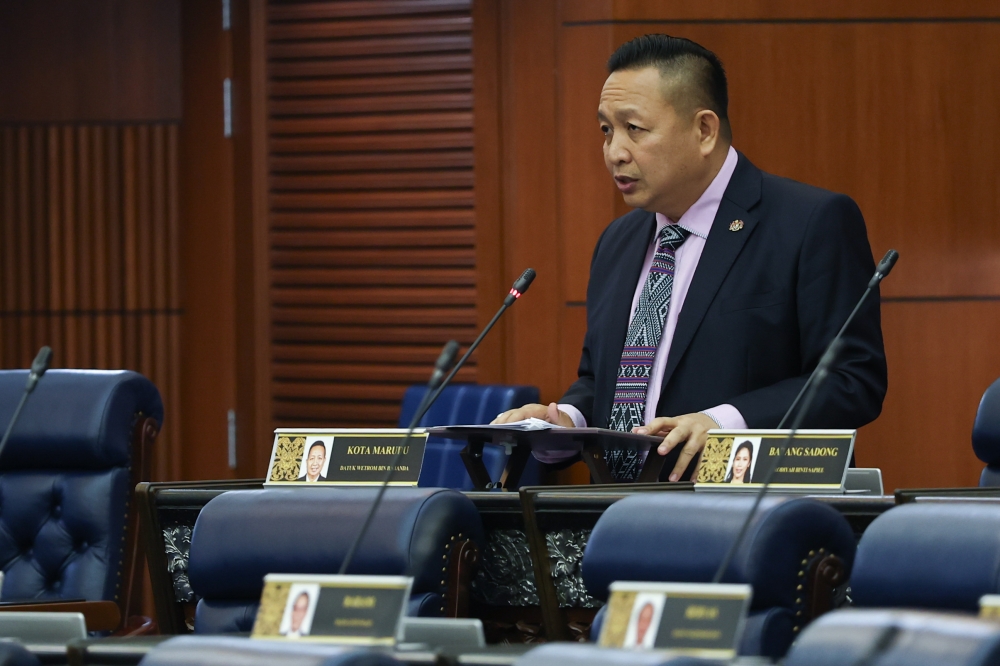
Meanwhile, Datuk Wetrom Bahanda (KDM-Kota Marudu) proposed that unspent development allocations for Sabah be carried forward to the following year by establishing a Carry Forward Fund.
He said the mechanism would ensure approved allocations continue to be utilised, especially when project implementation faces bureaucratic, technical or other constraints that cause delays.
Wetrom noted that Sabah received an allocation of RM18.7 billion for 2027, an increase of RM1.1 billion from the previous year, but failing to use the entire sum would be detrimental to a state still in need of basic infrastructure development.
Echoing Wetrom’s sentiments, Datuk Seri Wilfred Madius Tangau (GRS-Tuaran) urged the Federal Government to end the culture of announcing development projects that ultimately get delayed and become “sick” projects.
Madius also called for measures to ensure Sabah’s development allocations are fully spent to benefit the people.
He asked the government to detail the amount of Sabah’s 2026 development allocation that had been disbursed and spent, including the value of projects implemented by the Sabah Public Works Department (JKR) and the number of sick projects in the state managed by both Sabah JKR and Federal JKR.
He also proposed five improvement measures, including ensuring land, approval and utility matters are resolved before a project begins, and publicly disclosing physical progress, actual expenditure, completion dates and any extensions of time for projects.
“Sick projects must also have recovery plans and follow-up actions. A second extension of time due to contractor weaknesses should undergo an independent review, including considering contract termination in accordance with the law.
“Additionally, Sabah JKR should be empowered as the technical agency for federal projects valued at RM50 million and below,” he said.
The Dewan Rakyat sitting continues today. — Bernama
Finance Ministry: Malaysians under 30 rack up RM5.4b in BNPL transactions in first half of 2026
Budget 2027: Technology adoption, business growth key to higher wages, says minister
Budget 2027: Kelantan, Terengganu, Perlis, Kedah, Sabah, Sarawak get RM21.26b development allocation
Close, but not caviar: Sushi King wins tax dispute over imported fish roe
国会议员们对沙巴和砂拉越的临时特别拨款从 6 亿令吉增加到 15 亿令吉表示欢迎,并寻求根据联邦宪法第 112D 条制定最终的拨款公式。
有人对沙巴州是否有权获得该州获得的 40% 联邦净收入表示担忧,强调宪法责任。
有人提议结转未使用的拨款,防止项目延误,并授权沙巴公共工程局作为5000万令吉以下联邦项目的技术机构。
吉隆坡,10月14日讯——沙巴和砂拉越增加的临时特别拨款和发展拨款预计将加强两州的发展,国会议员们希望在此基础上能够最终确定特别拨款方案,并更有效地实施项目。
昨天在国会下议院政策阶段辩论2027年供应法案(预算)时,拿督斯里多丽丝·索菲亚·布罗迪(GPS-斯里阿曼)表示,应该赞赏将两个州的临时特别拨款从6亿令吉增加到15亿令吉。
然而,她希望联邦政府能够加快制定最终方案,使其在联邦宪法第 112D 条的规定下,做到透明、客观和可持续,并符合 1963 年马来西亚协议 (MA63) 的精神。
拿督莫哈末·库尼亚万·奈姆·莫克塔尔(国阵-京那巴当岸)敦促政府解释关于授予沙巴州获得联邦政府从该州获得的净收入 40% 的方案的最新谈判进展情况。
“这不仅仅是追加拨款的问题;它涉及联邦政府和沙巴州政府之间的宪法责任和财政关系。
“因此,我要求政府澄清40%拨款方案谈判的最新进展、核实沙巴州联邦净收入的方法以及与州政府达成解决方案的目标时间表,”他说。
与此同时,拿督韦特罗姆·巴汉达(KDM-哥打马鲁都)提议,将沙巴未使用的开发拨款结转到下一年,设立结转基金。
他表示,该机制将确保已批准的拨款继续得到利用,尤其是在项目实施面临官僚主义、技术或其他限制导致延误的情况下。
韦特罗姆指出,沙巴州在 2027 年获得了 187 亿令吉的拨款,比上一年增加了 11 亿令吉,但如果未能使用全部款项,将对这个仍然需要基本基础设施发展的州造成不利影响。
与韦特罗姆的观点相呼应,拿督斯里威尔弗雷德·马迪乌斯·唐高(GRS-Tuaran)敦促联邦政府结束宣布发展项目最终被延误并变成“病态”项目的风气。
马迪乌斯还呼吁采取措施,确保沙巴的发展拨款得到充分利用,造福人民。
他要求政府详细说明沙巴 2026 年发展拨款的拨付和支出金额,包括沙巴公共工程局 (JKR) 实施的项目的价值,以及沙巴公共工程局和联邦公共工程局管理的该州陷入困境的项目数量。
他还提出了五项改进措施,包括确保在项目开始前解决土地、审批和公用设施问题,并公开披露项目的实际进展、实际支出、完成日期和任何延期情况。
“陷入困境的项目也必须有恢复计划和后续行动。因承包商的不足而导致的第二次延期应接受独立审查,包括根据法律考虑终止合同。”
“此外,应赋予沙巴公共工程局(JKR)权力,使其成为价值 5000 万令吉及以下联邦项目的技术机构,”他说道。
下议院会议今天继续进行。 — 马新社
财政部:2026年上半年,30岁以下马来西亚人“先买后付”(BNPL)交易额将达到54亿令吉。
2027年预算案:部长称技术应用和企业增长是提高工资的关键。
2027年财政预算案:吉兰丹、登嘉楼、玻璃市、吉打、沙巴、砂拉越获得21.26b令吉发展拨款
差一点就成了鱼子酱:寿司王赢得进口鱼卵税务纠纷