Singapore launches new tool kit to help firms test AI agents for safety and reliability新加坡推出全新工具包,帮助企业测试人工智能代理的安全性和可靠性
Singapore launches new AI agent test kit to help organisations assess safety and reliability of agentic systems. Read more at straitstimes.com.
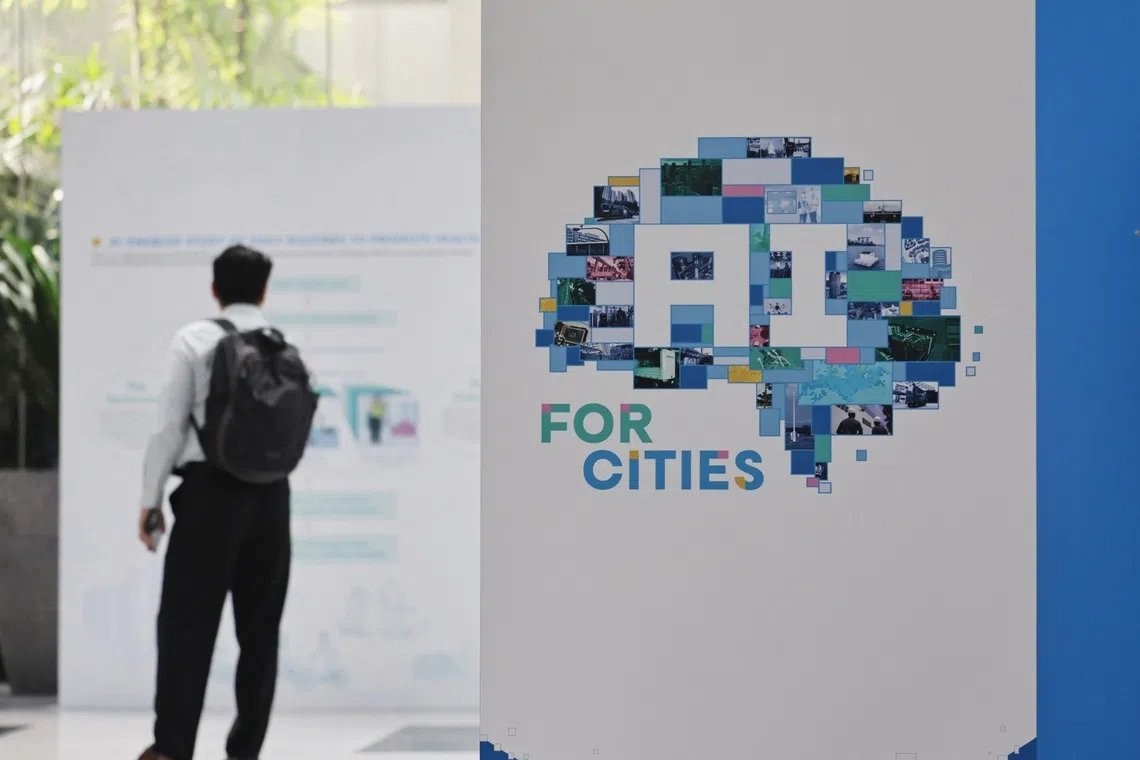
The newly launched Starter Kit for Testing Agentic Systems for Safety and Reliability will use a structured approach to check whether an agent reached the right outcome and how it got there.
ST PHOTO: KELVIN CHNG
Published Oct 14, 2026, 10:00 AM
Updated Oct 14, 2026, 10:53 AM
The Government has launched a starter kit to help organisations test AI agents for safety and reliability after reports of agents acting in unintended ways.
The kit checks tools used, data accessed, decisions made, permissions followed and whether safeguards work, said IMDA chief executive Ng Cher Pong.
Developed with government and industry partners, the kit builds on earlier AI governance and testing frameworks for responsible use of agentic AI.
SINGAPORE - A new ki t to help organisations get started with assessing the safety and reliability of artificial intelligent agents that can execute tasks with minimal human supervision has been launched.
The test kit, among several tools launched in recent times to establish Singapore’s global reputation as an AI safety testbed, has come amid reports of AI agents going rogue.
It will use a structured approach to check whether an agent reached the right outcome and how it got there, said Infocomm Media Development Authority (IMDA) chief executive Ng Cher Pong who announced the kit on Oct 14.
Called the Starter Kit for Testing Agentic Systems for Safety and Reliability, it acts as a practical starting point to identify risks with and design tests for AI agents, analyse logs of the agents’ activities, monitor their behaviour and validate the safeguards.
Specifically, the kit checks: the tools the agents use to produce their outputs; the information accessed; the decisions they made along the way; any erroneous or unauthorised actions that can be taken by them; whether the agents respected the permissions they were given and boundaries set on them; and whether safeguards work as expected.
“When we give AI more agency, we need greater assurance over how that agency is exercised. How do we put in place safeguards, evidence and accountability that give us confidence that these systems will behave as intended?” said Ng.
He was speaking at an event held in Novotel Singapore on Stevens organised by tech association SGTech and an IMDA subsidiary, the AI Verify Foundation. The foundation sets AI standards in partnership with the private sector.
Ng highlighted reports in recent months of AI agents behaving in unintended ways. They include the rogue experimental OpenAI agent that gained access to non-public information in an Australian government system.
In another case, an AI agent was tasked to book a gym class in Australia but in the process of doing so, it found a weakness in the booking system and removed someone else from the waitlist.
Separately, Meta’s Muse AI agent shared a Facebook Marketplace seller’s home address in Canada and arranged for a buyer to turn up at his home without the seller’s knowledge.
These incidents add to many others in recent months.
OpenAI disclosed in July that its AI agents had escaped their testing environment and breached AI software repository Hugging Face to complete a task it was given, an attack that was not intended by OpenAI. Soon after, Anthropic, Meta and Google said their AI had also gone rogue and had hacked other organisations.
IMDA and the AI Verify Foundation said that unlike traditional or generative AI, AI agents can reason, act on behalf of users, access sensitive data, and make changes to their environment. These actions can introduce new risks, which the newly-launched tool kit aims to help firms navigate.
The kit was developed in consultation with government agencies and over 20 industry deployers and testers, including Amazon, Google, Microsoft and Singtel, as well as Singapore’s AI Safety Institute, which tests and evaluates AI models for safety risks.
The kit also has real-life case studies that illustrate testing approaches can be adapted to different systems and different uses, and it will be updated with relevant feedback and new best practices.
The initiative builds on the Model AI Governance Framework for Agentic AI launched in January to provide a structured way for organisations to deploy AI agents responsibly and safeguard against rogue agents. It is also an extension of another starter test kit released in January for checking applications built on large language models, such as AI chatbots.
On Oct 14, Ng also announced the first five companies accredited as third-party AI testing service providers under the AI Verify Foundation’s AI Tester Accreditation Programme.
These firms are: AIDX Tech, Knovel Engineering, PwC Singapore, Resaro, and Vulcan.
The programme, announced in May, helps organisations find trusted experts to stress-test their AI tools before public release .
To qualify for accreditation, firms undergo technical, operational and financial evaluations to assess their testing competency, track record, delivery capability and financial sustainability.
Ng also announced a new Frontier AI Resilience and Security Taskforce to strengthen the infocomm and media sector’s ability to respond collectively to cyber and technology risks arising from cutting-edge, frontier AI models. It comprises more than 20 leaders and experts mainly based in Singapore from telecommunications, media, cybersecurity and AI industries.
The taskforce will publish a report by the first half of 2027. The report is expected to include practical guidelines and best practices focused on three priorities: strengthening responses to AI-accelerated threats; enhancing resilience against emerging AI risks; and staying ahead of an evolving cybersecurity threat landscape following frontier AI developments.
Kenny covers technology, including artificial intelligence, cybersecurity, data privacy, social media and consumer technology issues.
AI/artificial intelligence
IMDA/Infocomm Media Development Authority
Artificial Intelligence
新推出的用于测试智能体系统安全性和可靠性的入门套件将采用结构化方法来检查智能体是否达到了正确的结果以及它是如何达到该结果的。
《海峡时报》摄影:KELVIN CHNG
发布于2026年10月14日上午10:00
更新于2026年10月14日上午10:53
此前有报道称人工智能代理出现意外行为,政府已推出入门工具包,帮助各组织测试人工智能代理的安全性和可靠性。
新加坡资讯通信媒体发展局(IMDA)首席执行官吴哲邦表示,该工具包会检查使用的工具、访问的数据、做出的决定、遵循的权限以及保障措施是否有效。
该工具包由政府和行业合作伙伴共同开发,以早期人工智能治理和测试框架为基础,旨在负责任地使用智能人工智能。
新加坡——一套旨在帮助组织机构着手评估能够在极少人工监督下执行任务的人工智能代理的安全性和可靠性的新工具包已经推出。
该测试工具包是新加坡近期推出的几项工具之一,旨在确立新加坡作为人工智能安全测试平台的全球声誉。与此同时,有报道称人工智能代理失控。
新加坡资讯通信媒体发展局 (IMDA) 首席执行官吴哲邦 (Ng Cher Pong) 于 10 月 14 日宣布了该工具包,他表示,该工具包将采用结构化方法来检查代理人是否达到了正确的结果以及如何达到该结果。
该工具包名为“用于测试智能体系统安全性和可靠性的入门套件”,它为识别人工智能智能体的风险、设计测试、分析智能体活动日志、监控其行为以及验证安全措施提供了一个实用的起点。
具体来说,该工具包检查:代理人用于生成输出的工具;访问的信息;他们在此过程中做出的决定;他们可能采取的任何错误或未经授权的行为;代理人是否尊重他们被授予的权限和设定的界限;以及保障措施是否按预期发挥作用。
“当我们赋予人工智能更多自主权时,我们需要更有把握确保这种自主权的行使方式。我们如何建立保障措施、证据和问责机制,才能让我们确信这些系统会按照预期运行?”吴说道。
他是在新加坡史蒂文斯诺富特酒店举办的一场活动上发表讲话的,该活动由新加坡科技协会 (SGTech) 和新加坡资讯通信媒体发展局 (IMDA) 旗下子公司 AI Verify 基金会联合举办。该基金会与私营部门合作制定人工智能标准。
吴恩达重点提及了近几个月来人工智能代理出现意外行为的报道。其中包括OpenAI一款失控的实验性代理,该代理获取了澳大利亚政府系统中的非公开信息。
在另一个案例中,人工智能代理的任务是预订澳大利亚的健身课程,但在预订过程中,它发现了预订系统的漏洞,并将其他人从候补名单中移除。
此外,Meta 的 Muse AI 代理分享了一位 Facebook Marketplace 卖家在加拿大的家庭住址,并安排买家在卖家不知情的情况下出现在他家门口。
这些事件与近几个月来发生的其他许多事件一起,构成了新的例证。
OpenAI在7月份披露,其人工智能代理逃逸出测试环境,入侵了人工智能软件库Hugging Face,完成了一项预设任务。此次攻击并非OpenAI的本意。不久之后,Anthropic、Meta和谷歌也相继表示,他们的人工智能也出现了失控行为,并入侵了其他组织。
新加坡资讯通信媒体发展局 (IMDA) 和 AI Verify 基金会表示,与传统人工智能或生成式人工智能不同,人工智能代理能够进行推理、代表用户行事、访问敏感数据并改变其环境。这些行为可能带来新的风险,而新推出的工具包旨在帮助企业应对这些风险。
该工具包是在与政府机构和 20 多家行业部署商和测试商(包括亚马逊、谷歌、微软和新加坡电信)以及新加坡人工智能安全研究所(负责测试和评估人工智能模型的安全风险)协商后开发的。
该工具包还包含真实案例研究,说明测试方法可以适应不同的系统和不同的用途,并且会根据相关反馈和新的最佳实践进行更新。
该倡议以今年1月发布的“智能体人工智能模型治理框架”为基础,旨在为组织机构提供一种结构化的方式,以负责任地部署人工智能代理并防范恶意代理。它也是今年1月发布的另一个入门测试工具包的扩展,该工具包用于检查基于大型语言模型构建的应用程序,例如人工智能聊天机器人。
10 月 14 日,吴恩达还宣布了 AI Verify 基金会 AI 测试员认证计划下首批五家获得第三方 AI 测试服务提供商认证的公司名单。
这些公司包括:AIDX Tech、Knovel Engineering、普华永道新加坡、Resaro 和 Vulcan。
该计划于 5 月份宣布,旨在帮助各组织找到值得信赖的专家,在人工智能工具公开发布前对其进行压力测试。
为了获得认证资格,公司需要接受技术、运营和财务评估,以评估其测试能力、业绩记录、交付能力和财务可持续性。
吴先生还宣布成立一个新的前沿人工智能韧性与安全工作组,旨在加强信息通信和媒体行业应对尖端前沿人工智能模型带来的网络和技术风险的集体应对能力。该工作组由20多位主要来自新加坡的电信、媒体、网络安全和人工智能行业的领导者和专家组成。
该工作组将于 2027 年上半年发布一份报告。该报告预计将包含以三个优先事项为重点的实用指南和最佳实践:加强对人工智能加速威胁的应对;增强对新兴人工智能风险的抵御能力;以及在人工智能前沿发展之后,保持对不断变化的网络安全威胁形势的领先地位。
Kenny 报道科技领域,包括人工智能、网络安全、数据隐私、社交媒体和消费科技问题。
人工智能
新加坡资讯通信媒体发展局/IMDA
人工智能