European navies chase the white whale of torpedo-busting torpedoes欧洲海军都在追逐能够拦截鱼雷的鱼雷这一“白色鲸鱼”。
Germany and the Netherlands are banking on a European Union project to field a workable defensive system for surface ships by 2030.
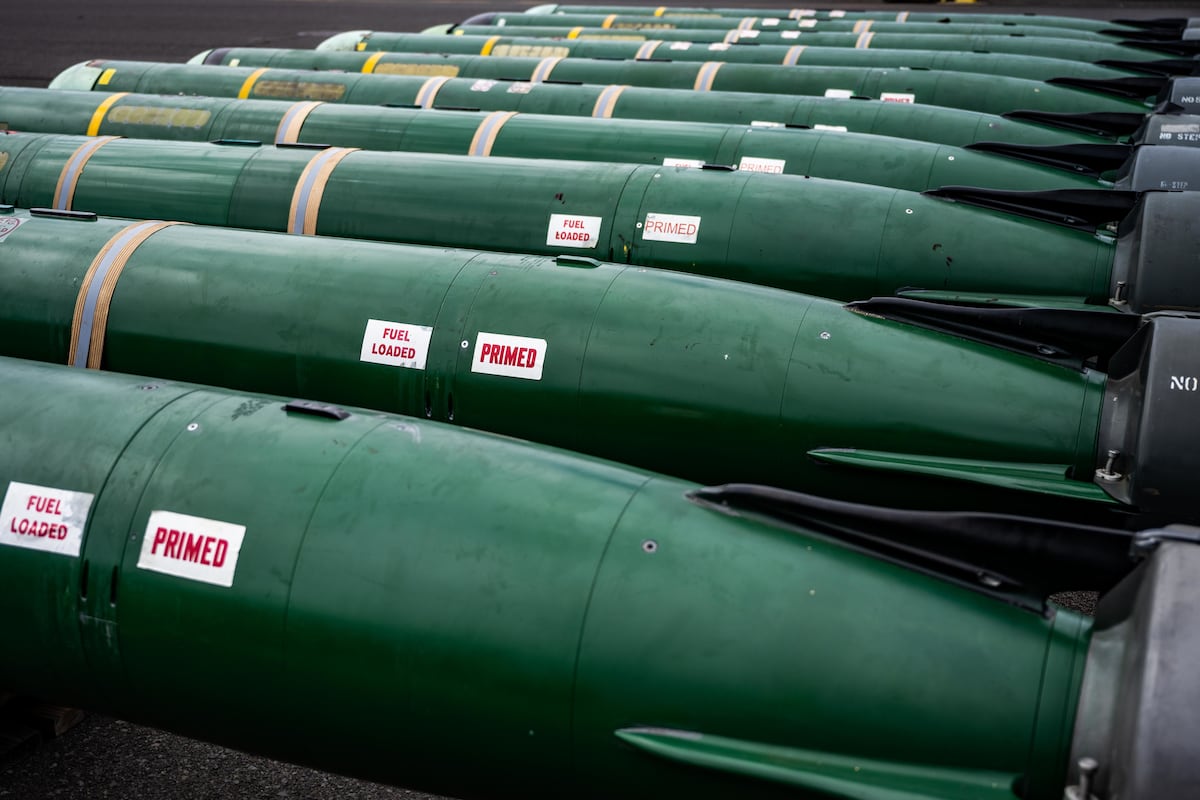
COLOGNE, Germany – The technology promises to be a game changer: a torpedo-seeking torpedo fired by surface vessels for head-on intercepts, missile-defense style.
Yet after more than a decade of research, lead nations Germany and the Netherlands are still years away from fitting their navies with a hard-kill torpedo countermeasure.
Germany’s navy has been toying with a product called SeaSpider, developed by Atlas Elektronik, for several years. Work on the sole technology option under consideration in Europe goes back even further, with engineers studying it for at least 15 years, according to the firm’s website.
But while Atlas has tried to market the system as ready for combat, no navy has yet taken the bait, and the Dutch Ministry of Defence has repeatedly pushed back the start of a formal purchasing program based on SeaSpider.
The German sea service did tests some years ago, but decided against adopting the system. And the Canadian navy, deemed a prospective SeaSpider launch customer due to the timing of its large-scale surface combatant program, made no mention of the capability in its initial lineup of technologies for the future fleet.
A spokesman for Atlas’ parent company, Thyssen Krupp Marine Systems, declined to discuss SeaSpider, pointing to previous requests by the German navy to keep details under wraps. A spokeswoman for the German Ministry of Defense said the technology’s classification and contractual status prohibit the disclosure of details.
Still, officials in Berlin believe that a capability to intercept torpedoes with torpedoes is a critical force-protection technology in principle, the spokeswoman told Defense News.
Torpedoes have historically been one of the main threats to surface vessels, with the weapon involved in more than half of sinkings of U.S. Navy ships during World War II, according to U.S. Coast Guard data cited by Dutch researchers at TNO, a government-linked research organization.
Defense against torpedoes remains essentially a losing proposition, according to experts, leaving surface ships relatively vulnerable once such a weapon is headed their way. The main defensive measures consist of maneuvering, or launching decoys to confuse incoming torpedoes. Yet the latter is ineffective against so-called wake-homing variants, which align their travel path to hit ships in a straight line from behind, their sonar signature buried in the acoustic noise of a ship’s own propulsion system.
The U.S. Navy experimented with an anti-torpedo interceptor installed on three of its aircraft carriers in 2017, before uninstalling the system in 2018, saying that while the hard-kill measure showed “some capability to defeat an incoming torpedo,” reliability was uncertain and lethality of the system was untested.
SeaSpider can intercept all types of torpedoes, combining data from sensors installed on the carrier ship and the interceptor torpedo to compute collision paths with the inbound weapon, the manufacturer promises on its website.
The package has been in play again since last year for further development under the auspices of a European Union program, led by Germany and the Netherlands, labeled simply “Anti-torpedo Torpedo,” or ATT.
A one-sentence description for the project on an EU website describes a desire for “bringing a developed anti-torpedo torpedo demonstrator to the production-ready design, with a qualified effector and a proven functional chain,” an apparent reference to the Atlas product that only the Dutch Ministry of Defence would confirm to Defense News.
A spokesperson there said the SeaSpider technology is still too immature to warrant setting up a formal program, though Dutch defense officials have planned to take such a step, which requires parliamentary notification, since 2022. If it all comes to pass, perhaps in 2025, budget analysts have slotted a torpedo-killing torpedo capability into a category of programs consuming anywhere between €250 million and €1 billion, according to the Dutch MOD.
That is in addition to a related effort, led by TNO and estimated at €50 million to €100 million, to sharpen the technology for torpedo detection that would go into an eventual anti-torpedo torpedo suite, a spokesperson told Defense News.
Notably, the German MOD declined to disclose even the industry team of Atlas and TNO as lead companies of the European Union program, set up under the bloc’s defense-cooperation push known as PESCO. A spokeswoman in Berlin said no contracts had been signed in the matter.
Also unanswered were questions about the shortcomings that the German navy sees in SeaSpider. Defense News has learned that the depth of the envisioned intercept sequence is at issue, with the Atlas system currently limited to hits around the water surface.
In the end, the timing of a European anti-torpedo torpedo program could line up with Dutch Navy plans for new anti-submarine warfare frigates, the first of which is expected to become operational in 2029. That is because German officials expect the PESCO program to yield a production-ready system that passes all regulatory requirements by the end of the decade, with a prototype built in 2028.
In the meantime, other European nations also have taken an interest, including Sweden, Poland, Portugal, Italy and Spain, according to issue experts.
Rudy Ruitenberg in Paris contributed to this report.
Sebastian Sprenger is associate editor for Europe at Defense News, reporting on the state of the defense market in the region, and on U.S.-Europe cooperation and multi-national investments in defense and global security. Previously he served as managing editor for Defense News. He is based in Cologne, Germany.
德国科隆——这项技术有望改变游戏规则:水面舰艇发射鱼雷进行正面拦截,类似于导弹防御。
然而,经过十多年的研究,德国和荷兰这两个领先国家距离为其海军配备硬杀伤鱼雷对抗措施仍有数年之遥。
德国海军多年来一直在研究一种名为“海蜘蛛”(SeaSpider)的产品,该产品由阿特拉斯电子公司(Atlas Elektronik)开发。据该公司网站称,这项目前欧洲唯一被考虑的技术方案的研究工作甚至更早,工程师们至少已经研究了15年。
尽管阿特拉斯公司一直试图将该系统宣传为已准备好投入战斗,但至今还没有任何海军上当,荷兰国防部也一再推迟启动基于“海蜘蛛”系统的正式采购计划。
德国海军几年前曾进行过测试,但最终决定不采用该系统。而加拿大海军由于其大规模水面作战舰艇项目的推进时间,被认为是“海蜘蛛”系统的潜在首批用户,但在其未来舰队的初始技术方案中,并未提及该系统。
Atlas母公司蒂森克虏伯海洋系统公司的一位发言人拒绝就SeaSpider项目置评,并指出德国海军此前曾要求对相关细节保密。德国国防部的一位女发言人表示,由于该技术的保密级别和合同性质,无法披露具体细节。
发言人告诉《防务新闻》,柏林官员仍然认为,用鱼雷拦截鱼雷的能力在原则上是一项至关重要的部队保护技术。
历史上,鱼雷一直是水面舰艇的主要威胁之一。据美国海岸警卫队的数据,荷兰TNO(一家与政府有关联的研究机构)的研究人员引用的数据显示,二战期间,超过一半的美国海军舰艇沉没都是由鱼雷造成的。
专家指出,防御鱼雷基本上仍是一项徒劳无功的策略,一旦水面舰艇遭遇鱼雷攻击,便会变得相对脆弱。主要的防御措施包括机动或投放诱饵来迷惑来袭鱼雷。然而,后者对所谓的尾流自导鱼雷无效,这类鱼雷会调整航向,从舰艇后方直线攻击目标,其声呐信号会被舰艇自身推进系统的声学噪声所掩盖。
美国海军于 2017 年在其三艘航空母舰上试验了一种反鱼雷拦截器,随后于 2018 年拆除了该系统。美国海军表示,虽然这种硬杀伤措施显示出“一定能力击败来袭鱼雷”,但可靠性尚不确定,而且该系统的杀伤力也未经测试。
制造商在其网站上承诺,SeaSpider 可以拦截所有类型的鱼雷,它将安装在航母和拦截鱼雷上的传感器的数据结合起来,计算出与来袭武器的碰撞路径。
自去年以来,该方案在由德国和荷兰领导的欧盟计划的支持下再次投入使用,以进行进一步开发,该计划被简单地称为“反鱼雷鱼雷”(ATT)。
欧盟网站上对该项目仅有一句话的描述,表达了“将已开发的反鱼雷鱼雷演示器转化为可量产的设计,配备合格的效应器和经过验证的功能链”的愿望,这显然是指 Atlas 产品,但只有荷兰国防部向《防务新闻》证实了这一点。
一位发言人表示,SeaSpider技术仍不够成熟,不值得设立正式项目,尽管荷兰国防部官员自2022年以来就计划采取这一步骤,但这需要向议会提交通知。据荷兰国防部称,如果一切顺利,或许在2025年,预算分析师已将反鱼雷鱼雷能力归入一个耗资2.5亿欧元至10亿欧元的项目类别。
一位发言人告诉《防务新闻》,除此之外,TNO 还牵头开展了一项相关工作,预计耗资 5000 万至 1 亿欧元,旨在改进鱼雷探测技术,最终将其应用于反鱼雷系统。
值得注意的是,德国国防部甚至拒绝透露参与欧盟“永久结构性合作”(PESCO)项目(该项目是根据欧盟防务合作计划设立的)的Atlas和TNO两家牵头企业的行业团队信息。柏林一位发言人表示,此事尚未签署任何合同。
此外,德国海军认为“海蜘蛛”(SeaSpider)系统存在不足之处,这些问题也尚未得到解答。《防务新闻》获悉,问题在于该系统设想的拦截深度,目前“阿特拉斯”(Atlas)系统只能对水面附近目标进行打击。
最终,欧洲反鱼雷鱼雷项目的启动时间可能与荷兰海军建造新型反潜护卫舰的计划相吻合,其中第一艘预计将于 2029 年投入使用。这是因为德国官员预计,PESCO 项目将在本十年末之前产出一套符合所有监管要求的量产系统,并在 2028 年建造原型机。
与此同时,据该问题专家称,其他欧洲国家也对此表现出了兴趣,包括瑞典、波兰、葡萄牙、意大利和西班牙。
巴黎的鲁迪·鲁伊滕贝格对本报道亦有贡献。
塞巴斯蒂安·斯普伦格是《防务新闻》欧洲版副主编,负责报道该地区的防务市场状况,以及美欧在防务和全球安全领域的合作和多国投资。此前,他曾担任《防务新闻》执行主编。他现居德国科隆。