Ukrainian officials eye export potential of pent-up weapons expertise乌克兰官员着眼于积压武器技术出口的潜力
The country’s defense industry is obliged by law to supply its entire output to the Ukrainian Armed Forces, keeping innovations local for now.
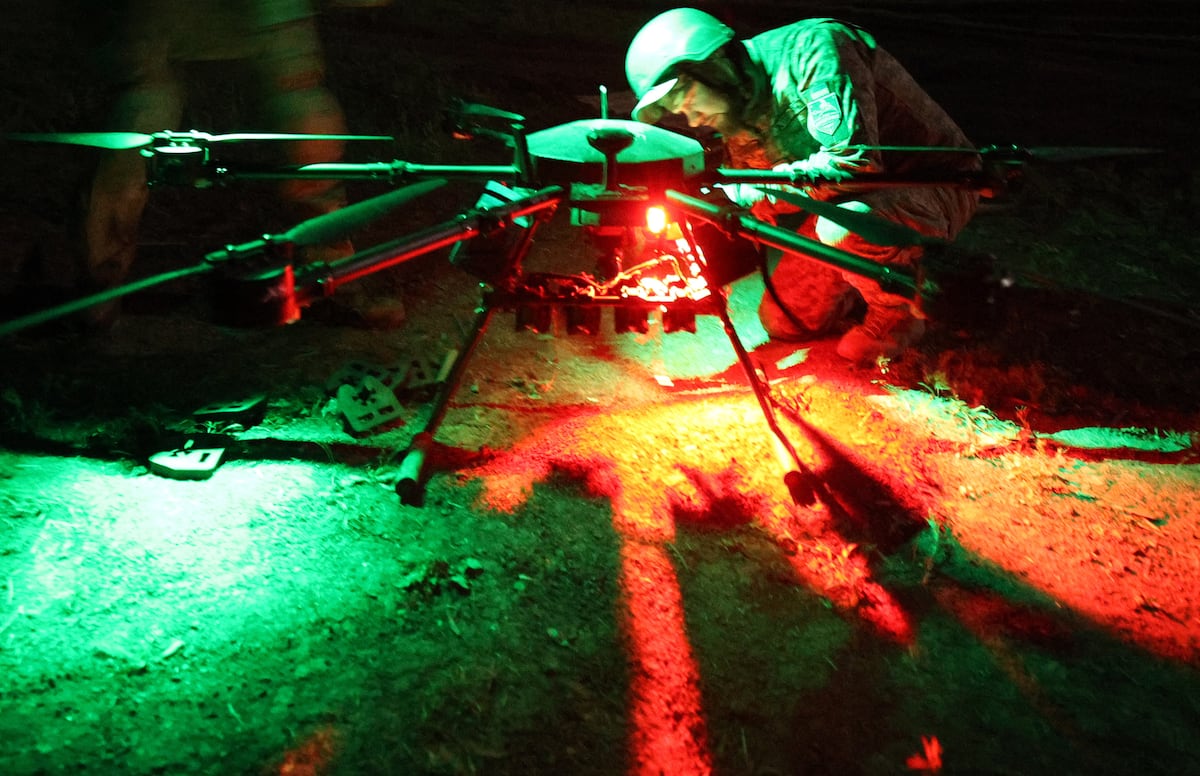
WARSAW, Poland — As Ukraine continues its fight against the Russian invasion, the country’s defense companies hope to convert their wartime experience into foreign exports once a mandate lifts to supply only local forces.
The sentiment comes amid a desire by Ukrainian and European manufacturers , in particular, to forge partnerships that are meant to blossom when the country enters something of a post-war period. Local arms makers have touted their products as war-proven, tested in an intense land conflict not seen in Europe since World War 2, since the Russian full-scale invasion began in February 2022.
Vadym Ivchenko, a Ukrainian lawmaker for the Batkivshchyna party, told Defense News Ukraine’s defense industry has developed a wide range of capabilities since then. The country’s defense industry is obliged by law to supply its entire output to the Ukrainian Armed Forces, keeping the sector’s innovations local for now.
“We test all weapons and equipment in the battlefield, and all of them undergo upgrades based on the combat experience of our soldiers. We have very efficient drones that can successfully strike the enemy, and Ukrainian defense companies are very competitive with regards to drones, armored vehicles and many other types of gear,” Ivchenko said.
Ukraine is currently making efforts to ramp up its industry’s ammunition production capacities. In the long term, local plants could supply the surplus of their output to other militaries across Europe, as numerous allies are currently building up their stockpiles, according to Ukrainian officials.
“We also make mines and ammunition of different types: 122mm, 152mm and 155mm, among others. Right now, our industry produces only for our military. But once the war is over, it will be possible to export weapons that are needed by allied militaries abroad,” Ivchenko said.
Under Ukrainian law, local manufacturers are required to sell their output to the country’s armed forces to bolster its combat against Russia’s military. However, some officials have begun pointing out what they see as the limitations of such an approach, arguing the restriction deprives both the industry and the state budget of revenue.
At a Sept. 5 meeting of the Temporary Special Commission on Protection of Investors’ Rights in Ukraine’s parliament, the Verkhovna Rada, lawmaker Halyna Yanchenko said opening up weapon and equipment exports could generate a major income stream for the country.
“Weapons made in Ukraine and tested in real combat are of interest to many countries around the world,” she said, as quoted in a statement released by the parliament. “Our defense industry can annually produce goods worth $20 billion. At the same time, the state is able to purchase weapons for only $6 billion, this includes purchases from abroad. We are slowing down the development of a strategic industry through export restrictions.”
Similarly to other industry players, Ukrainian defense company Kvertus supplies its entire output of electronic-warfare and reconnaissance systems to the country’s military. However, after the exports ban is eventually lifted, the manufacturer hopes to launch foreign sales of its combat-proven systems with the help of foreign partners in Europe or the United States.
Serhii Skoryk, the commercial director of Kvertus, told Defense News the business is promoting its offers, including anti-drone jamming systems, abroad even as it cannot sell it to foreign users. The company took part in the MSPO defense industry show in Kielce, Poland, in early September.
“We are the biggest anti-drone jamming system producer in Ukraine. Our company makes around 5,000 products per month, and all of it goes to the Ukrainian Armed Forces. Kvertus equipment is combat-proven and saves lives every day. The demand is high, because a $400 drone can destroy a tank worth $10 million,” he said.
“Today, it’s forbidden to export such products, but it might be possible tomorrow. The demand abroad is huge, and we are discussing with our foreign partners how we can use our extensive experience with fighting against Russia’s attack,” according to Skoryk.
Ukraine’s industry is dominated by state-owned players, including the country’s defense giant Ukroboronprom. At the same time, the ongoing war has spurred the growth of many private companies such as Kyiv-based Kvertus.
Jaroslaw Adamowski is the Poland correspondent for Defense News.
波兰华沙——随着乌克兰继续与俄罗斯入侵作斗争,该国的国防公司希望在仅向当地部队提供武器的授权解除后,将其战争经验转化为对外出口。
这种情绪的出现,正值乌克兰和欧洲制造商,特别是那些希望在乌克兰进入某种程度上的战后时期建立合作伙伴关系的制造商,渴望这些合作关系能够蓬勃发展之际。自2022年2月俄罗斯全面入侵以来,当地武器制造商一直标榜他们的产品经受住了战争的考验,在二战以来欧洲从未经历过的激烈陆地冲突中发挥了作用。
乌克兰祖国党议员瓦迪姆·伊夫琴科告诉《防务新闻》,自那时以来,乌克兰国防工业已发展出广泛的能力。该国法律规定,国防工业必须将其全部产品供应给乌克兰武装部队,目前该行业的创新仍局限于本土。
“我们在战场上测试所有武器装备,并根据士兵的实战经验进行升级。我们拥有非常高效的无人机,能够成功打击敌人,乌克兰国防企业在无人机、装甲车和许多其他类型的装备方面都极具竞争力,”伊夫琴科说。
乌克兰目前正努力提升其弹药工业的产能。乌克兰官员表示,从长远来看,当地工厂可以将剩余产能供应给欧洲其他国家的军队,因为许多盟国目前都在增加弹药储备。
“我们也生产各种类型的地雷和弹药:包括122毫米、152毫米和155毫米等。目前,我们的工业只为本国军队生产。但一旦战争结束,就有可能出口盟国军队所需的武器,”伊夫琴科说。
根据乌克兰法律,当地制造商必须向该国武装部队出售产品,以加强其对抗俄罗斯军队的战斗力。然而,一些官员开始指出这种做法的局限性,认为这种限制既损害了工业发展,也增加了国家财政收入。
9月5日,乌克兰最高拉达议会召开临时投资者权益保护特别委员会会议,议员哈利娜·扬琴科表示,开放武器装备出口可以为该国带来巨大的收入来源。
“乌克兰制造并在实战中经受过考验的武器引起了世界许多国家的关注,”她在议会发布的一份声明中表示。“我们的国防工业每年可以生产价值200亿美元的产品。与此同时,国家却只能用60亿美元购买武器,这其中还包括从国外采购。我们正在通过出口限制来减缓这一战略产业的发展。”
与其他业内企业类似,乌克兰国防公司Kvertus将其全部电子战和侦察系统产品供应给乌克兰军方。然而,在出口禁令最终解除后,该公司希望借助欧洲或美国等国合作伙伴的力量,将其久经实战考验的系统推向海外市场。
Kvertus公司商务总监谢尔盖·斯科里克(Serhii Skoryk)告诉《防务新闻》,尽管该公司无法将反无人机干扰系统等产品直接出售给国外用户,但仍在积极向海外推广。该公司于9月初参加了在波兰凯尔采举行的MSPO防务工业展。
“我们是乌克兰最大的反无人机干扰系统生产商。我们公司每月生产约5000件产品,全部供应给乌克兰武装部队。Kvertus的设备久经沙场,每天都在拯救生命。需求量很大,因为一架价值400美元的无人机就能摧毁一辆价值1000万美元的坦克,”他说道。
斯科里克表示:“目前,出口此类产品是被禁止的,但明天或许就有可能了。国外需求巨大,我们正在与外国伙伴探讨如何利用我们在对抗俄罗斯攻击方面积累的丰富经验。”
乌克兰的工业以国有企业为主导,其中包括该国的国防巨头乌克兰国防工业公司(Ukroboronprom)。与此同时,持续不断的战争也促进了许多私营企业的发展,例如总部位于基辅的Kvertus公司。
Jaroslaw Adamowski 是《防务新闻》驻波兰记者。