How Malaysia can raise its retirement age from 60 to 65: Experts explain the math and more马来西亚如何将退休年龄从60岁提高到65岁:专家解读计算方法及更多细节
KUALA LUMPUR, Oct 15 — Should Malaysia push its retirement age up from 60 to 65, and if yes, how can it be done?Currently, Malaysia’s minimum retirement age of 60 means private...
The article explores proposals and expert opinions on increasing Malaysia's retirement age from 60 to 65. Global pension expert William Price suggests a gradual increase to mirror rising life expectancies and proposes linking the retirement age to life expectancy figures. Analysts, including licensed financial planner Rajen Devadason and ILO specialists, emphasize the need for political will, flexible retirement options, and policies against age discrimination. They discuss the economic implications and potential benefits of older and younger workers complementing each other in the workforce.For a visual representation, see the Flourish visualisation: [Flourish URL](https://public.flourish.studio/visualisation/30498090)---Please let me know if you would like any changes or further details added.
KUALA LUMPUR, Oct 15 — Should Malaysia push its retirement age up from 60 to 65, and if yes, how can it be done?
Currently, Malaysia’s minimum retirement age of 60 means private sector employees are protected from premature retirement before 60, while civil servants have a mandatory retirement age of 60.
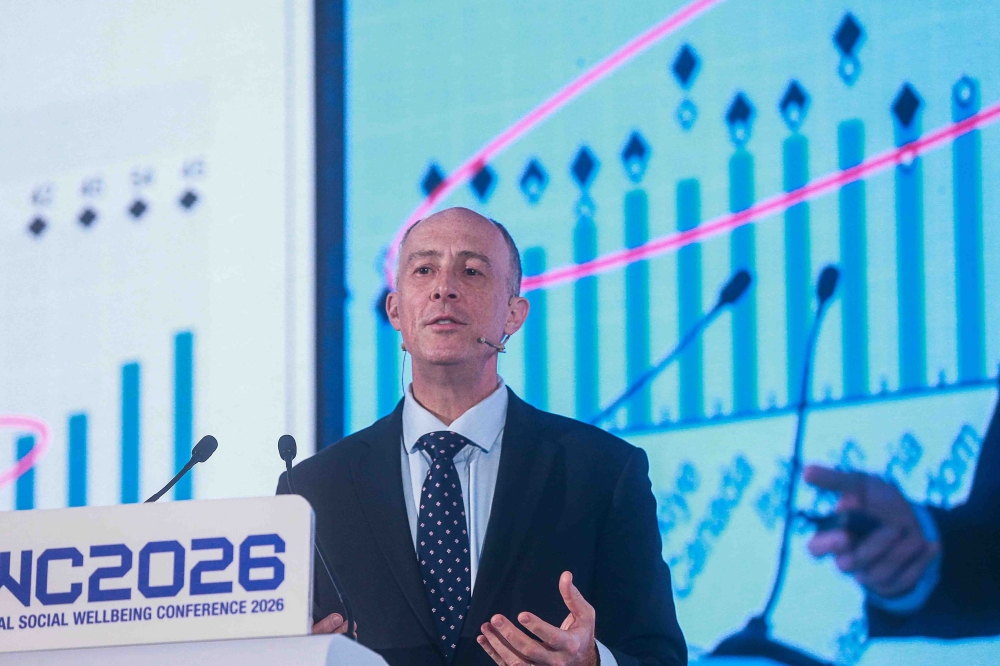
However, global pension expert William Price said Malaysia needs to gradually increase its retirement age to at least 65 as Malaysians are living longer.
He said “it’s very strange that Malaysia’s retirement age has been so low for so long” when many other countries had increased theirs.
“Usually some countries do it in a crisis period where suddenly they have to increase it very rapidly and that’s tough,” he told Malay Mail at the sidelines of the Employees Provident Fund’s (EPF) International Social Wellbeing Conference (ISWC) 2026.
He explained that people may find it psychologically difficult to accept if the retirement age is suddenly raised, such as when a 59-year-old person thought they were one year away from retirement, but are suddenly told they have to work six years more before retiring at 65.
“But also it’s just difficult for you in terms of your life and employer, you might not have prepared for it,” the CEO of consultancy firm D3P Global Pension Consulting said.
“So countries have a gradual way, which I think Malaysia should follow, and you just say from now on each year is going to work three months longer,” he said.
How will the maths work?
Price explained how the gradual shift to the right direction of eventually hitting 65 can work, where three months are added for each of the remaining years that a worker will be working.
So if you announce that the retirement age will be 65 from 2040, anyone currently working who is below the age of 40 will retire at 65.
“But there’s a transitional period so it goes 60, 60 and 3 months, 60 and 6 months, 60 and 9 months, 61 so it’s gradually going year by year,” he said.
For example, a 40-year-old would have 20 years’ time to prepare and adjust to the idea of working five more years to retire at 65, instead of 60.
On the flip side, those nearer to the initial retirement age of 60 would not suddenly have to adjust to the idea of working until 65.
“If you’re currently 50, you’re going to retire at 62 and a half. If you’re currently 55, you’re going to retire at 61 and a bit,” he said.
For someone aged 59, they would just have to accept that they will be working three months longer, and would retire at 60 years and three months.
“So, the closer you are, the smaller the change; the further away, then you get time to put the whole change in,” he added.
Apart from being psychologically easier to accept, he said: “It’s easier for the labour market to adjust so that employers are used to hiring workers who are staying longer or who are older. And most countries try to do this, some sort of gradual phasing in of the change in retirement age.”
Price said this gradual method is less politically divisive as people would just be retiring months apart from each other, instead of there being two different groups with very different experiences of retiring at 60 and 65 respectively.
“And it’s the dominant model that countries do around the world, work out how late people need to retire, work out a pathway to adjust towards it over time gradually,” he said.
If the retirement age is increased to 65, he said it could come with caveats, where those who started working at a younger age (such as age 16) can retire earlier at around age 60, as compared to those who went to university first and started working later (such as age 26).
“So you usually have a rule where the retirement age is ‘X’ but after you’ve done say 40 years or 45 years you can retire. So that maybe it’s possible to retire a bit earlier for the people who started work for longer,” he said.
“Because often the people who work from age 16, it’s often people who are from less wealthy backgrounds, in lower-paid jobs, sometimes more physically-demanding jobs. So it makes sense … basically they’ve more than done enough years of contributions, so they should be able to retire a bit early,” he said.
Linking the retirement age to life expectancy
After increasing to 65, Price said Malaysia could ideally adopt what some countries do, which is to link retirement age to the Department of Statistics Malaysia’s (DOSM) life expectancy figures.
“And so if people are not living that much longer, then you don’t change your retirement age. If they are living that much longer, then you do,” he said when explaining that the retirement age could be further increased or stay the same depending on whether life expectancy rises.
Based on the latest DOSM figures released September 30, life expectancy for a baby born in Malaysia in 2026 has increased to 75.5, while those aged 60 now are expected to live 20.2 years more (age 80.2) and those aged 65 now are expected to live 16.5 years more (age 81.5).
Linking the retirement age to access to retirement funds, with built-in flexibilities
Price said most people would not have sufficient income until they die, saying: “So they need to work longer, they need to save longer, and they need to take their money later.”
To make this work, Price also proposed linking the gradual increase in retirement age to a similar gradual increase of the age to access retirement savings, using a similar transition method.
He said it would be psychologically and politically difficult if those expecting to access their retirement funds at 55 were suddenly told they could only access it at 65.
Instead, workers who are 20 years away from retiring could have the age they access their retirement savings increased to 65, which would match the new retirement age.
At the same time, he said there could still be some flexibility, where those who have saved more in their EPF could be granted “early access” to the extra amount beyond the basic savings level. He said this could be an incentive to encourage people to save more.
The EPF’s guide for what Malaysians can target to save up by retirement has three levels to aim for, currently: basic savings at (RM390,000), adequate savings (RM650,000) and enhanced savings (RM1.3 million).
An older person may work differently than in their youth
During an ISWC 2026 panel session, Price noted some may mistakenly fear that a higher retirement age would mean older people do not leave their jobs and that it would lead to higher youth unemployment rates.
But he described this as the “lump of labour fallacy”, which refers to the mistaken belief that there is only a fixed number of jobs available.
“The evidence suggests, good labour markets which have the ability for employers to offer jobs, show the opposite,” he said, adding that raising the retirement age could be done without increasing unemployment for those in their 20s and 30s.
Price said the biggest benefit of working longer would be to fund retirement, as it would mean more years of not needing to tap or rely solely on one’s retirement savings.
He said older persons may not necessarily continue working full time or the same jobs until they hit age 65; and that where and how they work and the number of working hours or days could change.
“But if you’re working three days a week when you’re 62 to [63, 64, 65], drawing down a little bit of your assets, that gives you enough income. That means that you’re not wiping out everything in that first 10 years or so,” he said in his ISWC presentation.
Raise it to 65 by 2030, 70 by 2050
Licensed financial planner Rajen Devadason said it is time for Malaysia to gradually move up its current retirement age of 60, which he feels is “too low”, and said this will require political will as it can be politically unpalatable.
“I think that Malaysia’s retirement age should be shifted up, obviously in stages, to 65 by the year 2035, and to 70 by the year 2050,” he told Malay Mail in an interview at the ISWC 2026.
In his hypothetical example, Rajen said the retirement age could be increased by one year every two years (or in other words, by one month every two months).
While saying that a mandatory higher retirement age would “work better”, Rajen said people would be more willing to accept the change if they are given an option on whether to retire later.
Higher retirement ages won’t deprive younger workers of jobs
Rajen acknowledged resistance by some against higher retirement ages: “A lot of people get very upset. They say, ‘If you are older and you work longer, you will then be depriving younger people of jobs.’ I don’t think that’s true.”
“Because you think about it. By the time someone is 55, 60, and then if he or she keeps working till 65, 70, etc., the jobs that that particular individual is doing would be very, very different from the jobs that younger people entering the workforce would be doing.
“So, what is required is economic growth and the ability to actually create enough jobs,” he said.
“But it’s going to be a tough journey, because not just in Malaysia, in every country, people resist being told that you are required to retire later. People resent it,” he said.
But for those who might not want to retire later even if they have the option to do so, Rajen indicated the reality — especially for private sector employees — would be running out of funds during retirement: “You don’t want to work, don’t work. You’ll just run out of money.”
At ISWC 2026, Rajen had also pointed out that people are increasingly living longer, such as his oldest client who died at 103, Tun Dr Hasmah Mohamad Ali at 100, and his own mother at over 94.
“Our legislation is caught in a time warp. And the set retirement age at 60 is irrationally low in my opinion. And if you retire at 60 and the average lifespan is 75, you assume, okay, you’ve only got 15 years to go.
“But the trouble with averages is that they actually hide half, half the people who live longer,” he said, when explaining that living longer also meant planning to ensure sufficient income in the remaining years.
Rajen said Malaysians would need to have the right skills required by an evolving global marketplace in order to work longer and work remotely here, saying that they could start preparing from young by mastering languages such as English, Mandarin and Spanish as well as focusing on Science, Technology, Engineering and Mathematics (STEM) courses.
Working longer gives meaning too, but some may have to retire earlier
International Labour Organisation (ILO) Senior Social Protection Specialist for South Asia Mariko Ouchi said one solution could be allowing flexibility in the retirement age, saying for example that it could be fixed at a range of age 60 to 65.
Ouchi said some people may want to work longer as the income from employment is usually higher than from pensions or old-age benefits, and that those who are healthy may want to continue working for reasons beyond money and as work has meaning for them.
As for those who have health concerns or have to take care of older parents or other family responsibilities, she said they could still retire at 60 but possibly receive less old-age benefits compared to those who work longer and continue contributing more years.
“So, you know, like for those who agree for the later retirement, keep some options for them to retire a little bit later,” she said during an ISWC 2026 panel session, adding that the retirement age could be increased gradually such as by three months or six months per year.
Introduce policies against age discrimination at workplace
ILO Regional Social Protection Specialist for South-East Asia and the Pacific André Gama said retirement ages have to be increased gradually to enable people to adjust, adding that such increases can “mimic” the increase in life expectancy.
“For those workers who want to continue to work or will need to continue to work above the retirement age, what are the policies we need?
“Well, we need gradual increases in retirement ages in most countries. It is unavoidable, it is unpopular, but it’s a necessity,” he said during his IWSC 2026 presentation.
Gama said global data showed workers older than 65 were more likely to be doing agriculture work which tends to be more physically demanding, and were also more likely to be doing informal work, and less likely to be doing high-skilled jobs despite having more experience.
“If we don’t act, if there’s no policies in place to address this, we see that older people will struggle in the labour market,” he said, adding that policies are needed to ensure older people are treated with dignity at the workplace.
Gama said there needs to be more “age-inclusive” policies for the labour market, as older workers tend to have less rights, face discrimination and face obstacles in being able to contribute to their full potential.
Noting some employers may think older workers are more likely to be sick or might quit in a few years’ time, Gama pointed out there are existing policies preventing workplace discrimination, such as against women based on their likelihood to become pregnant.
He proposed incentives such as subsidies for hiring older workers, adding that their experience could complement younger workers.
He gave a hypothetical example where a 60-year-old policeman may not be able to run after a thief very fast, while a 20-year-old policeman may lack experience to communicate and diffuse the situation when a nervous thief pointing a gun.
“But if you have the two of them working together, then you can get the best of both worlds,” he said, adding that some jobs and work responsibilities could be adjusted to take full advantage of older workers’ experience and also account for some limitations.
“But we need to look at this in a more proactive way, and not just think that the market by itself, and the private sector by purely the magic invisible hand of economics is going to provide them the incentives to do so,” he said.
Recommended reading:
PM: Malaysians should have the choice to work past 60, ageing population needs options
As Malaysians live longer, should they work longer? Global perspectives worth pondering
Babies born in Malaysia in 2026 expected to live 75.5 years, DOSM says
Haze: Education Ministry coordinating school operating procedures under new action plan
PM Anwar extends donation to Makkal Osai senior editor
Malay Rulers urge outsiders not to politicise Negeri Sembilan throne dispute
本文探讨了关于将马来西亚退休年龄从60岁提高到65岁的提案和专家意见。全球养老金专家威廉·普莱斯建议逐步提高退休年龄,以适应不断增长的预期寿命,并提议将退休年龄与预期寿命挂钩。包括持牌理财规划师拉詹·德瓦达森和国际劳工组织专家在内的分析人士强调,需要政治意愿、灵活的退休选择以及反对年龄歧视的政策。他们讨论了老年人和年轻人在劳动力市场中相互补充所带来的经济影响和潜在益处。[图注:全球养老金专家威廉·普莱斯建议马来西亚将退休年龄提高到65岁,以适应该国不断增长的预期寿命。他指出,一些国家在危机期间被迫迅速提高退休年龄。]
图片由 Sayuti Zainudin 提供](/path/to/20260930SZ1.JPG)如需查看可视化效果,请参阅 Flourish 可视化:[Flourish URL](https://public.flourish.studio/visualisation/30498090)---如果您希望进行任何更改或添加更多详细信息,请告诉我。
吉隆坡,10月15日讯——马来西亚是否应该将退休年龄从60岁提高到65岁?如果应该,该如何实现?
目前,马来西亚的最低退休年龄为 60 岁,这意味着私营部门员工不会在 60 岁之前提前退休,而公务员的强制退休年龄为 60 岁。
然而,全球养老金专家威廉·普莱斯表示,随着马来西亚人寿命的延长,马来西亚需要逐步将退休年龄提高到至少 65 岁。
他说:“马来西亚的退休年龄长期以来一直很低,这非常奇怪”,而许多其他国家都提高了退休年龄。
“通常一些国家会在危机时期这样做,因为他们突然不得不迅速增加养老金,这很困难,”他在2026年雇员公积金局(EPF)国际社会福祉大会(ISWC)的间隙告诉《马来邮报》。
他解释说,如果退休年龄突然提高,人们可能会在心理上难以接受,例如,一个 59 岁的人以为自己还有一年就要退休了,但突然被告知他必须再工作六年才能在 65 岁退休。
“但这也会给你的生活和雇主带来困难,你可能没有为此做好准备,”咨询公司 D3P Global Pension Consulting 的首席执行官表示。
“所以各国采取了循序渐进的方式,我认为马来西亚应该效仿,只需宣布从现在开始,每年的工作时间延长三个月即可,”他说。
数学计算将如何进行?
Price 解释了逐步向最终达到 65 岁这一正确方向转变的方法,即工人每工作一年,就增加三个月。
因此,如果您宣布从 2040 年起退休年龄为 65 岁,那么目前所有 40 岁以下的在职人员都将在 65 岁退休。
“但是有一个过渡期,所以是 60 个月、60 个月零 3 个月、60 个月零 6 个月、60 个月零 9 个月、61 个月,所以是逐年逐步推进的,”他说。
例如,一个 40 岁的人将有 20 年的时间来准备和适应再工作 5 年,在 65 岁而不是 60 岁退休的想法。
另一方面,那些接近最初退休年龄(60 岁)的人不必突然适应工作到 65 岁的想法。
他说:“如果你现在50岁,你将在62岁半退休。如果你现在55岁,你将在61岁多一点退休。”
对于一个 59 岁的人来说,他们只能接受自己要多工作三个月,并在 60 岁零 3 个月时退休的事实。
“所以,距离越近,找零就越小;距离越远,你就有时间把所有零钱都放进去,”他补充道。
除了在心理上更容易接受之外,他还说:“劳动力市场更容易调整,让雇主习惯于雇用工作时间更长或年龄更大的员工。大多数国家都在努力这样做,以某种方式逐步改变退休年龄。”
普莱斯表示,这种渐进的方法在政治上造成的分裂较小,因为人们只是在退休时间上相隔几个月,而不是像现在这样,两个不同的群体分别在 60 岁和 65 岁退休,有着截然不同的退休经历。
他说:“这是世界各国普遍采用的模式,即确定人们需要多晚退休,并制定一个逐步调整的过渡方案。”
他表示,如果将退休年龄提高到 65 岁,可能会有一些限制条件,例如,那些较年轻就开始工作的人(例如 16 岁)可以在 60 岁左右提前退休,而那些先上大学后较晚开始工作的人(例如 26 岁)则不能。
他说:“通常情况下,退休年龄会设定为‘X’,但工作满40年或45年后就可以退休。所以对于那些工作时间较长的人来说,或许可以提前退休。”
他说:“因为通常情况下,从16岁就开始工作的人,往往来自不太富裕的家庭,从事收入较低、有时甚至是体力劳动强度较大的工作。所以这很合理……基本上,他们已经为社会贡献了足够多的年限,因此他们应该能够提前退休。”
将退休年龄与预期寿命挂钩
Price表示,马来西亚在将退休年龄提高到65岁后,可以理想地效仿一些国家的做法,将退休年龄与马来西亚统计局(DOSM)的预期寿命数据挂钩。
“因此,如果人们的寿命没有延长那么多,那么退休年龄就不用改变。如果他们的寿命延长那么多,那么就应该改变,”他解释说,退休年龄可能会进一步提高,也可能会保持不变,这取决于预期寿命是否延长。
根据马来西亚统计局 (DOSM) 9 月 30 日发布的最新数据,2026 年在马来西亚出生的婴儿的预期寿命已增至 75.5 岁,而现在 60 岁的人预计还能活 20.2 年(达到 80.2 岁),现在 65 岁的人预计还能活 16.5 年(达到 81.5 岁)。
将退休年龄与退休金的提取挂钩,并赋予其灵活性
普莱斯表示,大多数人到去世前都没有足够的收入,他说:“所以他们需要工作更长时间,需要储蓄更长时间,需要晚些领取他们的钱。”
为了实现这一目标,普莱斯还提议将逐步提高退休年龄与逐步提高提取退休储蓄的年龄联系起来,采用类似的过渡方法。
他表示,如果那些原本期望在 55 岁领取退休金的人突然被告知他们只能在 65 岁领取,这将在心理上和政治上造成困难。
相反,对于还有 20 年才退休的工人,他们可以将提取退休储蓄的年龄提高到 65 岁,这与新的退休年龄一致。
与此同时,他表示仍可保留一定的灵活性,那些在公积金账户中储蓄较多的人可以“提前支取”超出基本储蓄额度的额外部分。他认为这可以激励人们增加储蓄。
马来西亚雇员公积金局 (EPF) 为马来西亚人退休储蓄目标制定了三个级别:基本储蓄 (390,000 令吉)、充足储蓄 (650,000 令吉) 和增强储蓄 (130 万令吉)。
老年人的工作方式可能与年轻时有所不同。
在 ISWC 2026 的一次小组会议上,普莱斯指出,有些人可能错误地担心,提高退休年龄意味着老年人不会离开工作岗位,这将导致更高的青年失业率。
但他将此描述为“劳动力总量谬误”,指的是错误地认为只有固定数量的工作岗位可供使用。
“证据表明,劳动力市场良好,雇主能够提供就业机会,情况恰恰相反,”他说道,并补充说,提高退休年龄不会增加二三十岁人群的失业率。
普莱斯表示,延长工作年限的最大好处是能够更好地筹集退休资金,因为这意味着可以有更多年的时间不必动用或完全依赖自己的退休储蓄。
他表示,老年人未必会一直全职工作到 65 岁,或者从事同样的工作;他们的工作地点、工作方式以及工作时长或工作天数都可能发生变化。
“但是,如果你在 62 岁到 63 岁、64 岁、65 岁的时候每周工作三天,动用你的一部分资产,那就能给你足够的收入。这意味着你不会在最初的 10 年左右耗尽所有积蓄,”他在 ISWC 的演讲中说道。
到2030年提高到65%,到2050年提高到70
持牌理财规划师拉詹·德瓦达森表示,马来西亚应该逐步提高目前的60岁退休年龄,他认为这个年龄“太低了”,并表示这将需要政治意愿,因为这在政治上可能不受欢迎。
“我认为马来西亚的退休年龄应该逐步提高,到 2035 年提高到 65 岁,到 2050 年提高到 70 岁,”他在 2026 年国际安全与气候变化大会 (ISWC 2026) 期间接受《马来邮报》采访时表示。
拉詹在他的假设例子中说,退休年龄可以每两年增加一岁(或者换句话说,每两个月增加一个月)。
Rajen表示,虽然强制提高退休年龄“效果会更好”,但如果人们可以选择是否晚些退休,他们会更愿意接受这种改变。
提高退休年龄不会剥夺年轻劳动者的就业机会。
拉詹承认有些人反对提高退休年龄:“很多人对此非常不满。他们说,‘如果你年纪大了,工作时间还长,就会剥夺年轻人的工作机会。’我不认为这是真的。”
“因为你想想,当一个人到了 55 岁、60 岁,如果他或她一直工作到 65 岁、70 岁等等,那么这个人所从事的工作将与年轻人进入职场时所从事的工作非常非常不同。”
“因此,我们需要的是经济增长和创造足够多就业机会的能力,”他说。
“但这将是一段艰难的旅程,因为不仅在马来西亚,在每个国家,人们都抗拒被告知必须晚退休。人们对此感到不满,”他说。
但对于那些即使有退休选择也不想晚退休的人来说,拉詹指出,现实情况是——尤其是对于私营部门的员工而言——退休后资金会耗尽:“不想工作就别工作。否则你的钱就会用光。”
在 2026 年 ISWC 大会上,拉詹还指出,人们的寿命越来越长,例如他最年长的客户 Tun Dr Hasmah Mohamad Ali 享年 103 岁,他本人的母亲也超过 94 岁。
“我们的立法已经过时了。在我看来,60岁的退休年龄低得不合理。如果你60岁退休,而平均寿命是75岁,你就会觉得,好吧,你只剩下15年的时间了。”
“但平均值的问题在于,它实际上掩盖了一半更长寿的人,”他解释说,长寿也意味着要计划如何确保在余生中获得足够的收入。
拉詹表示,马来西亚人需要具备不断变化的全球市场所需的技能,才能在这里工作更长时间并远程工作。他表示,马来西亚人可以从小就开始准备,掌握英语、普通话和西班牙语等语言,并专注于科学、技术、工程和数学 (STEM) 课程。
延长工作时间也能赋予工作意义,但有些人可能不得不提前退休。
国际劳工组织(ILO)南亚高级社会保障专家大内真理子表示,一个解决方案可能是允许退休年龄具有灵活性,例如可以将其固定在 60 至 65 岁之间。
大内表示,有些人可能想延长工作时间,因为工作收入通常高于养老金或老年福利;而身体健康的人可能出于金钱以外的原因,以及因为工作对他们来说具有意义,而想继续工作。
至于那些有健康问题或需要照顾年迈父母或其他家庭责任的人,她说他们仍然可以在 60 岁退休,但与那些工作时间更长、继续缴费更多年限的人相比,他们可能获得的养老金会更少。
“所以,你知道,对于那些同意晚些退休的人来说,要为他们保留一些晚些退休的选择,”她在2026年国际社会主义大会(ISWC 2026)的小组会议上说,并补充说,退休年龄可以逐步提高,例如每年提高三个月或六个月。
制定反对工作场所年龄歧视的政策
国际劳工组织东南亚及太平洋地区社会保障专家安德烈·加马表示,退休年龄必须逐步提高,以便人们能够适应,并补充说,这种提高可以“模仿”预期寿命的增长。
“对于那些想要继续工作或需要在退休年龄后继续工作的劳动者,我们需要哪些政策?”
“嗯,大多数国家都需要逐步提高退休年龄。这是不可避免的,也不受欢迎,但却是必要的,”他在2026年国际太阳与太阳时报大会上说道。
Gama表示,全球数据显示,65岁以上的劳动者更有可能从事体力劳动强度较大的农业工作,也更有可能从事非正式工作,尽管经验更丰富,但不太可能从事高技能工作。
“如果我们不采取行动,如果没有相应的政策来解决这个问题,我们就会看到老年人在劳动力市场中举步维艰,”他说道,并补充说,需要制定政策来确保老年人在工作场所受到有尊严的对待。
加马表示,劳动力市场需要更多“年龄包容性”政策,因为老年工人往往权利较少,面临歧视,并且在充分发挥自身潜力方面面临障碍。
加玛指出,一些雇主可能认为年龄较大的员工更容易生病,或者几年后可能会辞职,但现有的政策可以防止工作场所的歧视,例如基于女性怀孕可能性的歧视。
他提议采取补贴等激励措施来鼓励雇用年长的员工,并补充说,他们的经验可以与年轻员工形成互补。
他举了一个假设的例子,一个 60 岁的警察可能无法快速追赶窃贼,而一个 20 岁的警察可能缺乏经验,无法在紧张的窃贼持枪时进行沟通和化解局面。
“但如果让他们两人一起工作,就能兼顾两者的优势,”他说道,并补充说,一些工作和工作职责可以进行调整,以充分利用年长员工的经验,同时也考虑到一些局限性。
“但我们需要以更积极主动的方式来看待这个问题,而不能仅仅认为市场本身,以及私营部门,仅仅依靠经济学这只神奇的‘看不见的手’就会为他们提供这样做的激励,”他说。
推荐阅读:
首相:马来西亚人应该有选择权,可以在60岁以后继续工作,人口老龄化需要更多选择。
马来西亚人寿命延长,他们是否应该延长工作年限?值得深思的全球视角
马来西亚统计局称,2026年在马来西亚出生的婴儿预期寿命为75.5岁。
雾霾:教育部在新行动计划下协调学校运作程序
安华总理向《人民之声》高级编辑捐款
马来统治者敦促外界不要将森美兰州王位争端政治化