Ancient Chinese families gave babies humble nicknames – ‘Dog’, ‘Pig’ – to ward off bad luck古代中国人为了避凶,会给婴儿取一些不吉利的绰号,比如“狗”、“猪”。
SHANGHAI: Like people elsewhere in the world, Chinese people often have nicknames in addition to their official names. Some of these may surprise people from other cultures because they sound humble or even unflattering.
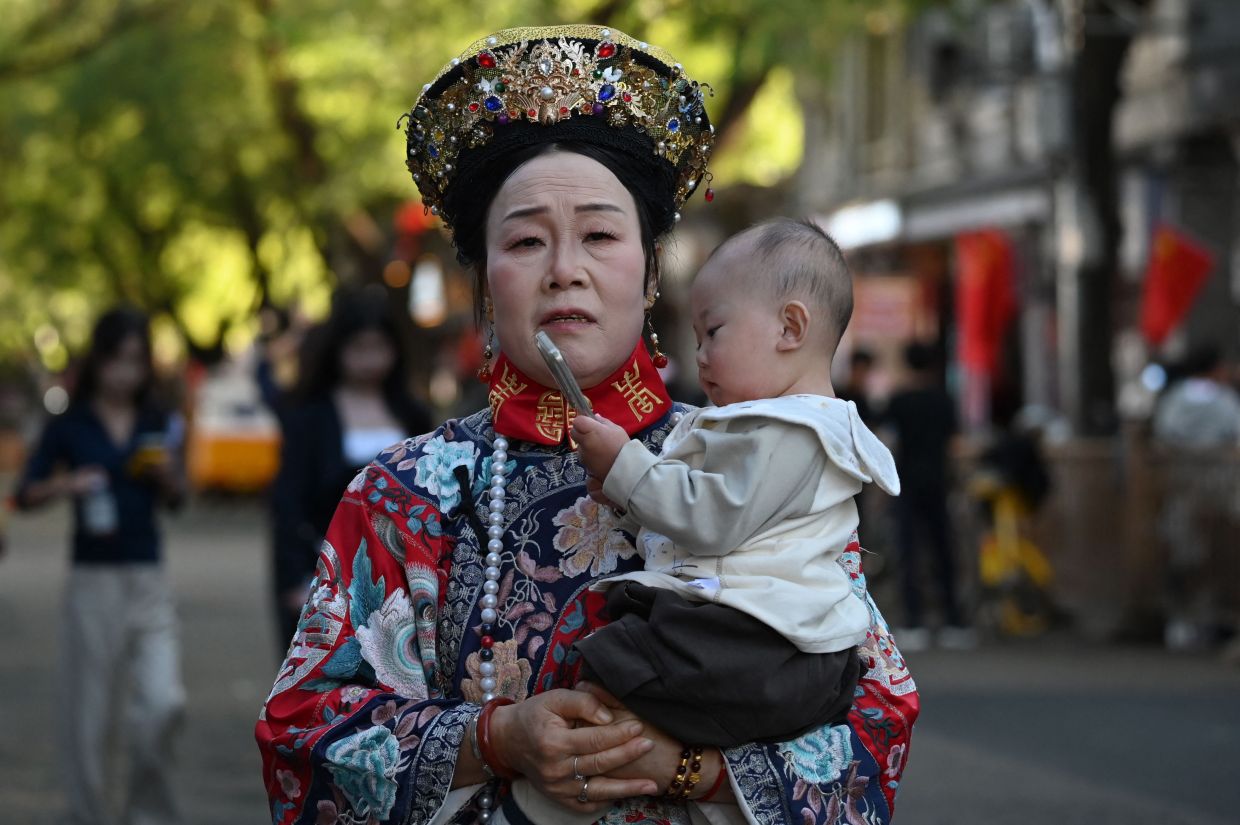
FILE PHOTO: A woman dressed in imperial costume holds a baby as it plays with a mobile phone in a street near the Forbidden City on Chinas National Day, which marks the anniversary of the 1949 founding of the Peoples Republic of China, in Beijing on October 1, 2026. - AFP
SHANGHAI: Like people elsewhere in the world, Chinese people often have nicknames in addition to their official names. Some of these may surprise people from other cultures because they sound humble or even unflattering.
Chinese parents have traditionally given their children humble, sometimes vulgar, nicknames – occasionally using animal names such as “Dog” or “Pig.” The practice dates back to ancient times.
Thank you for your report!
Malaysia to push for stronger Asean-China-GCC ties
Malaysia-China ties to go beyond technology transfer, says DPM
China restates backing for Malaysia’s full BRICS membership
资料照片:2026年10月1日,中国国庆节当天,在北京故宫附近的一条街道上,一名身着宫廷服饰的女子抱着一个婴儿,婴儿正在玩手机。国庆节是纪念中华人民共和国成立的节日。——法新社
上海:和世界其他地方的人一样,中国人除了正式名字之外,通常还有昵称。有些昵称可能会让其他文化背景的人感到惊讶,因为它们听起来谦逊甚至不太恭维。
中国父母历来喜欢给孩子取一些谦逊甚至粗俗的昵称——偶尔也会用“狗”或“猪”之类的动物名字。这种习俗可以追溯到古代。
感谢您的报告!
马来西亚将推动加强东盟、中国和海湾合作委员会之间的关系
马中关系将超越技术转让,副总理表示。
中国重申支持马来西亚成为金砖国家正式成员