askST: How can home owners protect themselves when tenants use shell companies to rent property?askST:当租户使用空壳公司出租房产时,房主如何保护自己?
It will be hard to recover unpaid rent from a shell company that has no asset against which a judgment can be enforced. Read more at straitstimes.com.
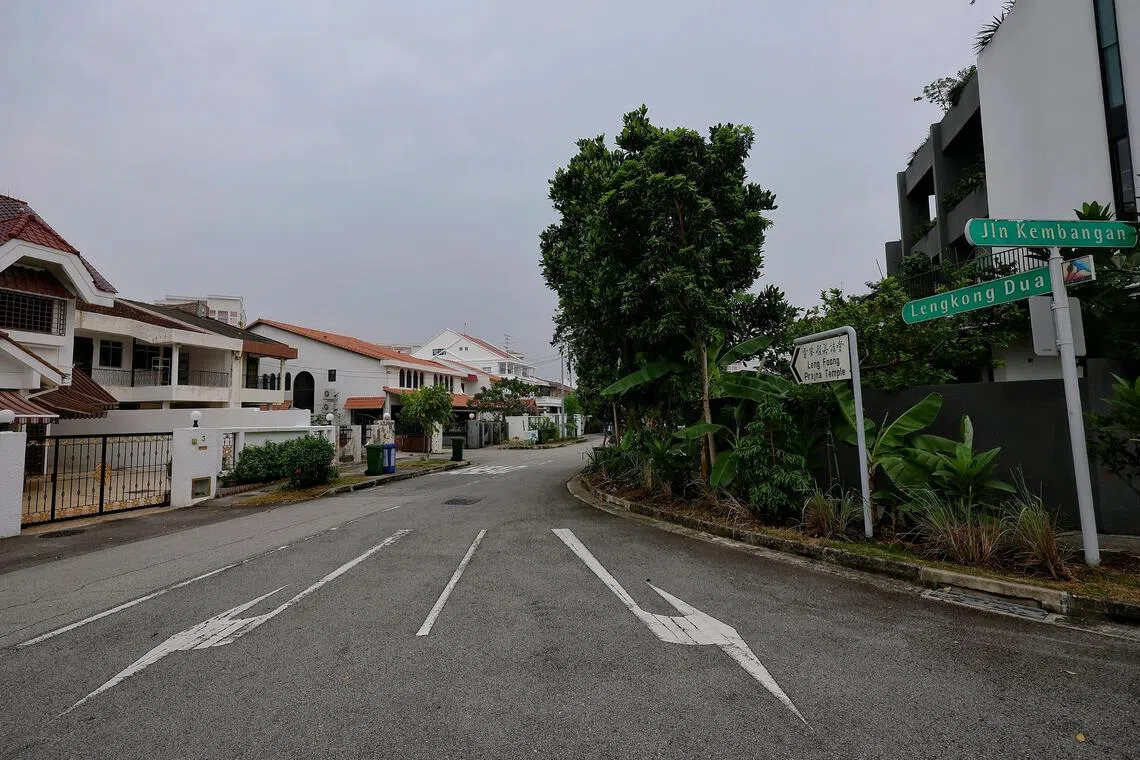
American Anthony Thomas Price had used Noranth Ventures, a shell company, to rent a semi-detached house in Lengkong Dua in Kembangan for $7,500 a month.
Published Oct 15, 2026, 05:20 PM
Updated Oct 15, 2026, 05:20 PM
SINGAPORE - Home owners who have leased their properties to companies with little or no assets, may later have difficulty recovering unpaid rents.
Such risks were thrust into the spotlight following a case in which a judge found that American Anthony Thomas Price had used shell companies to rent three landed homes and defaulted on his rent .
The Straits Times asked lawyer Daniel Chen from Lee & Lee, who specialises in property disputes, how landlords can protect themselves in such circumstances, and what recourse they have when tenants default on rent.
What checks should owners conduct before renting out their property?
Owners should check whether prospective tenants are undischarged bankrupts or have bankruptcy applications filed against them.
They may also search for ongoing or previous lawsuits involving prospective tenants. Such searches can be conducted through the courts’ electronic filing system or its service bureau, for a fee .
If the renter is a company , landlords can also check if the company is GST (goods and services tax) registered, to get an idea of the company’s annual turnover. Businesses must register for GST if their annual taxable turnover exceeds $1 million.
A business profile search on Accounting and Corporate Regulatory Authority (Acra) portal alone is insufficient as it only provides basic company information, Chen said.
What warning signs should landlords look out for?
Chen said the fact that a company is looking to lease a residential property is usually a warning sign, unless the company is doing so to house its employees there .
He suggested that owners avoid leasing residential properties to companies, unless they can give an assurance that the lease is for employees who are for some reason unable to enter into the lease directly.
Owners should also find out who the actual occupants are, and whether the company has the financial means to meet its rental obligations.
A company having little paid-up capital does not mean it will be unable to pay rent, Chen noted, but it is a reason to carry out further checks.
How can owners protect themselves before signing a a tenancy agreement?
First, the deposit should be paid in full before the tenancy begins. Chen said the higher the deposit, the greater the protection. However, he noted that there are some market standards which are difficult to deviate from.
Second, personal guarantees would provide additional protection, as the landlord can pursue the guarantor for unpaid rent.
If the tenant is a company, landlords can require a personal guarantee from a company director or the actual occupant.
However, further legal action is required to enforce the guarantee, and if the guarantor has no assets against which judgment can be enforced, the landlord may still end up with nothing.
What can owners do if tenants stop paying rent and refuse to leave? Can they change the locks?
Owners should check the tenancy agreement and notify tenants of the breach.
They are required to give tenants reasonable time - typically 14 days - to pay the rent. If the tenant fails to pay the rent within that time, the owner can re-enter the premises and forfeit the tenancy in accordance with the terms of the tenancy agreement.
The tenancy agreement will usually provide that if rent has been unpaid after some time from a notice requiring the tenant to do so, the landlord can re-enter the premises and thereby forfeit the tenancy. Since there is no longer any tenancy, the owner is then entitled to change the locks. However, they will have to be mindful of the safety of occupants.
For example, they should not lock anyone inside the property. There are also potential legal claims arising from their actions if they change the locks .
Chen said it is advisable to obtain a court order for vacant possession of the premises when tenants refuse to leave, or where the landlord does not wish to take the risk that claims might be made against them.
Can owners recover unpaid rent from a shell company?
Chen said there is almost no chance of recovering unpaid rent owed by a shell company . Owners can seek to enforce a court’s judgment against the company’s assets, but if the company has no assets, it is impractical to do so, he added.
He said that in some cases, the court can “pierce the corporate veil” to make directors or shareholders liable for a company’s debts, but this is extremely rare and would require further litigation. Landlords should not count on this being a possibility, he said.
Joyce Lim covers Singapore’s property market and redevelopment trends.
Residential property
Property market/sector
美国人安东尼·托马斯·普莱斯曾利用空壳公司 Noranth Ventures 在肯邦安的 Lengkong Dua 租了一栋半独立式住宅,月租金为 7,500 美元。
发布于2026年10月15日下午5:20
更新于2026年10月15日下午5:20
新加坡——将房产出租给几乎没有资产或根本没有资产的公司,房屋所有者日后可能难以收回未付租金。
此前,一名法官发现美国人安东尼·托马斯·普莱斯利用空壳公司租了三套独立式住宅,并拖欠租金,这一案件将此类风险推到了风口浪尖。
《海峡时报》采访了专门处理房地产纠纷的李氏律师事务所的陈丹尼尔律师,询问房东在这种情况下如何保护自己,以及当租户拖欠租金时,房东有哪些补救措施。
业主在出租房产前应该进行哪些检查?
业主应核实潜在租户是否为未解除破产状态的破产者,或是否有针对他们的破产申请。
他们还可以查询涉及潜在租户的正在进行或已发生的诉讼。此类查询可以通过法院的电子归档系统或其服务机构进行,但需支付一定费用。
如果租客是公司,房东还可以查询该公司是否已注册消费税(GST),以了解其年营业额。年应税营业额超过100万澳元的企业必须注册消费税。
陈先生表示,仅凭会计和企业监管局(Acra)门户网站上的企业概况搜索是不够的,因为它只提供基本的公司信息。
房东应该注意哪些预警信号?
陈先生表示,除非公司是为了安置员工,否则公司寻求租赁住宅物业通常是一个警告信号。
他建议业主避免将住宅物业出租给公司,除非他们能够保证租赁对象是因某种原因无法直接签订租赁合同的员工。
业主还应该查明实际的居住者是谁,以及该公司是否有财力履行其租金义务。
陈指出,一家公司实收资本少并不意味着它就付不起租金,但这却是需要进行进一步核查的原因。
业主在签署租赁协议前如何保护自身权益?
首先,押金应在租约开始前全额支付。陈先生表示,押金越高,保障越大。但他同时指出,有些市场标准难以更改。
其次,个人担保可以提供额外的保障,因为房东可以向担保人追讨未付租金。
如果租户是公司,房东可以要求公司董事或实际承租人提供个人担保。
然而,要强制执行担保,还需要采取进一步的法律行动;如果担保人没有可以强制执行判决的资产,房东最终可能仍然一无所获。
如果租户停止支付租金并拒绝搬走,房东可以采取什么措施?他们可以更换门锁吗?
业主应检查租赁协议,并通知租户违约情况。
房东必须给予租户合理的宽限期——通常为14天——来支付租金。如果租户未在规定时间内支付租金,房东可以根据租赁协议的条款收回房屋并终止租赁关系。
租赁协议通常会规定,如果租户在收到催缴通知后一段时间仍未支付租金,房东可以重新进入房屋,从而终止租赁关系。由于租赁关系已终止,房东有权更换门锁。但是,房东必须注意住户的安全。
例如,他们不应该将任何人锁在屋内。如果他们更换门锁,也可能引发法律纠纷。
陈先生表示,如果租户拒绝搬离,或者房东不愿承担可能被索赔的风险,最好向法院申请收回房屋的命令。
业主能否从空壳公司追回未付租金?
陈先生表示,追回空壳公司拖欠的租金几乎没有可能。业主可以寻求强制执行法院对公司资产的判决,但如果公司没有资产,这样做是不切实际的,他补充道。
他表示,在某些情况下,法院可以“揭开公司面纱”,追究董事或股东对公司债务的责任,但这极其罕见,而且需要进一步诉讼。他提醒房东不要指望这种情况会发生。
Joyce Lim负责报道新加坡房地产市场和重建趋势。
住宅物业
房地产市场/行业