As critical mineral deadline looms, Army expects to feel ‘some impact’随着关键矿产资源供应期限临近,陆军预计将受到“一定影响”。
Liz Miranda, Army Materiel Command's executive deputy to the commanding general, said a White House order's requirements for companies to map their supply chain down to the raw material level “is no easy task.”
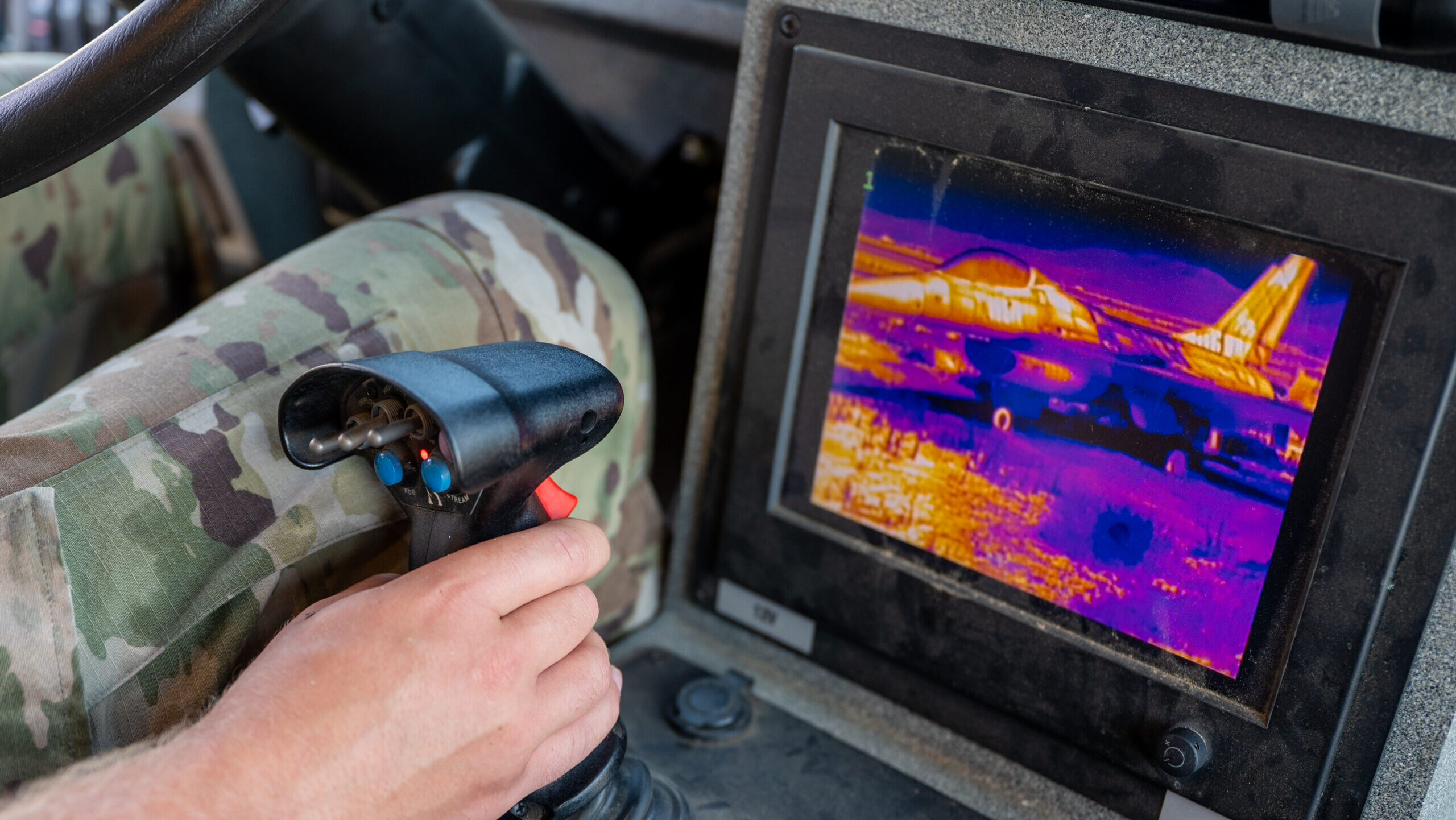
A U.S. Air Force fuels lab technician operates a fire hose while using thermal imaging on a mock metal burnpit aircraft during a job shadow exchange at a base in the U.S. Central Command area of responsibility Aug. 28, 2026. (U.S. Air Force photo by Senior Airman Sarah Hoover)
WASHINGTON — As the deadline approaches for defense industry to ween themselves off critical minerals from adversary nations, the Army is expecting to see “some impact” on companies that are still struggling to comply, an Army official said.
Executive order (EO) 14415, which was released in July, gives a January 2027 deadline for US companies to stop using critical materials and minerals from China, Russia, Iran, and North Korea. Companies will be able to get a waiver only if the government approves their mitigation plan, which spells out concrete steps that the firm is taking to find new suppliers in the United States or partner nations.
Liz Miranda, Army Materiel Command’s executive deputy to the commanding general, said Wednesday the EO’s requirements for companies to map their supply chain down to the raw material level “is no easy task.”
“We’re working towards that. Are we there yet? No. So we are going to see some impact come January,” she told an audience at the Association for the US Army conference.
Asked by Breaking Defense what impacts the Army foresees, Miranda said that she doesn’t anticipate any “off the cliff” outcomes that would be catastrophic for the service.
Rather, she said, “ I see a gradual holding all of us accountable to mitigating those areas where we know we we have risk because we’re dependent on foreign adversaries.”
Critical minerals covered by the EO include substances like tungsten alloys, which is used in engine components and hypersonics, and germanium, which is used in thermal imaging systems. China is the dominant producer of both materials, according to a September report by the Aerospace Industries Association (AIA).
Miranda pointed to the Army’s announcement earlier this week that it will conduct a “manufacturing rodeo,” which is meant to expose supply chain and manufacturing risks that the service may not be aware of.
“Unfortunately, we cannot insource all of the parts that are required — specifically for drone dominance,” she said. “So with this rodeo, what we intend to do is really look internal to the US domestic capabilities and see what gaps exist, and then working with industry to invest in building that domestic capability or partnering with other allies to identify resources there that we can leverage to scale what we need.”
In a July interview, Michael Cadenazzi, the assistant secretary of defense for industrial base policy, told Breaking Defense that the Pentagon would be willing to work with companies who need waivers, provided they are making a good faith effort to find new sources of supply.
“What we need to do is commit to companies to say, ‘Look, how are you going to go ahead and resolve this problem through friendshoring, through domestic shoring, through changes in suppliers?” he said. “And if there’s a gap, a legitimate gap, [and] you have a plan and you need a window to see you through [to] bridge that gap, that’s what we want to know.”
However, defense trade groups have raised concerns about the EO’s quick timeline. AIA has argued that waivers will still be necessary for years after the January 2027 deadline, as the current domestic supply of critical minerals is not sufficient to meet companies’ needs.
In the September report, AIA found, “Significant domestic processing, refining, and magnet production capacity for aerospace-grade materials is not expected to be available until 2028 or later,” with additional certification and qualification activities potentially pushing that date even further down the road.
The EO makes those challenges “more acute” because waivers will be restricted to companies who get a mitigation plan approved, with little feedback from the government on what constitutes an acceptable plan, said Dak Hardwick, AIA Vice President of International Affairs.
“Industry is still looking for clarity around the mitigation-plan standard and processing timelines,” he said Tuesday. “AIA is urging industry, government, Congress, and minerals producers to work together on a practical path forward that meets the unique needs of our industry, preserves waivers where qualified supply does not yet exist, and avoids disruptions to defense production.”
2026年8月28日,在美国中央司令部责任区内的一个基地,一名美国空军燃料实验室技术员在工作见习交流期间,一边使用热成像仪对模拟金属燃烧坑飞机进行热成像,一边操作消防水带。(美国空军高级飞行员莎拉·胡佛摄)
华盛顿——一位陆军官员表示,随着国防工业摆脱对敌对国家关键矿产依赖的最后期限临近,陆军预计那些仍在努力遵守规定的公司将受到“一些影响”。
7月发布的第14415号行政命令规定,美国公司必须在2027年1月前停止使用来自中国、俄罗斯、伊朗和朝鲜的关键材料和矿产。公司只有在政府批准其缓解计划后才能获得豁免,该计划需详细说明公司为在美国或伙伴国家寻找新供应商而采取的具体措施。
陆军物资司令部司令的执行副手莉兹·米兰达周三表示,该行政命令要求各公司绘制其供应链直至原材料层面的图谱,“这绝非易事”。
“我们正在朝着这个方向努力。我们实现了吗?还没有。所以我们将在明年一月看到一些成效,”她在美国陆军协会会议上对听众说道。
当被《防务新闻》问及陆军预见的后果时,米兰达表示,她预计不会出现任何对军队造成灾难性后果的“断崖式”结果。
相反,她说:“我认为应该逐步追究我们所有人的责任,以减轻那些我们知道存在风险的领域,因为我们依赖于外国对手。”
该环境令涵盖的关键矿物包括钨合金(用于发动机部件和高超音速发动机)和锗(用于热成像系统)等物质。根据美国航空航天工业协会(AIA)9月份发布的一份报告,中国是这两种材料的主要生产国。
米兰达指出,陆军本周早些时候宣布将进行一次“制造竞赛”,旨在暴露该军种可能没有意识到的供应链和制造风险。
“遗憾的是,我们无法完全自主生产所有必需的零部件——特别是无人机优势所需的零部件,”她说道。“因此,在这次竞赛中,我们打算真正审视美国国内的能力,找出存在的差距,然后与业界合作,投资建设国内能力,或者与其他盟友合作,寻找可以利用的资源,以扩大我们所需的规模。”
国防部负责工业基础政策的助理部长迈克尔·卡德纳齐在 7 月份接受 Breaking Defense 采访时表示,五角大楼愿意与需要豁免的公司合作,前提是这些公司正在真诚地努力寻找新的供应来源。
他说:“我们需要做的是向企业承诺,‘你们打算如何通过回流生产、国内生产或更换供应商来解决这个问题?’如果确实存在差距,而且你们有计划,只是需要一个窗口来弥合这个差距,这正是我们想知道的。”
然而,国防贸易团体对这项行政命令的仓促出台表示担忧。美国工业协会(AIA)认为,即使在2027年1月的最后期限之后,豁免仍然需要持续数年,因为目前国内关键矿产的供应不足以满足企业的需求。
AIA 在 9 月份的报告中发现,“预计要到 2028 年或更晚才能具备足够的国内航空航天级材料加工、提炼和磁体生产能力”,而额外的认证和鉴定活动可能会进一步推迟这一日期。
美国建筑师协会国际事务副总裁达克·哈德威克表示,该行政命令使这些挑战“更加严峻”,因为豁免将仅限于获得缓解计划批准的公司,而政府对何为可接受的计划几乎没有反馈。
“业界仍在寻求关于缓解计划标准和处理时间表的明确规定,”他周二表示。“美国工业协会(AIA)敦促业界、政府、国会和矿产生产商共同努力,制定切实可行的前进道路,以满足我们行业的独特需求,在合格供应尚未存在的情况下保留豁免权,并避免对国防生产造成干扰。”