Yields on S’pore government securities climb higher: Should investors buy in or stick to stocks?新加坡政府债券收益率攀升:投资者应该买入还是继续持有股票?
Singapore T-bill yields rise as investors weigh government securities, Singapore Savings Bonds and dividend stocks. Read more at straitstimes.com.
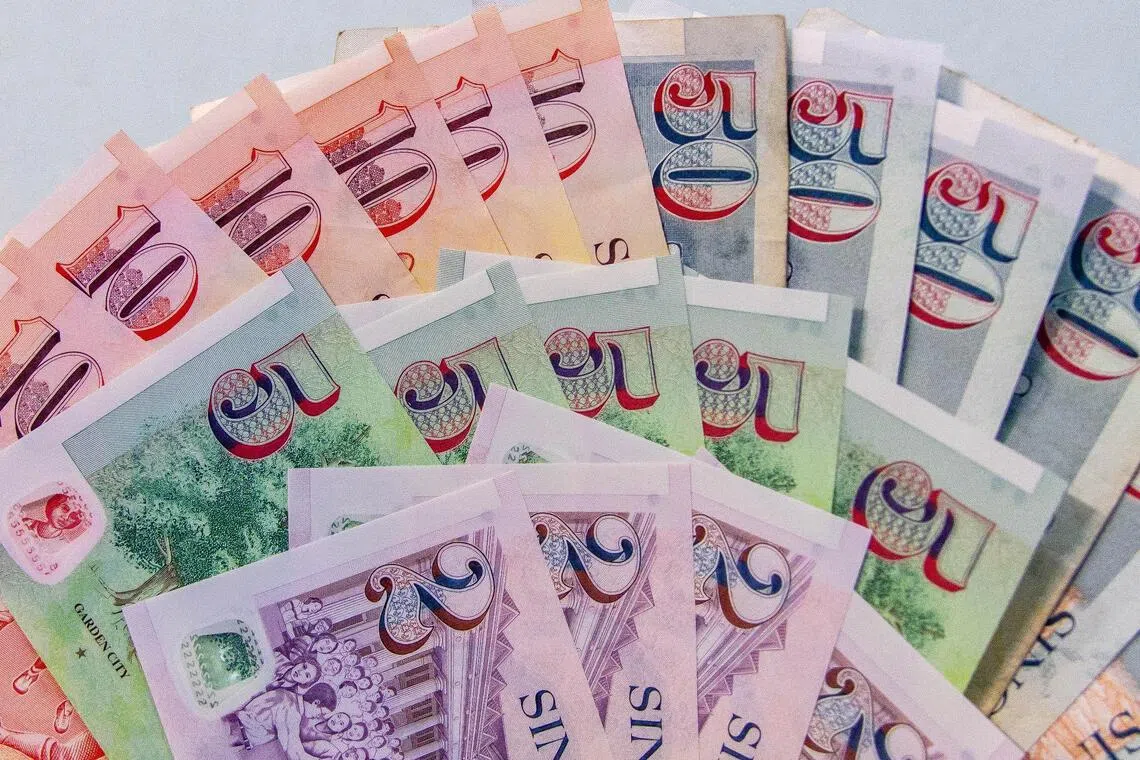
The interest rate on the one-year T-bill rose to its 2026 high of 1.92% on Oct 15.
Published Oct 16, 2026, 01:35 PM
Updated Oct 16, 2026, 04:47 PM
T-bill yields in Singapore have risen to about 1.9%, and experts expect more gains as US Federal Reserve hikes push up short-term rates.
Nov's Singapore Savings Bonds hit a 2026 peak of 2.45%, though early redemption cuts year-one yields to 1.67%
Some investors still prefer dividend stocks, as their yields can beat T-bills and SSBs, while keeping more cash ready for market opportunities.
SINGAPORE – The returns that retail investors are getting for Treasury Bills (T-bills), a type of short-term Singapore government securities, are climbing after dipping to around 1.3% to 1.4% in 2025 and the first half of 2026.
With yields now hovering near 1.9%, fixed-income experts believe there is more upside in the coming months.
Another form of Singapore government securities, the Singapore Savings Bonds (SSBs), will pay the highest rates so far in 2026 for its November issue. If investors hold the SSBs for the full duration of 10 years, they will earn an average return of 2.45% a year.
T-bills are short-term securities with maturities of either six months or a year. Investors buy the bills at a discount upfront and receive the full face value at maturity, earning the difference as interest.
In contrast, SSBs are longer-term instruments that can be held for up to 10 years, though investors have the flexibility to exit their investment in any given month without penalty.
Both T-bills and SSBs are deemed risk-free investments backed by Singapore’s triple-A credit rating.
Resurgence of T-bills
The appeal of T-bills grew in 2022 as yields climbed steadily from sub-1% levels. The six-month T-bill subsequently hit a peak of 4.4% on Dec 8, 2022, and the one-year T-bill went as high as 3.87% on Jan 26, 2023.
Drawn by their safe nature and rising yields, investors from all walks of life piled in.
Senior lab technician Dallas Goh was one of them. He accumulated as much as $100,000 in T-bills at one point.
Interest in these short-term government securities waned in 2024 as equity markets became more attractive. Investors – including Goh, who stopped buying T-bills in the middle of 2024 – looked elsewhere for higher returns.
However, the yields on T-bills are climbing again. The interest rate on the one-year T-bill rose to its 2026 high of 1.92% on Oct 15, from 1.68% on July 23. There will be no more one-year T-bill auctions in 2026.
Meanwhile, the cut-off yield for the six-month T-bill dipped slightly to 1.9% on Oct 8, remaining just shy of its Sept 24 peak of 1.92%.
There are five more six-month auctions on Oct 22, Nov 4, Nov 19, Dec 3 and Dec 17.
Goh shared that the yields are “still too low” and he will wait until they cross 2.5% before he considers investing in T-bills again.
His wish may just come true. Market-watchers anticipate higher yields in the upcoming auctions as the US Federal Reserve is expected to raise interest rates at least once by December 2026 and a total of twice within the next six months.
Eugene Leow, head of fixed income research at DBS Bank, said: “As long as Fed hike bets are in play, we would reasonably expect six-month T-bill rates to continue climbing.”
He noted that the interest rates on a six-month T-bill reflect where investors expect the Fed to move rates over the next half a year.
“We think the six-month and one-year T-Bill rates would still grind higher in the coming months as Fed hikes get delivered,” he added.
Wesley Hoon, research analyst with the global fixed-income team at digital wealth platform FSM Global, noted that the Monetary Authority of Singapore manages the economy through the exchange rate rather than by setting interest rates. As a result, Singapore’s short-term rates largely take their cue from US interest rates.
To illustrate his point, Hoon noted that following the Federal Reserve’s rate hike on Sept 16, the cut-off yield for the six-month T-bill auction on Sept 24 climbed from 1.7% to 1.92%.
“If the Fed pauses in October and hikes in December, as markets expect, that adds upward pressure into year-end, though some of it is already reflected in today’s yields,” he said.
Hoon expects the six-month yields to keep climbing over the remaining auctions in 2026.
FSM Global is also positive on the one-year T-bills. However, since there are no more one-year bills in 2026, investors must wait until January 2027 to participate.
To avoid sitting on idle cash, Hoon suggested they may want to consider building a T-bill ladder with staggered maturity dates by spreading their cash across multiple upcoming auctions.
Because six-month bills are auctioned every two weeks, investors can allocate a portion into each of the next few issues, making January 2027’s one-year T-bill just another rung in their ladder rather than the final destination, he added.
“With a ladder, you don’t have to call the peak to earn a decent yield,” Hoon said. “Part of your money matures every couple of weeks. If yields keep rising, you reinvest at higher rates; if they ease, you’ve already locked some in.”
Locking in long-term yields with Singapore Savings Bonds
Beyond T-bills, investors might also consider SSBs as a longer-term option.
SSBs hit a historic all-time high in their December 2022 issue, offering an average annual return of 3.47% if held for 10 years.
While the latest November issue of SSBs is still below that high, it represents the highest-yielding SSB issuance of 2026. Investors earn an average return of 2.45% a year if they hold the SSBs to the end.
Hoon added that investors can choose to cash out of their SSBs any time and get back the full amount they put in.
This is unlike a regular bond, which may experience price drops when interest rates rise, meaning that investors may not get back the full amount they invested.
However, he cautioned that if investors cash out early, they will not earn the 2.45% return. For example, if they decide to exit after the first year, they will earn only 1.67%, underperforming the current T-bill yields, which are around 1.9%.
“The SSBs suit money you won’t need for several years,” Hoon said.
“For long-term savings, they offer a sensible way to lock in today’s higher long-term rates, while keeping the option to walk away.”
The equity edge: Why dividend stocks still win for some
That said, while T-bills and SSBs offer secure returns, these low-risk investments may not align with every investor’s financial goals or risk appetite.
Daryl Liew, head and chief investment officer at Phillip Securities, noted that dividend yields from Singapore-listed stocks remain far more attractive.
“The interest rate hasn’t reached a threshold that can compete very strongly with the dividend yield,” he said, adding that if interest rates climb above 3%, he will “be very tempted” to reconsider.
For now, Liew is advising his clients to hold a bit more cash amid heightened market volatility.
This liquidity will position them to capitalise on investment opportunities that he expects could emerge in the coming weeks.
Chor Khieng Yuit is senior correspondent at The Straits Times. She believes in financial education for the masses, particularly the low-income, the elderly and people with special needs.
Singapore Savings Bonds
10月15日,一年期国库券利率升至2026年以来的最高点1.92%。
发布于 2026 年 10 月 16 日下午 1:35
更新于2026年10月16日下午4:47
新加坡国库券收益率已升至约1.9%,专家预计随着美联储加息推高短期利率,收益率还将进一步上涨。
11月发行的新加坡储蓄债券2026年到期收益率达到2.45%的峰值,但提前赎回将第一年的收益率降至1.67%。
一些投资者仍然偏爱分红股票,因为它们的收益率可以超过国库券和国债,同时还能保留更多现金以把握市场机会。
新加坡——新加坡政府短期债券(国库券)的零售投资者收益率在2025年和2026年上半年跌至1.3%至1.4%左右后,正在攀升。
目前收益率徘徊在 1.9% 左右,固定收益专家认为未来几个月还有上涨空间。
新加坡政府发行的另一种债券——新加坡储蓄债券(SSB)——将于2026年11月发行,届时将支付迄今为止最高的利率。如果投资者持有SSB满10年,平均年收益率将达到2.45%。
国库券是期限为六个月或一年的短期证券。投资者预先以折扣价购买国库券,到期时获得全额面值,差额部分作为利息收入。
相比之下,SSB 是长期投资工具,可以持有长达 10 年,但投资者可以灵活地在任何月份退出投资,而无需支付任何罚款。
国库券和新加坡储蓄债券都被视为无风险投资,并有新加坡AAA信用评级作为担保。
国库券的复兴
2022年,随着收益率从1%以下稳步攀升,国库券的吸引力日益增强。随后,六个月期国库券收益率在2022年12月8日达到4.4%的峰值,一年期国库券收益率在2023年1月26日达到3.87%的高位。
受其安全性和不断增长的收益率吸引,各行各业的投资者纷纷涌入。
高级实验室技术员达拉斯·戈就是其中之一。他一度积累了高达10万美元的国库券。
2024年,随着股票市场更具吸引力,投资者对这些短期政府债券的兴趣逐渐减弱。包括吴先生在内的投资者(他在2024年年中停止购买国库券)开始寻求其他更高的回报。
然而,国库券收益率再次攀升。10月15日,一年期国库券利率升至1.92%,创下2026年新高,高于7月23日的1.68%。2026年将不再进行一年期国库券拍卖。
与此同时,10 月 8 日,六个月期国库券的截止收益率小幅下降至 1.9%,略低于 9 月 24 日 1.92% 的峰值。
还有五场为期六个月的拍卖会,分别于 10 月 22 日、11 月 4 日、11 月 19 日、12 月 3 日和 12 月 17 日举行。
吴先生表示,收益率“仍然太低”,他会等到收益率超过 2.5% 才会考虑再次投资国库券。
他的愿望或许会实现。市场观察人士预计,由于美联储预计到2026年12月至少会加息一次,并在未来六个月内加息两次,因此即将举行的债券拍卖收益率将会更高。
星展银行固定收益研究主管尤金·廖表示:“只要美联储加息的预期持续存在,我们就可以合理预期六个月期国库券利率将继续攀升。”
他指出,六个月期国库券的利率反映了投资者对美联储未来半年利率走向的预期。
他补充说:“我们认为,随着美联储加息措施的实施,未来几个月六个月和一年期国债利率仍将缓慢走高。”
数字财富平台FSM Global全球固定收益团队的研究分析师Wesley Hoon指出,新加坡金融管理局通过汇率而非利率来管理经济。因此,新加坡的短期利率很大程度上受到美国利率的影响。
为了说明他的观点,Hoon 指出,在美联储 9 月 16 日加息之后,9 月 24 日六个月期国库券拍卖的截止收益率从 1.7% 攀升至 1.92%。
“如果美联储如市场预期那样在10月份暂停加息,并在12月份加息,这将给年底带来上行压力,尽管其中一部分已经反映在今天的收益率中,”他说道。
Hoon预计,在2026年剩余的拍卖中,六个月期国债收益率将继续攀升。
FSM Global也看好一年期国库券。然而,由于2026年没有新的一年期国库券发行,投资者必须等到2027年1月才能参与。
为了避免闲置资金,Hoon建议他们考虑构建一个到期日错开的国库券阶梯,将资金分散到即将举行的多次拍卖中。
他补充说,由于六个月期国库券每两周拍卖一次,投资者可以将一部分资金分配到接下来的几期国库券中,因此 2027 年 1 月的一年期国库券只是他们投资阶梯上的另一个台阶,而不是最终目的地。
Hoon表示:“使用阶梯式投资策略,你无需预测到最高点就能获得可观的收益。你的资金每隔几周就会有一部分到期。如果收益率持续上升,你可以以更高的利率进行再投资;如果收益率下降,你已经锁定了一部分收益。”
利用新加坡储蓄债券锁定长期收益
除了短期国库券,投资者还可以考虑将可持续债券作为一种长期投资选择。
SSB 在 2022 年 12 月发行时创下历史新高,如果持有 10 年,平均年回报率为 3.47%。
虽然最新发行的 11 月份 SSB 债券价格仍低于该高点,但它是 2026 年收益率最高的 SSB 债券。如果投资者持有 SSB 债券直至到期,则平均每年可获得 2.45% 的回报。
Hoon补充说,投资者可以随时选择兑现他们的SSB,并取回他们投入的全部金额。
这与普通债券不同,普通债券在利率上升时可能会出现价格下跌,这意味着投资者可能无法收回全部投资金额。
然而,他提醒说,如果投资者提前退出,他们将无法获得2.45%的回报。例如,如果他们在第一年后决定退出,他们将只能获得1.67%的回报,低于目前约1.9%的国库券收益率。
Hoon说:“SSB适合那些你几年内都用不上的钱。”
“对于长期储蓄而言,它们提供了一种明智的方式来锁定当前较高的长期利率,同时保留了随时退出的选择权。”
股权优势:为什么分红股票对某些人来说仍然更具吸引力
也就是说,虽然国库券和国债能提供稳定的收益,但这些低风险投资可能并不符合每位投资者的财务目标或风险承受能力。
辉立证券(Phillip Securities)负责人兼首席投资官刘德利(Daryl Liew)指出,新加坡上市股票的股息收益率仍然更具吸引力。
“利率还没有达到能够与股息收益率激烈竞争的门槛,”他说道,并补充说,如果利率攀升至 3% 以上,他将“非常倾向于”重新考虑。
目前,鉴于市场波动加剧,刘先生建议客户多持有一些现金。
这种流动性将使他们能够抓住他预计在未来几周内可能出现的投资机会。
卓庆玉是《海峡时报》的资深记者。她致力于普及大众金融知识,尤其关注低收入人群、老年人和残疾人士。
新加坡储蓄债券