Singapore police help with disaster victim identification in Nepal新加坡警方协助尼泊尔进行灾难遇难者身份识别
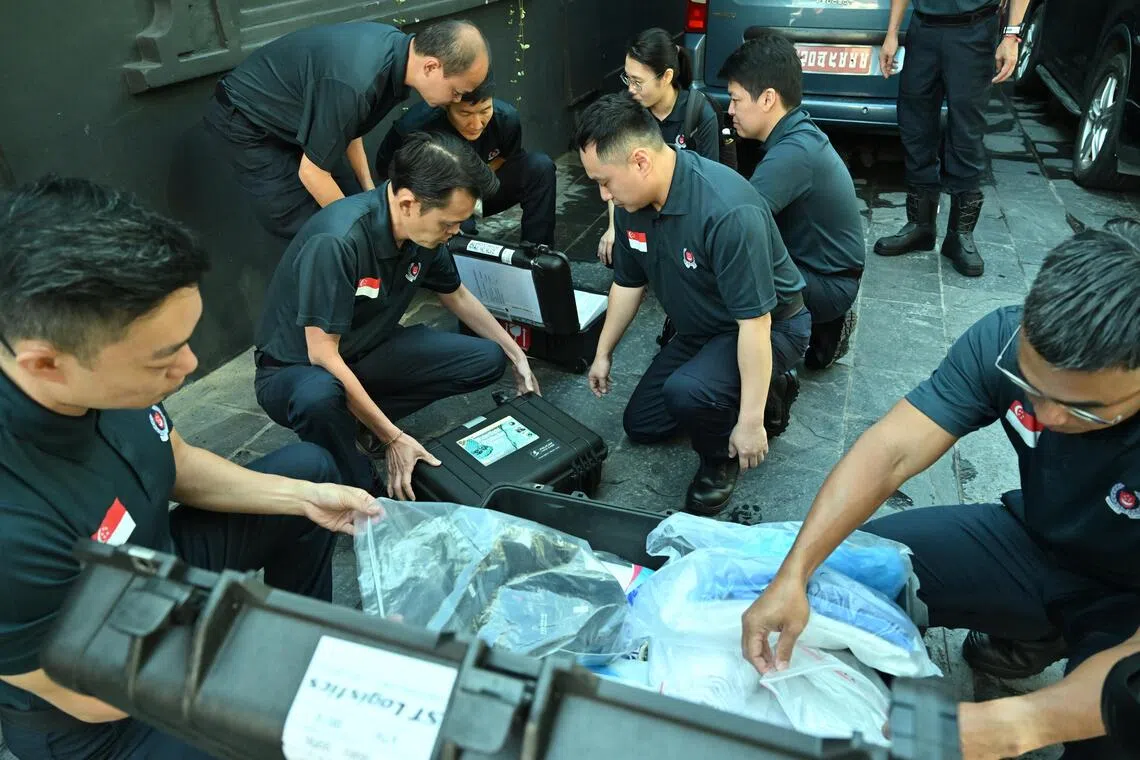
They are in Nepal to support the local authorities with aerial surveillance and especially disaster victim identification. Read more at straitstimes.com.
新闻视频
Published Sep 06, 2026, 12:00 PM
Updated Sep 06, 2026, 07:04 PM
A 35-member Singapore Police Force team is aiding Nepal with disaster victim identification and drone training after the Aug 26 flash flood that killed over 1,300 people and left 5,000 missing.
The team uses fingerprinting, forensic pathology and DNA matching under INTERPOL protocols to identify victims of all nationalities.
Singapore’s Ministry of Foreign Affairs and Government have provided humanitarian aid and are support Nepal's rescue efforts, prioritising recovery and identification to bring closure to families, including nine missing Singaporeans.
KATHMANDU – As rescue and relief operations continue in Nepal following the devastating Aug 26 flash flood, a 35-member team of the Singapore Police Force (SPF) is on the ground to support the local authorities with aerial surveillance and especially disaster victim identification.
The team, which began arriving in Nepal from Sept 2, includes officers trained in fingerprint lifting and photography, as well as specialists in fingerprint examination from the Integrated Forensics Service under the Home Team Science and Technology Agency.
The team is still assessing the situation on the ground, said Assistant Commissioner of Police Patrick Tan, the contingent commander of the team in Nepal.
“For now, we are focusing on disaster victim identification as well as training Nepali police to operate drones to support their search and rescue operations,” he told The Straits Times.
Assistant Commissioner of Police Eugene Wang, the commander of the SPF’s Disaster Victim Identification (DVI) team in Nepal, said his team’s mission is to help identify victims of all nationalities, not just Singaporeans.
“We are not able to isolate and say we target only the Singaporeans. Since the victims are of many nationalities, it is a collaborative effort, involving many countries.
“We are here to help in the collective effort to identify the victims so that we can bring reconciliation and relief to the families,” he said.
Nine Singaporeans have been reported missing since the flood, which has killed at least 1,300 people so far.
Assistant Commissioner of Police Patrick Tan (left) and Assistant Commissioner of Police Eugene Wang in Kathmandu, Nepal, on Sept 5. ST PHOTO: DESMOND FOO
Assistant Commissioner of Police Patrick Tan (left) and Assistant Commissioner of Police Eugene Wang in Kathmandu, Nepal, on Sept 5.
ST PHOTO: DESMOND FOO
Wang said he was most struck by the magnitude of the situation. “More than a thousand bodies have been recovered, but more than 4,000 are still missing. That’s over 5,000 people of different nationalities.”
The SPF team also comprises a forensic pathologist and a forensic technical officer from the Health Sciences Authority, who both play critical roles in post-mortem examinations, documentation and sample collection for forensic identification. These capabilities are particularly important where bodies are decomposed, fragmented or recovered far from the original disaster site, making visual recognition unreliable.
At hospitals in Nepal’s capital Kathmandu, SPF’s DVI team is collecting fingerprints from bodies brought to mortuaries, in coordination with the Nepali police, forensic and health officials.
Back in Singapore, the SPF is collecting information – such as X-rays or medical records obtained before the person went missing – from the families of the missing people, as well as DNA samples.
Wang explained that Singapore will provide the information to Nepal, which will carry out the matching.
Under the DVI protocol of the INTERPOL, the country that experienced the disaster does the DNA matching.
Besides Singapore, countries such as India, China, Japan, South Korea and Australia have also sent help, ranging from forensic identification teams and specialised tunnel-rescue experts to rapid response teams and logistics coordinators.
While the SPF team comprises members experienced in identifying victims following disasters in places such as Phuket, Thailand, which was hit by a tsunami in 2004, the massive flash flood in Nepal presents unique challenges.
“Typically in a flood situation, by this point, the body is badly decomposed. The body can be quite severely damaged, even coming in fragments. So that creates a lot more challenges in terms of identification and fingerprint collection.
“But we have been quite successful in collecting information,” said Wang.
Meanwhile, a crisis response team from Singapore’s Ministry of Foreign Affairs (MFA) has been in Nepal since Aug 27 .
The MFA team travelled to some affected areas with the Nepali authorities to assess the damage.
Abraham Tan, First Secretary (Political) at the High Commission of the Republic of Singapore in New Delhi, said: “I think one of the biggest challenges has been the absolute devastation of infrastructure; 40km to 50km of roads have been washed away and at least 20 bridges destroyed.
“That has hugely complicated rescue and recovery operations as the authorities cannot access the actual flood-affected areas.”
The Nepali police and armed forces have had to use helicopters and drones, but this too has been complex in the narrow valley below the Himalayas, which has limited airspace for rescue and recovery operations.
“Our initial mission was to find information about missing Singaporeans who were caught up in the flash floods near the Nepal-China border. But we figured that we needed to support Nepal in rescue operations.
“This meant drones, supplies and information on last known locations or other data that could potentially help to narrow down the search,” said Tan, who is leading the MFA’s crisis response team in Nepal.
Abraham Tan, who is leading Singapore’s Ministry of Foreign Affairs’ crisis response team in Nepal, pictured here in Kathmandu. ST PHOTO: DESMOND FOO
Abraham Tan, who is leading Singapore’s Ministry of Foreign Affairs’ crisis response team in Nepal, pictured here in Kathmandu.
The Singapore Government has arranged humanitarian aid of $560,000, including essential medicine, relief supplies and emergency survival items, for the survivors, as well as for the Nepali government’s operations.
This will arrive in Nepal early next week .
Ten days after the flood, the priority for the Nepali authorities and international teams is twofold.
Even as they try to rescue people stuck in hydropower tunnels and those who made it to higher ground, they must simultaneously recover as many remains as they can.
Said Tan: “The families of the missing Singaporeans can expect that both the MFA and the SPF teams are going to do everything they can to identify and recover, if unfortunately, any of the missing Singaporeans have passed away.
“We will do everything we can to try and recover the remains, and, if requested, (we) can bring them back to Singapore so that the families can have closure,” he said.
Rohini Mohan is The Straits Times’ India Correspondent based in Bengaluru. She covers politics, business and human rights in the South Asian region.
Humanitarian aid/Disaster relief
发布于 2026 年 9 月 6 日 下午 12:00
更新于2026年9月6日晚上7:04
8 月 26 日,尼泊尔发生山洪暴发,造成 1300 多人死亡,5000 人失踪。事后,一支由 35 名成员组成的新加坡警察部队小组正在协助尼泊尔进行灾民身份识别和无人机培训。
该团队根据国际刑警组织的协议,利用指纹识别、法医病理学和 DNA 比对来识别所有国籍的受害者。
新加坡外交部和政府已提供人道主义援助,并支持尼泊尔的救援工作,优先进行遗体搜寻和身份识别,以慰藉包括九名失踪新加坡人在内的家属。
加德满都——在尼泊尔发生毁灭性的8月26日突发洪水后,救援和救济行动仍在继续,一支由35名成员组成的新加坡警察部队(SPF)小组已抵达当地,通过空中监视,特别是识别灾民,为当地政府提供支持。
该团队从 9 月 2 日开始陆续抵达尼泊尔,其中包括接受过指纹提取和摄影训练的官员,以及来自内政部科技局下属综合法医服务部门的指纹检验专家。
尼泊尔特遣队指挥官、助理警务处长帕特里克·谭表示,该小组仍在评估当地情况。
“目前,我们正集中精力识别灾难受害者,并培训尼泊尔警方操作无人机以支持他们的搜救行动,”他告诉《海峡时报》。
新加坡警察部队尼泊尔灾难受害者身份识别小组(DVI)指挥官、助理警务处长王永健表示,他的团队的任务是帮助识别所有国籍的受害者,而不仅仅是新加坡人。
“我们不能孤立地看待这个问题,说我们只针对新加坡人。由于受害者来自多个国家,这是一项涉及多个国家的合作行动。”
他说:“我们来到这里是为了协助各方共同努力,确认受害者身份,以便能够为受害者家属带来和解与慰藉。”
洪水过后,已有九名新加坡人被报道失踪,目前洪水已造成至少 1300 人死亡。
9月5日,尼泊尔警察助理总监陈柏杰(左)和王宇健在尼泊尔加德满都。(海峡时报摄影:傅德明)
9月5日,尼泊尔加德满都,助理警务处长Patrick Tan(左)和助理警务处长Eugene Wang。
圣路易斯照片:德斯蒙德·福
王先生说,他最震惊的是事态的严重性。“已经找到一千多具遗体,但仍有四千多人失踪。这可是五千多人,来自不同的国家。”
SPF团队还包括一名法医病理学家和一名来自卫生科学局的法医技术人员,他们在尸检、文件记录和法医鉴定样本采集方面发挥着至关重要的作用。当尸体已经腐烂、破碎或在远离原灾难现场的地方被发现时,这些能力尤为重要,因为在这种情况下,仅凭肉眼识别难以准确辨认。
在尼泊尔首都加德满都的医院里,SPF 的 DVI 团队正在与尼泊尔警方、法医和卫生官员协调,从送到太平间的尸体上采集指纹。
回到新加坡,新加坡警察部队正在从失踪人员的家属那里收集信息,例如失踪者失踪前获得的 X 光片或医疗记录,以及 DNA 样本。
王解释说,新加坡将向尼泊尔提供信息,由尼泊尔进行匹配。
根据国际刑警组织的DVI协议,发生灾难的国家进行DNA比对。
除了新加坡之外,印度、中国、日本、韩国和澳大利亚等国家也派出了援助力量,包括法医鉴定小组、隧道救援专家、快速反应小组和后勤协调员等。
虽然 SPF 团队的成员在识别灾害后的受害者方面经验丰富,例如在 2004 年遭受海啸袭击的泰国普吉岛,但尼泊尔的大规模突发洪水带来了独特的挑战。
“通常情况下,在洪水灾害中,尸体到了这个阶段已经严重腐烂。尸体可能损毁严重,甚至碎成碎片。因此,这给身份识别和指纹采集带来了更大的挑战。”
王说:“但我们在收集信息方面取得了相当大的成功。”
与此同时,新加坡外交部的一个危机应对小组自 8 月 27 日起一直在尼泊尔。
外交部小组与尼泊尔当局一同前往一些受灾地区评估损失。
新加坡共和国驻新德里高级专员公署一等秘书(政治)陈亚伯拉罕表示:“我认为最大的挑战之一是基础设施的彻底破坏;40至50公里的道路被冲毁,至少20座桥梁被摧毁。
“这极大地增加了救援和恢复行动的复杂性,因为当局无法进入实际受洪水影响的地区。”
尼泊尔警方和武装部队不得不使用直升机和无人机,但这在喜马拉雅山脚下的狭窄山谷中也很复杂,因为那里的空域有限,救援和恢复行动的空间有限。
“我们最初的任务是寻找在尼泊尔-中国边境附近突发洪水中失踪的新加坡公民的信息。但我们认为我们需要支持尼泊尔的救援行动。”
“这意味着需要无人机、物资以及有关最后已知位置或其他可能有助于缩小搜索范围的数据,”领导外交部在尼泊尔危机应对小组的谭说道。
图为新加坡外交部驻尼泊尔危机应对小组组长陈亚发(Abraham Tan)在加德满都的照片。(海峡时报摄影:傅德明)
图中是领导新加坡外交部在尼泊尔危机应对小组的陈亚伯(Abraham Tan),摄于加德满都。
新加坡政府已安排了 56 万美元的人道主义援助,其中包括基本药品、救援物资和紧急生存用品,用于帮助幸存者以及支持尼泊尔政府的救援行动。
预计下周初抵达尼泊尔。
洪水过后十天,尼泊尔当局和国际团队的首要任务有两个。
即使在努力营救被困在水电站隧道中的人员和那些已经到达地势较高处的人员的同时,他们也必须尽可能多地找到遗骸。
陈先生说:“失踪新加坡人的家属可以放心,外交部和新加坡警察部队的队伍将会尽一切努力去辨认和搜寻,如果不幸的是,任何失踪的新加坡人已经去世。”
他说:“我们将尽一切努力找回遗骸,如果家属提出要求,我们可以将遗骸带回新加坡,以便他们能够得到慰藉。”
罗希尼·莫汉是《海峡时报》驻印度班加罗尔的记者,主要报道南亚地区的政治、商业和人权问题。
人道主义援助/灾害救援