CIA tracked Iranian leaders for months ahead of attacks that began with 3 strikes in 60 seconds在发动袭击前数月,中央情报局就对伊朗领导人进行了跟踪,袭击始于60秒内发动的三次打击。
The eventual barrage of U.S.-Israeli attacks on Iran came so quickly that they were nearly simultaneous, an Israeli military official said Sunday.
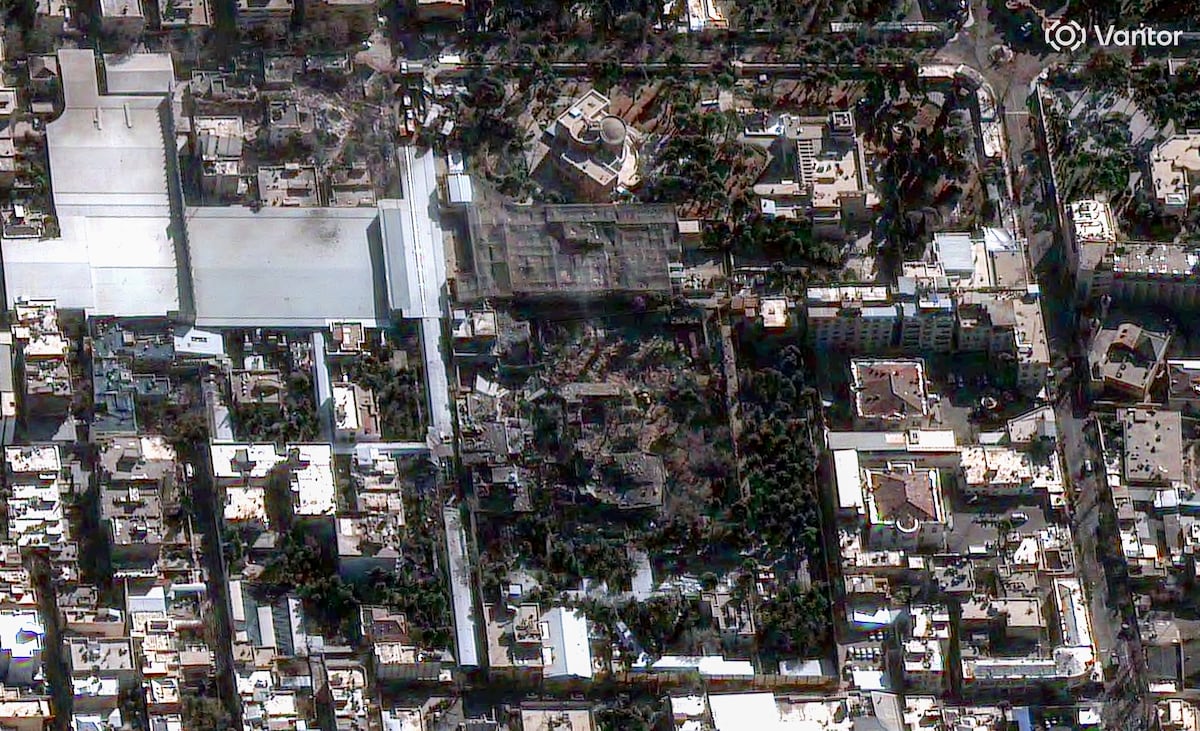
Israeli and American authorities spent weeks tracking the movements of senior Iranian leaders, including Supreme Leader Ayatollah Ali Khamenei, sharing information that allowed the strikes to be carried out in a surprise daylight attack, according to an Israeli military official and a person familiar with the operation.
The eventual barrage of U.S.-Israeli attacks on Iran came so quickly that they were nearly simultaneous — with three strikes in three locations hitting within a single minute — killing Khamenei and some 40 senior figures, including the head of the Revolutionary Guard and the country’s defense minister, the Israeli military official said Sunday.
The official insisted on anonymity to more fully detail the attack, but said that a variety of factors created a golden opportunity to take out much of Iran’s leadership, like weeks of training and monitoring the movements of senior figures as well as intelligence in real-time before the attack began that key targets were gathered together.
Striking by day also gave an additional element of surprise, said the official, who said that so many major, rapid-fire strikes were critical to keep key officials from fleeing after the first strike. The official said Israel closely cooperated with its U.S. counterparts and had used a similar tactic at the beginning of last June’s war — which resulted in the killing of several senior Iranian figures.
The official also noted Khamenei having posted defiant tweets taunting President Donald Trump in the days before the attack.
The details about the strikes came as the conflict entered its second day, with Trump saying in a video message Sunday that he expected it would continue until “all of our objectives are achieved.” He did not spell out what those objectives were.
The Republican president also said the U.S. military and its partners hit hundreds of targets in Iran, including paramilitary Revolutionary Guard facilities, Iranian air defense systems and nine warships, “all in a matter of literally minutes.”
CIA had long tracked top Iranian leaders
Before the attacks, the CIA had for months tracked the movements of senior Iranian leaders, including the country’s supreme leader.
The intelligence was shared with Israeli officials, and the timing of the strikes was adjusted in part because of that information about the Iranian leaders’ location, according to the person, who was not authorized to comment publicly and spoke on condition of anonymity.
The intelligence-sharing between U.S. and Israel reflects the preparation that went into the strikes, which continued for a second day Sunday after Khamenei’s killing threw the future of the Islamic Republic into uncertainty and raised the risk of escalating regional conflict.
Arkansas Republican Sen. Tom Cotton, chairman of the Senate Intelligence Committee, told CBS’ “Face the Nation” that tracking the movements of the supreme leader and the heads of other adversarial nations “is obviously one of the highest priorities of our intelligence community.”
The U.S. regularly shares intelligence with allies including Israel. Those partnerships, and the accuracy of the intelligence they yield, is often critical not only to the success of a military operation but also to the public’s support for it.
Virginia Sen. Mark Warner, the senior Democrat on the committee, told The Associated Press that, historically, “our working relationship with the Mossad and Israel is really strong.” Mossad is the Israeli spy agency.
Warner said he has serious concerns about the justification for the strikes, Trump’s long-term plans for the conflict and the risks that U.S. service members will face. The military announced that three American troops had been killed in the Iran operation.
“No tears will be shed over their leadership being eliminated, but always the question is: OK, what next?” Warner said.
Iran has signaled it’s open to talks with the US
A senior White House official said Iran’s “new potential leadership” has suggested it is open to talks with the United States. That official, who spoke on condition of anonymity to discuss internal administration deliberations, said Trump has indicated he’s “eventually” willing to talk but that for now the military operation “continues unabated.”
The official did not say who the potential new Iranian leaders are or how they made their alleged willingness to talk known. Separately, Trump told The Atlantic that he planned to speak with Iran’s new leadership.
“They want to talk, and I have agreed to talk, so I will be talking to them,” he said Sunday, declining comment on the timing.
The potential future diplomatic opening comes as the details were emerging about the detailed planning that went into the U.S.-Israeli strikes and some of the targets that were hit in Iran.
U.S. Central Command said that B-2 stealth bombers struck Iran’s ballistic missile facilities with 2,000-pound bombs. That mirrors the approach that the military took in June, when Trump agreed to deploy B-2 bombers to attack three key Iranian nuclear sites.
Trump said during his State of the Union speech last week that Iran had been building ballistic missiles that could reach the U.S. homeland — a justification he repeated again Saturday as he announced that the bombardment of Iran was underway.
Iran has not acknowledged that it is building or seeking to build intercontinental ballistic missiles. The U.S. Defense Intelligence Agency, however, said in an unclassified report last year that Iran could develop a militarily viable intercontinental ballistic missile by 2035 “should Tehran decide to pursue the capability.”
Federman reported from Jerusalem. Associated Press writers Matthew Lee, Will Weissert and Ben Finley contributed to this report.
据一名以色列军方官员和一名熟悉此次行动的人士透露,以色列和美国当局花了数周时间追踪伊朗高级领导人(包括最高领袖阿亚图拉·阿里·哈梅内伊)的行踪,并共享信息,使得此次袭击得以在光天化日之下突然发动。
以色列军方官员周日表示,美国和以色列最终对伊朗发动的猛烈攻击来得如此之快,几乎是同时发生的——一分钟内,三个地点遭到三次袭击——导致哈梅内伊和约 40 名高级官员丧生,其中包括革命卫队司令、国防部长等。
这位官员坚持匿名,以便更详细地描述这次袭击,但他表示,多种因素共同创造了一个除掉伊朗大部分领导层的绝佳机会,例如数周的训练和对高级人物动向的监控,以及在袭击开始前实时收集到的情报,这些情报表明关键目标已被集中在一起。
这位官员表示,白天发动袭击也增加了突袭的奇袭效果。他还说,如此多的大规模快速打击至关重要,可以防止关键官员在第一次打击后逃离。这位官员表示,以色列与美国方面密切合作,并在去年六月战争初期就采用了类似的策略——那次行动导致多名伊朗高级官员丧生。
这位官员还指出,在袭击发生前的几天里,哈梅内伊曾发布挑衅性的推文,嘲讽美国总统唐纳德·特朗普。
冲突进入第二天之际,有关空袭的细节也随之公布。特朗普周日在一段视频讲话中表示,他预计冲突将持续到“我们所有目标都实现为止”。但他并未具体说明这些目标是什么。
这位共和党总统还表示,美国军方及其伙伴在短短几分钟内袭击了伊朗境内的数百个目标,包括准军事革命卫队设施、伊朗防空系统和九艘军舰。
中央情报局长期以来一直在追踪伊朗高层领导人。
在袭击发生前,中央情报局已经跟踪伊朗高级领导人(包括该国最高领袖)的行踪数月之久。
据一位不愿透露姓名的人士称,情报已与以色列官员分享,袭击时间的调整部分原因在于掌握了有关伊朗领导人位置的信息。该人士未被授权公开评论此事。
美国和以色列之间的情报共享反映了对此次袭击的准备工作。在哈梅内伊遇害后,袭击持续了第二天,即周日。哈梅内伊遇害使伊朗伊斯兰共和国的未来陷入不确定性,并增加了地区冲突升级的风险。
参议院情报委员会主席、阿肯色州共和党参议员汤姆·科顿在接受哥伦比亚广播公司“面对国家”节目采访时表示,追踪最高领导人和其他敌对国家领导人的动向“显然是我们情报部门最重要的优先事项之一”。
美国经常与包括以色列在内的盟友分享情报。这些伙伴关系以及它们所获得的情报的准确性,不仅对军事行动的成功至关重要,而且对公众对军事行动的支持也至关重要。
弗吉尼亚州参议员马克·沃纳是该委员会的资深民主党成员,他告诉美联社,从历史上看,“我们与摩萨德和以色列的工作关系非常牢固。”摩萨德是以色列的间谍机构。
华纳表示,他对此次空袭的合理性、特朗普对这场冲突的长期计划以及美军士兵将面临的风险深表担忧。军方宣布,三名美军士兵在伊朗行动中丧生。
“他们的领导层被撤换,我们不会为此感到惋惜,但问题始终是:好吧,接下来该怎么办?”华纳说道。
伊朗已表示愿意与美国进行对话。
一位白宫高级官员表示,伊朗“新的潜在领导层”已暗示愿意与美国进行对话。这位官员因需讨论政府内部讨论而要求匿名,他表示特朗普已表明他“最终”愿意对话,但目前军事行动“仍在继续,丝毫未减”。
这位官员没有透露潜在的伊朗新领导人是谁,也没有说明他们是如何表明愿意对话的。另据报道,特朗普告诉《大西洋月刊》,他计划与伊朗新领导层对话。
“他们想谈谈,我也同意谈谈,所以我将会和他们谈谈,”他周日表示,但拒绝就谈话时间发表评论。
随着有关美以空袭的详细计划以及伊朗境内部分被击中目标的细节逐渐浮出水面,未来可能出现的外交契机也随之出现。
美国中央司令部称,B-2隐形轰炸机使用2000磅炸弹袭击了伊朗的弹道导弹设施。这与军方6月份采取的策略如出一辙,当时特朗普同意部署B-2轰炸机袭击伊朗的三个关键核设施。
特朗普在上周的国情咨文中表示,伊朗一直在建造能够打到美国本土的弹道导弹——周六,他在宣布对伊朗进行轰炸时再次重申了这一理由。
伊朗尚未承认正在研制或寻求研制洲际弹道导弹。然而,美国国防情报局去年在一份非机密报告中指出,如果德黑兰决定发展这项能力,伊朗可能在2035年之前研制出具有军事实用价值的洲际弹道导弹。
费德曼从耶路撒冷报道。美联社记者马修·李、威尔·韦瑟特和本·芬利对本报道亦有贡献。