Missiles, drones and smuggled weapons: How the Houthis keep striking back导弹、无人机和走私武器:胡塞武装如何持续反击
PARIS, Oct 16 — Yemen’s Iran-backed Houthis have built up a missile and drone arsenal capable of launching varied and sustained strikes, as Saudi Arabia and the Yemeni...
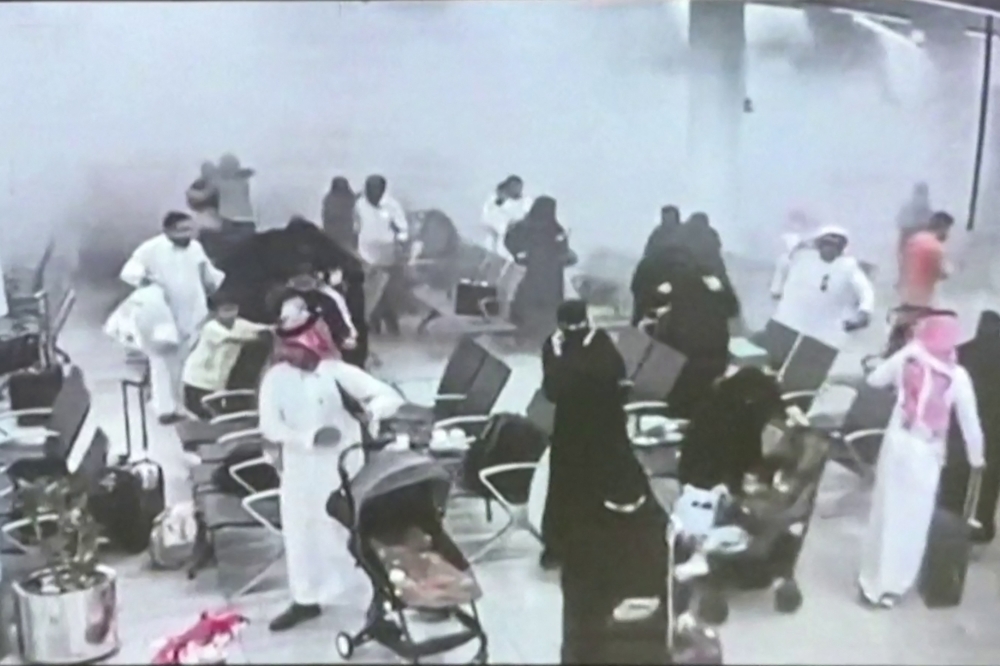
Since early September 2026, Yemen's Iran-backed Houthis have resumed hostilities against Saudi Arabia, launching missile and drone strikes targeting critical infrastructure, triggered by an earlier Saudi bombardment of Sanaa's airport.
The Houthis possess a diverse array of ballistic missiles and drones, some derived from Iranian models, with stockpiles acquired from seized arsenals or smuggled parts.
While Iran provides substantial military support, including missiles and UAV systems, the Houthis operate independently as strategic partners rather than proxies.
Their resilience, developed through enduring previous conflicts, enables them to sustain prolonged engagements.
PARIS, Oct 16 — Yemen’s Iran-backed Houthis have built up a missile and drone arsenal capable of launching varied and sustained strikes, as Saudi Arabia and the Yemeni government it backs are finding out.
‘Tit for tat’ strategy
Since early September, the Houthis have struck key oil infrastructure and airports across Saudi Arabia, notably Riyadh’s airport, which has been targeted 20 times.
They have also unsuccessfully targeted the cities of Medina and Mecca.
The trigger for their return to hostilities, after a four-year truce, was a Saudi bombardment of the airport in Sanaa, Yemen’s capital, in July to prevent a Houthi delegation from landing there.
Since then, there have been “tit-for-tat” military strikes, said April Longley Alley, a specialist on Yemen at the Washington Institute think tank.
“The Houthis framed this campaign as blockade for blockade, airport for airport, escalation for escalation,” she said.
The Houthis possess a wide range of ballistic missiles and drones, which they are also using to strike targets in the Bab al-Mandab Strait at the entrance to the Red Sea.
The group’s missile stocks partly come from arsenals seized when it took Yemen’s capital, Sanaa, in 2014, as well as “whole systems smuggled in, or self-manufactured systems built from parts that were themselves smuggled into Yemen, primarily via the Arabian Sea”, explained Niranjan BS, a strategic weapons analyst at Jane’s, the open-source intelligence company.
According to the International Institute for Strategic Studies’ Military Balance database, the Houthis have several types of medium-range missiles, some derived from Iranian models such as the Kheibar Shekan.
They also have short-range missiles, including the Asef anti-ship missile, derived from Iran’s Khalij Fars class of missile, noted the Wilson Center think tank.
In addition, the Houthis have a range of cruise missiles from Iran’s Quds missile family, with the Version 4 believed to have a range of 2,000 kilometres (1,200 miles), according to the Wilson Center.
They also have a range of aerial and maritime drones, at least some of which are derived from Iranian models.
The Waeid-1 and Waeid-2 aerial drones, for example, are “local copies of the Iranian Shahed-131 and Shahed-136 one-way attack UAVs (unmanned aerial vehicles) respectively”, Niranjan said.
“Iran has provided critical military assistance to the Houthis, particularly with the delivery of missiles and unmanned aerial vehicle (UAV) systems,” the Middle East Institute said in a report.
“Missile and UAV parts are designed and manufactured in Iran and smuggled into Yemen via small boats, container ships, or over the Oman-Yemen border, where they are assembled,” it said.
However, Danny Citrinowicz, an Israeli analyst specialising in Iran, cautioned that the Houthis “see themselves as partners of Iran, not proxies. This is why when people are saying Iran instructed the Houthis, it’s not working like that”.
“The Iranians have a strong presence in Yemen,” established by the Quds Force, the foreign operations arm of Iran’s Islamic Revolutionary Guard Corps, he said at a recent conference in Paris.
But those operatives only advise; they do not decide Houthi operations, he said.
In June 2024, the US Treasury imposed sanctions on a man in China suspected of links to the Houthis, who it said played “a key role in procuring materials that enable Houthi forces to manufacture advanced conventional weapons inside Yemen”.
Having already weathered years of conflict, the Houthis are seen as capable of using their arsenal for a long time to come.
“We need to remember with the Houthis that they have withstood punishing air campaigns before, from the Saudis, from the Americans, and from the Israelis,” said Longley Alley of the Washington Institute.
“This is a battle-hardened group, and they have much less to lose than the Saudis.”
She added that “the Houthis are probably calculating that they can go longer because they’re used to absorbing these strikes”. — AFP
North Korea advances AI weapons programme with new precision-guided torpedo
French navy seizes 8.6 tonnes of drugs in Caribbean and Atlantic operations
Putin claims positive battlefield gains as Russia pushes to capture Donetsk
Man detained to assist in murder probe after body found by roadside in Johor, iron rod seized
Police receive nine reports on suspicious packages at Tampin, Nilai schools
Baby’s body found in Kuala Berang drain missing head and hand, police investigating
自 2026 年 9 月初以来,也门伊朗支持的胡塞武装恢复了对沙特阿拉伯的敌对行动,发动导弹和无人机袭击,目标是关键基础设施,起因是沙特阿拉伯此前轰炸了萨那机场。
胡塞武装拥有种类繁多的弹道导弹和无人机,其中一些源自伊朗型号,其库存来自缴获的军火库或走私的零部件。
虽然伊朗提供了大量的军事支持,包括导弹和无人机系统,但胡塞武装是作为战略伙伴而非代理人独立运作的。
他们通过经历以往的冲突而培养出的韧性,使他们能够持续进行长期的军事行动。
巴黎,10 月 16 日——也门胡塞武装(伊朗支持)已经建立起一套导弹和无人机武库,能够发动各种持续打击,沙特阿拉伯及其支持的也门政府正在亲身经历这一过程。
“以牙还牙”策略
自 9 月初以来,胡塞武装袭击了沙特阿拉伯各地的重要石油基础设施和机场,特别是利雅得机场,该机场已被袭击 20 次。
他们还曾试图袭击麦地那和麦加两座城市,但均未成功。
在长达四年的停火之后,双方重燃战火的导火索是沙特阿拉伯在7月份轰炸了也门首都萨那的机场,以阻止胡塞武装代表团在那里降落。
华盛顿智库也门问题专家艾普丽尔·朗利·艾利表示,自那以后,双方就发生了“以牙还牙”的军事打击。
她说:“胡塞武装将这场行动描述为以封锁还封锁,以机场还机场,以升级还升级。”
胡塞武装拥有种类繁多的弹道导弹和无人机,他们还利用这些武器袭击红海入口处的曼德海峡的目标。
据开源情报公司简氏防务周刊的战略武器分析师尼兰詹·BS解释,该组织的导弹库存一部分来自2014年占领也门首都萨那时缴获的武器库,一部分来自“走私进来的整个系统,或者用走私到也门的零部件自行制造的系统,主要通过阿拉伯海走私进来”。
根据国际战略研究所的军事平衡数据库,胡塞武装拥有几种类型的中程导弹,其中一些源自伊朗型号,例如“海巴尔·谢坎”导弹。
威尔逊中心智库指出,他们还拥有短程导弹,包括源自伊朗“哈利吉·法尔斯”级导弹的“阿塞夫”反舰导弹。
此外,据威尔逊中心称,胡塞武装还拥有伊朗圣城导弹系列的多种巡航导弹,其中4型导弹的射程据信为2000公里(1200英里)。
他们还拥有一系列空中和海上无人机,其中至少有一些源自伊朗的型号。
例如,Waeid-1 和 Waeid-2 无人机分别是“伊朗 Shahed-131 和 Shahed-136 单向攻击无人机的本地仿制品”,Niranjan 说。
中东研究所在一份报告中称:“伊朗向胡塞武装提供了关键的军事援助,特别是导弹和无人机系统。”
声明称:“导弹和无人机部件在伊朗设计和制造,然后通过小船、集装箱船或越过阿曼-也门边境走私到也门,并在那里组装。”
然而,专门研究伊朗问题的以色列分析人士丹尼·西特里诺维奇警告说,胡塞武装“将自己视为伊朗的伙伴,而不是代理人。这就是为什么当人们说伊朗指示胡塞武装行动时,事实并非如此。”
“伊朗在也门拥有强大的影响力,”他在最近于巴黎举行的一次会议上说,“这种影响力是由伊朗伊斯兰革命卫队海外行动部门圣城旅建立的。”
但他表示,这些特工只是提供建议,并不决定胡塞武装的行动。
2024 年 6 月,美国财政部对一名身在中国的男子实施制裁,该男子被怀疑与胡塞武装有联系。美国财政部称,此人在“为胡塞武装在也门境内制造先进常规武器提供物资方面发挥了关键作用”。
经历了多年的冲突,胡塞武装被认为有能力在未来很长一段时间内继续使用其武器库。
“我们需要记住,胡塞武装以前曾遭受过来自沙特阿拉伯、美国和以色列的严厉空袭,”华盛顿研究所的朗利·阿利说。
“这是一支身经百战的队伍,他们比沙特人没什么可失去的。”
她补充说,“胡塞武装可能认为他们可以坚持更长时间,因为他们已经习惯了承受这些打击。”——法新社
朝鲜人工智能武器计划取得进展,推出新型精确制导鱼雷
法国海军在加勒比海和大西洋行动中缴获8.6吨毒品
普京声称俄罗斯在顿涅茨克战役中取得积极战果,俄罗斯正全力夺取顿涅茨克。
柔佛州路边发现一具尸体,一名男子被拘留协助谋杀案调查,警方缴获一根铁棍。
警方接到九起关于淡边、汝来学校可疑包裹的报告。
警方正在调查瓜拉勿浪排水沟发现的婴儿尸体,尸体缺少头部和一只手。