Ill-fated Gaza pier mission lacked sufficient training, equipment: IG监察长办公室:加沙码头行动失败的原因是缺乏足够的训练和装备。
The Defense Department's Gaza pier mission resulted in 62 personnel being injured and at least $31 million in damages, federal investigators found.
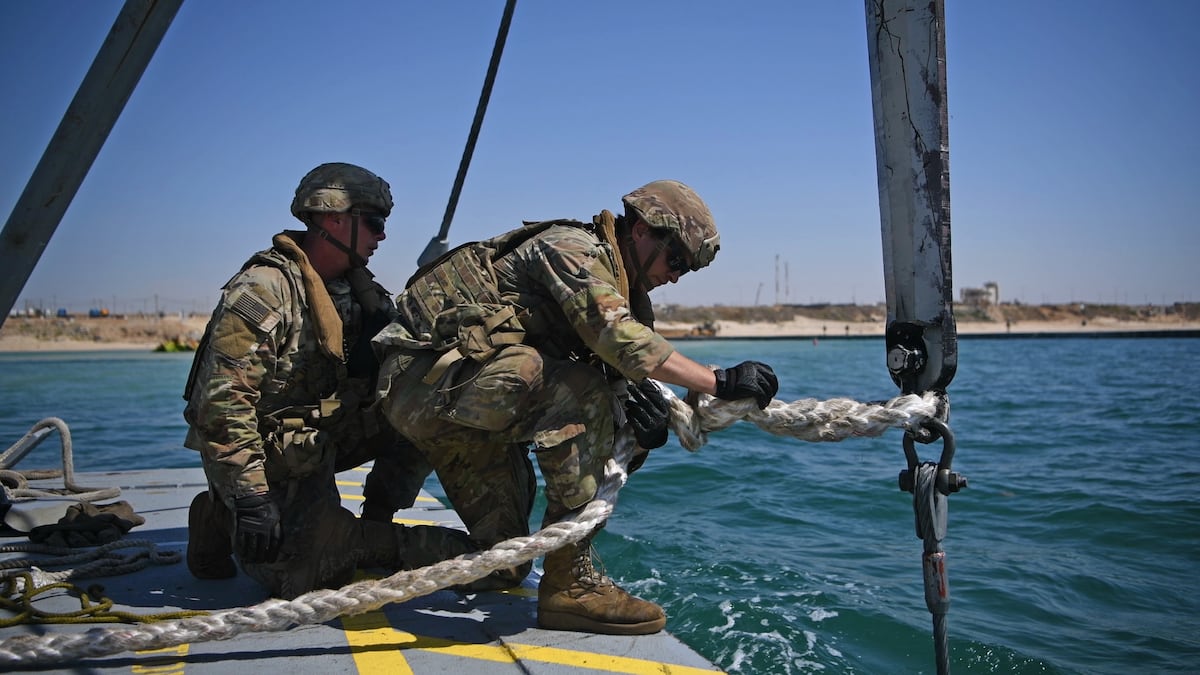
In March 2024, then-President Joe Biden announced the U.S. would create a new pathway for international aid into war-torn Gaza: a floating pier system operated by the Army and Navy known as Joint Logistics Over-the-Shore , or JLOTS. Later that month, construction was underway on the pier; but it was unceremoniously shut down for good in July, having spent only 20 days active amid equipment failures and insurmountable sea conditions.
Now, a new report from the Defense Department’s independent watchdog reveals just how ill-prepared the military services were to build the floating pier to Gaza. It found, among other things, mission planners failed to identify environmental factors, such as beach conditions and sea states , likely to affect the success of JLOTS; Army and Navy equipment was not interoperable and caused damage when combined; and cuts to training and resources further challenged the operation’s success.
The DOD Office of Inspector General report, dated Friday, recommends the creation of a new working group focused on JLOTS, a report to the defense secretary and the Joint Staff identifying gaps in its capabilities and better communication between the services, particularly through U.S. Transportation Command, which coordinated the mission.
The JLOTS pier, built under the mission name Operation Neptune Solace, was not a complete failure. During its operational period, it delivered some 19.4 million pounds of food aid to Gaza , enough to feed half a million Palestinian civilians for a month. But the IG found that its usefulness was badly curtailed by planning and resourcing failures, some of which had been observed for years prior to the mission.
While DOD had run 11 JLOTS exercises in the decade prior to the Gaza operation, the 84-page report found, neither the Army nor the Navy JLOTS packages met service standards for mission readiness, including equipment mission-capable rates. The actual readiness rates and unit manning shortages are redacted in the report, but it does note that the lack of resourcing had clear consequences.
“According to [U.S. Army 7th Transportation Brigade (Expeditionary)] officials, manning shortages delayed the deployment of some Army watercraft for Operation Neptune Solace,” investigators wrote.
Officials with Navy Beach Group One, investigators added, said the unit “had to pull together every person they could to sufficiently staff vessels in accordance with Navy requirements.”
Between 2018 and 2023, the Army and Navy had completed major divestments of equipment the JLOTS system required, it found, including roughly half the Army’s watercraft, or 64 out of 134, and one of the Navy’s two JLOTS-capable units, Amphibious Construction Battalion 2. Officials in units involved with the deployment to Gaza “expressed concern at the Services’ divestment of JLOTS capabilities and stated their belief that the DoD’s current JLOTS capabilities were not sufficient to meet projected needs,” the report found.
And the JLOTS training that had occurred at the DOD level had not trouble-shot a major problem with the Gaza deployment: the fact that the Army and Navy equipment was not meant to be used together. Both Army and Navy officials, the report said, had cited issues with the other service’s pier gear. The Improved Navy Lighterage System, or INLS, and the Army’s roll-on, roll-off discharge facility — both versions of floating docks — sat at different heights in the water. The Navy gear warped Army boat ramps, while the Army boats punched “a bunch of holes” into Navy docks, officials told investigators.
An image published in the report shows an Army vessel with gouges in the base and the words “total loss” spray-painted on the side.
While the Army’s damage assessment is redacted, the Navy reported damage to 27 boats and INLS equipment totaling about $31 million. U.S. Central Command reported that 62 U.S. personnel were also injured during Neptune Solace, the IG reported, although the manner of the injuries and how they took place was not provided.
One service member died as a result of injuries sustained during non-combat duties on the mission. Army Sgt. Quandarius Stanley died in October after being critically injured in May when high winds and heavy seas damaged the pier, causing four Army vessels to become beached, The Associated Press reported at the time.
A photo published in the DOD IG report shows damage to an Army boat inflicted by a Navy dock component during the Gaza pier mission. (U.S. Army 7th Transportation Brigade (Expeditionary) via DoD IG.)
Army and Navy communication systems weren’t interoperable either, the report found — a problem highlighted in earlier JLOTS exercises. As a result, the services were sometimes left without secure communications, according to the IG.
On top of insufficient training and equipping, planning also fell short, the IG found. Despite clear sea state limits established for JLOTS, planners in the services and Geographic Combatant Commands “did not fully identify or consider mission-specific requirements, such as beach conditions, average sea states, and other factors likely to affect the ability to successfully conduct a JLOTS operation,” and lacked information specific to the Gaza region.
The report recommended the Army and the Navy individually review their JLOTS capabilities and determine what changes need to be made to meet mission requirements, which service leaders agreed with. It also called on U.S. Transportation Command to develop JLOTS mission-essential task lists and establish other measures to ensure JLOTS missions had the resources they needed.
While TRANSCOM partially concurred, the IG stated its responses did not address how the command planned to better fulfill its coordinating responsibilities for JLOTS. It requested TRANSCOM submit a full report detailing such a plan within 30 days.
Editor’s note: This report has been updated to reflect the date of Sgt. Quandarius Stanley‘s death.
2024年3月,时任总统乔·拜登宣布,美国将为国际援助进入饱受战火蹂躏的加沙地带开辟一条新通道:由陆军和海军共同运营的浮动码头系统,名为“联合岸上后勤保障系统”(JLOTS)。当月晚些时候,码头开始动工建设;但由于设备故障和恶劣海况,仅运行了20天,便在7月被草草关闭。
国防部独立监督机构发布的一份新报告揭露了军方在建造通往加沙的浮动码头方面准备不足的程度。报告发现,任务规划人员未能识别出可能影响联合海上平台行动(JLOTS)成功的环境因素,例如海滩状况和海况;陆军和海军的装备无法互操作,合并使用时反而造成了破坏;此外,训练和资源的削减也进一步阻碍了行动的成功。
国防部监察长办公室周五发布的报告建议成立一个新的工作组,专门负责联合后勤运输系统(JLOTS),并向国防部长和联合参谋部提交报告,指出该系统能力方面的差距,并加强各军种之间的沟通,特别是通过负责协调该任务的美国运输司令部。
根据“海王星慰藉行动”建造的JLOTS码头并非完全失败。在其运行期间,该码头向加沙运送了约1940万磅粮食援助,足以供50万巴勒斯坦平民食用一个月。但监察长发现,由于规划和资源方面的失误,该码头的效用受到了严重限制,而其中一些问题早在行动开始前几年就已存在。
这份长达84页的报告指出,尽管国防部在加沙行动前的十年间开展了11次联合后勤保障训练(JLOTS)演习,但陆军和海军的JLOTS训练方案均未达到任务准备就绪的军种标准,包括装备任务可用率。报告中隐去了实际的准备就绪率和部队人员短缺情况,但确实指出资源匮乏造成了明显的后果。
调查人员写道:“据美国陆军第7运输旅(远征)官员称,人员短缺导致一些陆军水上舰艇在‘海王星慰藉行动’中的部署被推迟。”
调查人员补充说,海军第一滩头部队的官员表示,该部队“不得不召集所有能找到的人,按照海军的要求为舰艇配备足够的人员”。
报告发现,在2018年至2023年间,陆军和海军已完成联合海上作战系统(JLOTS)所需装备的大量撤出,其中包括陆军约一半的水上舰艇(134艘中的64艘)以及海军两支具备JLOTS能力的部队之一——第二两栖建筑营。报告还指出,参与加沙部署的部队官员“对各军种撤出JLOTS能力表示担忧,并表示他们认为国防部目前的JLOTS能力不足以满足预计的需求”。
国防部层面开展的联合海上作业技术服务(JLOTS)培训并未解决加沙部署中的一个重大问题:陆军和海军的装备原本就不是设计用于协同使用的。报告指出,陆军和海军官员都曾提到对方码头设备存在问题。改进型海军驳船系统(INLS)和陆军的滚装滚卸设施——这两种都是浮动码头——在水中的高度不同。官员们告诉调查人员,海军的设备导致陆军船艇坡道变形,而陆军的船艇则在海军码头上撞出了“许多洞”。
报告中公布的一张图片显示,一艘陆军舰艇底部有凹痕,侧面喷涂着“完全损毁”的字样。
虽然陆军的损失评估报告已被隐去,但海军报告称,27艘舰艇和海军航空站(INLS)设备受损,总损失约3100万美元。监察长办公室报告称,美国中央司令部报告称,在“海王星慰藉”行动中,另有62名美军人员受伤,但并未提供受伤方式和受伤过程。
一名军人在执行任务期间因非战斗任务受伤身亡。据美联社当时报道,陆军中士昆达里厄斯·斯坦利于10月去世,此前他在5月份遭遇强风暴雨,码头受损,导致四艘陆军舰艇搁浅,他本人也身负重伤。
美国国防部监察长办公室发布的一张照片显示,在加沙码头任务期间,一艘陆军舰艇遭到海军码头部队的破坏。(美国陆军第7运输旅(远征)供图,经美国国防部监察长办公室发布。)
报告还发现,陆军和海军的通信系统也无法互操作——这个问题在之前的联合后勤保障演习中就已凸显。监察长指出,因此,各军种有时无法进行安全通信。
监察长发现,除了训练和装备不足外,计划也存在缺陷。尽管联合海上登陆作战(JLOTS)已明确规定了海况限制,但各军种和战区司令部的计划人员“并未充分识别或考虑任务的具体要求,例如海滩状况、平均海况以及其他可能影响联合海上登陆作战成功开展的因素”,并且缺乏加沙地区的具体信息。
该报告建议陆军和海军分别审查其联合后勤保障(JLOTS)能力,并确定需要做出哪些改变才能满足任务需求,军方领导人对此表示赞同。报告还呼吁美国运输司令部制定JLOTS任务关键任务清单,并采取其他措施,确保JLOTS任务拥有所需的资源。
尽管美国运输司令部部分同意,但监察长指出,其答复并未说明该司令部计划如何更好地履行其对联合后勤保障系统(JLOTS)的协调职责。监察长要求美国运输司令部在30天内提交一份详细说明该计划的完整报告。
编者按:本报告已更新,以反映昆达里厄斯·斯坦利中士的死亡日期。