Lithuania to lay antitank mines along its borders with Belarus, Russia立陶宛将在其与白俄罗斯和俄罗斯接壤的边境沿线布设反坦克地雷
The Ministry of Defense announced the decision on May 5, stressing the mines’ intended effect of restricting the movements of invading forces.
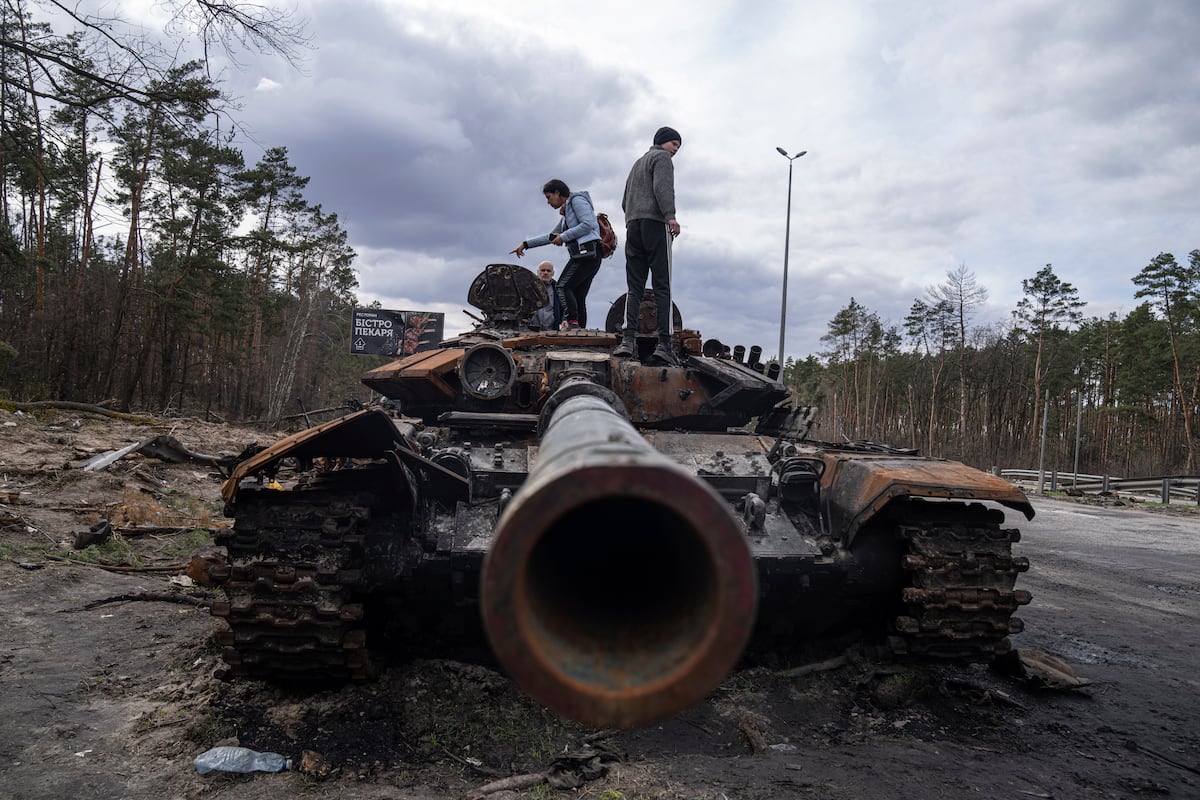
VILNIUS, Lithuania — The Lithuanian government will invest over €1 billion ($1.1 billion) over the next ten years to fortify its border protections near Belarus and Russia, with plans to purchase and install new antitank mines.
The Ministry of Defense announced the decision on May 5, stressing the mines’ intended effect of restricting the movements of invading forces.
“Counter-mobility measures are an important part of our national defense concept. … In the event of aggression, they would allow blocking and slowing down the actions of hostile states against Lithuania,” a ministry statement noted.
Over €800 million of the planned investment will be allocated to purchasing antitank mines and related systems.
The rest of the funds are lined up to prioritize the acquisition of electronic-warfare and counter-drone weapons, strengthening surveillance and early-warning systems, and increasing the mine-clearance capabilities of the Lithuanian military.
In parallel, Vilnius has also partnered with other Baltic nations, Estonia and Latvia, to implement the Baltic Defense Line project, seeking to bolster NATO’s eastern border to prevent possible adversary advances.
“Intensive work is underway to identify the geographical points where the countries’ engineering barriers need to converge to ensure the integrity of the Baltic Defense Lines,” the ministry statement added.
The initiatives come shortly after the government here, alongside with Latvia, Poland and Estonia, announced it would leave the Ottawa Convention, which forbids the use and stockpiling of anti-personnel landmines.
Last month, Latvia‘s Parliament officially voted to exit the international treaty ban, joining Finland , which announced its intention to withdraw on April 1. Finnish and Latvian officials have argued that their countries must reassess their defense strategies to respond more effectively to potential military threats.
The embrace of mines has sparked concerns among international human rights groups who have warned that unexploded munitions pose risks to civilians for decades.
Elisabeth Gosselin-Malo was a Europe correspondent for Defense News. She covers a wide range of topics related to military procurement and international security, and specializes in reporting on the aviation sector. She is based in Milan, Italy.
立陶宛维尔纽斯——立陶宛政府将在未来十年投资超过 10 亿欧元(11 亿美元),以加强其与白俄罗斯和俄罗斯接壤的边境防御,并计划购买和安装新的反坦克地雷。
国防部于5月5日宣布了这一决定,强调地雷的预期效果是限制入侵部队的行动。
“反机动措施是我们国防理念的重要组成部分。……一旦发生侵略,这些措施将有助于阻止和减缓敌对国家对立陶宛的行动,”国防部在一份声明中指出。
计划投资中将有超过 8 亿欧元用于购买反坦克地雷及相关系统。
其余资金将优先用于采购电子战和反无人机武器、加强监视和预警系统以及提高立陶宛军队的排雷能力。
与此同时,维尔纽斯还与其他波罗的海国家爱沙尼亚和拉脱维亚合作,实施波罗的海防线项目,旨在加强北约东部边界,防止可能的敌对势力推进。
该部声明还补充说:“目前正在加紧工作,以确定各国工程屏障需要汇合的地理点,以确保波罗的海防线的完整性。”
这些举措出台不久前,该国政府与拉脱维亚、波兰和爱沙尼亚政府一起宣布将退出《渥太华公约》,该公约禁止使用和储存杀伤人员地雷。
上个月,拉脱维亚议会正式投票决定退出国际条约禁令,与芬兰一道,芬兰于4月1日宣布打算退出该禁令。芬兰和拉脱维亚官员认为,两国必须重新评估其国防战略,以便更有效地应对潜在的军事威胁。
对地雷的接纳引发了国际人权组织的担忧,他们警告说,未爆炸的弹药几十年来一直对平民构成威胁。
伊丽莎白·戈斯林-马洛曾任《防务新闻》欧洲通讯员。她的报道涵盖军事采购和国际安全等广泛领域,尤其擅长航空领域的报道。她常驻意大利米兰。