Europe’s long-range strike project nears choice of lead contractors欧洲远程打击项目即将选定主承包商
A French parliamentary report describes Europe's effort catch up on conventional deterrence.
PARIS — The six European countries cooperating on a conventional long-range, ground-launched strike capability may announce the lead companies for the project in June, according to one of the co-authors on a French parliamentary report on the state of artillery.
The European Long-range Strike Approach (ELSA) coalition has identified 13 development pillars, and in June is expected to define who is responsible for what, said Jean-Louis Thiériot, a French deputy who sits on the National Assembly’s defense committee, in a hearing here last week.
The lead on each segment will be determined based on a “best athlete” approach, Thiériot said. France will play a “major role” through rocket builder Ariane Group for the ballistics segment, according to the lawmaker, who struck an optimistic tone about progress on ELSA.
“What is very interesting about this project is that it is indeed a coalition of volunteers and sovereign states, and it has been achieved without getting bogged down in the bureaucratic red tape that can often be encountered in more bureaucratic forms of cooperation,” Thiériot said.
“We are really at the beginning, but something is working,” he added.
France, Germany, Poland and Italy signed a letter of intent on the long-range strike initiative at a NATO summit in Washington in July 2024, with Sweden and the U.K. joining in October.
European NATO members have a capability gap in long-ranged strike compared with Russia, which operates several ground-launched ballistic and cruise missiles with ranges of between 500 kilometers and 2,500 kilometers, and capable of hitting targets across Europe, according to the International Institute for Strategic Studies
France’s current lack of a land-based, deep-strike capability creates a risk of nuclear deterrence being circumvented, with a gap between the lower threshold of nuclear deterrence and the maximum of what the conventional forces can do, according to the parliamentary report. ELSA could address that gap, with a capability separate from France’s plans to replace its rocket artillery .
Thiériot said there is political will to move forward on ELSA, combined with “manufacturers who will not get involved in cumbersome mechanisms such as the European Defence Fund, where you have to find the necessary number of partners, which means that you end up taking the SME that makes bolts to make ailerons.”
“There is a real desire for efficiency,” the deputy said. “It’s something that can work, both in the French interest and in the European interest, so it really seems like a good model to me. We’ll talk about it again in a year.”
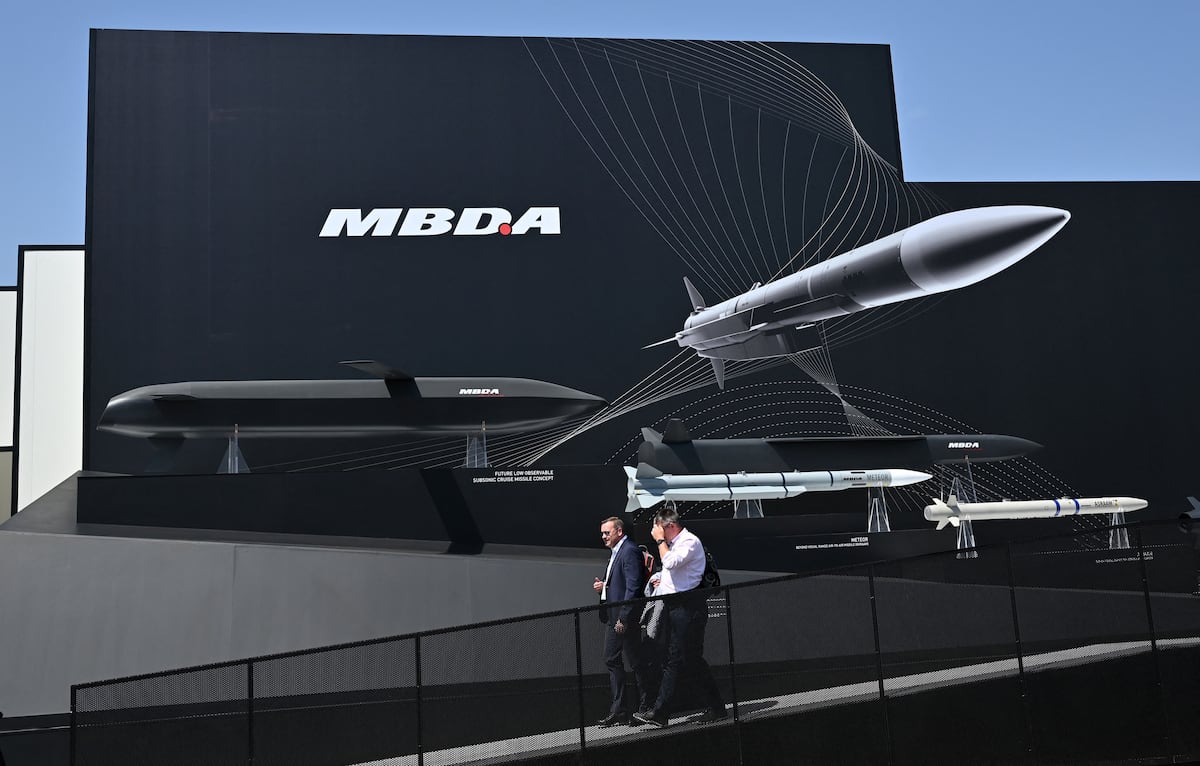
Ariane Group, MBDA, Safran and Thales all either didn‘t immediately respond to requests for comment, or had no immediate comment. MBDA has proposed its Land Cruise Missile, a land-based version of the company’s Missile de Croisière Naval, as a short-term solution for ELSA.
Ballistic and cruise-missile technologies each have comparative advantages, and ideally both technologies would be developed for strike capability in the range of 1,500 to 2,000 kilometers, the report said. Ballistic tech primarily focuses on fixed targets, while cruise missiles allow for precision strikes on fixed or mobile targets.
The ground-based, long-range strike capability would be a useful complement to existing air and sea-launched cruise missiles, according to the report. Diversifying delivery systems would significantly increase options available to political decision makers and provide an additional offensive vector for possible escalation management.
“The commitment of all joint strike assets at great depth would make it possible to combine trajectories and saturate the enemy’s defenses at specific points, forcing them into dilemmas,” the French artillery report said.
The deep strike capabilities of the French Navy and Air Force face constraints due to air defenses and access denial. A land-based system could offer greater flexibility, including for opportunistic targeting, according to the report.
Feedback from hearings and visits to Ukraine suggests interception of ground-based ballistic missiles by air defenses remains very low, “significantly lower” than for cruise missiles, according to Thiériot. If one technology were to be chosen due to budgetary constraints, developing ground-based ballistic technology for land-based long-range strike is more important, the report stated.
“I would add that the ideal solution would be to do both,” Thiériot said.
France’s work on nuclear deterrence and ballistic strike capability means it has companies such as Ariane Group able to “quickly master these capabilities,” Thiériot said.
Meanwhile, French defense manufacturer Turgis Gaillard on Wednesday announced a truck-mounted long-range strike system dubbed Foudre, able to fire both French and allied munitions, with the company saying it will present the system at the Paris Air Show in June.
France’s Directorate General for Armament is already working with a consortium of Safran and MBDA and another of Ariane Group and Thales to develop a tactical strike capability in the 150-kilometer range to replace the French Army’s remaining fleet of decades-old rocket launchers.
Turgis Gaillard has presented its system as complementary to what is being developed with the DGA, as the launcher would be able to fire the munitions developed by the two consortiums, according to Matthieu Bloch, a member of parliament and co-author of the artillery report.
Bloch said fire control and missiles for the launcher are critical and require a sovereign solution, whereas chassis and launch pods are non-critical elements.
Rudy Ruitenberg is a Europe correspondent for Defense News. He started his career at Bloomberg News and has experience reporting on technology, commodity markets and politics.
巴黎——据法国议会关于火炮状况报告的一位合著者称,正在合作研发常规远程陆基打击能力的六个欧洲国家可能会在6月份宣布该项目的牵头公司。
欧洲远程打击方案(ELSA)联盟已经确定了 13 个发展支柱,预计将在 6 月份明确各支柱的职责划分。法国国民议会国防委员会议员让-路易·蒂埃里奥上周在一次听证会上表示。
蒂埃里奥表示,各环节的领先者将根据“最佳运动员”原则确定。这位议员还表示,法国将通过火箭制造商阿丽亚娜集团在弹道学环节发挥“重要作用”,并对ELSA项目的进展持乐观态度。
蒂埃里奥表示:“这个项目非常有趣的地方在于,它确实是由志愿者和主权国家组成的联盟,而且它的实现并没有陷入官僚主义合作形式中经常遇到的繁文缛节。”
“我们确实还处于起步阶段,但有些事情正在奏效,”他补充道。
2024 年 7 月,法国、德国、波兰和意大利在华盛顿举行的北约峰会上签署了远程打击倡议意向书,瑞典和英国于 10 月加入。
根据国际战略研究所的说法,与俄罗斯相比,欧洲北约成员国在远程打击能力方面存在差距。俄罗斯拥有多种陆基弹道导弹和巡航导弹,射程在500公里至2500公里之间,能够打击欧洲各地的目标。
根据议会报告,法国目前缺乏陆基纵深打击能力,这造成了核威慑被规避的风险,核威慑的最低门槛与常规部队所能发挥的最大作用之间存在差距。ELSA项目可以弥补这一差距,其能力独立于法国的火箭炮替换计划。
Thiériot 表示,有政治意愿推进 ELSA 项目,同时“制造商们不愿参与像欧洲防务基金这样繁琐的机制,因为你必须找到足够多的合作伙伴,这意味着最终你会让生产螺栓的中小企业来生产副翼。”
这位议员说:“大家确实都渴望提高效率。这既符合法国的利益,也符合欧洲的利益,所以在我看来,这确实是一个很好的模式。我们一年后再来讨论这个问题。”
阿丽亚娜集团、MBDA、赛峰集团和泰雷兹集团均未立即回应置评请求,或表示暂不置评。MBDA已提出其陆基巡航导弹(该公司海军巡航导弹的陆基版本)作为ELSA的短期解决方案。
报告指出,弹道导弹和巡航导弹技术各有优势,理想情况下,这两种技术都应发展到1500至2000公里的打击范围。弹道导弹技术主要针对固定目标,而巡航导弹则可以对固定或移动目标进行精确打击。
报告指出,陆基远程打击能力将是对现有空射和海射巡航导弹的有效补充。运载系统的多样化将显著增加政治决策者的选择余地,并为可能的局势升级管理提供额外的进攻手段。
法国炮兵报告称:“纵深部署所有联合打击力量,可以组合不同的弹道,在特定地点饱和攻击敌人的防御,迫使敌人陷入两难境地。”
报告指出,由于防空系统和封锁措施的限制,法国海军和空军的纵深打击能力受到制约。陆基系统可以提供更大的灵活性,包括用于机会性打击。
根据蒂埃里奥的说法,听证会和对乌克兰的访问反馈表明,防空系统拦截陆基弹道导弹的成功率仍然很低,“远低于”巡航导弹的拦截成功率。报告指出,如果由于预算限制必须选择一种技术,那么发展用于陆基远程打击的陆基弹道导弹技术更为重要。
“我认为理想的解决方案是两者兼顾,”蒂埃里奥说道。
蒂埃里奥表示,法国在核威慑和弹道打击能力方面的工作意味着它拥有像阿丽亚娜集团这样的公司,能够“迅速掌握这些能力”。
与此同时,法国国防制造商图尔吉斯·盖拉尔(Turgis Gaillard)周三宣布推出一款名为“Foudre”的车载远程打击系统,该系统能够发射法国和盟军的弹药。该公司表示,将在6月份的巴黎航展上展示该系统。
法国军备总局已经与赛峰集团和MBDA集团组成的联合体以及阿里安集团和泰雷兹集团组成的联合体合作,开发射程150公里的战术打击能力,以取代法国陆军剩余的服役数十年的火箭发射器。
据议员兼炮兵报告合著者马修·布洛赫称,图尔吉斯·盖拉尔公司表示,其系统与德国国防军总局(DGA)正在开发的系统互补,因为该发射器能够发射这两个财团开发的弹药。
布洛赫表示,发射器的火控系统和导弹至关重要,需要自主解决方案,而底盘和发射舱则不是关键部件。
鲁迪·鲁伊滕贝格是《防务新闻》的欧洲记者。他的职业生涯始于彭博新闻社,拥有报道科技、大宗商品市场和政治方面的经验。