From weekend markets to a matcha network: How Kevin Chee built Matchaya从周末市集到抹茶连锁店:Kevin Chee 如何打造 Matchaya
Long before matcha took off in Singapore, Kevin Chee saw its business potential. More than a decade later, Matchaya has expanded from retail into a major distribution business.
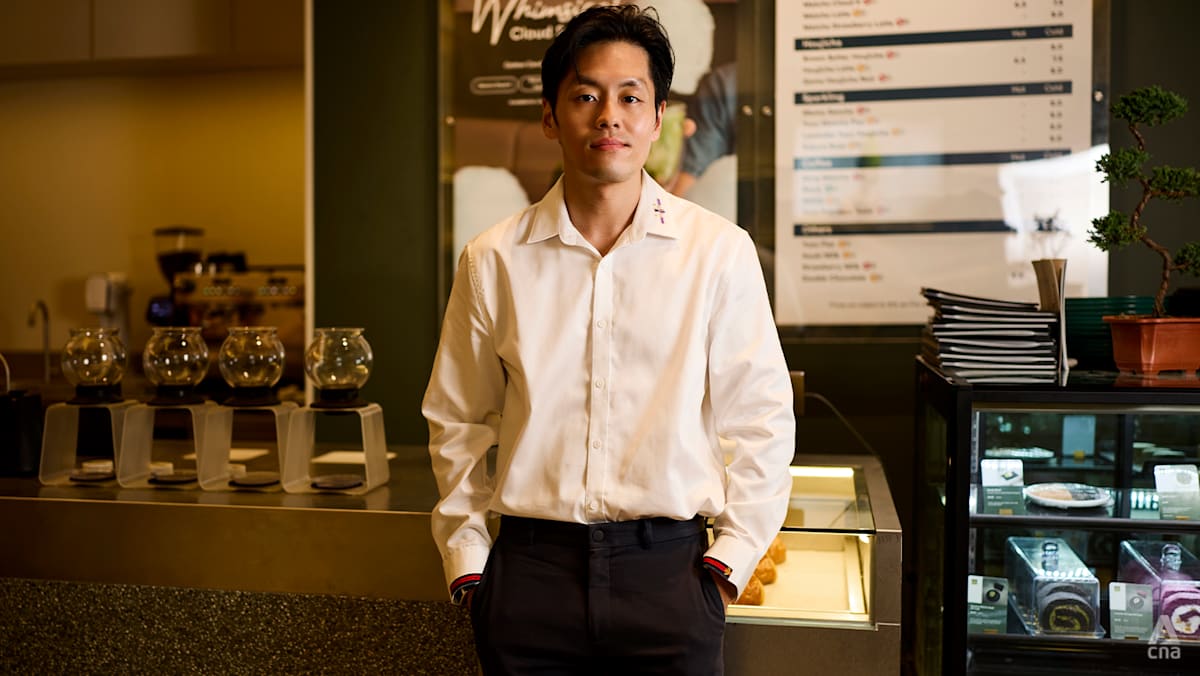
Long before matcha took off in Singapore, Kevin Chee saw its business potential. More than a decade later, Matchaya has expanded from retail into a major distribution business.
Matchaya founder Kevin Chee has spent more than a decade building the brand across retail, distribution and overseas expansion. (Photo: CNA/Aik Chen)
This audio is generated by an AI tool.
Every so often, a budding entrepreneur senses the gentle shifting of tectonic plates, those early tremors of a burgeoning cultural trend that can reap a windfall if they move early and fast. In 2014, that seismologist of the times was Kevin Chee, a then 27-year-old corporate rat who spotted an adjacent opportunity in the booming speciality coffee market. As we sat down to a fancy brew at his flagship Matchaya cafe in Tiong Bahru on a quiet weekday morning, Chee recalled looking into the mixed beverage market and zeroing in on matcha.
“At that time, people mainly bought matcha from Starbucks,” he said in his low, rapid-fire tone. “People thought of it more as a flavour. Like, matcha ice cream is Haagen-Dazs, and matcha chocolates are from Royce.”
Matcha as a category was still nascent in Singapore, but Chee got brewing anyway, preparing bottled matcha lattes after work to sell at weekend markets. His side gig blew up on social media, garnering 50 to 60 posts each day from happy customers. That was enough to persuade him to quit his job as a management trainee at DBS Bank and open Matchaya’s first outlet at Icon Village six months later – a 100-sq-ft space that ticked all the right boxes: a central location, good visibility and affordable rent .
What started as an after-work side hustle selling bottled matcha lattes soon led Kevin Chee to open Matchaya’s first store. (Photo: Matchaya)
Although he said he was winging it at the time, Chee knew even then that for his business to succeed, he would have to build a retail and distribution ecosystem. Fast forward a dozen years and Matchaya is now one of Singapore’s most established homegrown matcha brands, with two outlets at home and four in Indonesia. More significantly, Chee estimates that Matchaya supplies about half of the matcha used by Singapore’s cafes, restaurants and food manufacturers.
“The most important part then was to source directly from tea farms in Japan,” he recalled. Introductions from friends and several cold emails eventually yielded a contact in Shizuoka. One meeting led to another, and Chee soon built his own network of matcha suppliers, learning from them about the nuances of matcha production, quality and culture.
The Tiong Bahru flagship reflects Matchaya’s move further into speciality matcha and a more experience-led retail format. (Photo: Matchaya)
As his nascent business chugged along, Chee noticed more customers coming into the store to buy matcha powder. “Which prompted us to ask if they were cafe or restaurant owners,” he said. “It turns out they were and when we asked where they got their matcha from, they would say, my coffee supplier, my chocolate supplier or even their sugar supplier.”
Filling that gap in the market was easy. “We were already bringing matcha in at our best cost price and I saw an opportunity for collaboration and also free marketing.” And with that, Matchaya’s distribution business arm was born.
Supplying competitors with the very product on which you are building your brand might seem like a fool’s errand. Yet that is precisely what has set Matchaya apart in today’s sea of matcha cafes – and helped keep it afloat during tougher times.
Kevin Chee has built Matchaya around a simple idea – that growing the wider matcha ecosystem can benefit the brand too. (Photo: CNA/Aik Chen)
“At the end of the day, a business is run by numbers,” Chee said, adding that distribution helped Matchaya weather the ups and downs in its retail business, particularly during the COVID-19 pandemic. “Rather than portraying ourselves as someone who wants to be a gatekeeper for matcha supply, we now look at matcha as a form of network. We love our friends and competitors because we still feel that this is crucial for our ecosystem.”
THE REDISTRIBUTION OF MATCHA
The global appetite for matcha has resulted in a shortage that has sent prices sharply upwards. Unlike some crops, tea destined for matcha cannot simply be planted in response to a spike in demand and harvested the following season. “Typically, the growing cycle takes about three years,” Chee explained. He said prices from some Japanese tea suppliers have risen by as much as three and a half times in the past few years. “But I think supply will stabilise in the next two to three years.”
As Japanese matcha prices have risen, Chinese producers have stepped up production, offering a wider range of grades at lower prices. The powdered-tea tradition from which matcha developed originated in China, but it was in Japan that matcha evolved into the form we know today.
View this post on Instagram A post shared by matchaya® (@matchayasg)
A post shared by matchaya® (@matchayasg)
“What’s interesting right now is that a lot of Chinese matcha stores have set up in Singapore and they don’t just carry their network and operations across, but also their culture,” Chee added. “People have gotten a taste of Chinese matcha, and at their good price point, I think they are here to stay.”
Matchaya has begun offering Chinese matcha to commercial clients, allowing them in turn to offer lower prices to their customers. “We’ve come to realise that we can’t just focus on the mass premium,” Chee said. “The masses are typically where you also have to capture the market.”
That said, Matchaya serves only Japanese matcha at its retail stores. Consumers, Chee noted, have become increasingly discerning, moving from simply wanting to drink matcha to wanting to know more about what is in their brew – including the tea’s origin, cultivar, harvest and quality. In response, Matchaya has moved further into speciality matcha, including what the industry commonly markets as ceremonial-grade matcha.
The Whimsical Cloud Series is among Matchaya’s newer novelty drinks, combining matcha with coconut water, sea salt foam and cotton candy. (Photo: Matchaya)
In March 2026, Matchaya unveiled its new flagship store in Tiong Bahru, which Chee calls “Matchaya 3.0” – a more polished, experiential expression of the brand. Customers can watch their matcha being prepared at the counter, while the menu includes novelty drinks such as the Whimsical Cloud Series, featuring matcha mixed with coconut water and topped with sea salt foam and a cloud of cotton candy. The store also has a dining area serving Japanese-inspired dishes, including rice burgers designed to complement the tea programme.
All this is Chee’s now keenly honed seismometer at work. Having spent the last 12 years grinding against the shifting grounds of the matcha market, he is wise to its constant rumblings and ready to roll when the next fault line appears.
A single handpicked story that we think you shouldn't miss. Just one a day.
早在抹茶在新加坡流行起来之前,Kevin Chee 就看到了它的商业潜力。十多年后,Matchaya 已从零售业务发展成为一家大型分销企业。
Matchaya创始人Kevin Chee花费十余年时间,在零售、分销和海外扩张等领域打造了该品牌。(图片:CNA/Aik Chen)
这段音频由人工智能工具生成。
每隔一段时间,一位初出茅庐的企业家就能敏锐地察觉到板块的轻微移动,那是新兴文化潮流的早期震颤,如果他们能及早行动,就能获得丰厚的回报。2014年,这位“时代地震学家”便是当时27岁的企业白领Kevin Chee,他敏锐地发现了蓬勃发展的精品咖啡市场中蕴藏的商机。在一个工作日清晨,我们坐在他位于中峇鲁的旗舰店Matchaya咖啡馆里,一边品尝着精致的咖啡,一边听Chee回忆起他如何研究混合饮料市场,最终将目光锁定在抹茶上。
“那时候,人们主要在星巴克买抹茶,”他用低沉而快速的语调说道。“人们更多地把它当作一种口味。比如,抹茶冰淇淋是哈根达斯的,抹茶巧克力是Royce的。”
抹茶在新加坡当时还处于起步阶段,但Chee却开始着手制作,下班后便开始制作瓶装抹茶拿铁,并在周末市集上售卖。他的副业在社交媒体上迅速走红,每天都能收到50到60条来自满意顾客的留言。这足以让他辞去星展银行管理培训生的工作,并在六个月后于Icon Village开设了Matchaya的第一家门店——一个面积仅100平方英尺(约9平方米)的店面,却满足了他所有的期望:地处中心位置,醒目易见,租金也十分合理。
Kevin Chee最初只是在下班后兼职售卖瓶装抹茶拿铁,没想到却意外地开设了Matchaya的第一家门店。(图片:Matchaya)
尽管Chee当时表示自己是在摸着石头过河,但他那时就明白,要想生意成功,就必须建立起零售和分销生态系统。十几年过去了,Matchaya如今已成为新加坡本土最知名的抹茶品牌之一,在新加坡拥有两家门店,在印尼拥有四家。更重要的是,Chee估计,Matchaya供应了新加坡咖啡馆、餐厅和食品生产商所用抹茶的大约一半。
“当时最重要的是直接从日本的茶园采购,”他回忆道。通过朋友介绍和几封陌生邮件,他最终在静冈找到了一位联系人。一次会面促成了另一次会面,Chee很快建立起自己的抹茶供应商网络,并从他们身上学习抹茶生产、品质和文化的细微之处。
位于中峇鲁的旗舰店体现了Matchaya进一步向专业抹茶领域和更注重体验式零售模式转型。(图片:Matchaya)
随着他的生意逐渐步入正轨,Chee注意到越来越多的顾客进店购买抹茶粉。“这促使我们询问他们是否是咖啡馆或餐厅的老板,”他说。“结果发现他们确实是,当我们问他们抹茶是从哪里进货时,他们会说,来自我的咖啡供应商、巧克力供应商,甚至是糖供应商。”
填补市场空白轻而易举。“我们当时已经以最优成本价进货抹茶,我看到了合作的机会,也看到了免费推广的商机。”就这样,Matchaya的经销部门诞生了。
向竞争对手供应你赖以建立品牌的产品,这听起来似乎是徒劳之举。然而,这恰恰是 Matchaya 在如今抹茶咖啡馆林立的市场中脱颖而出的关键所在,也是它能在艰难时期生存下来的秘诀。
Kevin Chee 创立 Matchaya 的理念很简单——发展更广泛的抹茶生态系统也能使品牌受益。(图片:CNA/Aik Chen)
“归根结底,企业运营靠的是数字,”Chee说道,并补充说,分销渠道帮助Matchaya度过了零售业务的起伏,尤其是在新冠疫情期间。“我们不再把自己定位为抹茶供应的守门人,而是将抹茶视为一种网络。我们珍视我们的朋友和竞争对手,因为我们仍然认为这对我们的生态系统至关重要。”
抹茶的重新分配
全球对抹茶的需求激增导致供应短缺,价格也随之飙升。与其他一些农作物不同,用于制作抹茶的茶叶不能像其他作物那样,在需求激增时种植,并在下一个季节采摘。“通常情况下,抹茶的生长周期约为三年,”Chee解释道。他表示,过去几年里,一些日本茶叶供应商的价格上涨了三倍半之多。“但我认为未来两到三年内,供应将会趋于稳定。”
随着日本抹茶价格上涨,中国生产商加大了生产力度,以更低的价格提供更多等级的抹茶。抹茶的粉末状茶饮传统起源于中国,但抹茶演变成我们今天所熟知的形式却是在日本。
在 Instagram 上查看此帖子 由 matchaya® (@matchayasg) 分享的帖子
matchaya® (@matchayasg) 分享的帖子
Chee补充道:“现在有趣的是,很多中国抹茶店都进驻新加坡,他们不仅把在中国的门店和运营模式带到了这里,也带来了他们的文化。人们已经品尝到了中国抹茶的美味,而且价格也很实惠,我认为他们会在这里长期发展下去。”
Matchaya已开始向商业客户提供中国产抹茶,使他们能够以更低的价格回馈顾客。“我们逐渐意识到,我们不能只专注于高端市场,”Chee说道,“大众市场才是你真正需要攻克的市场。”
尽管如此,Matchaya 在其零售店只销售日本抹茶。Chee 指出,消费者变得越来越挑剔,他们不再仅仅满足于喝抹茶,而是想要了解更多关于抹茶的成分——包括茶叶的产地、品种、采摘时间和品质。为了满足这一需求,Matchaya 进一步拓展了特种抹茶业务,包括业内通常所说的“仪式级”抹茶。
Matchaya推出的“奇幻云朵系列”是其最新推出的创意饮品之一,将抹茶与椰子水、海盐泡沫和棉花糖完美融合。(图片:Matchaya)
2026年3月,Matchaya在Tiong Bahru开设了全新的旗舰店,Chee称之为“Matchaya 3.0”——一个更加精致、更具体验感的品牌形象。顾客可以在吧台观看抹茶的制作过程,菜单上还提供一些新奇饮品,例如“奇幻云朵系列”,这款饮品将抹茶与椰子水混合,顶部点缀着海盐泡沫和一团棉花糖。店内还设有用餐区,供应日式风味菜肴,包括与茶饮相得益彰的米汉堡。
这一切都是 Chee 如今炉火纯青的“地震仪”在发挥作用。过去 12 年来,他一直在抹茶市场风云变幻中摸索前行,对市场持续不断的波动了如指掌,并随时准备应对下一个危机。
每天一篇,我们精心挑选一篇您不容错过的精彩故事。