Rival ports 'fast catching up': SM Lee warns against complacency, says port workers must not face shift alone竞争对手港口“正在迅速赶上”:李显龙警告不要掉以轻心,并表示港口工人不应独自值班。
Senior Minister Lee Hsien Loong also highlighted the importance of strong tripartism to enable PSA's management team, the unions and the workers to work together in a "relationship of trust" to build a "disciplined and skilled workforce".
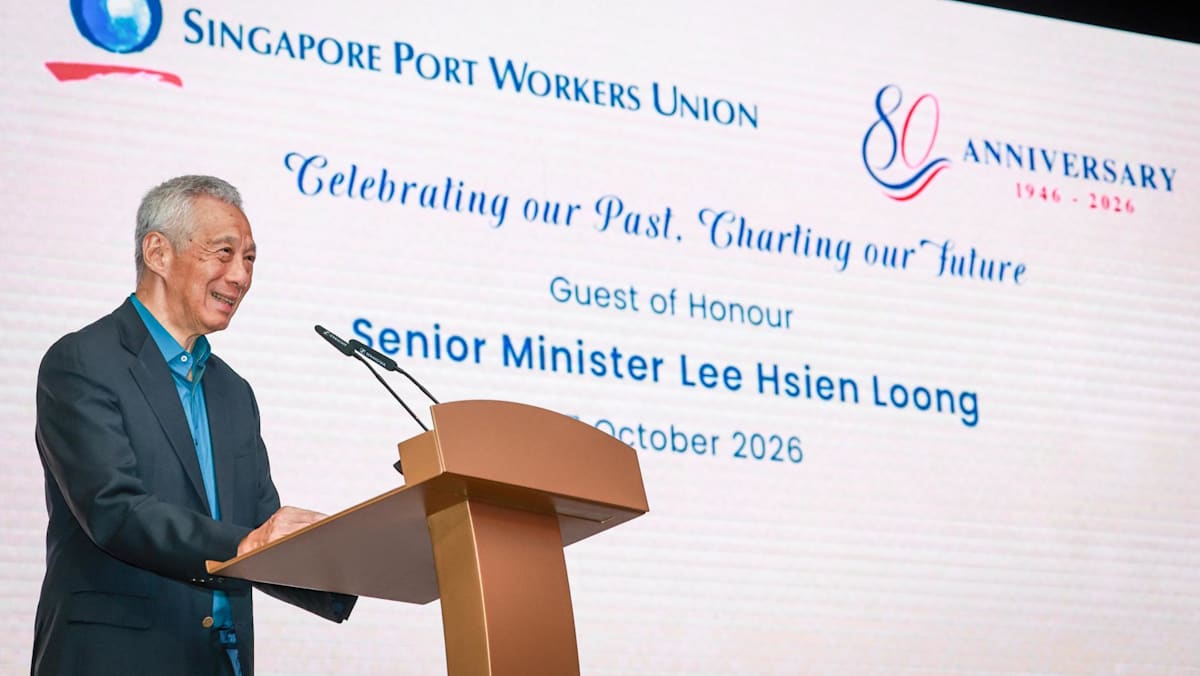
Senior Minister Lee Hsien Loong also highlighted the importance of strong tripartism to enable PSA's management team, the unions and the workers to work together in a "relationship of trust" to build a "disciplined and skilled workforce".
Senior Minister Lee Hsien Loong speaking at the 80th anniversary dinner celebration of the Singapore Port Workers Union on Oct 17, 2026. (Photo: Ministry of Digital Development and Information)
This audio is generated by an AI tool.
SINGAPORE: Singapore's port risks being left behind by its rivals that are "fast catching up, and in some respects quite possibly ahead of us", said Senior Minister Lee Hsien Loong on Saturday (Oct 17), as he called for technological transformation while not leaving workers to face the challenges alone.
He also highlighted the importance of strong tripartism to enable PSA's management team, the unions and the workers to work together in a "relationship of trust" to build a "disciplined and skilled workforce".
Mr Lee was speaking at a dinner celebration for the 80th anniversary of the Singapore Port Workers Union (SPWU), which represents PSA employees.
"PSA has done well, adopting technology and upgrading your operations to keep our port efficient and competitive. But other ports in the region are making progress digitalising and automating too," said Mr Lee.
CNA Games Guess Word Crack the word, one row at a time Buzzword Create words using the given letters Mini Sudoku Tiny puzzle, mighty brain teaser Mini Crossword Small grid, big challenge Word Search Spot as many words as you can Show More Show Less "If PSA slackens or becomes complacent, we risk being left behind and losing our business." To outsiders, Mr Lee said the past six decades "look like an unbroken string of successes". "But those of us who have participated in this journey know just how much hard work actually went into it – how many difficult strategic choices we faced along the way; how many times we needed to transform the way we operate; and how from time to time we made missteps, and painfully corrected them," he said. Giving an example, he noted how advancements in technology allowed PSA to move from the manual loading and unloading of ship cargo to the use of quayside and yard cranes, and then to operators controlling multiple cranes simultaneously and remotely from a control centre "in a more comfortable setting" today. "In the container yard, instead of people manually driving prime movers hauling containers under sun and rain, we have remotely-operated automated guided vehicles (AGVs) performing the task. "Each time the jobs changed, PSA sought to retrain existing workers to take up these new roles, rather than to hire afresh," said Mr Lee, noting that the company developed structured training programmes to help workers upskill while the unions persuaded workers to adopt a flexible mindset and to take up training opportunities. "Each episode was a challenging and laborious process of organisational change and personal adjustment. Each required close coordination between port management and the unions – to help workers accept radical changes in their work processes, to upgrade themselves as their roles changed, and then safely and successfully adopt new ways of working, sometimes in new places." "PAINFUL DECISIONS" There were also many port moves – including to Keppel, Brani, Pasir Panjang and Tuas Port – that needed workers to adjust to different work environments and commuting arrangements. In particular, the move to Tuas lengthened commuting for workers significantly, said Mr Lee. As a result, government agencies are working with SPWU and PSA management to increase bus services to Tuas South, and are also looking at building a Bus Rapid Transit system. Other times, "painful decisions" had to be made, said Mr Lee, citing the example of PSA losing several major shipping customers to Malaysia's Port of Tanjung Pelepas in the early 2000s. PSA had to change strategy and cut costs decisively to restore its competitiveness and win the business back, leading to retrenchments and wage cuts. "PSA management took pains to explain to the unions why these drastic steps were necessary," said Mr Lee, adding that SPWU also "negotiated hard with management to secure the best possible deal for the workers who had to leave". The result was a retrenchment and wage-reduction package that would "save the company" and at the same time was "fair to the affected workers". "Nevertheless, it was a wrenching and painful experience, not only for the affected workers, but for all those who had to deal with the issue, both on the union and management sides," said Mr Lee.
"If PSA slackens or becomes complacent, we risk being left behind and losing our business."
To outsiders, Mr Lee said the past six decades "look like an unbroken string of successes".
"But those of us who have participated in this journey know just how much hard work actually went into it – how many difficult strategic choices we faced along the way; how many times we needed to transform the way we operate; and how from time to time we made missteps, and painfully corrected them," he said.
Giving an example, he noted how advancements in technology allowed PSA to move from the manual loading and unloading of ship cargo to the use of quayside and yard cranes, and then to operators controlling multiple cranes simultaneously and remotely from a control centre "in a more comfortable setting" today.
"In the container yard, instead of people manually driving prime movers hauling containers under sun and rain, we have remotely-operated automated guided vehicles (AGVs) performing the task.
"Each time the jobs changed, PSA sought to retrain existing workers to take up these new roles, rather than to hire afresh," said Mr Lee, noting that the company developed structured training programmes to help workers upskill while the unions persuaded workers to adopt a flexible mindset and to take up training opportunities.
"Each episode was a challenging and laborious process of organisational change and personal adjustment. Each required close coordination between port management and the unions – to help workers accept radical changes in their work processes, to upgrade themselves as their roles changed, and then safely and successfully adopt new ways of working, sometimes in new places."
There were also many port moves – including to Keppel, Brani, Pasir Panjang and Tuas Port – that needed workers to adjust to different work environments and commuting arrangements.
In particular, the move to Tuas lengthened commuting for workers significantly, said Mr Lee. As a result, government agencies are working with SPWU and PSA management to increase bus services to Tuas South, and are also looking at building a Bus Rapid Transit system.
Other times, "painful decisions" had to be made, said Mr Lee, citing the example of PSA losing several major shipping customers to Malaysia's Port of Tanjung Pelepas in the early 2000s.
PSA had to change strategy and cut costs decisively to restore its competitiveness and win the business back, leading to retrenchments and wage cuts.
"PSA management took pains to explain to the unions why these drastic steps were necessary," said Mr Lee, adding that SPWU also "negotiated hard with management to secure the best possible deal for the workers who had to leave".
The result was a retrenchment and wage-reduction package that would "save the company" and at the same time was "fair to the affected workers".
"Nevertheless, it was a wrenching and painful experience, not only for the affected workers, but for all those who had to deal with the issue, both on the union and management sides," said Mr Lee.
However, when PSA did well, the management was also fair to its workers and unions in ensuring that everyone shared in the company's success, he noted.
PSA had in 2005 paid a special gain-sharing payout to workers, rewarding them for meeting cost-reduction and performance targets. That was also a "gesture of appreciation for the workers' contributions and sacrifices", said Mr Lee.
"Such intimate cooperation between management and the unions, through both ups and downs, was instrumental in building trust between them, and a key reason for PSA’s sustained success."
He added that SPWU's approach "contrasts sharply" with that of some other port worker unions, which resist technology and progress as they believe this is the way to protect their workers' jobs and interests. "But over time their ports suffered, and so did their members."
Beyond competition from other ports, Mr Lee added that the industry is transforming in fundamental ways, with supply chain disruptions, climate change and geopolitical tensions affecting shippers and port operators.
For instance, green fuels such as ammonia and methanol will mandate new processes, skills and safety protocols.
Rapid advances in artificial intelligence, autonomous technology, sensors and robotics are also already drastically changing port operations, while embodied AI may also automate repetitive physical tasks such as coning and de-coning.
"These developments present new challenges, but also new opportunities," said Mr Lee.
"There will be higher-value tasks which are less physically demanding; better jobs, centred on data, judgment and decision-making; and even completely new roles that do not yet exist – in areas like sustainability management and alternative fuel options."
Skilled roles will allow workers to deepen their expertise, grow their responsibilities and build meaningful careers, and PSA must stay on top of these changes and turn new challenges into opportunities, said Mr Lee.
"As in past waves of transformation, we must not leave workers to face these challenges alone."
Get our pick of top stories and thought-provoking articles in your inbox
Stay updated with notifications for breaking news and our best stories
Join our channel for the top reads for the day on your preferred chat app
李显龙高级部长还强调了强有力的三方合作的重要性,以使新加坡公共服务集团的管理团队、工会和工人能够在“信任关系”下共同努力,建立一支“纪律严明、技能精湛的员工队伍”。
2026年10月17日,李显龙高级部长在新加坡港口工人联合会成立80周年晚宴上发表讲话。(图片:新加坡数码发展及新闻部)
这段音频由人工智能工具生成。
新加坡:新加坡高级部长李显龙周六(10月17日)表示,新加坡港口有被竞争对手甩在后面的风险,这些竞争对手“正在迅速赶上,在某些方面甚至可能领先于我们”。他呼吁进行技术转型,同时不要让工人独自面对挑战。
他还强调了强大的三方合作的重要性,以使PSA的管理团队、工会和工人能够在“信任关系”中共同努力,建立一支“纪律严明、技能精湛的员工队伍”。
李先生是在新加坡港口工人联合会(SPWU)成立 80 周年庆祝晚宴上发表上述讲话的,该联合会代表新加坡港务集团(PSA)的员工。
李先生表示:“新加坡港务集团(PSA)做得很好,他们采用新技术并升级运营,使我们的港口保持高效和竞争力。但该地区的其他港口也在数字化和自动化方面取得进展。”
CNA游戏 猜词游戏 逐行破解单词 流行词游戏 用给定的字母组成单词 迷你数独 小谜题,脑力挑战 迷你填字游戏 小方格,大挑战 单词搜索 尽可能多地找出单词 显示更多 显示更少 “如果PSA松懈或自满,我们就有被淘汰并失去业务的风险。” 李先生说,在外人看来,过去六十年“似乎是一连串的成功”。“但我们这些参与其中的人都知道,这背后付出了多少努力——我们一路走来面临了多少艰难的战略选择;我们多少次需要改变运营方式;以及我们不时犯错,又如何痛苦地纠正错误,”他说。他举例说,技术的进步使PSA从人工装卸船舶货物,到使用码头和堆场起重机,再到如今操作员在“更舒适的环境”中通过控制中心远程同时控制多台起重机。 “在集装箱堆场,我们不再需要人工驾驶牵引车在烈日雨中搬运集装箱,而是使用遥控自动导引车(AGV)来完成这项工作。”李先生说,“每次工作岗位发生变化时,PSA都会尽量对现有员工进行再培训,让他们胜任新的岗位,而不是重新招聘。”他指出,公司制定了结构化的培训计划,帮助员工提升技能,而工会则积极引导员工转变观念,抓住培训机会。“每一次变动都是组织变革和个人调整过程中充满挑战且艰辛的过程。”每一项举措都需要港口管理层和工会密切协调,以帮助工人接受工作流程的根本性变革,随着角色转变提升自身能力,并安全成功地适应新的工作方式,有时甚至需要在新的地点工作。“痛苦的抉择” 此外,还有许多港口搬迁——包括迁至吉宝港、布拉尼港、巴西班让港和图阿斯港——这需要工人适应不同的工作环境和通勤安排。李先生指出,特别是迁至图阿斯港,显著延长了工人的通勤时间。因此,政府机构正与新加坡港务工人联合会(SPWU)和新加坡港务集团(PSA)管理层合作,增加前往图阿斯南港的巴士服务,并正在考虑建设快速公交系统。李先生还提到,有时也需要做出“痛苦的抉择”,例如在2000年代初期,PSA失去了几家主要航运客户,这些客户流向了马来西亚的丹戎帕拉帕斯港。PSA不得不改变战略,果断削减成本,以恢复竞争力并赢回客户,最终导致了裁员和降薪。李先生表示:“PSA管理层竭力向工会解释为何必须采取这些激烈的措施。”他还补充道,新加坡港务工人联合会(SPWU)也“与管理层进行了艰苦的谈判,力求为被迫离职的工人争取到尽可能好的条件”。最终达成的裁员和减薪方案既“挽救了公司”,又“对受影响的工人公平”。李先生说:“然而,这不仅对受影响的工人来说是一次痛苦的经历,对所有不得不处理此事的人,无论是工会还是管理层,都是如此。”
“如果PSA放松警惕或变得自满,我们就有被淘汰并失去业务的风险。”
李先生说,在外人看来,过去六十年“就像一连串不间断的成功”。
“但我们这些参与过这段旅程的人都知道,这其中付出了多少努力——我们一路上面临着多少艰难的战略选择;我们多少次需要改变我们的运营方式;以及我们不时会犯错,并痛苦地纠正它们,”他说。
他举例说,技术的进步使PSA从人工装卸船舶货物过渡到使用码头和堆场起重机,再到如今操作员在“更舒适的环境”中通过控制中心远程同时控制多台起重机。
“在集装箱堆场,我们不再需要人工驾驶牵引车在日晒雨淋中运输集装箱,而是使用远程操控的自动导引车 (AGV) 来完成这项任务。
李先生表示:“每次工作岗位发生变化时,PSA都会尝试对现有员工进行再培训,让他们承担这些新角色,而不是重新招聘。”他还指出,公司制定了结构化的培训计划,帮助员工提升技能,而工会则说服员工采取灵活的思维方式,并抓住培训机会。
“每一次变革都是组织变革和个人调整过程中充满挑战且艰辛的过程。每一次变革都需要港口管理层和工会密切协调,帮助工人接受工作流程的根本性变革,随着角色变化提升自身能力,然后安全成功地适应新的工作方式,有时甚至是在新的工作地点。”
此外,还有许多港口搬迁——包括吉宝港、布拉尼港、巴西班让港和图阿斯港——这需要工人适应不同的工作环境和通勤安排。
李先生指出,搬迁至大士后,工人的通勤时间显著延长。因此,政府机构正与新加坡工人联合会(SPWU)和新加坡港务集团(PSA)管理层合作,增加前往大士南的巴士班次,并正在考虑建设快速公交系统。
李先生表示,有时也需要做出“痛苦的决定”,他举例说,PSA 在 2000 年代初期失去了几家主要的航运客户,这些客户都去了马来西亚的丹戎帕拉帕斯港。
为了恢复竞争力并赢回业务,PSA 不得不改变战略并果断削减成本,这导致了裁员和减薪。
李先生说:“PSA管理层费尽心思向工会解释为什么必须采取这些激烈的措施。”他还补充说,新加坡港务工人联合会(SPWU)也“与管理层进行了艰苦的谈判,以确保为不得不离开的工人争取到最好的条件”。
最终达成的方案是裁员和减薪,既能“拯救公司”,又能“公平对待受影响的工人”。
李先生说:“然而,这不仅对受影响的工人来说是一次痛苦的经历,对所有不得不处理这个问题的人来说也是如此,无论是工会方面还是管理层方面。”
他指出,然而,当PSA业绩良好时,管理层也会公平对待员工和工会,确保每个人都能分享公司成功的成果。
新加坡港务集团(PSA)曾在2005年向员工发放了一笔特别的收益分享奖金,以奖励他们完成成本削减和绩效目标。李先生表示,这也是“对员工贡献和牺牲的感谢之举”。
“管理层和工会之间这种密切的合作,无论顺境还是逆境,都对建立彼此间的信任起到了至关重要的作用,也是PSA持续成功的关键原因。”
他还补充说,SPWU的做法与其他一些港口工人工会的做法“截然不同”,后者抵制技术和进步,因为他们认为这是保护工人工作和利益的途径。“但随着时间的推移,他们的港口遭受了损失,他们的成员也受到了损害。”
李先生补充说,除了来自其他港口的竞争之外,该行业正在发生根本性的变革,供应链中断、气候变化和地缘政治紧张局势正在影响托运人和港口运营商。
例如,氨和甲醇等绿色燃料将需要新的工艺、技能和安全规程。
人工智能、自主技术、传感器和机器人技术的快速发展也已经极大地改变了港口运营,而具身人工智能还可以自动执行重复性的物理任务,例如锥形和锥形拆卸。
李先生表示:“这些发展带来了新的挑战,但也带来了新的机遇。”
“未来将会出现一些价值更高、体力要求更低的工作;一些更好的工作,这些工作以数据、判断和决策为中心;甚至还会出现一些目前尚不存在的全新角色——例如在可持续发展管理和替代燃料选择等领域。”
李先生表示,技术岗位将使员工能够加深专业知识、拓展职责范围并建立有意义的职业生涯,PSA必须密切关注这些变化,并将新的挑战转化为机遇。
“就像以往的变革浪潮一样,我们绝不能让工人独自面对这些挑战。”
订阅我们的邮件,即可获取精选热点新闻和引人深思的文章。
订阅通知,第一时间获取突发新闻和精彩报道。
加入我们的频道,即可在您常用的聊天应用上获取当日热门文章。