Talk about a backseat spy: Chinese-made cars caught filming Norway’s military真是个后座间谍:中国制造的汽车被发现偷拍挪威军方。
OSLO, Oct 18 — Chinese-made cars filmed sensitive information during a Norwegian military exercise, including access codes at secure sites and officials’ comings and goings,...
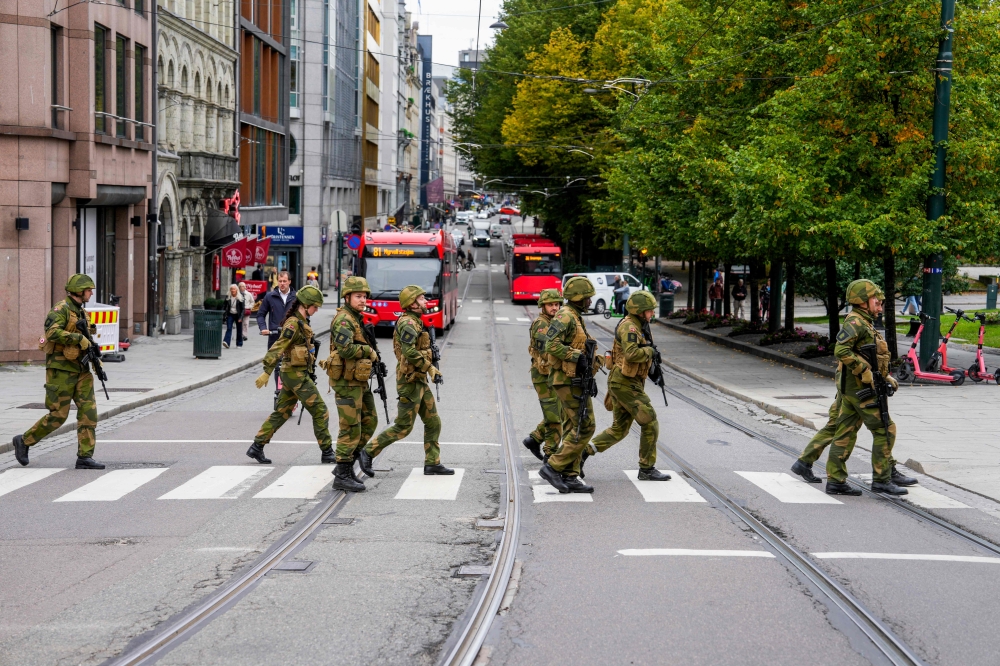
The infiltration of sensitive information during a Norwegian military exercise by onboard cameras in Chinese-made rental cars has raised significant espionage concerns.
Videos capturing sensitive data, including access codes and officials' movements, were discovered by soldiers, sparking debates on the risks of connected vehicles.
Despite the potential security threats, Norwegian military officials opted not to impose a general ban on such vehicles, favoring tailored security measures instead.
The incident underscores the broader risks posed by modern digital technologies, including vehicles and apps, in potentially exposing sensitive military information.
OSLO, Oct 18 — Chinese-made cars filmed sensitive information during a Norwegian military exercise, including access codes at secure sites and officials’ comings and goings, raising concerns about the risks posed by connected vehicles.
During a security exercise at Oslo airport on September 14-18, soldiers waiting in their vehicles and tapping on the onboard screens discovered videos recorded by the cars’ cameras, the Dagens Næringsliv ( DN ) newspaper reported.
The recordings showed who was getting in and out of the cars, the routes taken and even the codes used to open gates or doors to military facilities.
In its report three weeks after the exercise, DN said the recordings came from rental vehicles — at least two of them Deepal cars made by Chinese state-controlled automaker Changan.
The vehicles were supplied to the army by Hertz Norge, which is indirectly owned by Chinese automotive group Geely.
“Yes, soldiers from the Home Guard found videos from the vehicles’ sensors stored in their systems,” Lieutenant Colonel Per Gunnar Grosberghaugen, Norwegian Home Guard spokesman, confirmed to AFP.
It was not known whether the recordings had been shared with a third party, particularly in China, but the officer could not rule out the possibility.
The case highlights a paradox: while Europe’s armies are strengthening their defences against espionage and hybrid threats, the vehicles they use can collect sensitive information.
Even after discovering the leaks, the military continued using the vehicles until the end of the exercise because there were no alternatives, and the soldiers deleted the videos, DN reported.
Judging that a general ban on Chinese-made vehicles would be disproportionate to the potential security benefits, the military said it preferred security procedures tailored to each site, including possible local bans on vehicles equipped with cameras and sensors, regardless of their origin.
Hertz Norge stressed that it complies with Norwegian and European regulations.
“Our customers’ data is safe with us,” Hallvard Nerbovik, its marketing and communications director, told AFP.
“No personal data related to our rentals is shared with car manufacturers, our owners or other third parties without explicit legal grounds,” he added, without specifying whether the onboard videos might have been transferred.
Changan did not respond to AFP’s questions.
Last year, tests carried out for Oslo’s Ruter public transport authority revealed that Chinese manufacturer Yutong could theoretically remotely immobilise its electric buses through their “over-the-air” update system.
Norway could one day use the buses to evacuate the population during an emergency.
Ruter has since introduced mechanisms to monitor and delay incoming signals to control updates, it said.
Modern vehicles are not the only potential Trojan horses.
Smartwatches and fitness apps such as Strava, popular with joggers, can also expose sensitive military information.
In 2018, data published by Strava made it possible to identify military sites and soldiers’ routes, particularly in Afghanistan and Syria.
In March, French newspaper Le Monde was able to locate the French aircraft carrier Charles de Gaulle in almost real time in the eastern Mediterranean, thanks to a sailor on board who was using the app.
The Norwegian National Security Authority (NSM) said modern vehicles are “rolling computers that collect information”.
“We don’t know for sure where the information is sent or what it’s used for,” NSM official Andreas Skjold-Lorange told AFP.
The organisation, which is responsible for minimising strategic risks, including digital threats, said Norway should be wary not only of the data collected but also of excessive dependence on a single country.
This is particularly concerning if that country does not cooperate with Norway on security matters.
“If we become too dependent on services or products from a given country, that makes us vulnerable, whatever that country may be,” Skjold-Lorange warned. — AFP
Mexico turns to AI to age thousands of missing children’s faces and help families find answers
AI cracks Napoleon’s 200-year-old secret code in just six hours
Malaysian indie studio Metronomik steals the show with three wins at Level Up SEA Game Awards 2026
Amir Hamzah urges alumni to support schools, cites tax relief under Budget 2027
Floods worsen in Perak, Penang as evacuee numbers increase
Want clean air today? Skip Pasir Gudang, head for Balik Pulau or Limbang
在挪威的一次军事演习中,中国制造的租赁汽车上的车载摄像头泄露了敏感信息,这引发了人们对间谍活动的严重担忧。
士兵们发现了记录敏感数据(包括访问代码和官员行动轨迹)的视频,引发了关于联网车辆风险的辩论。
尽管存在潜在的安全威胁,挪威军方官员还是选择不全面禁止此类车辆,而是倾向于采取有针对性的安全措施。
该事件凸显了现代数字技术(包括车辆和应用程序)可能泄露敏感军事信息的更广泛风险。
奥斯陆,10 月 18 日——中国制造的汽车在挪威的一次军事演习中拍摄了敏感信息,包括安全场所的访问代码和官员的进出情况,这引发了人们对联网汽车带来的风险的担忧。
据《每日商业报》(Dagens Næringsliv,简称DN)报道,在9月14日至18日奥斯陆机场的一次安全演习中,等候在车内的士兵通过点击车载屏幕发现了汽车摄像头拍摄的视频。
录像显示了谁在上下车,行驶路线,甚至还显示了打开军事设施大门或门的密码。
在演习三周后发布的报告中,DN 表示,这些录音来自租赁车辆——其中至少有两辆是中国国有汽车制造商长安汽车生产的迪帕尔汽车。
这些车辆由 Hertz Norge 提供给军队,而 Hertz Norge 间接隶属于中国汽车集团吉利。
“是的,国民警卫队的士兵在他们的系统中发现了车辆传感器存储的视频,”挪威国民警卫队发言人佩尔·贡纳尔·格罗斯贝格豪根中校向法新社证实。
目前尚不清楚这些录音是否已与第三方(特别是中国)共享,但该官员无法排除这种可能性。
该案例凸显了一个悖论:虽然欧洲军队正在加强对间谍活动和混合威胁的防御,但他们使用的车辆却可以收集敏感信息。
据DN报道,即使发现泄密事件后,军方仍然继续使用这些车辆直到演习结束,因为没有其他替代方案,士兵们也删除了这些视频。
军方认为,全面禁止中国制造的车辆与潜在的安全效益不成比例,因此更倾向于根据每个地点的具体情况制定安全措施,包括可能对配备摄像头和传感器的车辆进行本地化禁令,无论这些车辆的产地如何。
Hertz Norge强调,其符合挪威和欧洲的法规。
“我们客户的数据在我们这里是安全的,”该公司市场营销和传播总监哈尔瓦德·内尔博维克告诉法新社。
他还补充道:“没有明确的法律依据,我们不会与汽车制造商、我们的所有者或其他第三方共享与租赁相关的任何个人数据。”但他没有具体说明车载视频是否可能已被传输。
长安方面没有回应法新社的提问。
去年,奥斯陆公共交通管理局 Ruter 进行的测试表明,中国制造商宇通理论上可以通过其“空中”更新系统远程使其电动巴士失去动力。
挪威未来某一天或许可以利用这些巴士在紧急情况下疏散民众。
Ruter表示,此后已引入机制来监控和延迟传入信号,以控制更新。
现代汽车并非唯一潜在的特洛伊木马。
智能手表和健身应用程序(例如深受慢跑者欢迎的 Strava)也可能泄露敏感的军事信息。
2018 年,Strava 发布的数据使得识别军事地点和士兵路线成为可能,尤其是在阿富汗和叙利亚。
今年三月,法国《世界报》借助船上一名水兵使用的应用程序,几乎实时地定位了位于东地中海的法国航空母舰“戴高乐”号。
挪威国家安全局 (NSM) 表示,现代车辆是“收集信息的移动计算机”。
“我们不确定这些信息会被发送到哪里,或者用于什么用途,”国家安全局官员安德烈亚斯·斯科尔德-洛朗格告诉法新社。
该组织负责最大限度地降低战略风险,包括数字威胁,并表示挪威不仅应该警惕所收集的数据,还应该警惕对单一国家的过度依赖。
如果该国在安全问题上不与挪威合作,这一点尤其令人担忧。
“如果我们过度依赖某个国家的服务或产品,无论那个国家是哪个,都会使我们变得脆弱,”斯科尔德-洛朗格警告说。——法新社
墨西哥利用人工智能技术鉴定数千名失踪儿童的面部年龄,帮助其家人寻找答案。
人工智能仅用六小时就破解了拿破仑两百年前的秘密密码
马来西亚独立游戏工作室 Metronomik 在 Level Up SEA 游戏大奖 2026 中大放异彩,斩获三项大奖。
阿米尔·哈姆扎呼吁校友支持母校,并援引2027年预算案中的税收减免政策。
随着疏散人数增加,霹雳州和槟城的洪水形势进一步恶化。
今天想要清新的空气吗?跳过巴西古当,前往浮罗山背或林梦