Hiring is just the first step. Can Singapore keep workers with disabilities in their jobs?招聘只是第一步。新加坡能否留住残疾员工?
Workplace dynamics and the lack of accommodations are among the hurdles to overcome. Read more at straitstimes.com.
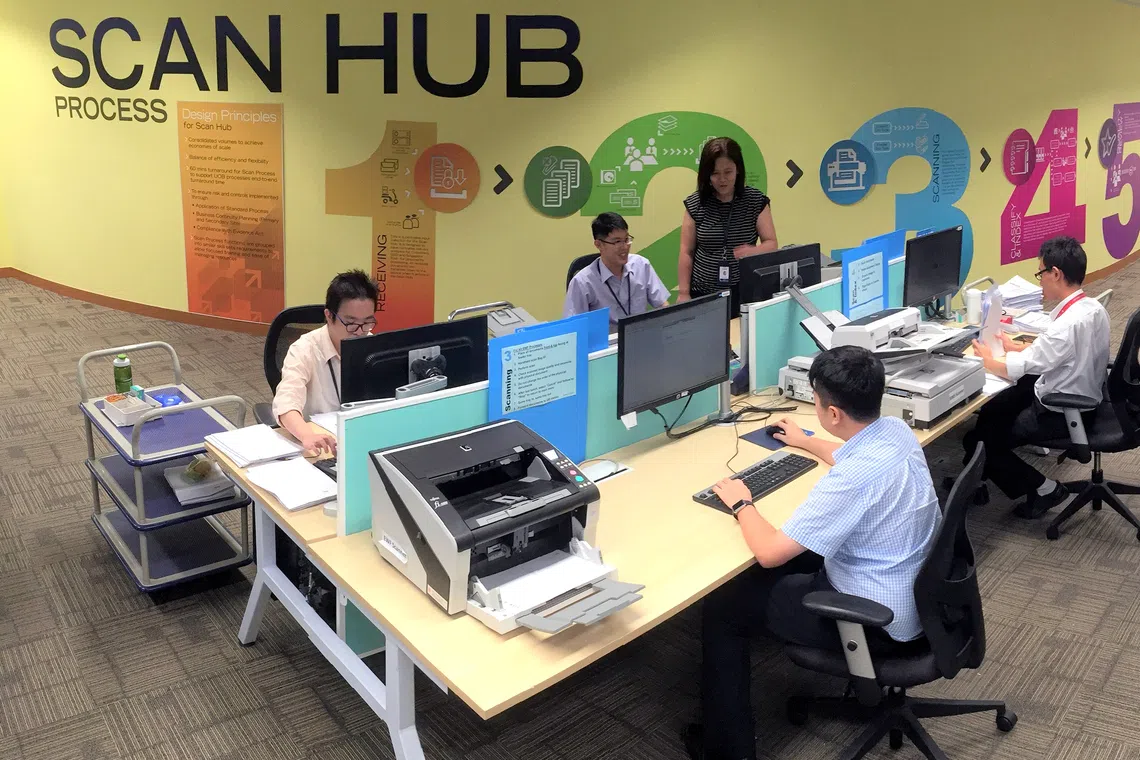
United Overseas Bank (UOB) began hiring persons with disabilities in 2013, including at their Scan Hub, where documents are digitised and archived.
Published Oct 18, 2026, 12:00 PM
Updated Oct 18, 2026, 12:00 PM
Singapore is improving disability hiring, but retention is weak. In 2025, only about one in four employed residents with disabilities stayed with the same employer for at least one year.
Muhammad Nafiz Sulaiman, 19, was not offered a full-time job after a nursery internship. His case shows problems with communication, support, and workplace understanding.
New measures aim to help retention, including SG Enable’s Employment Support Office, job redesign, and more employer grants. Experts say real inclusion needs trained staff and lasting support, not “tokenism”.
SINGAPORE – After interning at a hydroponic farm for three months, 19-year-old Muhammad Nafiz Sulaiman, who has autism, was not offered a full-time job.
He could do tasks like planting and watering well, but his employer felt he did not take enough initiative at work, said his mother, Siti Zulaiha Mohd Erfan, 46.
She believed the problem was one of communication. Nafiz finds it hard to start conversations, and his supervisors could have grown tired of having to tell him what to do next.
Nafiz had completed a horticulture course in school and had support from a job coach. Yet, he still struggled to hold down a job, reflecting the challenges of staying employed among persons with disabilities (PWDs) in Singapore.
As at 2025, only about one in four employed residents with disabilities worked for the same employer for at least one year, according to Ministry of Manpower data released for the first time in July.
Though there are no clear international benchmarks for retention rates of PWDs, it is crucial to start tracking such figures more comprehensively to establish Singapore’s own baseline and track progress.
More granular data could bring clarity in understanding why PWDs leave their jobs, or if retention varies across disability groups and industries. In Japan, for instance, the retention rate of employees with disabilities is categorised by intellectual, physical, mental or developmental disabilities.
Singapore national disability agency SG Enable acknowledged that this figure “sits below the overall workforce”. Between 85% and 89% of local employees stay with the same employer for at least a year, according to figures from the Singapore National Employers Federation.
“(The statistic) tells us that few employed persons with disabilities are staying with one employer long enough to build a sustainable career,” said the SG Enable spokesperson.
Siti Zulaiha Mohd Erfan with her son, Muhammad Nafiz Sulaiman, a 19-year-old with autism. PHOTO: COURTESY OF SITI ZULAIHA MOHD ERFAN
Siti Zulaiha Mohd Erfan with her son, Muhammad Nafiz Sulaiman, a 19-year-old with autism.
PHOTO: COURTESY OF SITI ZULAIHA MOHD ERFAN
Workplace retention was a pressing concern among the plans of a government task force that announced new support measures for PWDs on Oct 4.
Much of the focus has been on getting more PWDs into the workforce since the last Enabling Masterplan in 2022, which set a clear goal for 40% of residents with disabilities to be employed by 2030.
There has been steady progress. The employment rate rose from 28.2% in 2018/2019 to 34.7% in 2024/2025.
But there is no equivalent goal or tracking data for retention, which is a longer-term marker of how well PWDs find their place at work and in society.
Employment figures tell only one part of the story. A person who frequently moves between jobs may count as employed but struggle to reach financial stability or career progression.
When asked for a goal for the retention rate, SG Enable did not give a number, saying it would continue to monitor outcomes, including retention, as the new measures are implemented.
From principle to practice
The low retention rate raises a deeper question of whether Singapore workplaces are truly ready to integrate PWDs .
Hiring someone with a disability may signal a company’s commitment to inclusion. But keeping the person employed often requires changing the way rank-and-file employees work, communicate and relate to one another.
National Institute of Education associate professor Wong Meng Ee, who researches disability sociology, said the real test of inclusion is when people have to adjust to having colleagues with disabilities.
“That is where the tension lies, (when moving) from principle to practice,” said Wong, who has visual impairment.
When a job coach’s support ends or an understanding supervisor leaves, some PWDs may feel apprehensive about interacting with managers who may not understand their needs, said Ron Loh, assistant chief executive officer (services) of local charity SPD.
The National Council of Social Service’s Public Attitudes Study, which was conducted in 2019 and 2023, showed that the proportion of respondents who had positive attitudes towards PWDs at the workplace fell from 59.6% in 2019 to 50.6% in 2023.
No specific reasons were identified for the drop, but one expert said it could be due to stressful workplace environments and a lack of understanding of accommodations.
Some PWDs may need accommodations, such as screen readers for the visually impaired or extra breaks for neurodivergent individuals who experience sensory overload.
Without these, employers may misunderstand that they cannot do the job, said Max Soh, research and policy manager at the Disabled People’s Association (DPA).
For example, Nafiz could have benefited from having a daily schedule as people with autism usually work well with clear instructions, but not all employers understand this, said Zulaiha.
Other factors include the limited duration of wage support. Soh cited SG Enable’s Place-and-Train programme , which offered employers 90 per cent of salary support from the Government for up to a year to place and train PWDs.
A DPA report in 2024 found that some workers were let go when the subsidies ended, raising concerns that such schemes may inadvertently encourage short-term hiring without leading to sustained employment, said Soh.
The disability task force’s measures aim to address some gaps.
Of significance is SG Enable’s new Employment Support Office, which plans to provide longer-term support beyond initial job placement.
It will also help employers identify suitable roles and redesign jobs, and develop hiring guides for sectors with strong potential to hire PWDs, such as retail trade and finance and insurance services.
Financial support for employers like the Enabling Employment Credit will be expanded.
Firms will also get more flexibility to support PWDs’ needs, with new grants promising to offset costs of customised in-house training, and hiring professionals to support employees with moderate needs.
Having more job support generally leads to greater retention for PWDs.
About 60% to 70% of SPD’s clients in its employment programmes are still in their jobs at the one-year mark. The charity helps in securing workplace accommodations and redesigning jobs, and facilitates discussions between PWDs and supervisors or colleagues, said Loh.
Edmund Ho (left), who has cognitive and speech impairment, and Low Kah Gin (right), who has autism spectrum disorder, work at Yusof Ishak Secondary School’s canteen under SPD’s employment programme. With them is SPD staff and operations supervisor Foo Boon How. PHOTO: SPD
Edmund Ho (left), who has cognitive and speech impairment, and Low Kah Gin (right), who has autism spectrum disorder, work at Yusof Ishak Secondary School’s canteen under SPD’s employment programme. With them is SPD staff and operations supervisor Foo Boon How.
But all these can go only so far if colleagues remain reluctant to work alongside PWDs. Experts said employers must prepare staff at every level to understand disabilities, navigate difficulties in interactions and make reasonable adjustments .
The key is to help employees move beyond “tokenism”, where inclusive hiring is deemed as charity. PWDs must be seen as actual contributors, said Lyn Lee, author of the bestseller Tiny Rice Grains, which explores diversity, equity and inclusion in workplaces.
A company that has made strides towards inclusivity is United Overseas Bank (UOB). Besides providing step-by-step visual instructions for employees with autism, it also trains other employees to support them.
The bank started hiring employees with disabilities in 2013, first for its Scan Hub and recently also for its Wholesale Operational Readiness Centre.
PWDs also must be more confident in communicating their needs, said SPD’s Loh. In 2025, the charity set up a support group for employed PWDs to learn how to navigate the workplace.
Nafiz was upset when he was not offered a full-time job. He is now undergoing training to join other industries , while his mother hopes employers can better understand PWDs like him.
But the real test of inclusion is not whether someone like Nafiz gets hired. It is whether he can stay in one and build a future in it.
Christine Tan is a correspondent at The Straits Times reporting on social affairs and issues of justice in Singapore.
大华银行(UOB)从 2013 年开始雇用残疾人士,包括在其扫描中心(负责文件数字化和存档)雇用残疾人士。
发布于2026年10月18日下午12:00
更新于2026年10月18日中午12:00
新加坡在残疾人就业方面取得了进展,但留任率仍然较低。到2025年,只有大约四分之一的残疾居民就业者能在同一雇主处工作至少一年。
19岁的穆罕默德·纳菲兹·苏莱曼在一家托儿所实习后没有获得全职工作机会。他的案例反映出沟通、支持和工作场所理解方面存在问题。
新举措旨在帮助企业留住人才,包括SG Enable的就业支持办公室、工作岗位重新设计以及更多雇主补助。专家表示,真正的包容需要训练有素的员工和持久的支持,而不是“形式主义”。
新加坡——19 岁的自闭症青年穆罕默德·纳菲兹·苏莱曼在一家水培农场实习了三个月后,没有获得全职工作机会。
他的母亲,46岁的西蒂·祖莱哈·莫哈末·埃尔凡说,他能胜任种植和浇水等工作,但他的雇主觉得他在工作中不够积极主动。
她认为问题出在沟通上。纳菲兹不善于开启对话,他的上司可能已经厌倦了总是告诉他下一步该做什么。
纳菲兹曾在学校完成园艺课程,并得到就业指导员的帮助。然而,他仍然难以保住工作,这反映了新加坡残疾人就业所面临的挑战。
根据人力部7月份首次公布的数据,截至2025年,只有大约四分之一的残疾就业居民在同一雇主处工作至少一年。
虽然目前国际上还没有关于残疾人士留校率的明确基准,但全面跟踪这些数据对于建立新加坡自己的基准和跟踪进展至关重要。
更细致的数据有助于更清晰地了解残障人士离职的原因,以及不同残障群体和行业的员工留任率是否存在差异。例如,在日本,残障员工的留任率按智力、肢体、精神或发育障碍进行分类。
新加坡国家残疾人机构SG Enable承认,这一数字“低于整体劳动力的比例”。根据新加坡全国雇主联合会的数据,85%至89%的本地员工至少会在同一雇主处工作一年。
“(统计数据)告诉我们,很少有残疾人士能在一个雇主那里待足够长的时间,从而建立可持续的职业生涯,”SG Enable 的发言人说。
西蒂·祖莱哈·莫赫德·埃尔凡 (Siti Zulaiha Mohd Erfan) 和她 19 岁患有自闭症的儿子穆罕默德·纳菲兹·苏莱曼 (Muhammad Nafiz Sulaiman)。照片:由 SITI ZULAIHA MOHD ERFAN 提供
西蒂·祖莱哈·莫赫德·埃尔凡 (Siti Zulaiha Mohd Erfan) 和她 19 岁患有自闭症的儿子穆罕默德·纳菲兹·苏莱曼 (Muhammad Nafiz Sulaiman)。
照片:由 SITI ZULAIHA MOHD ERFAN 提供
10月4日,政府特别工作组宣布了针对残疾人士的新支持措施,其中工作场所保留问题是亟待解决的问题之一。
自 2022 年上一版《赋能总体规划》以来,重点一直放在让更多残疾人进入劳动力市场上,该规划设定了一个明确的目标,即到 2030 年,40% 的残疾居民要就业。
取得了稳步进展。就业率从2018/2019年的28.2%上升到2024/2025年的34.7%。
但对于留任率而言,却没有类似的指标或跟踪数据。留任率是衡量残疾人士在工作和社会中融入程度的长期标志。
就业数据只能反映部分情况。频繁更换工作的人可能被算作就业人员,但却难以实现经济稳定或职业发展。
当被问及留存率的目标时,SG Enable 没有给出具体数字,而是表示将在实施新措施的同时继续监测包括留存率在内的各项结果。
从原则到实践
低留任率引发了一个更深层次的问题:新加坡的工作场所是否真正准备好接纳残疾人士?
雇用残障人士或许表明公司致力于包容性。但要留住残障人士,往往需要改变普通员工的工作方式、沟通方式以及彼此之间的关系。
国立教育学院副教授黄孟义(Wong Meng Ee)研究残疾社会学,他表示,包容性的真正考验在于人们是否需要适应与残疾同事共事。
“这就是矛盾所在,(在)从理论到实践的转变过程中,”患有视力障碍的黄先生说道。
当地慈善机构 SPD 的助理首席执行官(服务)罗恩·洛表示,当就业辅导员的支持结束或善解人意的上司离开时,一些残疾人士可能会担心与可能不了解他们需求的管理人员互动。
全国社会服务理事会于 2019 年和 2023 年进行的公众态度调查显示,对工作场所中的残疾人持积极态度的受访者比例从 2019 年的 59.6% 下降到 2023 年的 50.6%。
虽然没有确定下降的具体原因,但一位专家表示,这可能是由于工作环境压力大以及对住宿安排缺乏了解造成的。
一些残障人士可能需要特殊照顾,例如为视障人士提供屏幕阅读器,或者为经历感官超载的神经多样性人士提供额外的休息时间。
残疾人协会 (DPA) 研究和政策经理 Max Soh 表示,如果没有这些,雇主可能会误以为他们无法胜任这份工作。
例如,祖莱哈说,纳菲兹如果能有一个每日作息时间表,可能会受益匪浅,因为自闭症患者通常在有明确指示的情况下工作效率更高,但并非所有雇主都理解这一点。
其他因素包括工资补贴期限有限。Soh 提到了 SG Enable 的“安置与培训”计划,该计划为雇主提供政府提供的长达一年的工资补贴,补贴金额为员工工资的 90%,用于安置和培训残障人士。
Soh表示,DPA在2024年的一份报告发现,一些工人在补贴结束后被解雇,这引发了人们的担忧,即此类计划可能会无意中鼓励短期雇佣,而无法带来持续的就业。
残疾人工作组的措施旨在弥补一些差距。
值得注意的是,SG Enable 新成立的就业支持办公室计划在最初的就业安置之外提供更长期的支持。
它还将帮助雇主确定合适的职位并重新设计工作,并为零售贸易、金融和保险服务等有较大潜力雇用残疾人的行业制定招聘指南。
将会扩大对雇主的财政支持,例如就业补贴。
企业也将获得更大的灵活性来支持残疾人士的需求,新的拨款有望抵消定制内部培训的成本,并聘请专业人员来支持有中度需求的员工。
为残疾人士提供更多就业支持通常能提高他们的留任率。
新加坡残疾人协会(SPD)就业计划的客户中,约有60%至70%的人在一年后仍保有工作。罗女士表示,该慈善机构帮助残疾人士获得工作场所的便利设施、重新设计工作岗位,并促进残疾人士与主管或同事之间的沟通。
患有认知和语言障碍的何先生(左)和患有自闭症谱系障碍的刘嘉金先生(右)在尤索夫伊萨克中学食堂工作,这是新加坡残疾人协会(SPD)就业计划的一部分。与他们合影的是SPD工作人员和运营主管符文豪先生。照片:SPD
患有认知和语言障碍的何先生(左)和患有自闭症谱系障碍的刘嘉金先生(右)在尤索夫伊萨克中学食堂工作,这是新加坡残疾人协会(SPD)就业计划的一部分。与他们合影的是SPD工作人员和运营主管符文豪。
但如果同事仍然不愿意与残障人士共事,所有这些努力都将收效甚微。专家表示,雇主必须让各级员工了解残障情况,克服人际交往中的困难,并做出合理的调整。
关键在于帮助员工摒弃“象征性”的做法,不要将包容性招聘视为一种慈善行为。畅销书《小小的米粒》(Tiny Rice Grains)的作者林恩·李(Lyn Lee)指出,残障人士必须被视为真正的贡献者。《小小的米粒》探讨了职场中的多元化、公平性和包容性。
在促进包容性方面做出巨大努力的公司之一是大华银行(UOB)。除了为自闭症员工提供分步图文指导外,该银行还培训其他员工来为他们提供支持。
该银行于 2013 年开始雇用残疾员工,最初是在其扫描中心,最近也在其批发运营准备中心雇用了残疾员工。
新加坡残疾人服务中心(SPD)的罗先生表示,残障人士也必须更有信心表达自己的需求。该慈善机构计划在2025年成立一个支持小组,帮助在职残障人士学习如何适应职场。
纳菲兹因为没能找到全职工作而感到沮丧。他现在正在接受培训,以便进入其他行业,而他的母亲则希望雇主们能够更好地理解像他这样的残疾人士。
但真正考验包容性的,并非像纳菲兹这样的人能否被录用,而是他能否在一家公司长期发展,并在此建立未来。
克里斯汀·谭是《海峡时报》的记者,报道新加坡的社会事务和司法问题。