F&B businesses struggle as haze conditions worsen雾霾加剧,餐饮业举步维艰
Some food stall owners have even suffered monthly losses. Read more at straitstimes.com.
新闻视频
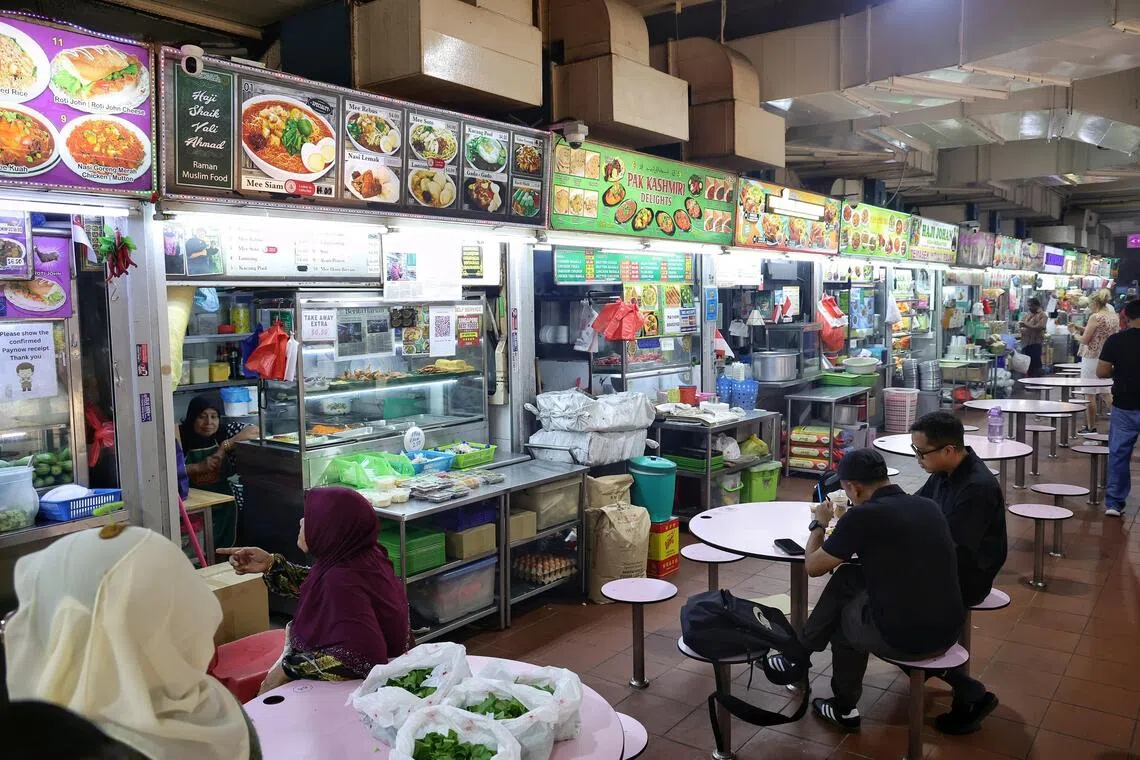
Half of the seats in Tekka Centre were empty when The Straits Times visited at 10am on Oct 16.
BNB Diviyadhaarshini, Wong Man Shun and Jean Wee
Published Oct 18, 2026, 12:00 PM
Updated Oct 18, 2026, 12:00 PM
Singapore’s haze has hit F&B businesses hard, with 12 straight days of unhealthy PSI readings and fewer customers at hawker centres and restaurants.
Tekka Centre stall owners say sales have dropped sharply, with one stall falling from 500 to 200 diners a day and fearing closure because of high costs and weak trade.
Many customers, especially the elderly, are staying indoors or choosing enclosed eateries, and hawkers are calling for financial aid as losses grow.
SINGAPORE – Tekka Centre food stall owner Zaiton Bee had already been struggling with the high costs of running her business before the haze.
Suffocated by the bad air now, she is considering shuttering the Muslim food stall she has been running for a decade.
The 73-year-old said she would serve about 500 customers a day before the haze situation escalated. Currently, she gets only about 200 diners daily .
Half of the seats in Tekka Centre were empty when The Straits Times visited at 10am on Oct 16 .
It was the 12th consecutive day Singapore had registered unhealthy Pollutant Standards Index (PSI) readings since Oct 5 – the longest continuous stretch of poor air quality the country has had to endure since the 2015 haze crisis.
This has meant a decline in customer footfall and revenue for Zaiton.
She said she was pessimistic about whether she could continue running the stall with the lingering haze, her old age, the declining number of customers and $4,000 in monthly costs , including rental, electricity and dish-washing fees.
This time of the year, during the lead-up to Deepavali, Tekka Centre is usually packed with families doing their preparations for the festival. ST PHOTO: KEVIN LIM
This time of the year, during the lead-up to Deepavali, Tekka Centre is usually packed with families doing their preparations for the festival.
“Now got no business, it’s very boring. We want to close the shop. If we cannot do business, maybe in a few months or next year we will give up,” she added.
The Deepavali festive season does not appear to be giving its usual uplift to stall owners at Tekka Centre.
Muhammad Yusof Syed Mohamed , a marketing researcher who helps his brother run a drink stall there, said footfall has dropped by about 30% since the haze began.
This time of the year, during the lead-up to Deepavali, the hawker centre is usually packed with families doing their preparations for the festival, which falls on Nov 8 this year .
But the haze may have contributed to diners staying at home or choosing to eat elsewhere.
The 43-year-old said: “About 40% of the patrons here are the elderly. They are scared for their health, so they are staying indoors as the Government advised them to.
“The haze affecting businesses is a small thing and for a few months only. But having elderly people in the hospital because of the haze is more serious.”
He said the haze comes at a bad time as the beverage container return scheme (BCRS) and GST hike to 9% have also hit the drink stall’s business.
Others in the food and beverage industry across the country have also reported a drop in customer count.
A Chinese food stall worker at Kovan 209 Market & Food Centre said its business can fall by as much as a third on a bad day.
“The customers are going to enclosed or air-conditioned places to eat or they will cook at home. Who would want to leave their house when it’s so hazy?” said the 53-year-old who wanted to be known only as Ling.
She hopes the Government will provide some form of financial aid to hawkers to help them through this period.
A Chinese food stall worker at Kovan 209 Market & Food Centre said its business can fall by as much as a third on a bad day. ST PHOTO: KEVIN LIM
Patrons of the food centre told ST that the haze may affect their eating choices in the evenings when the air quality tends to be worse. A 57-year-old trader who was dining with his mother and wanted to be known only as Yang, said they might opt for indoors or air-conditioned eateries instead.
Stall owners at the Holland Drive Market and Food Centre were concerned about suffering losses because of the haze.
Ben Tan , whose 20-year-old pastry stall Sweet Bistro has been a fixture there, said he was between $300 and $400 shy of breaking even in September , when the haze first started. He added that there has been a 20% drop in the number of customers there.
Yakara Muslim Indian Food stall owner Arabia Banu said she suffered a loss of about $200 in September because her customers are mainly the elderly, who may be staying indoors during this period.
She said it used to be difficult to find a seat in the hawker centre during lunchtime, but now even some of the more popular stalls are unable to draw large crowds.
From the grapevine, she heard that some of the other stall owners had even decided to close shop and go travelling to avoid the haze.
Stall owners at the Holland Drive Market and Food Centre were concerned about suffering losses because of the haze. ST PHOTO: NG SOR LUAN
ST PHOTO: NG SOR LUAN
PhD student Duy Nyugen, 27 , said he chose to eat at Holland Drive Market and Food Centre instead of another food centre right around the corner because it was more enclosed.
The computer science researcher said he was sensitive to pollutants and was working from home on Oct 16 because of the haze.
Homemaker, Nitha G, 40, a patron at a hawker centre at Tampines Park Connector told ST that she tends to stay home more often now – she goes out only when she is unable to cook .
An employee at Basil King, a Thai eatery at Tampines GreenGem, said far fewer people are eating out, with more customers opting for takeout instead. “Now, we sell about 300 plates a day, a lot less than what we sold before the haze,” the 38-year-old said.
Even restaurants, which have indoor seating, are not spared.
Harry’s, which operates about 18 kitchen and bar units across Singapore, said it has seen a sharp drop in footfall – approximately 40%.
At some of its outlets, the front doors have been shut to protect air quality indoors, said its head of marketing, Stephanie Howe.
“We have cordoned off the outdoor dining areas at some outlets, but this has not made a difference as we are not seeing any foot traffic at all,” she said.
Wong Man Shun a journalist at The Straits Times, where he writes about community and consumer news.
Food and beverage sector
10 月 16 日上午 10 点,《海峡时报》记者到访竹脚中心时,发现那里一半的座位都是空的。
BNB Diviyadhaarshini、Wong Man Shun 和 Jean Wee
发布于2026年10月18日下午12:00
更新于2026年10月18日中午12:00
新加坡的雾霾对餐饮业造成了沉重打击,空气污染指数连续 12 天低于健康标准,小贩中心和餐馆的顾客也明显减少。
竹脚中心摊主表示,销售额大幅下降,其中一个摊位的日均客流量从 500 人次锐减至 200 人次,由于成本高昂和生意惨淡,他们担心会关门大吉。
许多顾客,尤其是老年人,都待在室内或选择在封闭的餐馆用餐,随着损失不断增加,小贩们呼吁政府提供经济援助。
新加坡——在雾霾之前,竹脚中心的小吃摊老板Zaiton Bee就已经在为高昂的经营成本而苦苦挣扎。
由于空气污浊,她现在正考虑关闭自己经营了十年的穆斯林食品摊。
这位73岁的老太太说,在雾霾加剧之前,她每天大约能接待500位顾客。而现在,她每天只能接待大约200位顾客。
10月16日上午10点,《海峡时报》记者到访竹脚中心时,发现一半的座位都是空的。
这是新加坡自 10 月 5 日以来连续第 12 天记录到不健康的污染物标准指数 (PSI) 读数——这是自 2015 年雾霾危机以来,该国不得不忍受的最长的连续空气质量差时期。
这意味着Zaiton的客流量和收入有所下降。
她说,由于雾霾持续、年事已高、顾客数量不断减少以及每月 4000 美元的成本(包括租金、电费和洗碗费),她对能否继续经营摊位感到悲观。
每年这个时候,临近屠妖节,竹脚中心通常挤满了为节日做准备的家庭。(海峡时报照片:KEVIN LIM)
每年这个时候,在屠妖节(Deepavali)到来之际,德卡中心(Tekka Centre)通常挤满了为节日做准备的家庭。
“现在生意不好做,太无聊了。我们想关门大吉。如果生意做不下去,也许几个月后或者明年我们就放弃了。”她补充道。
屠妖节似乎并没有像往常一样给竹脚中心的摊主们带来生意上的提振。
市场研究员穆罕默德·优素福·赛义德·穆罕默德(Muhammad Yusof Syed Mohamed)帮助他的兄弟在那里经营一个饮料摊,他说,自雾霾开始以来,客流量下降了约 30%。
每年这个时候,在屠妖节(今年的屠妖节是 11 月 8 日)到来之际,小贩中心通常挤满了为节日做准备的家庭。
但雾霾可能导致食客们待在家中或选择在其他地方用餐。
这位43岁的男子说:“这里大约40%的顾客是老年人。他们担心自己的健康,所以按照政府的建议待在家里。”
“雾霾对企业的影响微乎其微,而且只会持续几个月。但因雾霾导致老年人住院则更为严重。”
他说,雾霾来得正是时候,因为饮料容器回收计划 (BCRS) 和消费税上调至 9% 也打击了饮料摊的生意。
全国其他食品饮料行业的企业也报告称顾客数量下降。
高文209巴刹与熟食中心的一位华人食品摊贩表示,生意不好的时候,生意可能会下降三分之一。
“顾客们要么去有空调的室内餐厅吃饭,要么就自己在家做饭。雾霾这么严重,谁还愿意出门呢?”这位53岁的女士说道,她只愿透露自己名叫凌。
她希望政府能向小贩提供某种形式的财政援助,帮助他们度过这段时期。
高文209巴刹与熟食中心的一位华人小吃摊摊主表示,生意不好的时候,一天的生意可能会下降三分之一。(海峡时报照片:林凯文)
美食中心的顾客告诉《海峡时报》,雾霾可能会影响他们晚上的用餐选择,因为晚上空气质量往往更差。一位57岁的商人杨先生(化名)当时正和母亲一起用餐,他说他们可能会选择室内或有空调的餐馆。
荷兰大道市场和熟食中心的摊主们担心雾霾会造成损失。
Ben Tan在当地经营着一家名为“Sweet Bistro”的糕点摊,已有20年历史。他表示,9月份雾霾刚开始的时候,他的生意还差300到400新元才能收支平衡。他还补充说,顾客数量下降了20%。
Yakara穆斯林印度食品摊老板Arabia Banu表示,由于她的顾客主要是老年人,而老年人在这段时间可能待在室内,因此她在9月份损失了约200美元。
她说,以前午餐时间在小贩中心很难找到座位,但现在即使是一些比较受欢迎的摊位也无法吸引大量顾客。
她从一些渠道听说,其他一些摊主甚至决定关门歇业,去旅行以躲避雾霾。
荷兰路巴刹与熟食中心的摊主们担心雾霾会造成损失。海峡时报摄影:吴淑銮
圣徒照片:吴索銮
27 岁的博士生 Duy Nyugen 表示,他选择在 Holland Drive Market and Food Centre 用餐,而不是去拐角处的另一个美食中心,因为 Holland Drive Market and Food Centre 更封闭一些。
这位计算机科学研究员表示,他对污染物很敏感,由于雾霾,10月16日他居家办公。
40岁的家庭主妇Nitha G经常光顾淡滨尼公园连道的小贩中心,她告诉《海峡时报》,她现在更倾向于待在家里——只有在不能做饭的时候才会出门。
淡滨尼绿宝石购物中心(Tampines GreenGem)一家名为Basil King的泰国餐厅的一名员工表示,外出就餐的人大大减少,更多顾客选择外卖。“现在我们每天大约能卖出300份,比雾霾前少了很多,”这位38岁的员工说道。
就连设有室内座位的餐厅也未能幸免。
Harry's 在新加坡经营着大约 18 家餐饮酒吧,该公司表示客流量大幅下降,降幅约为 40%。
该公司市场营销主管斯蒂芬妮·豪表示,为了保护室内空气质量,其部分门店已关闭前门。
“我们已经在一些门店的户外用餐区设置了围栏,但这并没有什么效果,因为我们根本没有看到任何客流量,”她说。
黄文顺是《海峡时报》的记者,主要撰写社区和消费新闻。
食品饮料行业