Contributions of Indian Muslims hailed as Bencoolen Mosque celebrates 200 years印度穆斯林的贡献备受赞誉,明古连清真寺迎来200周年纪念
Bencoolen Mosque marks 200 years, with Singapore’s Indian Muslim contributions hailed at its bicentennial celebration. Read more at straitstimes.com.
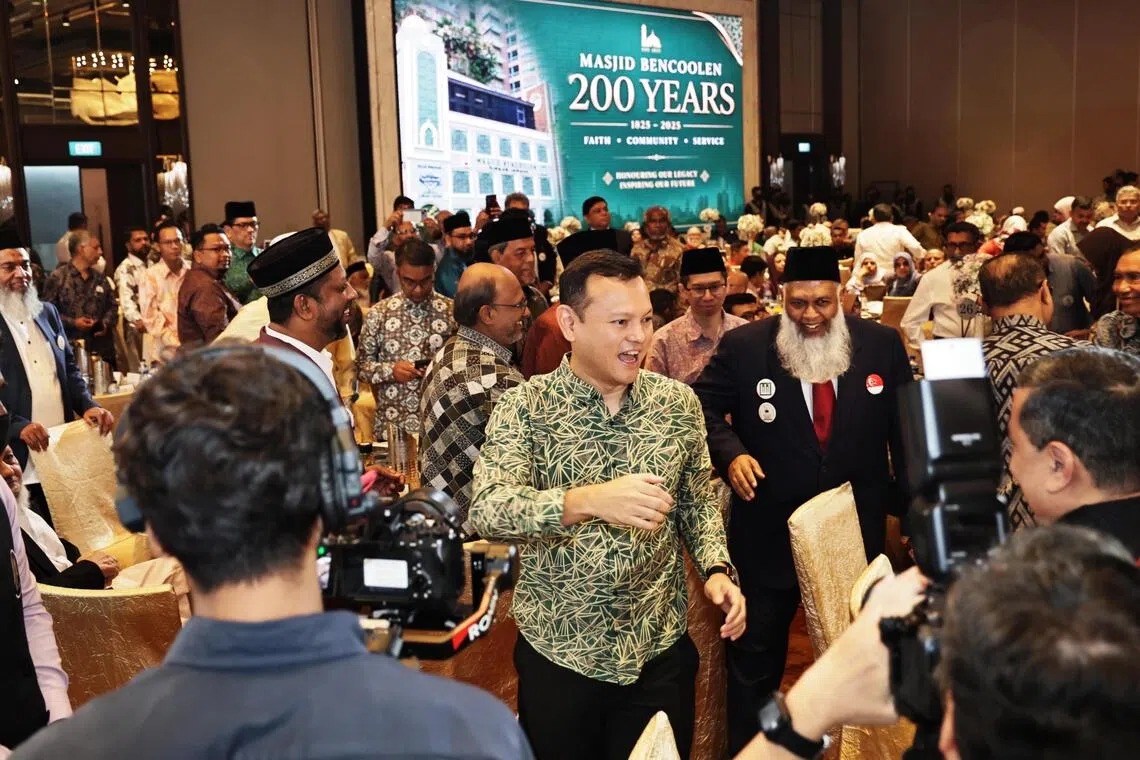
Acting Minister-in-charge of Muslim Affairs and Senior Minister of State for Defence Zaqy Mohamad (centre), said that the Indian Muslim community has played a significant role in the development of Singapore.
ST PHOTO: KELVIN CHNG
Published Oct 18, 2026, 06:45 PM
Updated Oct 18, 2026, 06:45 PM
Bencoolen Mosque marked 200 years with a book launch and a ceremony. Zaqy Mohamad praised Indian Muslims for helping shape Singapore’s faith, culture and society.
The mosque began in 1825 as a small attap-roofed structure for settlers from Bengkulu. After later redevelopments, it reopened in 2024 and now holds up to 1,100 worshippers.
Zaqy said the mosque reflects the Islamic idea of “amanah”, or trust and duty. Bencoolen Mosque vice-chairman Mohamed Abdul Jaleel’s life showed this spirit through service and charity.
SINGAPORE - When Sir Stamford Raffles came to Singapore in 1819, Indian Muslims from Bengkulu in Indonesia - called Bencoolen then - followed him to the island, bringing their faith, culture and community with them.
These traders, labourers and settlers lived along Bencoolen Street, Prinsep Street and Waterloo Street , with many dhobis - traditional Indian launderers - working along Rochor River . They built a humble attap-roofed structure on Bencoolen Street in 1825 to serve as a mosque for their growing community, marking the establishment of Masjid Bencoolen or Bencoolen Mosque.
Over the decades, the mosque was redeveloped several times. Following the latest renovations , it reopened in 2024 and can now accommodate up to 1,100 congregants at a time, a far cry from the few dozen worshippers back in 1825.
Bencoolen Mosque’s bicentennial was celebrated on Oct 18 with the launch of a book tracing its journey, and the contributions of the Indian Muslim community hailed by Zaqy Mohamad, Acting Minister-in-charge of Muslim Affairs and Senior Minister of State for Defence.
The mosque , which has become a key centre of Islamic learning in Singapore, is one of the oldest in the country. Three other mosques here are around two centuries old: Omar Kampong Melaka Mosque, Sultan Mosque and Jamae Mosque.
Speaking at Orchard Hotel at an event marking Bencoolen Mosque’s 200th anniversary, Zaqy said that the Indian Muslim community has played a significant role in the development of Singapore and has enriched the heritage of the country’s Muslim community.
Referring to the early Indian Muslim settlers, he said: “They built this mosque not just to be a place of worship but as an anchor for their community to find its footing in a new land.”
Through years of giving, service and philanthropy, the community sustained the mosque and ensured that it continued to serve the changing needs of its congregants, he said.
Zaqy added that Bencoolen Mosque has been at the heart of the Indian Muslim community’s deep and enduring contributions to Singapore’s social, cultural and economic fabric by nurturing individuals who serve their families, community and faith.
“These contributions are not just simply part of the Indian Muslim history - they are an important part of the Singapore story, of the rich and diverse heritage of our Muslim community here in Singapore,” he said.
The country’s Muslim community has always drawn strength from its diversity, said Zaqy, with people of different traditions, languages and experiences sharing a commitment to faith, family and service.
Zaqy also highlighted the Islamic concept of “amanah”, which he said has sustained Bencoolen Mosque for two centuries and which must continue to guide its future. Amanah refers to the responsibility entrusted to people to care for what they have inherited, and to leave something meaningful for those who come after.
He said that the journey of individuals like Bencoolen Mosque’s vice-chairman, Mohamed Abdul Jaleel , embodies the spirit of amanah.
While Jaleel was born in Singapore, his family moved to Chennai in India before returning in 1964 when he was six years old.
His father ran a small convenience store in Singapore, with a young Jaleel helping him and taking on whatever work was needed to support the family.
At Bencoolen Mosque, he and his family found a sense of community, belonging and faith, and he became a mosque volunteer in 1972.
He later founded property and logistics solutions company MES Group, where he is still chief executive, and engaged in philanthropic work supporting students, ex-offenders and the preservation of the Tamil cultural heritage.
Bencoolen Mosque, one of the oldest mosques in Singapore, celebrated its 200th anniversary on Oct 18. It has been redeveloped several times since it was established in 1825. ST PHOTO: KELVIN CHNG
Bencoolen Mosque, one of the oldest mosques in Singapore, celebrated its 200th anniversary on Oct 18. It has been redeveloped several times since it was established in 1825.
He then stepped forward to become Bencoolen Mosque’s chairman and continues to serve now as its vice-chairman.
Jaleel, now 68, noted that the Indian Muslim community is a minority here - there are seven Indian mosques in Singapore among the more than 70 mosques in the country.
Even so, he believes that, in time to come, the community will be able “to do better not only for their families but also for Singapore and their culture and heritage”.
Said Bencoolen Mosque chairman Mohamed Rafeeq Mohamed Yusoof: “One of our key priorities is nurturing the next generation of mosque leaders and volunteers. Our vision is to see more youth come onboard, not just as participants, but as stewards of Masjid Bencoolen’s legacy for the next 200 years.”
负责穆斯林事务的代理部长兼国防部高级政务部长扎基·穆罕默德(中)表示,印度穆斯林社群在新加坡的发展中发挥了重要作用。
《海峡时报》摄影:KELVIN CHNG
发布于 2026 年 10 月 18 日下午 6:45
更新于2026年10月18日下午6:45
明古连清真寺举行新书发布会和纪念仪式,庆祝其建成200周年。扎基·穆罕默德赞扬了印度穆斯林为塑造新加坡的信仰、文化和社会所做出的贡献。
这座清真寺始建于1825年,最初是为来自明古鲁的移民建造的一座小型亚答屋顶建筑。经过后来的重建,它于2024年重新开放,现在可容纳多达1100名信徒。
扎基表示,这座清真寺体现了伊斯兰教的“阿玛纳”(amanah)理念,即信任和责任。明古连清真寺副主席穆罕默德·阿卜杜勒·贾利勒的一生通过服务和慈善事业展现了这种精神。
新加坡——1819 年,斯坦福·莱佛士爵士来到新加坡,来自印度尼西亚明古鲁(当时称为明古连)的印度穆斯林跟随他来到这个岛屿,并将他们的信仰、文化和社区带到了这里。
这些商人、劳工和定居者居住在明古连街、普林西普街和滑铁卢街一带,许多印度传统洗衣工(dhobi)在罗卓河沿岸工作。1825年,他们在明古连街上建造了一座简朴的亚答屋顶建筑,作为他们不断壮大的社区的清真寺,这标志着明古连清真寺(Masjid Bencoolen)的建立。
几十年来,这座清真寺经过多次重建。最近一次翻修后,它于 2024 年重新开放,现在一次最多可容纳 1100 名信徒,这与 1825 年只有几十名信徒的情况截然不同。
10 月 18 日,为庆祝明古连清真寺建成 200 周年,发布了一本追溯其发展历程的书籍,并赞扬了印度穆斯林社区的贡献。穆斯林事务代理部长兼国防部高级国务部长扎基·穆罕默德对此表示赞扬。
这座清真寺已成为新加坡重要的伊斯兰教学习中心,也是该国最古老的清真寺之一。这里还有三座清真寺也拥有约两百年的历史:奥玛甘榜马六甲清真寺、苏丹清真寺和贾迈清真寺。
在乌节酒店举行的明古连清真寺200周年纪念活动上,扎基发表讲话称,印度穆斯林社群在新加坡的发展中发挥了重要作用,并丰富了该国穆斯林社群的文化遗产。
他谈到早期的印度穆斯林定居者时说:“他们建造这座清真寺不仅是为了礼拜,更是为了让他们的社群在新土地上站稳脚跟。”
他说,多年来,社区通过捐赠、服务和慈善活动,维持了清真寺的运转,并确保清真寺能够继续满足信众不断变化的需求。
Zaqy补充说,明古连清真寺一直是印度穆斯林社区对新加坡社会、文化和经济结构做出深刻而持久贡献的核心,它培养了服务于家庭、社区和信仰的人才。
他说:“这些贡献不仅仅是印度穆斯林历史的一部分,它们也是新加坡历史的重要组成部分,是我们新加坡穆斯林社区丰富多元的文化遗产的重要组成部分。”
扎基表示,该国的穆斯林社区一直以来都从其多样性中汲取力量,不同传统、语言和经历的人们共同致力于信仰、家庭和服务。
扎基还强调了伊斯兰教的“信托”(amanah)理念,他表示,正是这一理念支撑着明古连清真寺走过了两个世纪,也必将继续指引其未来。信托指的是人们肩负着照管所继承之物、为后人留下有意义遗产的责任。
他表示,像明古连清真寺副主席穆罕默德·阿卜杜勒·贾利勒这样的人的经历体现了诚信精神。
贾利尔出生于新加坡,他的家人后来搬到了印度钦奈,1964 年他六岁时返回新加坡。
他的父亲在新加坡经营一家小型便利店,年轻的贾利尔会帮父亲的忙,并承担任何工作来养家糊口。
在明古连清真寺,他和家人找到了归属感、社区感和信仰,并于 1972 年成为清真寺的志愿者。
后来,他创立了房地产和物流解决方案公司 MES 集团,至今仍担任首席执行官,并从事慈善工作,支持学生、前罪犯和保护泰米尔文化遗产。
新加坡最古老的清真寺之一——明古连清真寺于10月18日庆祝了其200周年纪念日。自1825年建成以来,该清真寺已多次重建。(海峡时报摄影:KELVIN CHNG)
新加坡最古老的清真寺之一——明古连清真寺于10月18日庆祝了其200周年纪念日。自1825年建成以来,它已经过多次重建。
随后他挺身而出,成为明古连清真寺的主席,并一直担任副主席至今。
现年 68 岁的贾利尔指出,印度穆斯林社群在这里属于少数群体——新加坡 70 多座清真寺中只有 7 座是印度清真寺。
即便如此,他仍然相信,在未来的某个时候,这个群体不仅能够“更好地照顾他们的家庭,还能更好地为新加坡、他们的文化和传统做出贡献”。
明古连清真寺主席穆罕默德·拉菲克·穆罕默德·优素福表示:“我们的首要任务之一是培养下一代清真寺领导人和志愿者。我们的愿景是看到更多年轻人加入我们,不仅是作为参与者,更是作为明古连清真寺遗产的守护者,在未来200年里传承下去。”