CNA Explains: What workers and bosses need to know about the dismissal of pregnant staffCNA解读:关于解雇怀孕员工,员工和老板需要了解什么
CNA speaks to lawyers about how pregnant employees can protect themselves from wrongful dismissal and when an expectant staff member can be legitimately fired.
CNA speaks to lawyers about how pregnant employees can protect themselves from wrongful dismissal and when an expectant staff member can be legitimately fired.
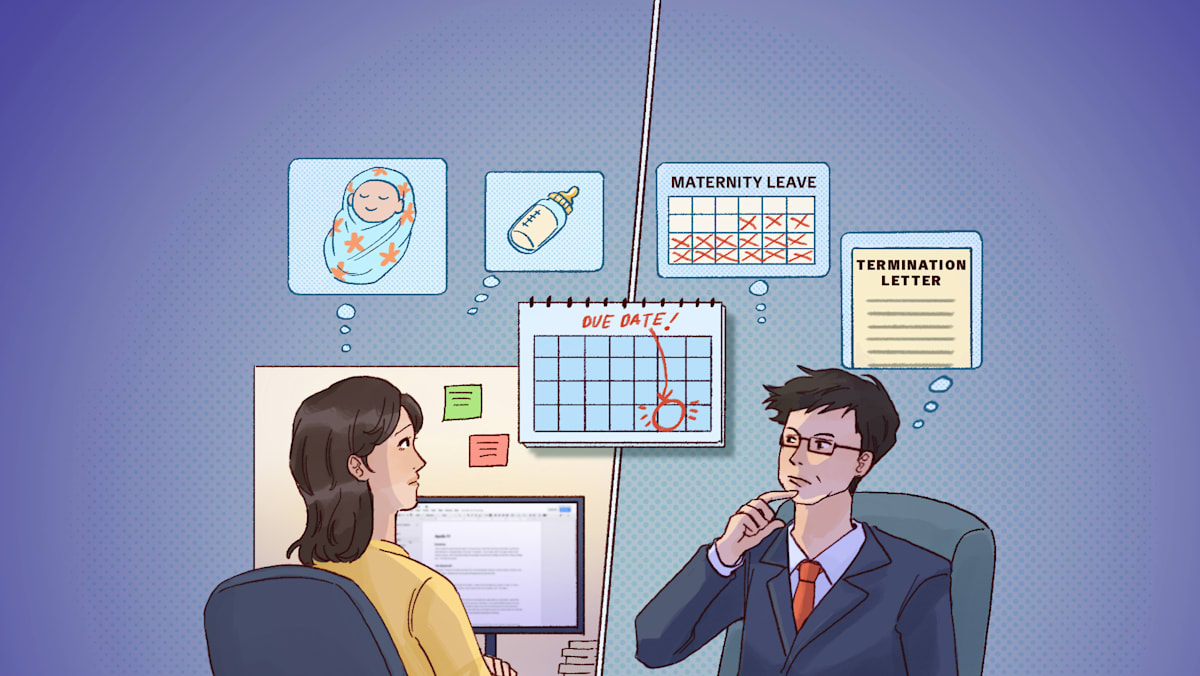
A recent tribunal awarded compensation to a woman who was sacked while pregnant. When can expectant staff be lawfully let go, and how can they protect themselves from unfair dismissal? (Illustration: CNA/Clara Ho)
This audio is generated by an AI tool.
SINGAPORE: Can a company sack an employee simply because she is expecting a baby or due to go on maternity leave? Under Singapore law, the short answer is no – yet dozens of women in past years have lodged claims alleging that is exactly what happened.
Last month, an Employment Claims Tribunal (ECT) issued a judgment awarding S$19,800 (US$15,520) to a woman who was wrongfully dismissed because of her pregnancy and maternity leave .
The Tripartite Alliance for Fair and Progressive Employment Practices (TAFEP) received 49 pregnancy-related discrimination complaints between 2019 and 2025, according to a written parliamentary response by Acting Minister for Manpower Jasmin Lau on Oct 7.
A total of 387 pregnancy-related wrongful dismissal claims were filed at the Tripartite Alliance for Dispute Management (TADM) between April 2019 and 2025, she added.
Of these, 301 were resolved through mediation by TADM, while the remainder were allowed to file claims with the ECT.
Of the 72 who proceeded to file claims at the tribunals, 27 were awarded compensation.
But what counts as wrongful dismissal for a pregnant employee, and is there any way that a pregnant employee can be lawfully dismissed?
CNA spoke to lawyers to find out more.
Why the tribunal ruled in her favour?
Referring to the ECT case last month that resulted in a payout, Mr Johnathan Lee Kui Bao, a lawyer at Fong & Fong law firm who was previously a prosecutor with the Ministry of Manpower, noted there were two parts to the case.
The first part relates to whether the woman's own resignation amounted to a dismissal, and the second relates to whether such a dismissal was "without just cause or excuse".
The tribunal found that it was both. In particular, it found that the company's real reason was the woman's impending absence from work, due to her hospitalisation leave and subsequent maternity leave.
As both types of leave are entitlements under Singapore law, dismissing her for exercising these rights was wrongful, said Mr Lee.
What counts as wrongful dismissal for pregnant women or women on maternity leave?
A dismissal may be wrongful where the real reason for it is pregnancy, maternity, or an employee's exercise of a maternity-related employment right, said Ms Amarjit Kaur, Withers KhattarWong's head of its Singapore employment team.
The Employment Act prohibits an employer from dismissing a pregnant employee, or issuing her a notice of dismissal, without sufficient cause that is unrelated to pregnancy, said Ms Kaur.
This protection applies to female employees who have served the employer for at least three months, and is triggered upon certification of her pregnancy by a doctor.
Ms Kaur listed some examples of dismissing an employee without sufficient cause:
Because she is pregnant or will be absent on maternity leave
To avoid paying maternity benefits
Because she took pregnancy-related hospitalisation leave or medical leave
Giving a purported reason such as poor performance or redundancy that is not justified by the evidence, or
Through conduct that effectively compels her to resign
Can a pregnant employee be lawfully dismissed?
A pregnant employee can be dismissed for a genuine reason unrelated to the pregnancy, said Mr Mato Kotwani, a partner at PDLegal Singapore.
This can be serious misconduct, poor performance, or a redundancy exercise.
"The important question is whether the employer can show that the stated reason is real, objectively supported and unrelated to the pregnancy or maternity leave," said Mr Kotwani.
Examples of misconduct by pregnant employees that can result in legitimate firing include dishonest conduct such as theft or misappropriation of company assets, said Mr Faraaz Amzar, a director at Eugene Thuraisingam Asia and a former ECT magistrate.
"However, the company must be able to substantiate the allegations with evidence," he said.
If an employer wishes to dismiss a pregnant employee without notice for misconduct, they can do so only after due inquiry, where they set out the allegations against the employee and give her a genuine opportunity to explain herself, said Mr Lee.
The employer should maintain proper documentation and evidence of both the cause for dismissal and the inquiry process, he added.
Mr Kotwani said that the protection is stronger once the employee is actually on maternity leave. The Employment Act specifically restricts employers from giving notice of dismissal during that period.
Even if there is a legitimate reason for termination, separate maternity-benefit obligations may remain, said Ms Kaur.
"MOM states that a pregnant employee who has served her employer for at least three months and is dismissed without sufficient cause or retrenched is still entitled to the applicable maternity benefits," she said.
How can workers protect themselves?
Ms Kaur said an employee who is pregnant or on maternity leave should first consider whether the dismissal notice was given during her maternity leave itself, or timed to expire during maternity leave.
"This is unlawful outright under Section 81 of the Employment Act and will not require a further 'sufficient cause' analysis," she said.
If the dismissal notice was given at any other point during the pregnancy and the employee has worked for at least three months, the employer will have to show "sufficient cause", said Ms Kaur.
Even if the employer cites redundancy or business reorganisation, a pregnant employee can still challenge the dismissal if it is wrongful.
If the employer is alleging misconduct by the employee, she should make sure the employer has conducted a due inquiry and keep clear, contemporaneous records, said Ms Kaur.
It all boils down to evidence, agreed Mr Lee, advising employees to keep a written record and to save messages, emails and performance appraisals.
After any important conversation, send a short email setting out what was said, he added.
"The employee in this case did exactly that, asking that any decision to terminate her be put 'in black and white'," said Mr Lee.
If an employer suddenly raises performance concerns, removes responsibilities or suggests termination, ask for the reasons in writing, added Mr Kotwani.
"Do not resign in haste: a worker who resigns has to show that the resignation was forced, so get advice before deciding," said Mr Lee.
He added that such workers should seek help early, from the TADM, a union or a lawyer, as wrongful dismissal claims generally have to be filed within one month from the last day of employment.
Ms Kaur said MOM's maternity-dispute guidance also states that a claim concerning wrongful dismissal during pregnancy and unpaid maternity benefits should be filed after dismissal and within two weeks of the child's birth.
Employees should seek prompt advice on which deadline applies to them, said Ms Kaur.
Can it be a wrongful dismissal if the employee is forced to resign?
Discrimination is rarely expressed that directly, said Mr Kotwani. He said a tribunal can infer the real reason from the surrounding circumstances.
"The law recognises the concept of 'constructive dismissal'," explained Mr Faraaz.
"This means that where the employer has 'forced' the employee to resign, through its words and conduct, the law will recognise that the employee has been 'constructively' dismissed," he said.
This occurs where the employer's conduct has left the worker with no practical alternative or choice but to resign. The tribunal can then find that an employee has been wrongfully dismissed, even though the employee technically resigned, said Mr Faraaz.
However, not every difficult workplace interaction will amount to constructive dismissal, said Ms Kaur. The employee must establish that the resignation was involuntary and caused by the employer's conduct.
In other words, the employee must have evidence to support her claim.
Can you secretly record your boss to protect yourself from unfair dismissal?
In this case, the woman had a recording of a call with her boss that was a "crucial piece of evidence", said Mr Lee.
He said it is generally not a criminal offence in Singapore to record a conversation you are part of, and a court can rely on such recordings.
"The risks lie in how a recording is made and used," he said.
A person does not generally need the other side's consent to record a conversation they are part of in a phone call or an ordinary meeting.
However, being open about it is better practice, said Mr Lee.
"If an employer has a clear policy against recording, or expressly asks an employee not to record, doing so anyway, especially secretly, may be treated as disobeying an instruction and can undermine the employee’s credibility," said Mr Lee.
He stressed that recordings should be used only to obtain legal advice or pursue a claim and should not be shared online. If it is, and confidential information is made public, employers may initiate proceedings for damages.
Mr Lee added that employers are held to a different standard under the Personal Data Protection Act (PDPA) - it does not need consent from employees where recording its staff if the recording is reasonable for managing the employment relationship.
However, it must tell them why it is recording, such as through an employment contract, an employee handbook or through HR policies.
Secretly recording staff without such notice risks breaching the PDPA, said Mr Lee.
Employers may also restrict staff from recording meetings, but any such policy should be clear, communicated in advance and applied fairly, he said.
Ms Kaur said an employee recording a conversation with a colleague or manager for their own personal protection generally falls outside the PDPA.
However, if a company's internal policies expressly prohibit covert recording, doing so can expose the employee to disciplinary action, which might then form grounds of misconduct for dismissal, said Ms Kaur.
A contemporaneous written note or follow-up email is often a cleaner way of preserving evidence, Mr Kotwani said.
How will the upcoming Workplace Fairness Act change things?
The Workplace Fairness Act is expected to come into effect in end-2027, said Ms Kaur.
It protects workers against discrimination and prohibits employers from making adverse employment decisions based on protected characteristics like sex, marital status and caregiving responsibilities, she said.
It also includes strict provisions against retaliation for employees who report discriminatory behaviour, said Ms Kaur.
The upcoming Act also lists pregnancy and caregiving responsibilities among its protected characteristics, and will initially apply to employers with 25 or more employees, said Mr Lee.
He said there are clear lessons for employers here, as the court published the judgment last month to "shed light on the kind of adverse workplace culture that working women who choose to have children may encounter from certain employers".
"Beyond legal liability, there are risks to an employer’s reputation and to workforce morale. Decisions on performance or conduct must rest on documented, legitimate grounds unrelated to the pregnancy," he said.
"If an employer has legitimate reasons to dismiss a pregnant employee, it should carry out the process sensitively: hold difficult conversations in person, with HR present, and confirm them in writing," said Mr Lee.
"Above all, managers should be trained, because the company is answerable for what they say and write. Here, a WhatsApp message and a phone call became key evidence against the employer. Employers must level up and prepare for the higher standards expected of them."
Want an issue or topic explained? Email us at digitalnews [at] mediacorp.com.sg . Your question might become a story on our site.
Get our pick of top stories and thought-provoking articles in your inbox
Stay updated with notifications for breaking news and our best stories
Join our channel for the top reads for the day on your preferred chat app
CNA采访了律师,了解怀孕员工如何保护自己免受不当解雇,以及怀孕员工在什么情况下可以被合法解雇。
近日,一家仲裁庭裁定一名怀孕期间被解雇的女性获得赔偿。怀孕员工在什么情况下可以被合法解雇?她们又该如何保护自己免受不公平解雇?(插图:CNA/Clara Ho)
这段音频由人工智能工具生成。
新加坡:公司可以仅仅因为员工怀孕或即将休产假就解雇她吗?根据新加坡法律,答案是否定的——然而,过去几年里,数十名女性提出申诉,声称她们就遭遇了这种情况。
上个月,就业索赔法庭 (ECT) 作出判决,判令雇主向一名因怀孕和产假而被错误解雇的妇女支付 19,800 新元(15,520 美元)的赔偿金。
根据人力部代理部长刘嘉敏于 10 月 7 日在国会作出的书面答复,公平与进步就业实践三方联盟 (TAFEP) 在 2019 年至 2025 年间收到了 49 起与怀孕相关的歧视投诉。
她补充说,2019 年 4 月至 2025 年期间,三方争议管理联盟 (TADM) 共受理了 387 起与怀孕相关的非法解雇索赔。
其中 301 起案件通过 TADM 的调解得到解决,其余案件则允许向 ECT 提出索赔。
在向法庭提出索赔的 72 人中,有 27 人获得了赔偿。
但是,对于怀孕的员工来说,什么才算是非法解雇?怀孕的员工是否有任何合法解雇的方式?
CNA 已与律师联系以了解更多信息。
法庭为何判她胜诉?
上个月,在人力部检察官曾任职的方方律师事务所律师李奎宝先生在谈到导致赔偿的ECT案件时指出,该案件分为两个部分。
第一部分涉及该女子的辞职是否构成解雇,第二部分涉及这种解雇是否“没有正当理由或借口”。
仲裁庭认定两者兼而有之。特别是,仲裁庭认定,该公司真正的理由是该女子即将因住院和产假而缺勤。
李先生表示,由于这两种休假都是新加坡法律规定的权利,因此因她行使这些权利而解雇她是错误的。
对于怀孕妇女或休产假妇女而言,什么情况构成非法解雇?
Withers KhattarWong 新加坡就业团队负责人 Amarjit Kaur 女士表示,如果解雇的真正原因是怀孕、产假或员工行使与产假相关的就业权利,则解雇可能是错误的。
考尔女士表示,《雇佣法》禁止雇主在没有与怀孕无关的充分理由的情况下解雇怀孕雇员或向其发出解雇通知。
这项保护适用于为雇主服务至少三个月的女员工,并在医生证明其怀孕后生效。
考尔女士列举了一些无正当理由解雇员工的例子:
因为她怀孕了或将休产假
为了避免支付产假福利
因为她请了与怀孕相关的住院假或病假
给出诸如业绩不佳或人员冗余等毫无证据支持的所谓理由,或者
通过某种行为,实际上迫使她辞职。
解雇怀孕员工是否合法?
新加坡 PDLegal 律师事务所合伙人 Mato Kotwani 先生表示,即使没有与怀孕相关的正当理由,怀孕的员工也可以被解雇。
这可能是严重的渎职行为、业绩不佳,或者裁员。
科特瓦尼先生说:“关键问题是,雇主能否证明所陈述的理由是真实的、有客观依据的,并且与怀孕或产假无关。”
Eugene Thuraisingam Asia 的董事兼前 ECT 法官 Faraaz Amzar 先生表示,怀孕员工的不当行为,例如盗窃或挪用公司资产等不诚实行为,可能会导致被合法解雇。
“但是,该公司必须能够用证据来证实这些指控,”他说。
李先生表示,如果雇主想以行为不端为由解雇怀孕的员工,且不提前通知,则只能在经过适当调查后才能这样做,调查中雇主应列出对该员工的指控,并给予她一个真正的解释机会。
他还补充说,雇主应妥善保存解雇原因和调查过程的文件和证据。
科特瓦尼先生表示,员工一旦真正开始休产假,就能获得更强有力的保护。《雇佣法》明确规定,雇主不得在产假期间发出解雇通知。
考尔女士表示,即使有正当理由终止雇佣关系,单独的产假福利义务可能仍然存在。
“人力部表示,怀孕的员工如果已为雇主服务至少三个月,即使没有正当理由被解雇或被裁员,仍然有权享受适用的产假福利,”她说。
工人如何保护自己?
考尔女士表示,怀孕或休产假的员工首先应该考虑解雇通知是否是在其产假期间发出,或者是否是为了在产假期间到期而特意设置的。
“这完全违反了《雇佣法》第 81 条的规定,无需进一步进行‘充分理由’分析,”她说。
考尔女士表示,如果解雇通知是在怀孕期间的任何其他时间发出,并且该员工已工作至少三个月,则雇主必须证明有“充分理由”。
即使雇主以裁员或业务重组为由解雇,怀孕的员工如果认为解雇不合理,仍然可以提出质疑。
考尔女士说,如果雇主指控雇员有不当行为,她应该确保雇主已进行适当的调查,并保留清晰、及时的记录。
李先生也认同,一切最终都取决于证据,他建议员工保留书面记录,并保存短信、电子邮件和绩效考核记录。
他补充说,每次重要谈话结束后,都要发送一封简短的电子邮件,概述谈话内容。
李先生说:“本案中的员工正是这样做的,她要求任何解雇她的决定都必须‘白纸黑字’写下来。”
科特瓦尼先生补充说,如果雇主突然提出绩效问题、解除职责或建议解雇,请要求以书面形式说明理由。
李先生说:“不要仓促辞职:辞职的员工必须证明辞职是被迫的,所以在做决定之前要先咨询专业人士的意见。”
他还补充说,这类工人应该尽早向TADM(土耳其劳工和失业救济委员会)、工会或律师寻求帮助,因为不当解雇索赔通常必须在最后一天工作后的一个月内提出。
考尔女士表示,人力部关于产假纠纷的指导意见还规定,有关怀孕期间不当解雇和未支付产假福利的索赔应在解雇后且在孩子出生后两周内提出。
考尔女士表示,员工应及时寻求建议,了解哪个截止日期适用于自己。
如果员工是被迫辞职,这是否构成非法解雇?
科特瓦尼先生说,歧视很少会如此直接地表现出来。他表示,法庭可以根据具体情况推断出真正的原因。
“法律承认‘推定解雇’的概念,”法拉兹先生解释说。
他说:“这意味着,如果雇主通过言行‘迫使’雇员辞职,法律将认定该雇员是被‘推定’解雇的。”
这种情况发生在雇主的行为导致员工别无选择,只能辞职时。法拉兹先生表示,即使员工从技术上讲是主动辞职,仲裁庭也可以认定该员工被非法解雇。
考尔女士指出,并非所有职场冲突都会构成变相解雇。员工必须证明其离职并非出于自愿,而是由雇主的行为所致。
换句话说,该员工必须有证据支持她的说法。
为了避免被不公平解雇,你可以秘密录音吗?
李先生说,在本案中,这名女子有一段与老板通话的录音,这是一份“关键证据”。
他说,在新加坡,录制自己参与的对话通常不属于刑事犯罪,法院可以依赖此类录音作为证据。
他说:“风险在于录音的制作和使用方式。”
在电话通话或普通会议中,一个人通常不需要征得对方的同意就可以录制自己参与的对话。
李先生表示,坦诚相待才是更好的做法。
李先生说:“如果雇主有明确的政策禁止录音,或者明确要求员工不要录音,那么员工仍然进行录音,尤其是秘密录音,可能会被视为违抗指令,并会损害员工的信誉。”
他强调,录音只能用于获取法律建议或提起诉讼,不得在网上分享。如果分享了录音,导致机密信息被公开,雇主可能会提起损害赔偿诉讼。
李先生补充说,根据《个人数据保护法》(PDPA),雇主适用不同的标准——如果录音是为了管理雇佣关系而合理进行的,则雇主在录音员工时无需征得员工同意。
但是,必须告知他们为什么要进行录音,例如通过雇佣合同、员工手册或人力资源政策。
李先生表示,在未事先通知的情况下秘密录制员工音频可能违反《个人数据保护法》。
他还表示,雇主也可以限制员工录制会议,但任何此类政策都应该明确,提前沟通,并公平执行。
考尔女士表示,员工为了保护自身人身安全而录制与同事或经理的对话,通常不属于《个人数据保护法》的管辖范围。
考尔女士表示,但是,如果公司内部政策明确禁止秘密录音,那么这样做可能会使员工受到纪律处分,进而构成解雇的不当行为理由。
科特瓦尼先生表示,当时的书面记录或后续电子邮件通常是保存证据的一种更清晰的方式。
即将出台的《工作场所公平法案》将会带来哪些改变?
考尔女士表示,《工作场所公平法案》预计将于 2027 年底生效。
她说,该法保护劳动者免受歧视,并禁止雇主基于性别、婚姻状况和照顾责任等受保护特征做出不利的雇佣决定。
考尔女士表示,该法案还包含严格的条款,禁止对举报歧视行为的员工进行报复。
李先生表示,即将出台的法案还将怀孕和照顾责任列为受保护的特征,并将首先适用于拥有 25 名或以上雇员的雇主。
他表示,这对雇主来说有明确的教训,因为法院上个月公布了判决,目的是“揭示选择生育子女的职业女性可能会在某些雇主那里遇到的不利的工作场所文化”。
“除了法律责任之外,还会对雇主的声誉和员工士气造成风险。对员工绩效或行为的决定必须基于有据可查的、合法的理由,且与怀孕无关,”他说道。
李先生说:“如果雇主有正当理由解雇怀孕的员工,就应该妥善处理此事:当面进行艰难的谈话,人力资源部门在场,并以书面形式确认。”
“最重要的是,管理人员应该接受培训,因为公司要对他们的言行负责。在这个案例中,一条WhatsApp消息和一个电话通话就成了指控雇主的关键证据。雇主必须提升自身水平,为更高的标准做好准备。”
想了解某个问题或话题?请发送邮件至 digitalnews [at] mediacorp.com.sg。您的提问可能会成为我们网站上的报道内容。
订阅我们的邮件,即可获取精选热点新闻和引人深思的文章。
订阅通知,第一时间获取突发新闻和精彩报道。
加入我们的频道,即可在您常用的聊天应用上获取当日热门文章。