Germany, France, Poland push for closer EU-Ukraine defense ties德国、法国和波兰推动欧盟与乌克兰加强防务联系
The group of three countries, known as the Weimar Triangle, supported the quick adoption of the EU’s proposed 19th sanctions package against Russia.
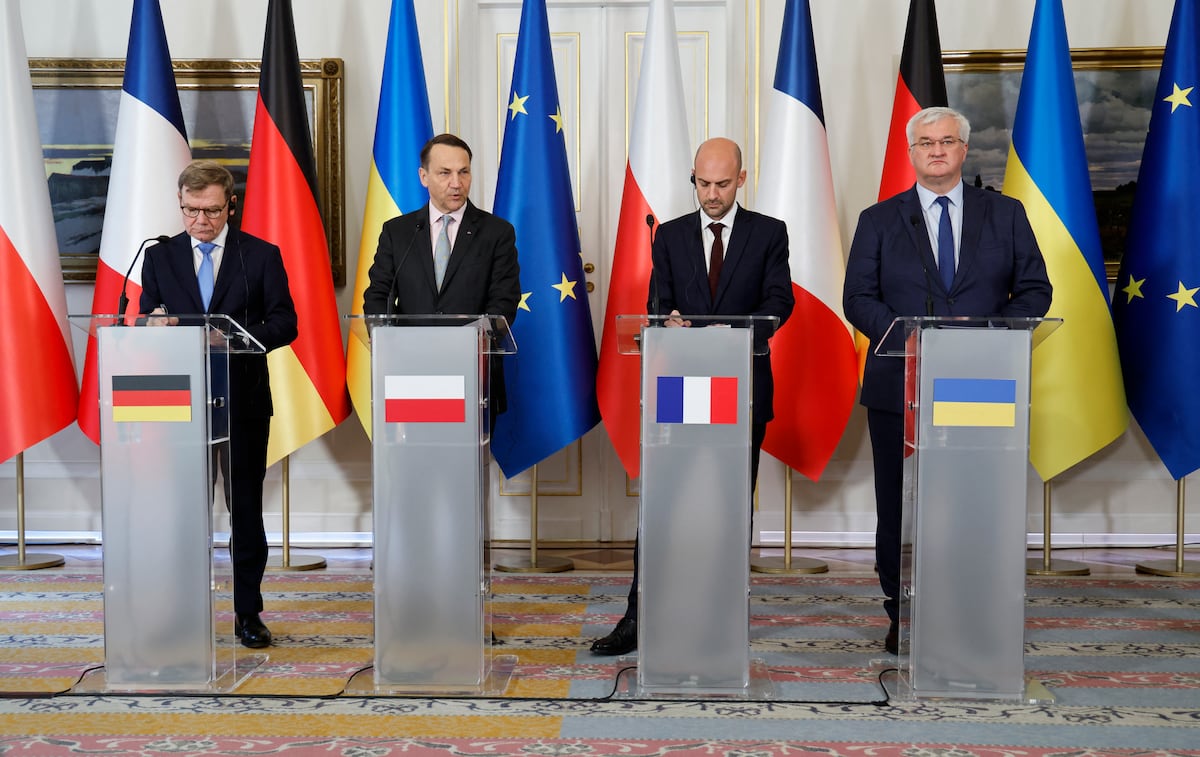
BERLIN — Germany, France and Poland support stronger European integration to counter Russia, potentially mobilizing frozen Russian financial assets to support Ukraine under an EU-proposed scheme, as well as deeper defense integration with Kyiv.
The announcements, delivered in the form of a joint statement on Tuesday, came following a trilateral meeting held the prior day in Poland’s capital Warsaw.
The nations’ three foreign ministers called for swift progress in the EU accession negotiations with Ukraine, suggesting the opening of a negotiation cluster dubbed “fundamentals.” This would be a significant procedural step forward, as this cluster — which includes rule of law, financial control, and anti-corruption measures — is the first to be opened and the last to be closed in the process of joining the Union.
The top diplomats also cited Moscow’s recent massive airstrikes against Ukraine, which the group of three said “would not go unanswered.” They vowed continued and expanded support for Kyiv, including through the provision of more air defense systems, until a “just and lasting peace in Europe” is secured. This would require “that financing for both short- and long-term military support must be significantly increased,” the foreign ministers said, while pushing for the “rapid integration” of Ukraine into the European defense technological and industrial base.
Several initiatives to that end have been launched this year, including a German government campaign to integrate the German and Ukrainian military-industrial complexes, the production of missile fuel in Denmark by a Ukrainian company, and a €6 billion ($7 billion) drone pact between Ukraine and the EU .
The group of three countries, known as the Weimar Triangle, supported the quick adoption of the EU’s proposed 19th sanctions package, which will, for the first time, sanction companies in third countries that financially support Russia’s war efforts, such as oil refineries processing Russian oil. It also proposes implementing a full EU embargo on Russian liquefied natural gas. A blanket embargo does not yet exist, although significant restrictions have been put in place.
Poland, Germany and France also announced they would intensify their efforts to counter Russia’s shadow fleet of ageing and often unregistered tankers in the Baltic Sea, which it uses to circumvent sanctions on its oil industry, which provides crucial revenue for the government. They called on their partners to do the same and ensure that sanctions are fully enforced.
The three countries also offered their support for an EU initiative to further leverage frozen Russian government assets to support Ukraine in the form of “reparation loans,” saying that “the aggressor - not the victim - must bear full responsibility, including financial responsibility, for this war.”
Despite historic tensions between Poland and Ukraine over grain exports, and the ongoing Franco-German drama surrounding cooperation on the Future Combat Air System project, the joint declaration by the three countries lent strong support to the idea of deeper European integration.
Historically, EU action on defense matters has been viewed with great suspicion by individual capitals, as security was considered a national prerogative. The mood changed following Russia’s full-scale invasion of Ukraine three years ago and unprecedented tensions with the U.S., allowing for a dramatic deepening of European integration in the military realm and of EU power in defense matters.
Linus Höller is Defense News' Europe correspondent and OSINT investigator. He reports on the arms deals, sanctions, and geopolitics shaping Europe and the world. He holds master’s degrees in WMD nonproliferation, terrorism studies, and international relations, and works in four languages: English, German, Russian, and Spanish.
柏林——德国、法国和波兰支持加强欧洲一体化以对抗俄罗斯,并可能根据欧盟提出的方案调动冻结的俄罗斯金融资产来支持乌克兰,以及与基辅进行更深层次的防务一体化。
这些消息于周二以联合声明的形式发布,此前一天,三方在波兰首都华沙举行了会晤。
三国外长呼吁加快乌克兰加入欧盟的谈判进程,并建议启动一个名为“基本要素”的谈判小组。这将是程序上的重要一步,因为该小组涵盖法治、金融监管和反腐败措施等内容,是加入欧盟进程中第一个启动、最后一个结束的谈判小组。
三国高级外交官还提及莫斯科近期对乌克兰发动的大规模空袭,并表示“绝不会对此置之不理”。他们誓言将继续并扩大对基辅的支持,包括提供更多防空系统,直至“欧洲实现公正持久的和平”。三国外长表示,这将需要“大幅增加短期和长期军事援助的资金”,同时敦促乌克兰“迅速融入”欧洲防务技术和工业基础。
今年已启动多项旨在实现这一目标的举措,包括德国政府发起的整合德国和乌克兰军工联合体的运动、乌克兰公司在丹麦生产导弹燃料,以及乌克兰与欧盟之间价值 60 亿欧元(70 亿美元)的无人机协议。
由三个国家组成的“魏玛三角”集团支持欧盟迅速通过其提出的第19项制裁方案。该方案将首次制裁那些为俄罗斯战争提供资金支持的第三国公司,例如加工俄罗斯石油的炼油厂。方案还提议对俄罗斯液化天然气实施全面禁运。尽管目前尚未实施全面禁运,但已采取了多项重要限制措施。
波兰、德国和法国也宣布,将加大力度打击俄罗斯在波罗的海的“影子船队”。这支由老旧且往往未注册的油轮组成的船队被用来规避对其石油行业的制裁,而石油行业是俄罗斯政府的重要收入来源。三国呼吁其他伙伴国采取同样的行动,并确保制裁得到全面执行。
这三个国家还表示支持欧盟的一项倡议,即进一步利用冻结的俄罗斯政府资产以“赔偿贷款”的形式支持乌克兰,并表示“侵略者而非受害者必须承担这场战争的全部责任,包括经济责任”。
尽管波兰和乌克兰之间因粮食出口存在历史性紧张关系,而且法德两国在未来作战空中系统项目合作方面也持续存在争议,但三国联合声明仍然有力地支持了深化欧洲一体化的理念。
历史上,欧盟在防务领域的行动一直受到各国首都的强烈质疑,因为安全被视为国家专属领域。然而,三年前俄罗斯全面入侵乌克兰以及与美国之间前所未有的紧张关系改变了这种局面,使得欧洲在军事领域的融合以及欧盟在防务领域的影响力显著增强。
林努斯·霍勒是《防务新闻》的欧洲记者和开源情报调查员。他报道影响欧洲乃至全球的军火交易、制裁和地缘政治。他拥有大规模杀伤性武器不扩散、恐怖主义研究和国际关系三个硕士学位,并精通英语、德语、俄语和西班牙语四种语言。