Conditions to Najib’s house arrest: Not SOP but subsidiary legislation and published in the Gazette — Hafiz Hassan纳吉布居家监禁的条件:并非标准作业程序,而是附属立法,并在政府公报上公布——哈菲兹·哈桑
OCTOBER 19 -- I refer to the report that the Malaysian Prisons Department is now in the final phase of drafting regulations and conditions for the implementation of home detention...
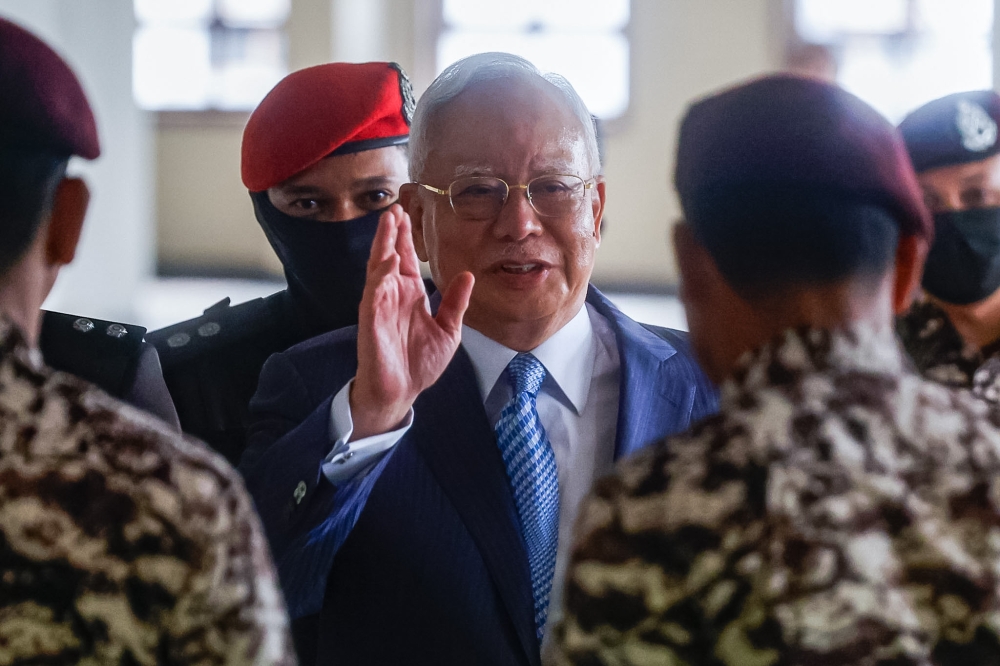
The Malaysian Prisons Department is finalising regulations for Datuk Seri Najib Razak's house arrest following his conditional pardon.
Home Minister Saifuddin Nasution Ismail emphasised setting specific conditions for Najib's house arrest, including rehabilitation activities and electronic monitoring.
It's suggested that these conditions should be formalised as secondary legislation under the Prison Act 1995 instead of being merely procedural.
OCTOBER 19 -- I refer to the report that the Malaysian Prisons Department is now in the final phase of drafting regulations and conditions for the implementation of home detention following the conditional pardon decision that allows former prime minister Datuk Seri Najib Razak to serve the remainder of his prison sentence through this method.
Home Minister Datuk Seri Saifuddin Nasution Ismail said that the matter is being pursued following a letter from the Pardons Board secretariat, which allows the Malaysian Prisons Department to set conditions for the implementation of house arrest.
When news broke exactly a month ago that Najib had been granted a conditional royal pardon allowing him to serve the remainder of his prison sentence under house arrest , I shared the conditions that may be attached to Najib serving his prison sentence under house arrest.
Allow me to share the conditions again, namely:
(a) attend any such counselling, therapy, test, assessment, and other activity for the purpose of facilitating his rehabilitation and reintegration into society as the prison authorities may require, at any time and place that the prison authorities may specify;
(b) report to provide a specimen of his urine or hair for testing at any time and place that the prison authorities may specify;
(c) remain indoors at his place of residence, or at any other place that the prison authorities may specify, at any time that the prison authorities may specify;
(d) allow the prison authorities and any authorised person to his place of residence, or any other place he is required to remain at, to determine his compliance with any condition of the house arrest or for any purpose relating to his rehabilitation;
(e) not consume any controlled drug, psychoactive substance, specified psychoactive substance or alcoholic beverage, or use or inhale any intoxicating substance;
(f) not have in his possession any controlled drug or psychoactive substance;
(g) to enable the electronic monitoring of his whereabouts —
(i) wear any electronic monitoring device issued by the prison authorities on any part of his person that the prison authorities may specify;
(ii) allow the prison authorities and any authorised person to enter his place of residence, or any other place he is required to remain at, to install, maintain, repair or retrieve any electronic monitoring device;
(iii) comply with all requirements to ensure the proper functioning of any electronic monitoring device issued to him or installed at his place of residence or any other place he is required to remain at;
(iv) comply with all reporting requirements imposed on him;
(v) not tamper with any electronic monitoring device issued to him or installed at his place of residence, or any other place he is required to remain at, or otherwise prevent or obstruct the electronic monitoring of his whereabouts; and
(h) comply with such other conditions as the Commissioner-General of Prisons may specify in the order.
Since Saifuddin conceded, rightly, that “[our] country has never had (house arrest) before, but suddenly there is” the Prisons Department may adopt the above conditions which are some of the conditions under neighbouring Singapore’s home detention order (see Section 54(1) of the Prisons Act 1993).
A word of caution though.
Let not the conditions to Najib’s house arrest be standard operating procedures (SOP).
Let the conditions be made subsidiary or secondary legislation under the Prison Act 1995 (Act 537) and therefore published in the Gazette.
* This is the personal opinion of the writer or publication and does not necessarily represent the views of Malay Mail.
Schools are closed. Are we ready for PdPR again? — Shazlin Niza Ab Razak
Protests in Europe: Understanding public concerns without deepening divisions — Nurul Fardini Zakaria
A student asked about corruption. Why did it go viral? — Khoo Ying Hooi
DKU hauls Negeri Sembilan MB Ismail Lasim, 16 others to court over throne dispute
ECRL fares start at RM60 for Gombak-Kuantan route, RM125 one-way to Kota Bharu
Terengganu woman loses over RM80,000 in online investment scam
马来西亚监狱部门正在敲定拿督斯里纳吉·拉扎克获得有条件赦免后居家监禁的相关规定。
内政部长赛夫丁·纳苏蒂安·伊斯梅尔强调,要为纳吉布的软禁设定具体条件,包括康复活动和电子监控。
有人建议将这些条件正式纳入 1995 年《监狱法》的附属立法,而不是仅仅作为程序性规定。
10 月 19 日——我指的是有报道称,马来西亚监狱部门目前正在最后阶段起草规章和条件,以便在有条件赦免决定允许前首相拿督斯里纳吉布·拉扎克通过这种方式服完剩余刑期后,实施居家监禁。
内政部长拿督斯里赛夫丁·纳苏蒂安·伊斯梅尔表示,此事是根据赦免委员会秘书处的一封信函进行处理的,该信函允许马来西亚监狱部门设定实施居家监禁的条件。
一个月前,当纳吉布获得有条件皇家赦免,允许他居家监禁服完剩余刑期的消息传出时,我分享了纳吉布居家监禁服刑可能附带的条件。
请允许我再次重申一下条件,即:
(a)参加监狱当局可能要求的任何此类咨询、治疗、测试、评估和其他活动,以促进其康复和重新融入社会,时间地点由监狱当局指定;
(b)应监狱当局指定的任何时间和地点提供尿液或毛发样本进行检测;
(c)待在其住所内,或监狱当局指定的任何其他地点,并在监狱当局指定的任何时间待在监狱当局指定的任何其他地点;
(d)允许监狱当局和任何获授权的人员前往他的住所或他被要求停留的任何其他地方,以确定他是否遵守居家监禁的任何条件或出于与他的改造有关的任何目的;
(e)不得服用任何管制药物、精神活性物质、特定精神活性物质或酒精饮料,或使用或吸入任何致幻物质;
(f)不得持有任何管制药物或精神活性物质;
(g)以便对其行踪进行电子监控——
(i)佩戴监狱当局指定的任何电子监控设备,安装在其身体的任何部位;
(二)允许监狱当局和任何获授权的人员进入他的住所或他被要求停留的任何其他地方,以安装、维护、修理或取回任何电子监控设备;
(三)遵守所有要求,以确保发给他或安装在他住所或他被要求停留的任何其他地方的任何电子监控设备正常运作;
(四)遵守对他施加的所有报告要求;
(五)不得篡改发给他或安装在他住所或他被要求停留的任何其他场所的任何电子监控设备,或以其他方式阻止或妨碍对他行踪的电子监控;
(h)遵守监狱总监在命令中可能规定的其他条件。
既然赛夫丁承认(而且是正确的),“我国以前从未实行过(居家监禁),但现在突然有了”,那么监狱部门可能会采用上述条件,这些条件是邻国新加坡居家监禁令中的一些条件(参见 1993 年监狱法第 54(1) 条)。
不过,有一点需要提醒。
不要让纳吉布的软禁条件成为标准操作程序(SOP)。
将这些条件作为 1995 年《监狱法》(第 537 号法案)的附属或次要立法,并在政府公报上公布。
* 这是作者或刊物的个人观点,并不一定代表《马来邮报》的观点。
学校停课了。我们准备好再次实施PdPR了吗?——沙兹林·尼扎·阿布·拉扎克
欧洲的抗议活动:在不加深分裂的前提下理解公众的关切——努鲁尔·法尔迪尼·扎卡利亚
一名学生询问有关腐败的问题。为什么这个问题会在网上疯传?——邱英辉
昆山杜克大学将森美兰州 MB Ismail Lasim 等 16 人因王位纠纷告上法庭
ECRL 鹅唛至关丹航线票价起价为 RM60,前往哥打巴鲁的单程票价为 RM125
登嘉楼女子网络投资诈骗损失超过8万令吉