PM Anwar says subsidy rationalisation toughest act, but vital to curb wastage安华总理表示,补贴合理化是最艰难的举措,但对遏制浪费至关重要。
PUTRAJAYA, Oct 19 — Subsidy rationalisation is one of the toughest economic acts but it is necessary to plug wastages and leakages in Malaysia, Prime Minister Datuk Seri Anwar...
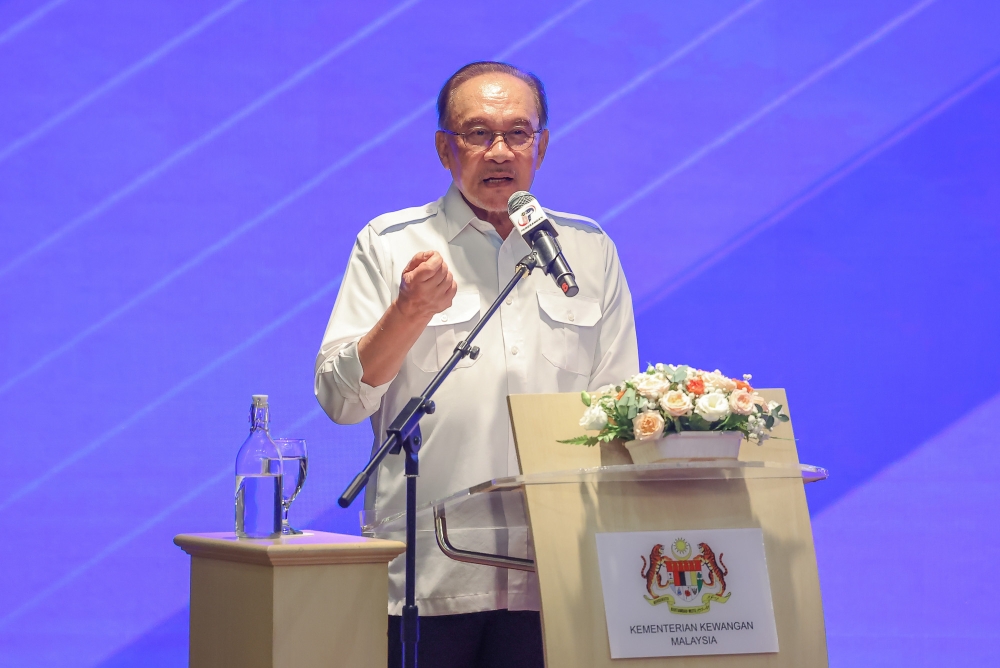
Prime Minister Datuk Seri Anwar Ibrahim emphasized the necessity of subsidy rationalization in Malaysia to curb wastages and leakages, acknowledging the challenges faced by previous administrations in implementing the measure.
Anwar, also serving as the Finance Minister, highlighted increased cash aid allocations to RM15 billion under programs like Sumbangan Tunai Rahmah (STR), projecting it might reach up to RM18 billion.
Anwar called on civil servants to enhance their proficiency and reduce bureaucratic inefficiencies, stressing the importance of integrity to prevent societal decline.
PUTRAJAYA, Oct 19 — Subsidy rationalisation is one of the toughest economic acts but it is necessary to plug wastages and leakages in Malaysia, Prime Minister Datuk Seri Anwar Ibrahim said.
Anwar, who is also the Finance Minister, said even his predecessors such as Tun Dr Mahathir Mohamad and Datuk Seri Najib Razak had attempted the measure but lacked the determination to implement it.
“Not many countries have managed to make it (subsidy rationalisation) work and few countries dare to even attempt doing it,” Anwar said during the Finance Ministry’s monthly assembly here today.
“The economic theories may not support it but for leaders committed to the Waad Nasional, we are obliged to do our best for the people,” he added.
Anwar said his administration has also increased cash aid allocations under Sumbangan Tunai Rahmah (STR) and Sumbangan Asas Rahmah (SARA) to RM15 billion, up from the RM8 billion earmarked by the previous administration.
“We actually estimate the cash aid allocations to increase up to RM18 billion,” he said.
Anwar also urged civil servants in the Finance Ministry and related agencies to improve their competency and reduce bureaucratic delays, especially as they now enjoy higher wages and better living conditions.
“No great empires in history have suffered decline because they have helped to uplift the people. But, many declined because of greed, rampant corruption and abuse of power,” he added.
DKU hauls Negeri Sembilan MB Ismail Lasim, 16 others to court over throne dispute
ECRL fares start at RM60 for Gombak-Kuantan route, RM125 one-way to Kota Bharu
King receives credentials of 18 foreign envoys to Malaysia
Terengganu woman loses over RM80,000 in online investment scam
马来西亚首相拿督斯里安华·易卜拉欣强调,马来西亚必须合理化补贴制度,以遏制浪费和漏洞,并承认以往历届政府在实施该措施时面临的挑战。
兼任财政部长的安华强调,在诸如“Sumbangan Tunai Rahmah”(STR)等计划下,现金援助拨款已增加至150亿令吉,预计最终拨款可能高达180亿令吉。
安华呼吁公务员提高工作能力,减少官僚主义低效现象,强调诚信对于防止社会衰落的重要性。
布城,10月19日讯——马来西亚首相拿督斯里安华·易卜拉欣表示,补贴合理化是最艰难的经济措施之一,但对于堵住马来西亚的浪费和漏洞而言,这是必要的。
安华同时也是财政部长,他表示,就连他的前任,如敦马哈蒂尔·穆罕默德和拿督斯里纳吉·拉扎克,都曾尝试过这项措施,但缺乏实施的决心。
安华今天在财政部月度会议上表示:“很少有国家能够成功实施(补贴合理化),也很少有国家敢于尝试这样做。”
“经济理论可能不支持这种做法,但对于致力于国家原则的领导人来说,我们有义务为人民竭尽全力,”他补充道。
安华表示,他的政府还将“Sumbangan Tunai Rahmah”(STR)和“Sumbangan Asas Rahmah”(SARA)项下的现金援助拨款增加到150亿令吉,高于上届政府拨出的80亿令吉。
他说:“我们预计现金援助拨款将增加至180亿令吉。”
安华还敦促财政部及相关机构的公务员提高自身能力,减少官僚主义拖延,尤其是在他们现在享受更高工资和更好生活条件的情况下。
“历史上没有哪个伟大的帝国是因为帮助人民过上更好的生活而衰落的。很多帝国衰落都是因为贪婪、腐败横行和滥用权力,”他补充道。
昆山杜克大学将森美兰州 MB Ismail Lasim 等 16 人因王位纠纷告上法庭
ECRL 鹅唛至关丹航线票价起价为 RM60,前往哥打巴鲁的单程票价为 RM125
国王接受18位外国使节递交的国书
登嘉楼女子网络投资诈骗损失超过8万令吉