How to hold Ukraine over until Congress passes more aid funding如何拖延乌克兰局势,直到国会通过更多援助资金
Opinion: Washington still retains the authority to give Kyiv more than $4 billion worth of materiel from U.S. stocks.
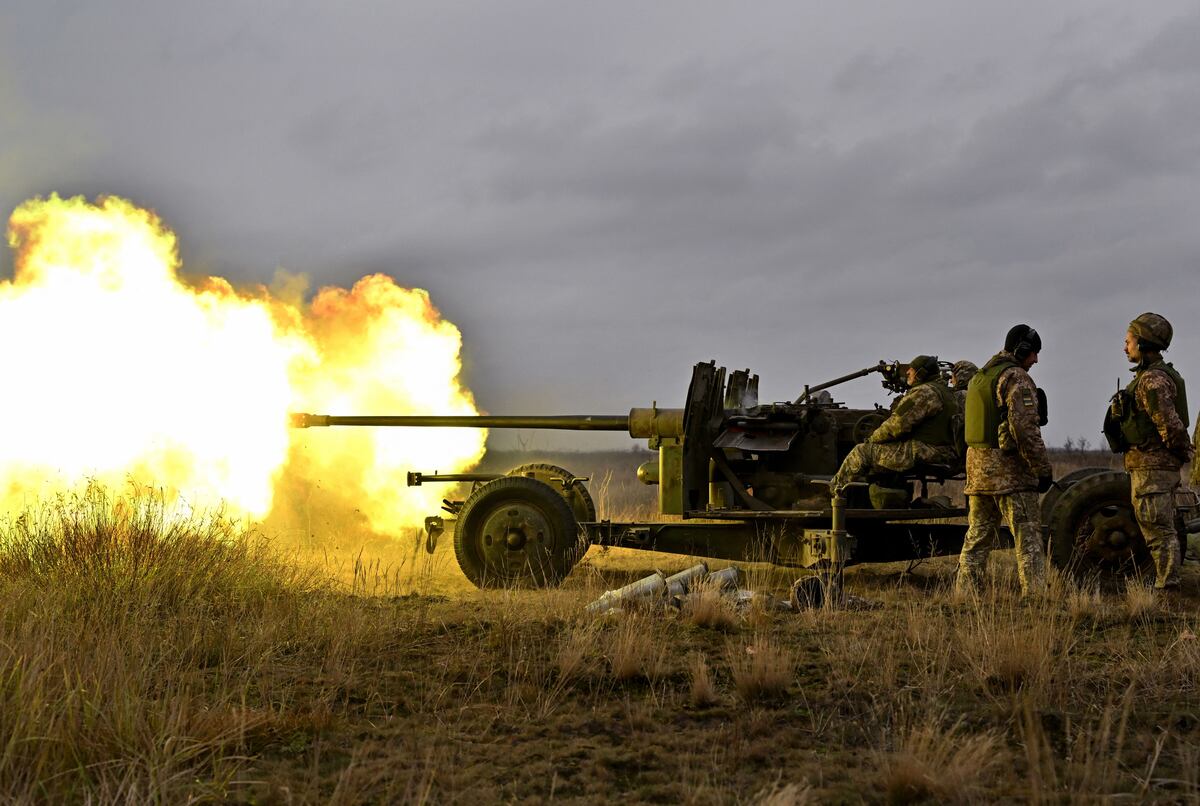
Without U.S. aid, Ukraine cannot defend its current lines, let alone liberate more territory, President Volodymyr Zelenskyy warned on Sunday, shortly after Kyiv’s troops were forced to withdraw from the eastern city of Avdiivka amid a severe ammunition shortage . Yet the House Republican leadership is still refusing to consider, much less pass, further security assistance funding for Kyiv.
There is, however, a way Washington could help hold Ukraine over until Congress gets its act together. While the administration has declared it’s “ out of money ” for Ukraine aid, it retains the authority to give Kyiv over $4 billion worth of materiel from U.S. stocks. The administration has declined to tap this authority because it’s out of funding to replace the donated equipment. But there are key weapons America could send now without compromising U.S. military readiness.
Ukraine is suffering from a shortage of men and materiel, particularly artillery ammunition. Congress’ monthslong delay in passing supplemental aid funding has exacerbated this challenge. Yet after rejecting an aid bill passed by the Senate earlier this month, House Speaker Mike Johnson appears to be in no rush to tackle the issue. It could be months before a bill reaches the president’s desk. Ukraine can’t afford to wait that long.
Since Russia’s February 2022 invasion, Washington has relied on presidential drawdown authority, or PDA, as its primary vehicle for Ukraine aid. PDA allows the administration to give foreign partners weapons taken from existing U.S. stocks, expediting delivery. Through PDA, the United States has provided Kyiv with regular shipments of artillery ammunition, air defense interceptors and other critical capabilities.
Normally, the Pentagon replaces equipment donated under PDA by procuring new systems or munitions, which the military receives within months or at most a year or two. In 2022 and 2023, Congress provided both additional PDA for Ukraine as well as funding to replace the donated equipment.
However, the PDA packages for Ukraine ground to a halt in late December. The issue isn’t a lack of PDA itself; the administration can still donate around $4.2 billion worth of weapons. Rather, as the Office of Management and Budget’s director explained, the administration made a “ very tough decision ” to forgo the remaining PDA because the Pentagon has run out of money to buy replacement equipment.
The Defense Department presumably worries, despite its $850 billion-plus annual budgets, that continued donations within this $4 billion limit could jeopardize U.S. military readiness, absent assured replacement funding.
The administration is obviously right to prioritize American warfighters. But the U.S. military’s vast inventories contain plenty of things that wouldn’t be missed by American troops but would be a godsend to Ukraine. The Pentagon could afford to wait to replace these items — if it bothers to replace them at all.
Most notably, the United States could probably spare some more cluster munitions for Ukraine’s Western-made artillery systems. Known as dual-purpose improved conventional munitions, or DPICM, these rounds release dozens of smaller sub-munitions, increasing lethality. The Biden administration first provided 155mm DPICM rounds to Ukraine last summer as Western stocks of standard shells ran low. Ukrainian forces have since employed these munitions to great effect.
While it’s unclear how many DPICM rounds Kyiv has already received, the United States probably has a lot left. America’s DPICM inventory reportedly totaled nearly 3 million rounds as of spring 2023. Some of those munitions may be expired or otherwise unsuitable for Ukraine, but a considerable portion is probably still available.
It’s doubtful sending Ukraine more now would harm U.S. readiness. Pentagon policy discourages U.S. commanders from using DPICMs, particularly those with a dud rate greater than 1%, which are supposed to be retired from service.
In addition to shells, Ukraine needs more protected mobility. Even outdated vehicles like the humble M113 armored personnel carrier could offer significant value if provided in sufficient quantities. M113s play a key role in evacuating wounded Ukrainian soldiers and moving forces around the battlefield, but Kyiv needs more of these vehicles. Absent enough armored vehicles, Ukrainian troops must rely on civilian alternatives that provide little protection against Russian artillery and other threats.
The U.S. Army has thousands of M113s in long-term storage and is actively replacing those still in service. Sending a significant number of them to Ukraine would prevent avoidable casualties. That’s especially important at a time when Kyiv needs to husband its scarce manpower.
To be clear, this stopgap solution would not obviate the need for Congress to pass additional security assistance funding. It would merely buy time. U.S. assistance for Ukraine will not be sustainable without that funding, and there’s a limit to what America should provide without assured replacements.
Administration officials may chafe at having to explain how they’re able to resume aid despite being “out of money.” They may also fear weakening — if only slightly — the pressure on House Republicans to pass the supplemental. But those are poor reasons not to take a simple step that would save Ukrainian lives.
Ukrainian troops are fighting not only for their freedom but also vital U.S. interests. America cannot afford to leave them out to dry indefinitely.
John Hardie is deputy director of the Russia Program at the Foundation for Defense of Democracies think tank, where retired Rear Adm. Mark Montgomery is a senior fellow.
乌克兰总统泽连斯基周日警告说,如果没有美国的援助,乌克兰连现有防线都无法守住,更遑论解放更多领土。此前不久,由于弹药严重短缺,基辅军队被迫从东部城市阿夫迪伊夫卡撤退。然而,众议院共和党领导层仍然拒绝考虑,更不用说通过向基辅提供进一步的安全援助资金。
然而,华盛顿或许有办法帮助乌克兰渡过难关,直到国会采取行动。尽管美国政府已宣布对乌克兰的援助“资金告罄”,但它仍然有权从美国库存中向基辅提供价值超过40亿美元的物资。由于缺乏资金来替换捐赠的设备,美国政府一直拒绝动用这项权力。但美国现在可以向乌克兰提供一些关键武器,而不会影响美国的军事战备。
乌克兰正面临兵力和物资短缺,尤其是炮弹。国会数月来迟迟未能通过补充援助资金,加剧了这一困境。然而,众议院议长迈克·约翰逊在本月初否决了参议院通过的援助法案后,似乎并不急于解决这个问题。法案可能还需要数月才能送达总统办公桌。乌克兰等不起这么久。
自俄罗斯2022年2月入侵乌克兰以来,华盛顿一直依赖总统撤军授权(PDA)作为其援助乌克兰的主要途径。PDA允许美国政府从现有的美国库存中撤出武器,从而加快交付速度,并将其提供给外国伙伴。通过PDA,美国定期向基辅提供炮弹、防空拦截器和其他关键装备。
通常情况下,五角大楼会通过采购新系统或弹药来替换根据《公共采购协议》(PDA)捐赠的装备,军方会在几个月内或最多一两年内收到这些新装备。2022年和2023年,国会不仅向乌克兰追加了《公共采购协议》拨款,还提供了资金用于替换捐赠的装备。
然而,对乌克兰的公共发展援助(PDA)项目在12月下旬陷入停滞。问题不在于PDA本身不足;美国政府仍然可以捐赠价值约42亿美元的武器。正如管理和预算办公室主任解释的那样,政府做出了一个“非常艰难的决定”,放弃剩余的PDA项目,因为五角大楼已经没有资金购买替代装备。
尽管国防部的年度预算超过 8500 亿美元,但想必他们仍然担心,在 40 亿美元的限额内继续捐款,如果没有可靠的替代资金,可能会危及美国的军事战备。
政府优先保障美国作战人员的利益显然是正确的。但美军庞大的库存中包含许多对美军而言无关紧要,但对乌克兰来说却是雪中送炭的物资。五角大楼完全可以等到需要更换这些物资的时候再做决定——如果他们真的打算更换的话。
最值得注意的是,美国或许可以再给乌克兰的西方制式火炮系统提供一些集束弹药。这种弹药被称为双用途改进型常规弹药(DPICM),它能释放数十枚小型子弹药,从而提高杀伤力。去年夏天,由于西方标准炮弹库存告急,拜登政府首次向乌克兰提供了155毫米DPICM弹药。此后,乌克兰军队已有效地使用了这些弹药。
虽然目前尚不清楚基辅已经接收了多少枚双用途反导导弹,但美国可能还有大量存货。据报道,截至2023年春季,美国的双用途反导导弹库存总量接近300万枚。其中一些弹药可能已经过期或不适合乌克兰使用,但相当一部分可能仍然可用。
现在向乌克兰增派武器是否会损害美国的战备状态令人怀疑。五角大楼的政策不鼓励美军指挥官使用DPICM(防空信使导弹),特别是那些失效率超过1%的导弹,这些导弹本应退役。
除了炮弹,乌克兰还需要更多防护机动能力。即使是像M113装甲运兵车这样略显老旧的车辆,如果数量充足,也能发挥巨大的作用。M113在撤离受伤的乌克兰士兵和在战场上调动部队方面发挥着关键作用,但基辅需要更多这类车辆。由于缺乏足够的装甲车辆,乌克兰军队不得不依赖民用替代品,而这些替代品几乎无法抵御俄罗斯炮兵和其他威胁。
美国陆军长期储存着数千辆M113自行火炮,并积极替换仍在服役的车辆。向乌克兰派遣大量此类车辆可以避免不必要的伤亡。在基辅急需节约稀缺人力资源的当下,这一点尤为重要。
需要明确的是,这项临时措施并不能免除国会通过额外安全援助资金的必要性,它仅仅是争取时间。如果没有这笔资金,美国对乌克兰的援助将无法持续,而且在没有可靠替代方案的情况下,美国的援助能力也是有限的。
政府官员或许会因为不得不解释如何在“资金短缺”的情况下恢复援助而感到不耐烦。他们也可能担心,这样做会削弱——哪怕只是略微削弱——众议院共和党人通过补充拨款法案的压力。但这些都不是放弃采取这一能够拯救乌克兰人民生命的简单措施的充分理由。
乌克兰军队不仅在为自由而战,也在为美国的重大利益而战。美国不能让他们无限期地孤立无援。
约翰·哈迪是保卫民主基金会智库俄罗斯项目的副主任,退役海军少将马克·蒙哥马利是该智库的高级研究员。