Data Centre Bill to go to Cabinet in 2027, says Akmal Nasrullah阿克马尔·纳斯鲁拉表示,《数据中心法案》将于2027年提交内阁审议。
PUTRAJAYA, Oct 19 — The government plans to draft the Digital Infrastructure (Data Centre) Bill for submission to the Cabinet next year to regulate the growth of the data centre...
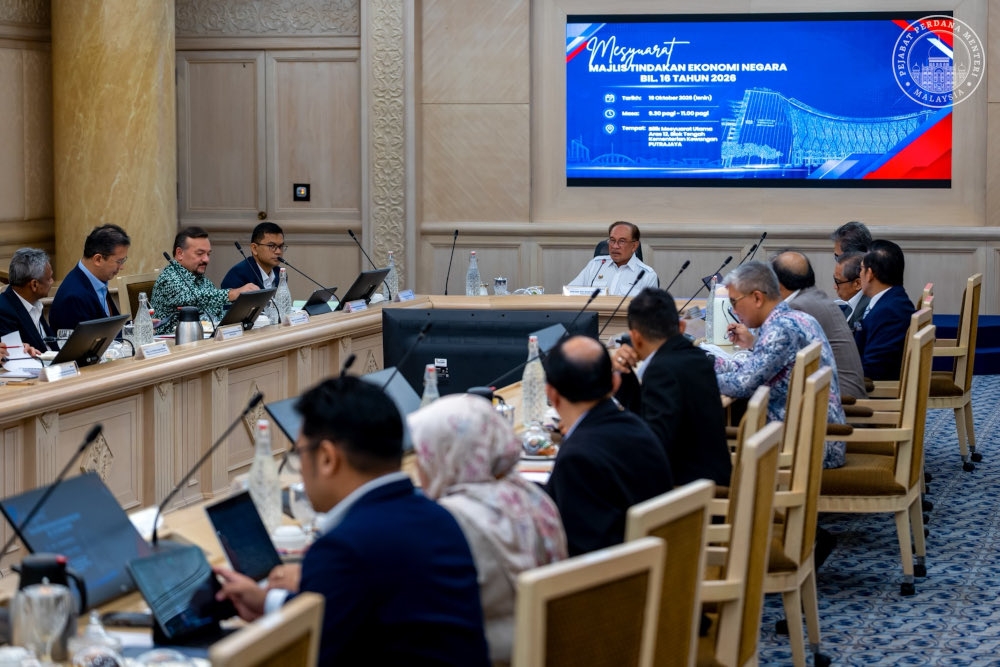
The government plans to draft the Digital Infrastructure (Data Centre) Bill to regulate the industry in line with energy and water capacities, with Cabinet presentation set for 2027.
The National Economic Action Council (NEAC) agreed on the proposal, aiming for strategic regulation to add economic value and address utility and environmental concerns.
NEAC also endorsed adopting a Circular Economy Framework to transition from a linear economy, aiming to optimise resources, reduce waste, and support the Net Zero goal by 2050.
PUTRAJAYA, Oct 19 — The government plans to draft the Digital Infrastructure (Data Centre) Bill for submission to the Cabinet next year to regulate the growth of the data centre industry in line with the country’s energy and water supply capacity.
Economy Minister Akmal Nasrullah Mohd Nasir said the measure aims to ensure that investments in the industry add value to the domestic economy, in addition to addressing utility constraints and avoiding imbalances in environmental impact.
He said the proposal to draft the bill is part of the strategic regulatory plan agreed upon by the National Economic Action Council (NEAC) at a meeting chaired by Prime Minister Datuk Seri Anwar Ibrahim today.
He said the agreement was reached following the presentation of the National Strategic Direction Towards Sustainable Data Centre Development by the Ministry of Digital.
“This step is taken to address utility constraints, avoid environmental impact imbalances, and ensure that data centre investments provide real economic spillovers to the local digital ecosystem,” he said in a statement.
Akmal Nasrullah said NEAC also agreed that the four lead ministries, along with the implementing agencies, would adopt the Circular Economy Framework (CEF) presented by the Ministry of Economy.
“NEAC agreed that the lead ministries, namely the Ministry of Housing and Local Government, the Ministry of Investment, Trade and Industry, the Ministry of Science, Technology and Innovation, and the Ministry of Human Resources, along with the implementing agencies, should adopt the CEF with an integrated governance, monitoring, and coordination structure,” he said.
He noted that the framework aims to lead the country’s transition from a linear economic model based on the “use-and-dispose” concept to a circular economy that optimises the lifespan of materials, reduces waste and preserves the value of resources.
“This integrated policy was formulated to address the issue of fragmented implementation across ministries in the past, to avoid economic losses due to the loss of valuable resources, and to support the Net Zero aspiration by 2050,” he said.
In other developments, Akmal Nasrullah said the meeting also reviewed the National Economic Resilience Framework presented by the Economic Affairs Division, Prime Minister’s Office, as a comprehensive long-term measure to address external economic shocks.
“The meeting agreed that this proposal should be presented to the Cabinet and further discussed at a meeting of ministry secretaries-general and heads of service chaired by the Chief Secretary to the Government,” he said.
He highlighted that NEAC today examined three strategic policy priorities to drive sustainable growth and strengthen the resilience of the country’s economy in the face of structural challenges and global economic uncertainties.
He said the agreed policies must be implemented in an integrated manner, particularly to enhance the efficiency of resource use, ensure that data centre investments add value to the domestic economy, and strengthen the country’s preparedness to face external economic shocks.
Akmal Nasrullah said the Ministry of Economy, as the NEAC secretariat, will coordinate and monitor follow-up actions with the relevant ministries and implementing agencies.
“The government’s priority is not just growth and investment, but a more productive, sustainable, and resilient economy with real benefits for the people and businesses,” he added. — Bernama
Rapid KL to deploy 85 shuttle buses for Malaysian GP at Sepang
Anwar congratulates para cyclist Zuhairie on winning Malaysia’s first gold at 2026 Asian Para Games
Haze: 27 areas in Malaysia record unhealthy air quality as of 4pm, Johan Setia in Selangor records highest reading of 169
政府计划起草《数字基础设施(数据中心)法案》,以根据能源和水资源容量对该行业进行监管,预计将于 2027 年提交内阁审议。
国家经济行动委员会(NEAC)同意了该提案,旨在通过战略监管增加经济价值,并解决公用事业和环境问题。
NEAC 还支持采用循环经济框架,从线性经济转型,旨在优化资源、减少浪费,并支持到 2050 年实现净零排放目标。
布城,10月19日讯——政府计划明年起草《数字基础设施(数据中心)法案》提交内阁审议,以规范数据中心行业的增长,使其与国家的能源和水资源供应能力相符。
经济部长阿克马尔·纳斯鲁拉·莫哈末·纳西尔表示,该措施旨在确保对该行业的投资能够为国内经济增添价值,同时解决公用事业限制问题,避免环境影响方面的不平衡。
他表示,起草该法案的提议是国家经济行动理事会(NEAC)今天在首相拿督斯里安华·易卜拉欣主持的会议上商定的战略监管计划的一部分。
他表示,在数字部提出《国家可持续数据中心发展战略方向》之后,双方达成了这项协议。
他在一份声明中表示:“采取这一步骤是为了解决公用事业限制问题,避免环境影响失衡,并确保数据中心投资为当地数字生态系统带来真正的经济溢出效应。”
阿克马尔·纳斯鲁拉表示,NEAC 还同意,四个牵头部委以及执行机构将采纳经济部提出的循环经济框架 (CEF)。
他说:“国家经济发展委员会一致认为,牵头部门,即住房和地方政府部、投资、贸易和工业部、科技创新部和人力资源部,以及执行机构,应采用综合治理、监测和协调结构来实施中央经济发展框架。”
他指出,该框架旨在引领该国从基于“用完即弃”概念的线性经济模式向循环经济模式转型,从而优化材料的使用寿命,减少浪费,并保护资源的价值。
他说:“制定这项综合政策是为了解决过去各部委执行不力的问题,避免因宝贵资源的流失而造成经济损失,并支持到 2050 年实现净零排放的目标。”
在其他方面,阿克马尔·纳斯鲁拉表示,会议还审查了总理办公室经济事务部提出的《国家经济韧性框架》,该框架是一项应对外部经济冲击的全面长期措施。
他说:“会议一致认为,这项提议应该提交内阁,并在由政府首席秘书主持的各部委秘书长和各部门负责人会议上进行进一步讨论。”
他强调,国家经济咨询委员会今天审查了三项战略政策重点,以推动可持续增长,并增强国家经济在面对结构性挑战和全球经济不确定性时的韧性。
他表示,已达成共识的各项政策必须以综合的方式实施,尤其要提高资源利用效率,确保数据中心投资为国内经济创造价值,并加强国家应对外部经济冲击的能力。
阿克马尔·纳斯鲁拉表示,经济部作为国家经济发展委员会秘书处,将与相关部委和执行机构协调并监督后续行动。
他补充说:“政府的首要任务不仅是经济增长和投资,更是要打造一个更具生产力、可持续性和韧性的经济体,为人民和企业带来实实在在的利益。”——马新社
Rapid KL将在雪邦赛道部署85辆接驳巴士,为马来西亚大奖赛提供服务。
安华祝贺残疾人自行车运动员祖海里在2026年亚残运会上为马来西亚赢得首枚金牌。
雾霾:截至下午4点,马来西亚27个地区空气质量达到不健康水平,雪兰莪州Johan Setia的雾霾读数最高,达169。