As other Asian equity markets boom, Singapore sees value over volume in SGX's IPO rebound在其他亚洲股市繁荣之际,新加坡交易所(SGX)的IPO反弹更看重价值而非数量。
The SGX is having a bumper crop of IPOs in the first half of the year and the trend is likely to continue if the market holds, analysts said.
The SGX is having a bumper crop of IPOs in the first half of the year and the trend is likely to continue if the market holds, analysts said.
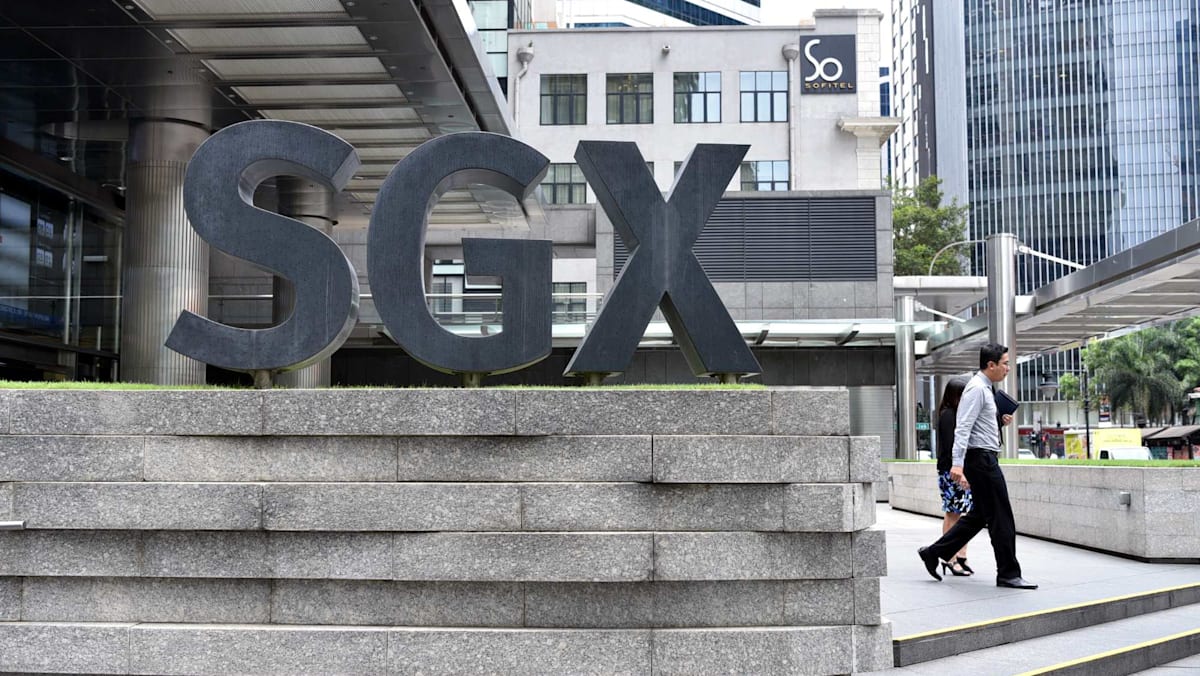
The SGX building in Shenton Way. (File photo: CNA/Jeremy Long)
This audio is generated by an AI tool.
SINGAPORE: On paper, the Singapore Exchange (SGX) appears overshadowed by red-hot initial public offering (IPO) markets across Asia in 2026. But analysts say the apparent gap masks a genuine turnaround taking place on the Singapore bourse.
Expecting more IPOs to come online in the second half of 2026, they said the measures rolled out since 2025, such as the equity market development programme and streamlined listing rules, will get things moving.
“We have to keep looking at it and keep our foot on the pedal because we’re trying to start an engine on a cold start. The engine hasn’t been moving,” said DBS’ global head of investment banking Clifford Lee.
Asian exchanges like Hong Kong and Malaysia are having a bumper year so far. Malaysia topped Southeast Asia’s IPO market in the first half of 2026, raising US$1.3 billion (S$1.65 billion) across 36 listings, including Sunway Healthcare Holdings .
CNA Games Guess Word Crack the word, one row at a time Buzzword Create words using the given letters Mini Sudoku Tiny puzzle, mighty brain teaser Mini Crossword Small grid, big challenge Word Search Spot as many words as you can Show More Show Less Sunway Healthcare in Malaysia and UI Boustead real estate investment trust in Singapore made up two of the three major listings in Southeast Asia that each raised more than US$500 million in the first half of 2026. In the first half of 2026, Hong Kong hosted 85 IPOs, raising about HK$210.4 billion (US$26.8 billion). This includes Chinese printed circuit board manufacturer Victory Giant Technology’s listing , which sits among the world’s largest IPOs this year. In July, Hong Kong’s stock exchange also made it easier for companies to go public, lowering the thresholds for firms with dual-class share structures and broadening access to confidential IPO filings. Against this backdrop, the SGX has logged eight listings so far this year. Analysts said that despite this comparison, Singapore's bourse is having one of its best years not just in terms of the number of IPOs relative previous years, but also the value of the listings. Earlier reports said SGX is on track for close to 30 listings in 2026, following a record year for IPO proceeds in 2025. Everything is in place for Singapore to attract more IPOs, said Mr Lee, pointing to Singapore’s tax regulations, transparency and its triple-A credit rating. Noting that SGX had several new IPOs and placements in 2025, Mr Lee said that if the market holds, Singapore should have multiple times last year's IPO issuances. Singapore saw four to five listings per year in recent years, with new listings only starting to pick up from 2025, said OCBC’s head of equity research Carmen Lee. Based on Singapore’s historical trends, 2025 and 2026 are considered "strong" years compared to the low IPO numbers from 2022 to 2024, said Ms Lee. SGX recorded four IPOs in 2024, the lowest in over a decade. “We see this as a healthy trend and interest should pick up if interest in small-mid cap stocks continues,” she added. Assistant Professor Goh Jing Rong, who teaches economics at the Singapore Management University (SMU), said Singapore’s listings are not slowing down. The Singapore IPO market is characterised by low-count, high-value listings, he noted. Listings in Singapore in the first half of 2026 already raised US$868 million across just five companies – UI Boustead real estate investment trust, Toku, The Assembly Place, Kin Global and JustCo Holdings, he added. But Singapore has room to improve on aftermarket performance , said Asst Prof Goh, noting that the 2026 listings on SGX have not delivered a sustained post-debut rally. “This is one key metric to look at, because typically a weak aftermarket performance is one key factor that deters future issuers.” NEW MEASURES WORKING UOB’s head of equity capital markets Mark Wee said the Singapore market has benefited from coordinated and proactive efforts by the Monetary Authority of Singapore (MAS), SGX and the broader industry to deepen and strengthen the equities ecosystem. This includes initiatives such as the equity market development programme , he added. The S$5 billion programme launched by MAS involves putting money with fund managers focused on investing in Singapore stocks. “These efforts are beginning to yield results , and we remain positive on the outlook for Singapore's IPO and equity markets,” said Mr Wee. Aside from the initiatives to attract capital and fund management activities, Singapore is also well-positioned to leverage several structural trends, including ASEAN’s growth and rising private wealth in Asia, he added. The bank is seeing a healthy pipeline of prospective issuers and increasing confidence in Singapore as a capital-raising hub, said Mr Wee. In May, Singapore passed laws to allow companies to dual list on SGX and American stock exchange Nasdaq while cutting down on paperwork. SGX had said its planned dual-listing link with Nasdaq could go live in months, with the first listings expected in the second half of the year. From Oct 5, the standard board lot size will be reduced from 100 units to 10 units for instruments priced above S$10, up to S$100, giving investors easier access to the Singapore stock market. “Aside from the measures being put in place, the market timing couldn’t be better,” said DBS’ Mr Lee, noting that with volatility and geopolitical tensions around the world, investors, companies and issuers need to start diversifying. From a currency standpoint, the Singapore dollar is very attractive and seen as a safe haven, said Mr Lee. “Now, we have a fair bit of liquidity chasing after assets. So the urgency to bring assets and issues into the Singapore stock exchange … has grown much higher than before.” Singapore is an impartial centre and all its regulations are written in English, he added. If a business is not heavily anchored in a big financial hub like the US, China or Europe, and it is looking to list in an "impartial place", Singapore becomes very viable, said Mr Lee. This also explains why companies from other countries in Southeast Asia where markets are currently “a bit choppy” are looking to list in Singapore, especially if they are international businesses, he added. “We’re at the beginning of pushing our automobile onto the racetrack after having it not run for many years. It’s moving, it’s on a cold start. The initial steps are encouraging but there’s lots more work to be done.” GAPS WITH HONG KONG AND MALAYSIA In any case, markets cannot be compared simply based on the volume of listings each year. Analysts highlighted the structural differences between various markets that make them incomparable. These contrasts cannot be resolved through regulation, they said. For example, Malaysia has a large domestic SME base while Singapore’s domestic corporate base is smaller simply because it has a smaller population, said SMU’s Asst Prof Goh. “You cannot simply regulate more listing candidates into existence,” he added. Hong Kong has a strong pipeline of mainland Chinese companies , including those that are already listed on the Shanghai or Shenzhen stock exchanges that are seeking an additional Hong Kong listing to access international capital, Asst Prof Goh noted. The Straits Times Index is dominated by banks and real estate investment trusts where buyers are income-oriented, not early-stage growth equity companies, which is what Hong Kong is good at listing, he added. It would be challenging for Singapore to close the listing volume gap with Hong Kong due to these structural issues. Nevertheless, Singapore still has great potential for quality listings, said Asst Prof Goh, noting the new measures. “Personally, I don't think Singapore needs to match Hong Kong’s IPO proceeds or listing count,” he added, noting that the scale of Hong Kong’s listings reflects its unique role as the international capital market for mainland Chinese companies, which is not a realistic benchmark for Singapore. “Hong Kong’s scale may be more spectacular, but is likely more sensitive to policy changes and investor sentiment.” Singapore lacks a track record and needs more confidence, Mr Lee said, noting that market openness is not a limiting factor. With more confidence from issuers and investors, the IPOs here will benefit from a broader base of investments, which will in turn generate more demand to deepen the market, he added. Immediate complaints like the lack of aftermarket support or having liquidity but not enough things to invest in are problems that can be solved once confidence builds up, said Mr Lee. “The whole market is working to ensure that, encourage that, and see what more we can do to broaden the investor base, broaden the participation level to have that depth. Once you have the depth, then you can take your foot off the pedal, the car will run itself.”
Sunway Healthcare in Malaysia and UI Boustead real estate investment trust in Singapore made up two of the three major listings in Southeast Asia that each raised more than US$500 million in the first half of 2026.
In the first half of 2026, Hong Kong hosted 85 IPOs, raising about HK$210.4 billion (US$26.8 billion). This includes Chinese printed circuit board manufacturer Victory Giant Technology’s listing , which sits among the world’s largest IPOs this year.
In July, Hong Kong’s stock exchange also made it easier for companies to go public, lowering the thresholds for firms with dual-class share structures and broadening access to confidential IPO filings.
Against this backdrop, the SGX has logged eight listings so far this year.
Analysts said that despite this comparison, Singapore's bourse is having one of its best years not just in terms of the number of IPOs relative previous years, but also the value of the listings.
Earlier reports said SGX is on track for close to 30 listings in 2026, following a record year for IPO proceeds in 2025.
Everything is in place for Singapore to attract more IPOs, said Mr Lee, pointing to Singapore’s tax regulations, transparency and its triple-A credit rating.
Noting that SGX had several new IPOs and placements in 2025, Mr Lee said that if the market holds, Singapore should have multiple times last year's IPO issuances.
Singapore saw four to five listings per year in recent years, with new listings only starting to pick up from 2025, said OCBC’s head of equity research Carmen Lee.
Based on Singapore’s historical trends, 2025 and 2026 are considered "strong" years compared to the low IPO numbers from 2022 to 2024, said Ms Lee. SGX recorded four IPOs in 2024, the lowest in over a decade.
“We see this as a healthy trend and interest should pick up if interest in small-mid cap stocks continues,” she added.
Assistant Professor Goh Jing Rong, who teaches economics at the Singapore Management University (SMU), said Singapore’s listings are not slowing down.
The Singapore IPO market is characterised by low-count, high-value listings, he noted.
Listings in Singapore in the first half of 2026 already raised US$868 million across just five companies – UI Boustead real estate investment trust, Toku, The Assembly Place, Kin Global and JustCo Holdings, he added.
But Singapore has room to improve on aftermarket performance , said Asst Prof Goh, noting that the 2026 listings on SGX have not delivered a sustained post-debut rally.
“This is one key metric to look at, because typically a weak aftermarket performance is one key factor that deters future issuers.”
NEW MEASURES WORKING
UOB’s head of equity capital markets Mark Wee said the Singapore market has benefited from coordinated and proactive efforts by the Monetary Authority of Singapore (MAS), SGX and the broader industry to deepen and strengthen the equities ecosystem.
This includes initiatives such as the equity market development programme , he added.
The S$5 billion programme launched by MAS involves putting money with fund managers focused on investing in Singapore stocks.
“These efforts are beginning to yield results , and we remain positive on the outlook for Singapore's IPO and equity markets,” said Mr Wee.
Aside from the initiatives to attract capital and fund management activities, Singapore is also well-positioned to leverage several structural trends, including ASEAN’s growth and rising private wealth in Asia, he added.
The bank is seeing a healthy pipeline of prospective issuers and increasing confidence in Singapore as a capital-raising hub, said Mr Wee.
In May, Singapore passed laws to allow companies to dual list on SGX and American stock exchange Nasdaq while cutting down on paperwork. SGX had said its planned dual-listing link with Nasdaq could go live in months, with the first listings expected in the second half of the year.
From Oct 5, the standard board lot size will be reduced from 100 units to 10 units for instruments priced above S$10, up to S$100, giving investors easier access to the Singapore stock market.
“Aside from the measures being put in place, the market timing couldn’t be better,” said DBS’ Mr Lee, noting that with volatility and geopolitical tensions around the world, investors, companies and issuers need to start diversifying.
From a currency standpoint, the Singapore dollar is very attractive and seen as a safe haven, said Mr Lee.
“Now, we have a fair bit of liquidity chasing after assets. So the urgency to bring assets and issues into the Singapore stock exchange … has grown much higher than before.”
Singapore is an impartial centre and all its regulations are written in English, he added.
If a business is not heavily anchored in a big financial hub like the US, China or Europe, and it is looking to list in an "impartial place", Singapore becomes very viable, said Mr Lee.
This also explains why companies from other countries in Southeast Asia where markets are currently “a bit choppy” are looking to list in Singapore, especially if they are international businesses, he added.
“We’re at the beginning of pushing our automobile onto the racetrack after having it not run for many years. It’s moving, it’s on a cold start. The initial steps are encouraging but there’s lots more work to be done.”
GAPS WITH HONG KONG AND MALAYSIA
In any case, markets cannot be compared simply based on the volume of listings each year. Analysts highlighted the structural differences between various markets that make them incomparable.
These contrasts cannot be resolved through regulation, they said.
For example, Malaysia has a large domestic SME base while Singapore’s domestic corporate base is smaller simply because it has a smaller population, said SMU’s Asst Prof Goh.
“You cannot simply regulate more listing candidates into existence,” he added.
Hong Kong has a strong pipeline of mainland Chinese companies , including those that are already listed on the Shanghai or Shenzhen stock exchanges that are seeking an additional Hong Kong listing to access international capital, Asst Prof Goh noted.
The Straits Times Index is dominated by banks and real estate investment trusts where buyers are income-oriented, not early-stage growth equity companies, which is what Hong Kong is good at listing, he added.
It would be challenging for Singapore to close the listing volume gap with Hong Kong due to these structural issues. Nevertheless, Singapore still has great potential for quality listings, said Asst Prof Goh, noting the new measures.
“Personally, I don't think Singapore needs to match Hong Kong’s IPO proceeds or listing count,” he added, noting that the scale of Hong Kong’s listings reflects its unique role as the international capital market for mainland Chinese companies, which is not a realistic benchmark for Singapore.
“Hong Kong’s scale may be more spectacular, but is likely more sensitive to policy changes and investor sentiment.”
Singapore lacks a track record and needs more confidence, Mr Lee said, noting that market openness is not a limiting factor.
With more confidence from issuers and investors, the IPOs here will benefit from a broader base of investments, which will in turn generate more demand to deepen the market, he added.
Immediate complaints like the lack of aftermarket support or having liquidity but not enough things to invest in are problems that can be solved once confidence builds up, said Mr Lee.
“The whole market is working to ensure that, encourage that, and see what more we can do to broaden the investor base, broaden the participation level to have that depth. Once you have the depth, then you can take your foot off the pedal, the car will run itself.”
Get our pick of top stories and thought-provoking articles in your inbox
Stay updated with notifications for breaking news and our best stories
Join our channel for the top reads for the day on your preferred chat app
分析师表示,新加坡交易所上半年IPO数量激增,如果市场保持稳定,这一趋势可能会持续下去。
珊顿道的SGX大楼。(资料照片:CNA/Jeremy Long)
这段音频是由人工智能工具生成的。
新加坡:从表面上看,2026年新加坡交易所(SGX)似乎会被亚洲各地火热的首次公开募股(IPO)市场所掩盖。但分析师表示,这种表面上的差距掩盖了新加坡交易所正在发生的真正转变。
他们预计 2026 年下半年将有更多 IPO 上线,并表示自 2025 年以来推出的各项措施,如股权市场发展计划和简化上市规则,将推动这一进程。
“我们必须继续关注,并保持努力,因为我们就像在冷启动发动机一样。发动机一直没有运转,”星展银行全球投资银行主管李克福表示。
今年以来,香港和马来西亚等亚洲交易所的IPO市场表现强劲。马来西亚在2026年上半年领跑东南亚IPO市场,通过36家上市公司筹集了13亿美元(16.5亿新元),其中包括双威医疗控股公司。
CNA游戏猜词游戏:逐行破解单词;流行词游戏:用给定的字母组成单词;迷你数独:小巧的谜题,强大的脑力挑战;迷你填字游戏:小网格,大挑战;单词搜索:尽可能多地找到单词。显示更多 显示更少 马来西亚的Sunway Healthcare和新加坡的UI Boustead房地产投资信托基金是2026年上半年东南亚三大IPO中的两家,每家IPO的融资额均超过5亿美元。2026年上半年,香港共有85家公司上市,融资额约为2104亿港元(268亿美元)。其中包括中国印刷电路板制造商胜利巨人科技的上市,该公司是今年全球规模最大的IPO之一。7月,香港交易所也简化了公司上市流程,降低了双重股权结构公司的上市门槛,并扩大了对保密IPO文件的访问范围。在此背景下,新加坡交易所今年迄今已完成8家公司的上市。分析师表示,尽管存在上述比较,新加坡交易所今年的IPO数量和IPO融资额均创历史新高,是近年来表现最好的年份之一。此前有报道称,继2025年IPO融资额创下历史新高之后,新加坡交易所(SGX)有望在2026年实现近30家公司的上市。李先生指出,新加坡的税收法规、透明度和AAA信用评级等因素,使其具备吸引更多IPO的条件。李先生还表示,新加坡交易所2025年有多家新公司上市和配售,如果市场保持稳定,新加坡的IPO发行量有望达到去年的数倍。华侨银行股票研究主管李嘉敏表示,近年来新加坡每年只有四到五家公司上市,新公司上市数量从2025年开始才开始回升。李女士表示,根据新加坡的历史趋势,与2022年至2024年IPO数量较低的时期相比,2025年和2026年被认为是IPO市场“强劲”的年份。新加坡交易所(SGX)在2024年录得四笔IPO,为十多年来的最低水平。她补充道:“我们认为这是一个健康的趋势,如果市场对中小市值股票的兴趣持续下去,IPO市场应该会回升。”新加坡管理大学(SMU)经济学助理教授吴景荣表示,新加坡的IPO市场并未放缓。他指出,新加坡IPO市场的特点是数量少、价值高。他还补充说,仅2026年上半年,新加坡五家公司——UI Boustead房地产投资信托、Toku、The Assembly Place、Kin Global和JustCo Holdings——的上市就已筹集了8.68亿美元。助理教授吴先生指出,新加坡在二级市场表现方面仍有提升空间,并表示2026年在新加坡交易所上市的股票并未在上市后持续上涨。“这是需要关注的关键指标之一,因为通常情况下,疲软的二级市场表现是阻碍未来发行人上市的关键因素之一。” 大华银行股票资本市场主管马克·魏先生表示,新加坡市场受益于新加坡金融管理局(MAS)、新加坡交易所和整个行业为深化和加强股票生态系统而采取的协调一致的积极努力。他补充说,这包括股票市场发展计划等举措。这项由新加坡金融管理局推出的50亿新元计划,旨在将资金投入专注于投资新加坡股票的基金经理。“这些努力已开始取得成效,我们对新加坡IPO和股票市场的前景仍然保持乐观,”魏先生说道。除了吸引资本和基金管理活动的举措外,新加坡还具备利用多项结构性趋势的优势,包括东盟的增长和亚洲私人财富的不断攀升,他补充道。黄先生表示,该行看到潜在发行人储备充足,并且对新加坡作为融资中心的信心日益增强。今年5月,新加坡通过立法,允许公司在新加坡交易所(SGX)和美国纳斯达克证券交易所双重上市,同时简化了文书工作。新加坡交易所曾表示,其与纳斯达克的双重上市计划有望在数月内上线,预计首批上市将于今年下半年实现。自10月5日起,对于价格在10新元至100新元之间的证券,标准交易单位将从100个单位减少至10个单位,这将使投资者更容易进入新加坡股市。“除了正在实施的措施外,市场时机也恰到好处,”星展银行的李先生表示,并指出鉴于全球市场的波动性和地缘政治紧张局势,投资者、公司和发行人需要开始分散投资。李显龙先生表示,从货币角度来看,新加坡元极具吸引力,被视为避险资产。“目前,大量流动性正在追逐资产。因此,将资产和发行产品引入新加坡证券交易所的紧迫性……比以往任何时候都高得多。”他补充道,新加坡是一个公正的中心,所有法规均以英文撰写。李显龙先生指出,如果一家企业并非深深扎根于美国、中国或欧洲等大型金融中心,并且希望在一个“公正的地方”上市,那么新加坡就成为一个非常可行的选择。他还补充说,这也解释了为什么来自东南亚其他国家(这些国家的市场目前“有些波动”)的公司,尤其是跨国公司,也希望在新加坡上市。“我们就像一辆多年未行驶的汽车,现在才刚刚开始启动。它正在移动,但还在冷启动阶段。最初的几步令人鼓舞,但还有很多工作要做。”与香港和马来西亚的差距 无论如何,市场不能仅仅根据每年的上市数量来比较。分析师强调了不同市场之间的结构性差异,这些差异使得它们无法直接比较。他们表示,这些差异无法通过监管来解决。例如,新加坡管理大学助理教授吴先生指出,马来西亚拥有庞大的国内中小企业基础,而新加坡的国内企业基础较小,这仅仅是因为新加坡的人口较少。“你不能仅仅通过监管就凭空创造出更多的上市候选企业,”他补充道。吴先生助理教授指出,香港拥有大量来自中国大陆的公司,其中包括一些已经在上海或深圳证券交易所上市的公司,它们正在寻求在香港上市以获得更多国际资本。他还补充说,海峡时报指数主要由银行和房地产投资信托基金构成,这些公司的买家以收益为导向,而非早期成长型股权公司,而这正是香港的优势所在。由于这些结构性问题,新加坡想要缩小与香港在上市数量上的差距将面临挑战。尽管如此,吴助理教授指出,新加坡在高质量上市方面仍具有巨大潜力,并提及了这些新举措。他补充道:“就我个人而言,我认为新加坡无需在IPO融资额或上市数量上与香港匹敌。”他指出,香港上市规模反映了其作为中国内地企业国际资本市场的独特地位,但这并非新加坡的现实参照标准。“香港的规模或许更为惊人,但也可能对政策变化和投资者情绪更为敏感。”李先生表示,新加坡缺乏过往业绩,需要增强信心,并指出市场开放程度并非限制因素。他补充说,随着发行人和投资者信心的增强,新加坡的IPO将受益于更广泛的投资基础,进而产生更多需求,深化市场。李先生表示,诸如缺乏二级市场支持或流动性充足但投资标的不足等当前问题,一旦信心建立起来,便可迎刃而解。 “整个市场都在努力确保这一点,鼓励这一点,并思考我们还能做些什么来扩大投资者基础,提高参与度,从而达到所需的深度。一旦有了足够的深度,你就可以放慢脚步,让市场自行运转。”
马来西亚的 Sunway Healthcare 和新加坡的 UI Boustead 房地产投资信托基金是东南亚三大上市公司中的两家,这两家公司在 2026 年上半年均筹集了超过 5 亿美元的资金。
2026年上半年,香港共进行了85起IPO,筹集资金约2104亿港元(268亿美元)。其中包括中国印刷电路板制造商胜利巨人科技的上市,该公司的上市是今年全球规模最大的IPO之一。
7 月,香港证券交易所也放宽了公司上市的门槛,降低了双重股权结构公司的上市门槛,并扩大了对保密 IPO 文件的访问范围。
在此背景下,新加坡交易所今年迄今已录得八项新股上市。
分析人士表示,尽管存在这种比较,但新加坡证券交易所今年不仅在IPO数量上超过了往年,而且上市股票的价值也创下了历史新高。
早前报道称,继 2025 年 IPO 融资额创纪录之后,新加坡交易所 (SGX) 有望在 2026 年实现近 30 家公司上市。
李显龙先生表示,新加坡具备吸引更多IPO的所有条件,他指出新加坡的税收法规、透明度和AAA信用评级都是优势。
李先生指出,新加坡交易所2025年将有几项新的IPO和配售,并表示如果市场保持稳定,新加坡的IPO发行量应该是去年的数倍。
华侨银行股票研究主管李嘉敏表示,近年来新加坡每年只有四到五家公司上市,新上市数量要到 2025 年才会开始回升。
李女士表示,根据新加坡的历史趋势,与2022年至2024年IPO数量较低的情况相比,2025年和2026年被认为是“强劲”年份。新加坡交易所2024年录得4起IPO,为十多年来的最低水平。
她补充说:“我们认为这是一个健康的趋势,如果人们对中小市值股票的兴趣持续下去,那么这种趋势应该会更加明显。”
新加坡管理大学 (SMU) 经济学助理教授吴景荣表示,新加坡的上市公司数量并没有放缓。
他指出,新加坡IPO市场的特点是上市公司数量少、价值高。
他补充说,仅在2026年上半年,新加坡上市的五家公司就已筹集了8.68亿美元,这五家公司分别是UI Boustead房地产投资信托基金、Toku、The Assembly Place、Kin Global和JustCo Holdings。
助理教授吴表示,新加坡在股票上市后的表现还有提升空间,并指出2026年在新加坡交易所上市的股票并没有在上市后持续上涨。
“这是需要关注的关键指标之一,因为通常来说,疲软的二级市场表现是阻碍未来发行人的关键因素之一。”
新措施正在发挥作用
大华银行股票资本市场主管马克·魏表示,新加坡市场受益于新加坡金融管理局 (MAS)、新加坡交易所 (SGX) 和更广泛的行业为深化和加强股票生态系统而采取的协调和积极努力。
他还补充说,这其中包括股票市场发展计划等举措。
新加坡金融管理局推出的这项50亿新元计划,旨在将资金投入专注于投资新加坡股票的基金经理手中。
“这些努力开始取得成效,我们对新加坡IPO和股票市场的前景仍然保持乐观,”魏先生说。
他还补充说,除了吸引资本和基金管理活动的举措外,新加坡还具备利用几个结构性趋势的良好条件,包括东盟的增长和亚洲不断增长的私人财富。
Wee先生表示,该银行看到了大量潜在发行人,并且对新加坡作为融资中心的信心日益增强。
今年5月,新加坡通过立法,允许公司在新加坡交易所(SGX)和美国纳斯达克证券交易所双重上市,同时简化文书工作。新加坡交易所曾表示,其与纳斯达克的双重上市计划有望在数月内上线,首批上市预计将于今年下半年实现。
从 10 月 5 日起,价格在 10 新元至 100 新元之间的股票的标准交易单位将从 100 个单位减少到 10 个单位,使投资者更容易进入新加坡股市。
星展银行的李先生表示:“除了正在采取的措施外,目前的市场时机再好不过了。”他指出,鉴于全球市场的波动性和地缘政治紧张局势,投资者、公司和发行人需要开始分散投资。
李先生表示,从货币角度来看,新加坡元非常有吸引力,被视为避险资产。
“现在,大量流动性正在追逐资产。因此,将资产和股票引入新加坡证券交易所的紧迫性……比以往任何时候都高得多。”
他补充说,新加坡是一个公正的中心,其所有规章制度都是用英文撰写的。
李先生表示,如果一家企业没有像美国、中国或欧洲这样的大型金融中心作为其主要业务,并且希望在一个“公正的地方”上市,那么新加坡就是一个非常可行的选择。
他还补充说,这也解释了为什么东南亚其他国家(这些国家的市场目前“有点动荡”)的公司,特别是国际企业,都希望在新加坡上市。
“我们的赛车已经多年未跑,现在正处于重新驶上赛道的阶段。它能动了,但还在冷启动阶段。最初的进展令人鼓舞,但还有很多工作要做。”
与香港和马来西亚的差距
总之,不能仅仅根据每年的挂牌数量来比较各个市场。分析师强调了不同市场之间存在的结构性差异,这些差异使得它们无法直接比较。
他们表示,这些矛盾无法通过监管来解决。
新加坡管理大学助理教授吴先生表示,例如,马来西亚拥有庞大的国内中小企业基础,而新加坡的国内企业基础较小,这仅仅是因为新加坡的人口较少。
“你不能仅仅通过监管就人为地制造出更多的上市候选者,”他补充道。
吴助理教授指出,香港拥有大量中国大陆企业,其中包括一些已经在上海或深圳证券交易所上市的企业,它们正在寻求在香港上市以获取国际资本。
他补充说,《海峡时报》指数主要由银行和房地产投资信托基金构成,这些投资者以收益为导向,而不是早期成长型股权公司,而这正是香港擅长的上市领域。
由于这些结构性问题,新加坡要缩小与香港在上市数量上的差距将面临挑战。不过,吴助理教授指出,新加坡在高质量上市方面仍然拥有巨大潜力,并强调了新措施的重要性。
“就我个人而言,我认为新加坡不需要在IPO融资额或上市数量上与香港匹敌,”他补充道,并指出香港上市的规模反映了其作为中国大陆公司国际资本市场的独特地位,这对新加坡来说并不是一个现实的基准。
“香港的规模或许更为惊人,但也可能对政策变化和投资者情绪更为敏感。”
李显龙先生表示,新加坡缺乏过往业绩,需要更多信心,并指出市场开放程度并非限制因素。
他补充说,随着发行人和投资者信心的增强,这里的IPO将受益于更广泛的投资基础,这反过来又会产生更大的需求,从而深化市场。
李先生表示,像缺乏售后支持或流动性充足但投资标的不足这类迫在眉睫的问题,一旦信心建立起来,就可以得到解决。
“整个市场都在努力确保这一点,鼓励这一点,并思考我们还能做些什么来扩大投资者基础,提高参与度,从而达到所需的深度。一旦有了足够的深度,你就可以放慢脚步,让市场自行运转。”
订阅我们的邮件,即可获取精选热点新闻和引人深思的文章。
订阅通知,第一时间获取突发新闻和精彩报道。
加入我们的频道,即可在您常用的聊天应用上获取当日热门文章。