Check Out These Rare Infrared Images Of A Minuteman III ICBM Blasting Off看看这些罕见的民兵III型洲际弹道导弹发射红外图像
The Air Force released the images a day after it formally hired Northrop Grumman to build its next ICBMs.
新闻视频
By Joseph Trevithick
Updated Nov 27, 2020 6:24 PM EST
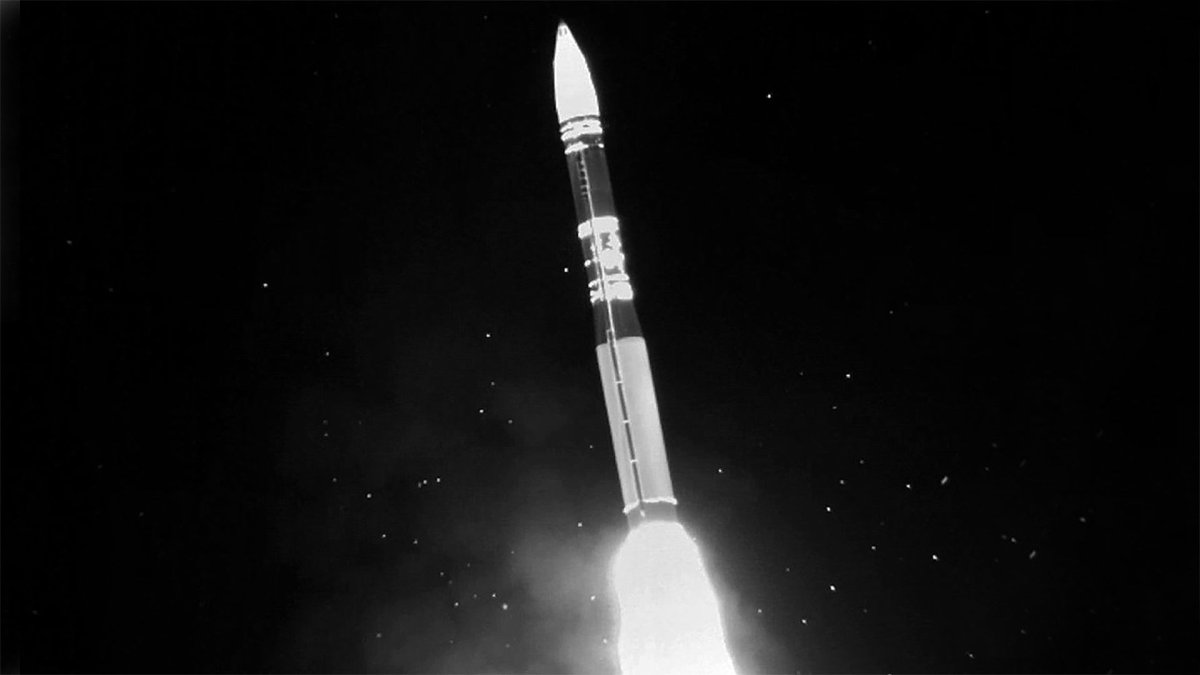
The U.S. Air Force has released rare shots of an LGM-30G Minuteman III intercontinental ballistic missile shortly after launch during a recent test launch from Vandenberg Air Force Base. This comes as the Air Force is celebrating the 50th anniversary of these missiles entering service this year and just a day after formally awarding Northrop Grumman a contract to continue development and eventually build the Minuteman III’s replacement, known as the Ground-Based Strategic Deterrent .
Air Force Global Strike Command (AFGSC), which oversees America’s intercontinental ballistic missile (ICBM) force, which is presently made up entirely of Minuteman IIIs, released the pictures on its Facebook page on Sept. 9, 2020. A camera team at Vandenberg captured the infrared images during a scheduled test launch of an LGM-30G from that base on Sept. 2.
“We just had to share these amazing shots of our #MMIII operational test launch on Sept. 2 taken by the optics camera team at Vandenberg Air Force Base!” AFGSC’s brief Facebook post read. “It’s not often you see shots like these!”
“Not often” is something of an understatement. Official images of this quality showing one of these missiles in flight are very rare. Typically, after Minuteman III tests, the Air Force only releases pictures and video of the missile leaving the silo and streaking across the sky. Since these launches are almost exclusively conducted at night, the imagery generally does not provide much in the way of detail.
However, the Air Force had already released video footage of the Sept. 2 test showing more of the initial flight than usual. It’s not immediately clear why there has been this apparent push to provide more visuals surrounding this particular launch.
The Sept. 2 test involved the launch of a missile with a single reentry vehicle. The reentry vehicle came down approximately 4,200 miles away from Vandenberg at Kwajalein Atoll in the Marshall Islands in the Pacific. “These test launches verify the accuracy and reliability of the ICBM weapon system, providing valuable data to ensure a continued safe, secure and effective nuclear deterrent,” the Air Force said of this particular launch.
This followed a more uncommon test launch in August involving a Minuteman III in a Multiple Independent Reentry Vehicle (MIRV) configuration with three reentry vehicles, as it was originally designed to carry. All operational LGM-30Gs are presently equipped with a single reentry vehicle only as a result of various arms control agreements, which you can read more about in this past War Zone piece .
2020 does mark 50 years in service for the LGM-30G, the first examples of which were operationally deployed in 1970. The annivarsary has put an additional focus on these missiles. The Minuteman III was the first MIRVed ICBM to enter service anywhere in the world.
In addition, on Sept. 8, 2020, the Air Force declared Northrop Grumman to be the formal winner of the Ground-Based Strategic Deterrent (GBSD) competition, awarding it a deal worth more than $13 billion . This company had been the only remaining contestant after Boeing dropped out of the running last year.
Boeing’s decision, along with the factors that led up to it , had prompted criticism, including from members of Congress who warned that having just one bidder could lead to increased costs. The total cost of replacing the Minuteman IIIs with new GBSD missiles, which have been tentatively designated YLGM-182As, is estimated to be around $100 billion , including various ancillary spending, such as infrastructure improvements.
An artist’s conception of Northrop Grumman’s GBSD ICBM., Northrop Grumman
This is just one part of a broader and potentially budget-busting nuclear modernization push across the U.S. military, which you can read about in more detail in this previous War Zone piece . The ICBM leg of America’s nuclear deterrent triad, also known as the “nuclear sponge” since it is meant to “soak up” incoming nuclear strikes, forcing an opponent to commit multiple warheads to each silo and hardened command bunker , is already, at best, a controversial part of the U.S. defense budget, as The War Zone
has explored in the past .
All of this also comes as the U.S. government continues to negotiate with its Russian counterparts about the future of the New Strategic Arms Reduction Treaty (New START), which is set to expire next year if the two sides can’t agree on terms to extend it. The United States is looking to bring China, which is expanding its nuclear and ballistic missile capabilities, into any future agreement, as well.
An LGM-30G Minuteman III missile in its silo., USAF
The end of New START would open the door for dramatic changes in America’s nuclear arsenal, broadly. For the ICBM force, this might lead to re-MIRVing of the Minuteman IIIs or a change to the planned configuration of the GBSD. The latter missiles are slated to begin replacing the existing LGM-30Gs starting in 2029.
Whatever the case, the Air Force has clearly been particularly keen recently to highlight the existing Minuteman IIIs, including with rarely seen imagery of the missile in flight.
Contact the author: Joe@thedrive.com
Comments couldn’t be loaded. Please refresh the page.
作者:约瑟夫·特雷维西克
更新于美国东部时间2020年11月27日下午6:24。
美国空军近日公布了一组罕见的LGM-30G“民兵III”洲际弹道导弹在范登堡空军基地试射后不久的照片。正值美国空军庆祝该导弹服役50周年之际,就在一天前,空军正式授予诺斯罗普·格鲁曼公司一份合同,委托其继续研发并最终建造“民兵III”的替代导弹——陆基战略威慑导弹(GBSD)。
负责监管美国洲际弹道导弹(ICBM)部队的空军全球打击司令部(AFGSC)于2020年9月9日在其Facebook页面上发布了这些照片。目前,美国洲际弹道导弹部队完全由民兵III型导弹组成。这些红外图像是范登堡空军基地的一个摄影团队在9月2日该基地进行的一次LGM-30G导弹计划性试射期间拍摄的。
“我们一定要分享这些精彩的照片,它们记录了9月2日范登堡空军基地光学摄像团队拍摄的#MMIII作战测试发射!”美国空军全球打击司令部(AFGSC)在Facebook上简短地写道。“这样的照片可不多见!”
“不常见”或许还算是轻描淡写了。这种高质量的官方图片,尤其是展示导弹飞行状态的图片,非常罕见。通常情况下,在“民兵III”导弹测试结束后,空军只会发布导弹离开发射井、划破夜空的照片和视频。由于这些发射几乎都在夜间进行,因此图像通常无法提供太多细节。
然而,空军此前已发布了9月2日测试的视频片段,其中包含比以往更多的首飞画面。目前尚不清楚为何此次测试似乎刻意要提供更多相关影像资料。
9月2日的测试发射了一枚带有单再入飞行器的导弹。该再入飞行器坠落在距离范登堡空军基地约4200英里(约6700公里)的太平洋马绍尔群岛夸贾林环礁。“这些试射验证了洲际弹道导弹武器系统的精度和可靠性,为确保持续安全、可靠和有效的核威慑提供了宝贵的数据,”美国空军在谈到此次发射时表示。
此前,8月份进行了一次较为罕见的试射,一枚民兵III型导弹采用多弹头独立再入飞行器(MIRV)配置,携带三枚再入飞行器,这与其最初的设计用途一致。由于各项军控协议的限制,目前所有现役的LGM-30G导弹都只配备一枚再入飞行器,您可以在之前的《战区》文章中了解更多相关信息。
2020年是LGM-30G导弹服役50周年,该导弹的首批样弹于1970年投入使用。周年纪念日使人们对这些导弹更加关注。“民兵III”是世界上第一种投入使用的多弹头分导式洲际弹道导弹。
此外,2020年9月8日,美国空军正式宣布诺斯罗普·格鲁曼公司赢得陆基战略威慑(GBSD)竞标,并授予其一份价值超过130亿美元的合同。此前,波音公司退出竞标,该公司成为唯一剩下的竞争者。
波音公司的决定及其背后的种种因素引发了批评,包括国会议员的警告,他们指出只有一家竞标者可能会导致成本增加。用新型GBSD导弹(暂定名为YLGM-182A)替换现有的民兵III型导弹的总成本估计约为1000亿美元,其中包括基础设施改进等各项辅助支出。
这是艺术家对诺斯罗普·格鲁曼公司GBSD洲际弹道导弹的构想图。
这只是美国军方更广泛、可能超出预算的核现代化计划的一部分,您可以在之前的《战区》文章中了解更多详情。作为美国核威慑三位一体的一部分,洲际弹道导弹也被称为“核海绵”,因为它旨在“吸收”来袭的核打击,迫使对手在每个发射井和加固指挥掩体中部署多枚核弹头。正如《战区》所述,洲际弹道导弹在美国国防预算中已是颇具争议的部分。
过去曾进行过探索。
与此同时,美国政府正继续与俄罗斯就《新削减战略武器条约》(新START)的未来进行谈判。如果双方无法就延期条款达成一致,该条约将于明年到期。美国还希望将正在扩充其核武器和弹道导弹能力的中国纳入未来的任何协议中。
一枚LGM-30G“民兵III”导弹在其发射井内。(美国空军)
新削减战略武器条约的终止将为美国核武库的重大变革打开大门。就洲际弹道导弹部队而言,这可能导致“民兵III”导弹重新升级为多弹头分导式导弹(MIRV),或者改变GBSD导弹的计划配置。后者计划从2029年开始逐步取代现有的LGM-30G导弹。
无论如何,空军最近显然特别热衷于重点宣传现有的民兵 III 型导弹,包括罕见地发布了该导弹飞行中的图像。
联系作者:Joe@thedrive.com
评论加载失败,请刷新页面。