No quota for CLP exam passes, candidates assessed purely on merit, Dewan Rakyat told国会下议院表示,民法考试不设名额限制,考生完全按成绩评定。
KUALA LUMPUR, Oct 20 — Candidates sitting the Certificate in Legal Practice (CLP) examination are assessed purely on merit, with no quota imposed on the number of passes, the...
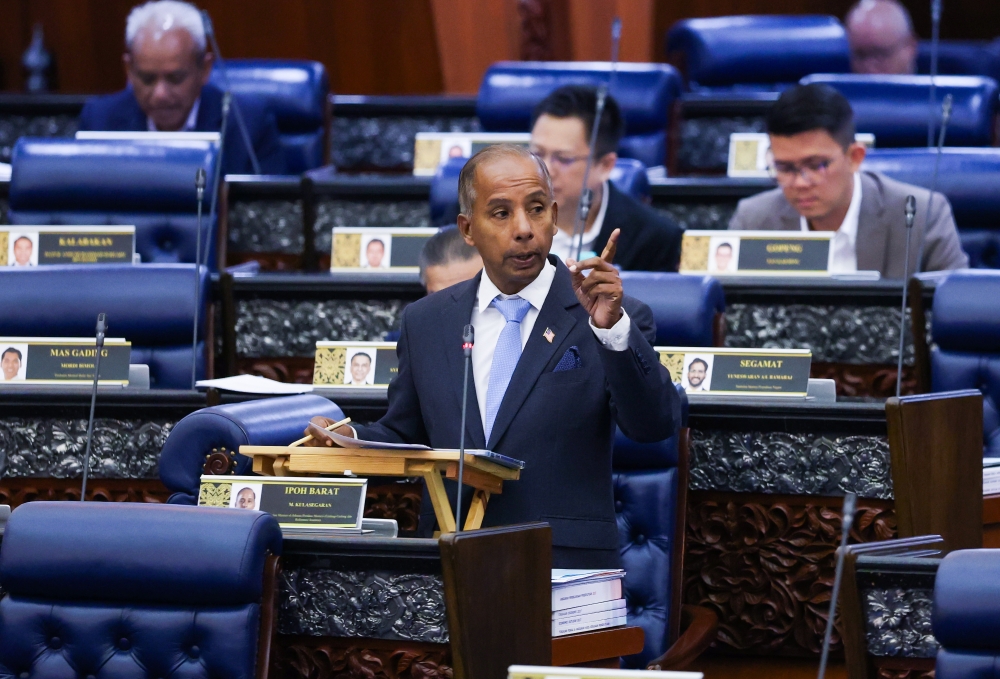
Kuala Lumpur officials confirmed that the Certificate in Legal Practice (CLP) examination assesses candidates solely on merit, with a minimum passing mark of 40 for each subject and no pass quota.
Despite a low pass rate of 19% in 2026, Deputy Minister M.
Kulasegaran attributed candidates' underperformance to inadequate preparation in Malaysian law and difficulties in applying legal principles.
An NBC Task Force is developing a framework for transitioning to a new qualification system emphasizing practical legal skills, while addressing concerns about the current CLP structure and assessment methods.
KUALA LUMPUR, Oct 20 — Candidates sitting the Certificate in Legal Practice (CLP) examination are assessed purely on merit, with no quota imposed on the number of passes, the Dewan Rakyat was told today.
Deputy Minister in the Prime Minister’s Department (Law and Institutional Reform) M. Kulasegaran said candidates were assessed based on their performance, with a minimum passing mark set for each subject.
“The passing mark for each CLP subject is 40, and there is no quota for passes. Candidates are assessed purely on merit,” he said during the question-and-answer session.
He was responding to a supplementary question from Dr V. Sivakumar (PH-Batu Gajah) on measures to address the low CLP examination pass rate while maintaining professional standards, after only 19 per cent of candidates (158 out of 826) obtained a full pass in 2026, compared with 21 per cent in 2025.
Kulasegaran clarified that the statistics covered only the main 2026 CLP examination and did not include the results of the supplementary examination.
“The overall results of the 2026 CLP examination will be announced in November 2026, after the results of the supplementary examination have been obtained and approved by the Board,” he said.
On the factors contributing to candidates’ failure, Kulasegaran said most candidates were law graduates from the United Kingdom, Australia and New Zealand, where they had studied the common law system, but appeared not to have adequately prepared for the Malaysian law component of the CLP examination.
He said that candidates also had difficulty identifying legal issues in examination questions, applying the law to the facts and citing relevant case law to support their answers.
In response to Sivakumar’s original question on the CLP’s structure, assessment methods, duration of study and transition to the New Bar Course (NBC), Kulasegaran said the Legal Profession Qualifying Board had established an NBC Task Force on April 27.
He said the task force was tasked with conducting a study to develop an implementation framework for the NBC, including arrangements to ensure a smooth transition to the new professional legal qualification system.
Kulasegaran said the NBC, which would replace the CLP, comprises two programmes, namely the Conversion Course (CC) and the Legal Practice Postgraduate Certificate (LPPC), with a greater emphasis on practical legal skills and professional competence.
He said the existing CLP system assesses candidates solely through written examinations, without a comprehensive evaluation of their practical legal skills, and does not require them to complete preparatory courses before sitting the examinations.
On the transition from the CLP to the NBC, he explained that the NBC Task Force was reviewing policies concerning candidates who had yet to pass the existing examinations but still had remaining attempts and valid registration periods.
“The qualifying board will consider this matter once the NBC Task Force has completed its study on the transition mechanism,” he said.
Responding to a supplementary question from Datuk Che Mohamad Zulkifly Jusoh (PN-Besut) on checks and balances in setting the curriculum and assessing prospective lawyers, Kulasegaran said the professional legal qualification system would continue under an improved approach with a revised set of courses.
He said that the improvements took into account complaints about the previous system while emphasising the difference between academic legal studies and the professional training required to become a lawyer.
Kulasegaran explained that law programmes in the United Kingdom and several other countries typically take three years to complete, compared with four years at local universities, where a professional component is introduced in the fourth year. — Bernama
Loke wants Transport Expo Asia to become permanent biennial event, next edition in 2028
Malaysia, WHO aim to finalise pandemic agreement by May 2027, says Dzulkefly
Suhakam calls for femicide to be recognised in law, tougher action on gender-based violence
吉隆坡官员证实,法律实践证书(CLP)考试完全根据考生的成绩进行评估,每门科目的最低及格分数为 40 分,没有及格名额限制。
尽管2026年的通过率只有19%,但副部长M.
库拉塞加兰将考生表现不佳归咎于马来西亚法律准备不足以及难以应用法律原则。
NBC 特别工作组正在制定过渡到新的资格认证体系的框架,该体系强调实用的法律技能,同时解决对当前 CLP 结构和评估方法的担忧。
吉隆坡,10 月 20 日讯——国会下议院今天获悉,参加法律实践证书(CLP)考试的考生将完全根据成绩进行评估,不设及格人数配额。
总理府(法律和体制改革)副部长库拉塞加兰表示,考生将根据其表现进行评估,每门科目都设有最低及格分数。
“每门民航驾驶课程的及格分数是40分,没有及格名额限制。考生完全根据成绩进行评估,”他在问答环节中说道。
他是在回应 V. Sivakumar 博士(PH-Batu Gajah)提出的补充问题,该问题涉及在保持专业标准的同时,如何解决 CLP 考试通过率低的问题。2026 年,只有 19% 的考生(826 人中的 158 人)获得了完全通过,而 2025 年的通过率为 21%。
Kulasegaran 澄清说,这些统计数据仅涵盖了 2026 年 CLP 主考,不包括补考结果。
“2026 年 CLP 考试的总体结果将于 2026 年 11 月公布,届时补考结果将获得委员会的批准,”他说。
关于导致考生考试失败的因素,库拉塞加兰表示,大多数考生都是来自英国、澳大利亚和新西兰的法律毕业生,他们学习的是普通法体系,但似乎没有为马来西亚法律考试(CLP)中的马来西亚法律部分做好充分准备。
他表示,考生在识别考题中的法律问题、将法律应用于事实以及引用相关案例法来支持其答案方面也存在困难。
针对 Sivakumar 最初提出的关于 CLP 的结构、评估方法、学习时长以及向新律师课程 (NBC) 过渡的问题,Kulasegaran 表示,法律职业资格委员会已于 4 月 27 日成立了 NBC 工作组。
他说,该工作组的任务是进行一项研究,为国家律师资格认证(NBC)制定实施框架,包括确保顺利过渡到新的专业法律资格体系的安排。
库拉塞加兰表示,NBC将取代CLP,它包括两个课程,即转换课程(CC)和法律实践研究生证书(LPPC),更加注重实践法律技能和专业能力。
他表示,现行的民选律师制度只通过笔试来评估候选人,没有对其实际法律技能进行全面评估,也不要求他们在参加考试前完成预备课程。
在谈到从 CLP 过渡到 NBC 时,他解释说,NBC 工作组正在审查有关尚未通过现有考试但仍有剩余考试机会和有效注册期的考生的政策。
他说:“资格审查委员会将在核生化工作组完成对过渡机制的研究后考虑此事。”
针对拿督切·穆罕默德·祖基菲里·尤索夫(国盟-勿述)提出的关于制定课程和评估未来律师的制衡机制的补充问题,库拉塞加兰表示,专业法律资格制度将继续以改进的方式实施,并修订课程。
他表示,这些改进措施考虑到了对先前制度的抱怨,同时强调了学术法律研究与成为律师所需的专业培训之间的区别。
库拉塞加兰解释说,英国和其他一些国家的法律课程通常需要三年才能完成,而本地大学的法律课程则需要四年,第四年会加入专业实践部分。——马新社
陆兆福希望亚洲交通运输博览会成为永久性的两年一度的盛会,下一届将于2028年举办。
祖基菲里表示,马来西亚和世卫组织的目标是在2027年5月前最终敲定大流行病应对协议。
泰国人权委员会呼吁将杀害女性行为纳入法律,并对基于性别的暴力行为采取更严厉的措施。