Tackling workplace ageism is critical in super-aged Singapore在老龄化严重的新加坡,解决职场年龄歧视问题至关重要。
Workplace ageism and social ties are key to helping Singapore’s seniors stay in work and keep up with health screenings. Read more at straitstimes.com.
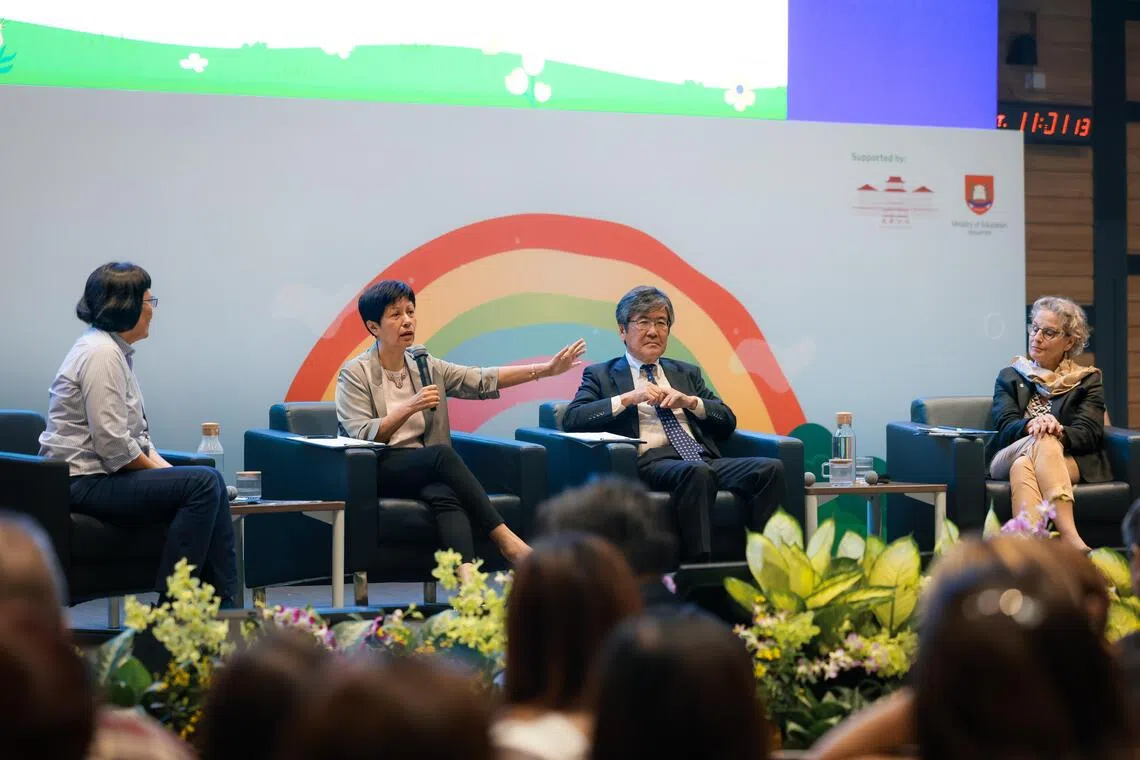
(From left) Professor Paulin Straughan, director of the Centre for Research on Successful Ageing at SMU, moderating a panel discussion with Minister in the Prime Minister’s Office Indranee Rajah, Nagoya University Graduate School of International Development vice-dean Satoshi Shimizutani and Technische Universität Dresden rector Ursula Staudinger on Oct 20.
Published Oct 20, 2026, 06:59 PM
Updated Oct 20, 2026, 06:59 PM
Professor Paulin Straughan said tackling workplace ageism is vital in Singapore’s super-aged society, where older workers still need jobs and fair pay, but flexible work options need to be developed
She warned that training often stops in people’s 40s, and this will backfire as the workforce shrinks and foreign labour cannot fill the gap.
Rosa findings also showed health fatalism blocks screening, while friends and informal social spaces help seniors act on health advice and stay well.
SINGAPORE - Overcoming ageist attitudes in the workplace, rigid post-retirement job opportunities and health fatalism is key to ensuring that people can continue to celebrate extended longevity, said Professor Paulin Straughan, director of the Centre for Research on Successful Ageing (Rosa) at the Singapore Management University (SMU).
This is because seniors in Singapore need to continue to work in order to age well, as well as focusing on maintaining their healthspan, Straughan said at the 6th Rosa symposium on Oct 20.
Flexible, bite-size work opportunities that suit the seniors’ strengths will be useful. When one is past retirement age, he or she may not want to continue committing to regular work hours, particularly if the rigour does not honour their experience in terms of remuneration.
“To put it very crudely, they are now supplementary labour. When we need you, we extend (your work contract). When we don’t need you, you are the first to go,” she said.
“Of course, they say, ‘Fine, I will wean myself off paid work’... But that’s a loss to think about because we cannot afford to retire.”
Furthermore, ageism is fanned by the thinking that an older person can no longer contribute to the workplace when it extends to the actions taken many years before that happens, she said.
“From our research, people as young as in their 40s tell us the moment they hit their 40s, training opportunities escape them. (It’s because) employers feel that they have a longer runway with the investment in training if they train younger employees,” Straughan said.
Straughan, who has been advocating against workplace ageism, said the mentality will backfire because as a super-aged society, Singapore is having fewer babies, and therefore, faces a smaller workforce.
Importing foreign labour will not be enough to plug the gap, because many other nations are ageing and looking at doing the same.
In Japan, for instance, where those aged 65 and above now make up more than 29% of the population, there is a severe shortage of care workers. While they are facing challenges in hiring foreign labour, they are looking to do so, said Nagoya University Graduate School of International Development vice-dean Satoshi Shimizutani.
He was speaking at a panel discussion with Straughan, Indranee Rajah, Minister in the Prime Minister’s Office and Second Minister for Finance and National Development; and Technische Universität Dresden rector Ursula Staudinger.
Staudinger said that work environments play a major role in the ageing process. While monotonous routines act as “poison” for the brain, engaging in varied cognitive demands, switching tasks, and taking on ongoing challenges protect against cognitive decline.
Straughan, who shared the latest findings from Rosa based on a study of more than 7000 participants aged 50 to 79, also stressed the importance of social connections and friendships in encouraging seniors to attend health screenings.
The study found that enrolment in Healthier SG was associated with more regular cancer screening.
“In our study, we looked at fatalism, the perspective that if you’re going to get cancer, there’s nothing you can do about it... there’s no need to go for health screening because I’m going to die.”
Although the assumption is that family members are the ones who can motivate seniors to sign up for the screenings, that is not always the case.
Friendship networks were found to be directly associated with regular screening for breast, cervical and colorectal cancer in most of the groups examined, while family influence appeared to operate more through knowledge and attitudes towards screening, the study found.
“When you’re going through age-related health crises or health challenges, I think discussions and advisories from your peers, who are now more or less in that same age group, is likely to be more impactful because this is somebody who is journeying the same pathway that you are, compared to somebody who’s younger or older than you,” Straughan said.
Because people tend to befriend those who are like themselves , curating informal third spaces for seniors can help to bridge social and class divides, which can help to drive preventive health efforts like screening.
For instance, hawker centres can be turned into neighbourhood kitchens, where someone can teach seniors how to make age-friendly meals that contains sufficient nutrients , she pointed out , but this will require a scheme to kickstart the training.
SMU/Singapore Management University
Flexible work arrangements
(从左至右)10 月 20 日,新加坡管理大学成功老龄化研究中心主任保林·斯特劳恩教授主持了一场小组讨论,与会人员包括首相府部长英德拉妮·拉贾、名古屋大学国际发展研究生院副院长清水谷聪和德累斯顿工业大学校长乌尔苏拉·施陶丁格。
发布于 2026 年 10 月 20 日下午 6:59
更新于2026年10月20日下午6:59
保琳·斯特劳恩教授表示,在新加坡这个超老龄化社会,解决职场年龄歧视问题至关重要。老年劳动者仍然需要工作和公平的薪酬,但需要制定灵活的工作选择方案。
她警告说,人们的培训往往在 40 多岁时就停止了,这将适得其反,因为劳动力会萎缩,而外国劳工无法填补这一空缺。
罗莎的研究结果还表明,健康宿命论会阻碍筛查,而朋友和非正式的社交空间则有助于老年人听取健康建议并保持健康。
新加坡——新加坡管理大学 (SMU) 成功老龄化研究中心 (Rosa) 主任保林·斯特劳恩教授表示,克服职场中的年龄歧视态度、僵化的退休后就业机会和对健康的宿命论,是确保人们能够继续享受长寿的关键。
斯特劳恩在 10 月 20 日举行的第六届罗莎研讨会上表示,这是因为新加坡的老年人需要继续工作才能健康老去,同时也要注重保持健康寿命。
灵活、轻松的工作机会,尤其是适合老年人优势的工作,将非常实用。过了退休年龄,人们可能不愿继续投入固定的工作时间,尤其是在薪酬与他们的资历不符的情况下。
“说得直白点,他们现在就是临时工。我们需要你们的时候,就延长你们的合同;不需要你们的时候,你们就是第一批被解雇的。”她说道。
“当然,他们会说,‘好吧,我会逐渐减少有偿工作……’但想想这其实是一种损失,因为我们负担不起退休。”
她还表示,年龄歧视的加剧,是因为人们认为老年人无法再为工作场所做出贡献,而这种看法甚至延伸到了老年人多年前的行为。
斯特劳恩说:“我们的研究发现,一些四十多岁的人告诉我们,一旦他们到了四十岁,培训机会就随之消失。(这是因为)雇主觉得,如果培训更年轻的员工,他们在培训方面的投资就能有更长的回报周期。”
一直倡导反对职场年龄歧视的斯特劳恩表示,这种心态会适得其反,因为新加坡作为一个超老龄化社会,生育率较低,因此劳动力规模也较小。
仅仅引进外国劳动力不足以弥补劳动力缺口,因为许多其他国家也面临人口老龄化问题。
例如,在日本,65岁及以上人口占总人口的29%以上,护理人员严重短缺。名古屋大学国际发展研究生院副院长清水谷聪表示,尽管他们在雇用外国劳工方面面临挑战,但他们仍在努力争取这样做。
他当时正在与斯特劳恩、总理办公室部长兼财政和国家发展部第二部长英德拉妮·拉贾以及德累斯顿工业大学校长乌尔苏拉·施陶丁格一起参加小组讨论。
施陶丁格指出,工作环境在衰老过程中扮演着重要角色。单调乏味的日常工作如同“毒药”侵蚀大脑,而参与多样化的认知活动、转换任务以及迎接持续的挑战则有助于延缓认知衰退。
斯特劳恩分享了罗莎基于对 7000 多名 50 至 79 岁参与者的研究得出的最新发现,他还强调了社交关系和友谊在鼓励老年人参加健康筛查方面的重要性。
研究发现,参加“健康新加坡”计划与更规律的癌症筛查相关。
“在我们的研究中,我们探讨了宿命论,即如果你注定要得癌症,你对此无能为力……没有必要进行健康筛查,因为我终将死去。”
虽然人们普遍认为家庭成员能够激励老年人报名参加筛查,但事实并非总是如此。
研究发现,在大多数受调查群体中,友谊网络与定期进行乳腺癌、宫颈癌和结直肠癌筛查直接相关,而家庭的影响似乎更多地体现在对筛查的知识和态度上。
斯特劳恩说:“当你经历与年龄相关的健康危机或健康挑战时,我认为来自同龄人的讨论和建议,尤其是那些与你年龄相仿的人的建议,可能会更有影响力,因为这些人正在经历与你相同的人生道路,而不是比你年轻或年长的人的建议。”
因为人们倾向于与和自己相似的人交朋友,所以为老年人打造非正式的第三空间有助于弥合社会和阶级鸿沟,从而有助于推动筛查等预防性健康工作。
她指出,例如,可以将小贩中心改造成邻里厨房,在那里可以有人教老年人如何制作营养丰富的适龄餐食,但这需要制定计划来启动培训。
新加坡管理大学
灵活的工作安排