Why won’t the rain wash away Malaysia’s haze? Experts explain what’s keeping the smoke coming为什么雨水无法冲刷掉马来西亚的雾霾?专家解释了烟雾持续存在的原因。
KUALA LUMPUR, Oct 21 — Malaysia, particularly the Klang Valley, has been experiencing bouts of heavy rain and thunderstorms in recent days, but the haze continues to linger....
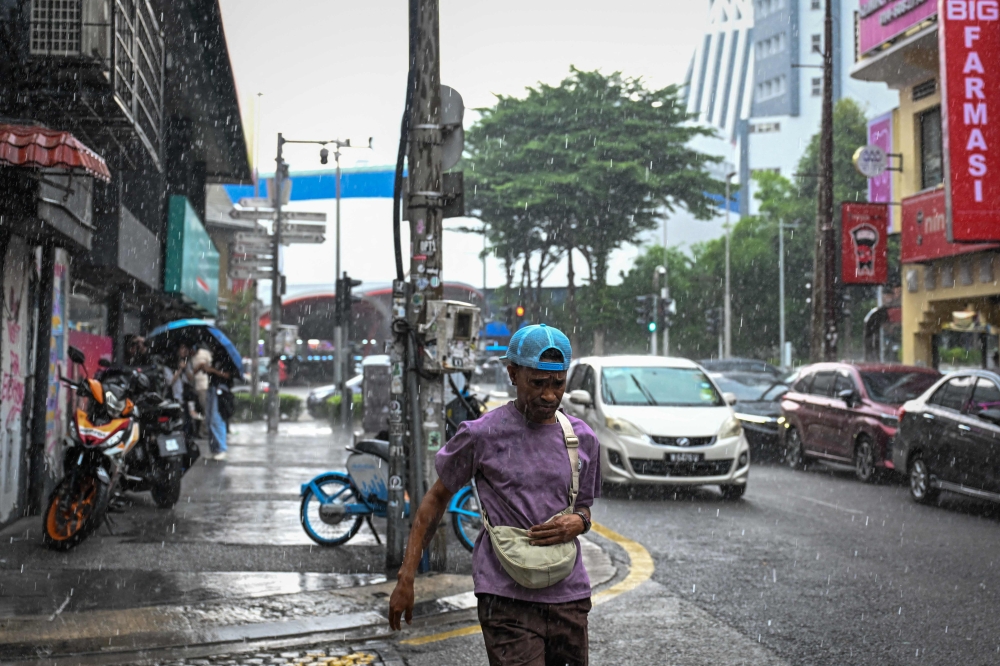
Malaysia, specifically the Klang Valley, is experiencing persistent transboundary haze despite recent heavy rains and thunderstorms.
The haze, primarily caused by smoke from fires in Indonesia, remains due to prevailing winds carrying the smoke into Malaysian airspace.
Though rains can temporarily alleviate haze by removing pollutant particles, continuous smoke influx and the transitionary monsoon's weak winds allow the haze to persist.
A potential improvement in air quality is anticipated with an upcoming change in wind direction during the Northeast Monsoon, which should redirect smoke away from Malaysia.
KUALA LUMPUR, Oct 21 — Malaysia, particularly the Klang Valley, has been experiencing bouts of heavy rain and thunderstorms in recent days, but the haze continues to linger. Why?
According to Malaysian Meteorological Department (MetMalaysia) director-general Mohd Hisham Mohd Anip, rainfall can provide only temporary relief as long as smoke continues to arrive from Indonesia.
“The haze currently affecting the country is caused by transboundary haze, whereby smoke from fire-affected areas in neighbouring countries is carried into Malaysian airspace.
“At the same time, the country is experiencing the monsoon transition phase, characterised by weak winds blowing from various directions.
“These conditions are conducive to the formation of rain clouds and thunderstorms in the afternoon and early evening.
“Rainfall during the monsoon transition can only temporarily reduce haze conditions. Therefore, haze may persist despite rainfall if smoke continues to be carried in by winds from other areas,” he told Malay Mail .
Universiti Malaya meteorologist Professor Datuk Azizan Abu Samah said the prevailing wind direction was a key reason the haze could persist even after rainfall.
As long as winds continued to blow from the south, south-west or west, smoke from Indonesia would continue to be carried into Malaysia, he explained.
“So even if the rain cleared due to wet deposition, new smoke will be blown back from Sumatra,” he said.
According to deforestation monitoring site Nusantara Atlas, fires in Indonesia burned more than 1.9 million hectares between January and the end of September this year, an area nearly 12 times the size of London.
Forest and peatland fires in Indonesia, particularly in Sumatra and Kalimantan, have been blamed for much of the haze affecting Malaysia, with smoke carried across borders by prevailing winds.
The haze has disrupted daily life in Malaysia in recent weeks, with worsening air quality prompting health concerns and school closures.
Prime Minister Datuk Seri Anwar Ibrahim has said Malaysia remains prepared to extend assistance to Indonesia in tackling the forest and land fires responsible for the transboundary haze.
Mohd Hisham explained that heavy, prolonged rainfall over a wide area could remove more pollutant particles from the atmosphere than brief, localised drizzle, although its effectiveness also depended on the size and properties of the particles and atmospheric conditions.
“A greater volume of rainwater and a longer duration of rainfall can enhance the removal of pollutant particles. However, the effectiveness of rainfall is also influenced by the size and properties of pollutant particles, as well as atmospheric conditions.
“Heavy rain does not necessarily guarantee that haze will clear completely if smoke continues to be carried into Malaysia from fire-affected areas in neighbouring countries.
“In the context of transboundary haze, changes in wind direction that reduce the transport of smoke into Malaysia, together with sufficient and sustained rainfall in affected areas, are crucial to improving air quality,” he said.
Explaining why the haze could return after rain, Mohd Hisham said smoke from forest and land fires typically contained fine suspended particles such as PM2.5 and PM10, including black carbon and organic carbon produced by burning organic matter.
PM2.5 particles are particularly fine and can remain suspended in the air for long periods, allowing them to travel considerable distances with the wind.
Certain gases released during combustion can also react in the atmosphere to form secondary pollutant particles, he said.
“Rain can remove some of these particles, but not all particles are necessarily removed at the same rate. When fresh smoke continues to enter Malaysia due to winds from fire-affected areas, pollutant concentrations can remain high or rise again,” Mohd Hisham said.
Azizan said the scale of the forest and peatland fires in Sumatra meant there was little technology could do to resolve the haze quickly.
“The scale of the environmental disaster is too big for a technological fix,” he said, adding that rainfall in Sumatra during October and November could help extinguish the fires.
Mohd Hisham also warned that hot and dry conditions could increase the risk of forest and land fires, particularly in areas with dry vegetation and peat soil.
“Ongoing fires will release more smoke and pollutant particles into the atmosphere, making it more difficult to reduce haze.
“The presence of a very strong Super El Niño phenomenon will further worsen weather conditions in the region and increase the risk of transboundary haze, such as the situation currently being experienced,” he said.
But a change in the weather could finally offer Malaysians some relief.
Mohd Hisham said the haze was expected to gradually subside next week following an anticipated change in wind direction.
During the Northeast Monsoon, stronger north-easterly winds and more widespread rainfall were expected to help improve air quality, he said.
Azizan said Malaysia would have to wait for the Northeast Monsoon to bring a more lasting improvement, with easterly and north-easterly winds expected to carry smoke away from the country.
He said the north-easterly wind belt was already present over the South China Sea near Ho Chi Minh City, Vietnam, and was expected to reach Peninsular Malaysia in early November.
“We just need to stay safe and let nature take its course,” he said, estimating that the country would have to endure the conditions for another two to three weeks.
Haze is making pets sick too: Malaysian vets report cats suffering asthma attacks, dogs needing oxygen therapy
Haze: Schools remain open in six states, KL and Putrajaya tomorrow, outdoor activities halted
From Waze to TuJu? Anwar backs Malaysian navigation app over data security concerns
尽管近期马来西亚普降暴雨并伴有雷暴天气,但马来西亚,特别是巴生谷地区,仍然持续受到跨境雾霾的影响。
雾霾主要由印度尼西亚的火灾产生的烟雾造成,由于盛行风将烟雾吹入马来西亚领空,雾霾仍然存在。
虽然降雨可以暂时缓解雾霾,去除污染物颗粒,但持续的烟雾涌入和过渡季风的微弱风力使得雾霾持续存在。
预计东北季风期间风向的变化将使烟雾远离马来西亚,空气质量有望得到改善。
吉隆坡,10月21日讯——近日,马来西亚,特别是巴生谷地区,持续遭受强降雨和雷暴天气侵袭,但雾霾却迟迟不散。这是为什么呢?
马来西亚气象局(MetMalaysia)总监莫哈末·希沙姆·莫哈末·阿尼普表示,只要来自印度尼西亚的烟雾持续飘来,降雨只能提供暂时的缓解。
“目前影响马来西亚的雾霾是由跨境雾霾造成的,邻国火灾地区的烟雾被带到了马来西亚领空。
“与此同时,该国正经历季风过渡阶段,其特点是风力较弱,且风向不定。
“这些条件有利于下午和傍晚时分形成雨云和雷暴。
“季风过渡期的降雨只能暂时缓解雾霾。因此,如果其他地区的烟雾继续被风吹来,即使下雨,雾霾也可能持续存在,”他告诉《马来邮报》。
马来亚大学气象学家拿督阿兹占阿布沙玛教授表示,盛行风向是雾霾即使在降雨后仍持续存在的一个关键原因。
他解释说,只要风继续从南面、西南面或西面吹来,来自印度尼西亚的烟雾就会继续被吹到马来西亚。
“所以即使雨水因湿沉降而停歇,新的烟雾也会从苏门答腊岛吹回来,”他说。
据森林砍伐监测网站 Nusantara Atlas 的数据显示,今年 1 月至 9 月底,印度尼西亚的火灾烧毁了超过 190 万公顷的森林,面积几乎是伦敦的 12 倍。
印度尼西亚,特别是苏门答腊岛和加里曼丹岛的森林和泥炭地火灾,被认为是造成马来西亚大部分地区雾霾的罪魁祸首,烟雾被盛行风吹过国界。
近几周来,雾霾扰乱了马来西亚的日常生活,空气质量恶化引发了人们对健康的担忧,并导致学校停课。
马来西亚总理拿督斯里安华·易卜拉欣表示,马来西亚仍然准备向印度尼西亚提供援助,以应对造成跨境烟霾的森林和土地火灾。
莫哈末·希沙姆解释说,大范围的持续强降雨比短暂的局部毛毛雨能从大气中清除更多的污染物颗粒,尽管其效果也取决于颗粒的大小和性质以及大气条件。
“雨量越大、降雨持续时间越长,越有利于去除污染物颗粒。然而,降雨的有效性也受到污染物颗粒的大小和性质以及大气条件的影响。”
“如果邻国受火灾影响地区的烟雾继续飘入马来西亚,即使下大雨也不一定能保证雾霾完全消散。
他说:“就跨境雾霾而言,改变风向以减少烟雾向马来西亚的输送,再加上受影响地区充足且持续的降雨,对于改善空气质量至关重要。”
莫哈末·希沙姆解释说,为什么雨后雾霾会再次出现,森林和土地火灾产生的烟雾通常含有细小的悬浮颗粒物,如 PM2.5 和 PM10,其中包括燃烧有机物产生的黑碳和有机碳。
PM2.5颗粒特别细小,可以在空气中长时间悬浮,并随风传播相当远的距离。
他说,燃烧过程中释放的某些气体也会在大气中发生反应,形成二次污染物颗粒。
“雨水可以清除部分颗粒物,但并非所有颗粒物都能以相同的速度被清除。当来自火灾地区的烟雾因风向持续进入马来西亚时,污染物浓度可能会保持高位甚至再次上升,”莫哈末·希沙姆说。
阿齐赞表示,苏门答腊森林和泥炭地火灾的规模意味着几乎没有技术能够迅速消除烟雾。
“这场环境灾难的规模太大,技术手段无法解决,”他说道,并补充说,10月和11月苏门答腊的降雨可能有助于扑灭大火。
莫哈末希沙姆还警告说,炎热干燥的天气可能会增加森林和土地火灾的风险,尤其是在植被干燥、土壤为泥炭的地区。
“持续的火灾会向大气中释放更多的烟雾和污染物颗粒,使减少雾霾变得更加困难。
他说:“非常强烈的超级厄尔尼诺现象的出现将进一步恶化该地区的天气状况,并增加跨境雾霾的风险,例如目前正在经历的情况。”
但天气的变化或许最终能给马来西亚人带来一些慰藉。
莫哈末·希沙姆表示,随着风向预计下周发生变化,雾霾有望逐渐消散。
他表示,东北季风期间,更强的东北风和更广泛的降雨预计将有助于改善空气质量。
阿齐赞表示,马来西亚需要等待东北季风带来更持久的改善,预计东风和东北风会将烟雾吹离该国。
他表示,东北风带已经出现在越南胡志明市附近的南海海面上,预计将于11月初抵达马来西亚半岛。
“我们只需要注意安全,顺其自然,”他说道,并估计该国还将不得不忍受这种状况两到三周。
雾霾也让宠物生病:马来西亚兽医报告称,猫咪出现哮喘发作,狗狗需要吸氧治疗。
雾霾:明日六个州、吉隆坡和布城学校照常开放,户外活动暂停。
从Waze到TuJu?安华力挺马来西亚导航应用,担忧数据安全问题。