Up to 15% increase in respiratory or eye-related vet visits in Singapore during haze新加坡雾霾期间,呼吸系统或眼部疾病相关的兽医就诊量增加高达15%。
Singapore vets report 10% to 15% rise in pet respiratory and eye cases during haze season Read more at straitstimes.com.
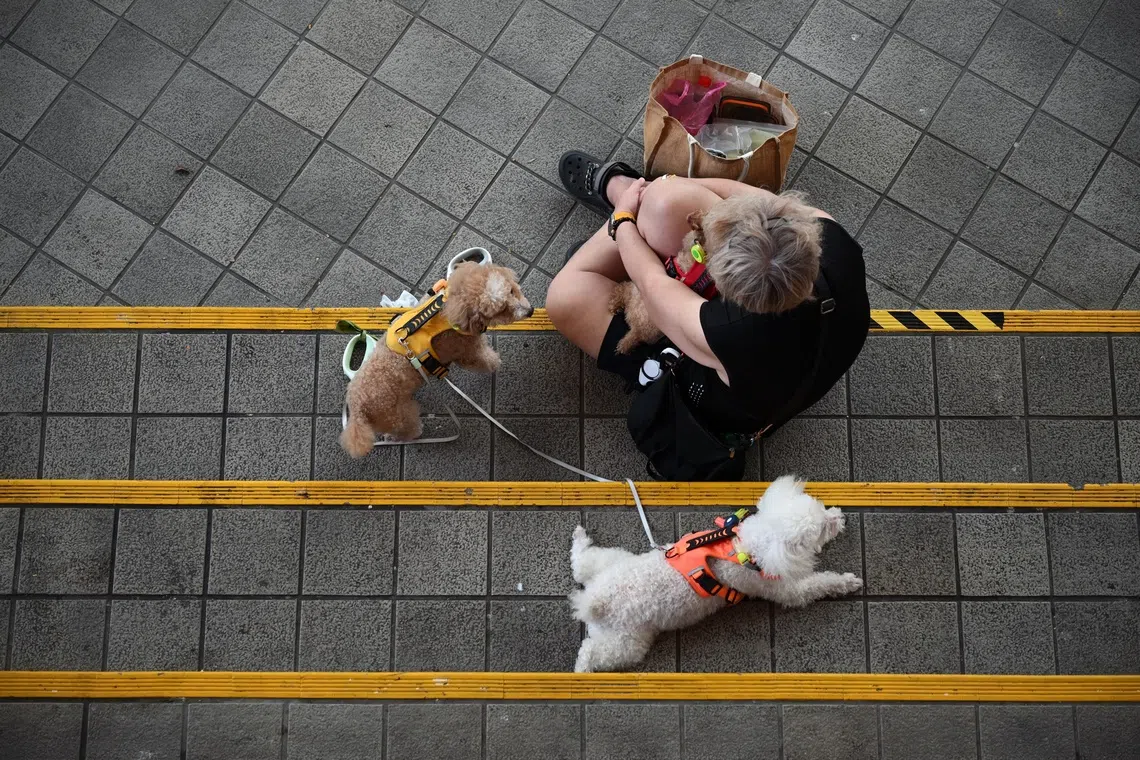
While direct causation has not been proven, most vets said that poor air quality can aggravate existing health conditions.
ST PHOTO: KUA CHEE SIONG
Published Oct 21, 2026, 06:20 PM
Updated Oct 21, 2026, 06:20 PM
Some Singapore vets report 10% to 15% more pet visits for breathing and eye problems during haze. Poor air quality and PM2.5 pollutants can worsen existing conditions.
Dogs, cats and birds are affected. Small-breed dogs and cats with asthma may need urgent treatment. Birds are especially sensitive to airborne pollution.
NParks urged owners to check PSI, keep pets indoors and watch for warning signs. Vets advise closed windows, HEPA air purifiers and less outdoor exercise.
SINGAPORE – Several vets in Singapore have been attending to more pets with respiratory or eye-related illnesses in recent weeks amid the haze season. While direct causation has not been established, most vets who spoke to The Straits Times estimate that the increase in visits ranges between 10% and 15%, adding that poor air quality and airborne pollutants like PM2.5 can aggravate existing health conditions, especially for more vulnerable animals.
Dr Kenneth Tong , founder of Animal and Avian Veterinary Clinic (AAVC) , said his clinic has seen an increase in respiratory illnesses and eye issues such as conjunctivitis and weepy or itchy eyes in recent weeks.
“For example, in a week, we usually just see three cases of eye issues, but now all of a sudden we are seeing five,” he said.
Common symptoms of haze-related illnesses reported include eye, skin and breathing problems for most pets. For pets with existing conditions such as chronic bronchitis, asthma or tracheal collapse, some cases may even require emergency treatment.
Dr Anne-Claire Duchaussoy from Beecroft Animal Specialist & Emergency Hospital said that respiratory problems are generally common in small-breed dogs, particularly in pomeranians, Yorkshire terriers and poodles. Toy breeds may also be genetically predisposed to conditions, such as tracheal collapse.
Poor air quality could aggravate these existing conditions, though not all respiratory cases can be directly attributed to the haze, she added.
The co-founder, who specialises in internal medicine, said that treatments for such respiratory issues depend on the severity of the symptoms and the underlying medical condition.
In one such severe case, Dr Duchaussoy had to perform a minimally invasive procedure called a bronchial stent placement on a pomeranian named Fluffy .
A specially designed stent was inserted into the dog’s airway to keep it open so that air can flow more freely into its lungs.
Poor air quality could exacerbate existing respiratory problems, especially for small-breed dogs like pomeranians. PHOTOS: COURTESY OF BEECROFT ANIMAL SPECIALIST & EMERGENCY HOSPITAL
Poor air quality could exacerbate existing respiratory problems, especially for small-breed dogs like pomeranians.
PHOTOS: COURTESY OF BEECROFT ANIMAL SPECIALIST & EMERGENCY HOSPITAL
Oasis Vet ’s Dr Sandhya Nair said that cats are prone to airway problems as well. As they groom themselves, cats may swallow particles that settle on their fur.
As an International Society of Feline Medicine (ISFM) Cat-Friendly Clinic , Oasis Vet sees many feline and eye cases, and the haze has made both more common, she said.
According to Dr Nair, the haze can bring on asthma-like symptoms for cats, such as coughing and wheezing, even in cats with no history of asthma. Cats with existing asthma can experience flare-ups.
“Last week, we saw a middle-aged cat whose asthma is normally well-controlled with an inhaler,” she said. “During the haze it flared up badly, and the cat needed oral steroids to get it back under control.”
But cats and dogs are not the only animals vulnerable to unhealthy air.
According to Dr Teo Boon Han , Senior Veterinarian and Pet Nutritionist at Canopy Veterinary Centre , birds deserve particular attention during the haze because of their highly efficient respiratory systems, which take in a lot of air. This makes them more sensitive to airborne pollutants.
“Owners of birds should be especially vigilant about maintaining good indoor air quality during haze episodes,” he said.
Dr Tong also said that the AAVC has seen cases of very small birds like canaries dying suddenly despite “looking perfectly okay”.
While he acknowledged that there could be other underlying factors, the increased occurrence from once a year to thrice in one week, for instance, has caused the clinic to attribute it to the haze as a precaution.
How can you care for your pets during the haze season?
In a statement on Oct 19 , How Choon Beng, Group Director of Wildlife Management at NParks, advised pet owners to check air quality readings before taking their pets outdoors, and to pay attention to the environment at home.
His statement came a day after the 24-hour Pollutant Standards Index (PSI) hit a season high of 230 .
In mid-October, vets in Malaysia similarly reported an increase in respiratory problems among pets amid the haze.
Veterinarian clinic director Muhammad Naim Md Kasim told Malaysia’s The Star newspaper that respiratory cases among cats had increased by an estimated 10% to 15% across several of his clinics since mid-September .
“When air quality deteriorates, pet owners should keep pets indoors as much as possible,” said Canopy Veterinary Centre’s Dr Teo. “Avoid prolonged outdoor walks, running and strenuous play, particularly when air quality is unhealthy.”
Pet owners should also watch for warning signs such as persistent coughing, unusual lethargy, eye irritation or changes in breathing, he said.
They should seek urgent veterinary attention if they notice open-mouth breathing in cats, pronounced abdominal effort when breathing, or blue or pale gums.
Dr Teo also advised pet owners to keep windows closed during periods of poor outdoor air quality and consider using air purifiers with a high-efficiency particulate air (HEPA) filter.
VetMobile founder Angeline Yang observed that many pet owners have made adjustments to their schedules when air quality is poor to minimise the risks.
For instance, they would choose to walk their dogs less or not at all, so as to keep cases of itchy skin or eye discomfort to a minimum.
Pet owners can also opt for simple indoor enrichment activities instead, said Dr Yang, who provides at-home veterinary services.
“In Singapore, some of these cases are seasonal,” she added. “They can happen throughout the year whenever the air quality is poorer or when the weather is dry or dusty.”
虽然尚未证实存在直接因果关系,但大多数兽医表示,空气质量差会加剧现有的健康状况。
《海峡时报》摄影:郭志雄
发布于2026年10月21日下午6:20
更新于2026年10月21日下午6:20
新加坡一些兽医报告称,雾霾期间,因呼吸系统和眼部问题就诊的宠物数量增加了10%至15%。空气质量差和PM2.5污染物会加剧原有疾病。
狗、猫和鸟类都会受到影响。患有哮喘的小型犬猫可能需要紧急治疗。鸟类对空气污染尤其敏感。
国家公园局敦促宠物主人检查宠物体温指数(PSI),将宠物留在室内,并留意任何警示信号。兽医建议关闭门窗,使用高效空气净化器(HEPA),并减少宠物的户外活动。
新加坡——近几周来,受雾霾影响,新加坡多家兽医诊所接诊的患有呼吸系统或眼部疾病的宠物数量有所增加。虽然尚未确定直接因果关系,但接受《海峡时报》采访的大多数兽医估计,就诊量增加了10%至15%。他们还表示,空气质量差和PM2.5等空气污染物会加剧宠物原有的健康问题,尤其对体弱多病的动物而言更是如此。
动物和禽类兽医诊所 (AAVC) 的创始人 Kenneth Tong 博士表示,最近几周,他的诊所接诊的呼吸道疾病和眼部疾病(如结膜炎、流泪或眼睛发痒)病例有所增加。
“例如,通常一周内我们只会看到三例眼部疾病病例,但现在突然间我们看到了五例,”他说。
据报道,雾霾相关疾病的常见症状包括大多数宠物出现眼部、皮肤和呼吸问题。对于患有慢性支气管炎、哮喘或气管塌陷等疾病的宠物,某些病例甚至可能需要紧急治疗。
来自比克罗夫特动物专科及急诊医院的安妮-克莱尔·杜肖索伊医生表示,呼吸系统疾病在小型犬中普遍存在,尤其是在博美犬、约克夏梗犬和贵宾犬中。玩具犬也可能存在遗传易感性,例如气管塌陷。
她补充说,空气质量差可能会加剧这些现有状况,但并非所有呼吸道疾病都能直接归因于雾霾。
这位专攻内科的联合创始人表示,此类呼吸系统问题的治疗取决于症状的严重程度和潜在的疾病状况。
在其中一个严重的病例中,杜绍索伊医生不得不对一只名叫弗拉菲的博美犬进行一种称为支气管支架置入术的微创手术。
为了保持狗狗气道畅通,让空气能够更自由地流入肺部,医生在狗狗的气道中插入了一个特制的支架。
空气质量差会加剧现有的呼吸系统疾病,尤其是对博美犬等小型犬而言。图片:由比克罗夫特动物专科及急诊医院提供
空气质量差可能会加剧现有的呼吸系统疾病,尤其是对于博美犬等小型犬而言。
照片:由比克罗夫特动物专科及急诊医院提供
Oasis Vet 的 Sandhya Nair 医生表示,猫也容易出现呼吸道问题。猫在梳理毛发时,可能会吞下落在毛发上的颗粒物。
作为国际猫科医学协会 (ISFM) 认证的猫友好诊所,Oasis Vet 接诊了许多猫科动物和眼科病例,雾霾使这两种疾病都变得更加常见,她说。
奈尔博士表示,雾霾会引发猫咪出现类似哮喘的症状,例如咳嗽和喘息,即使是那些没有哮喘病史的猫咪也不例外。而已经患有哮喘的猫咪则可能出现哮喘发作。
“上周,我们接诊了一只中年猫,它的哮喘平时用吸入器控制得很好,”她说。“雾霾期间,它的哮喘突然发作,需要口服类固醇才能控制住病情。”
但猫狗并不是唯一容易受到空气污染影响的动物。
据 Canopy 兽医中心的资深兽医兼宠物营养师 Teo Boon Han 博士介绍,由于鸟类呼吸系统高效,吸入空气量大,因此在雾霾期间应特别关注它们。这使得它们对空气污染物更加敏感。
他说:“在雾霾天气期间,养鸟人士尤其应该注意保持良好的室内空气质量。”
童医生还表示,AAVC 曾见过一些体型很小的鸟类,例如金丝雀,尽管“看起来完全正常”,却突然死亡。
虽然他承认可能还有其他潜在因素,但例如,发生频率从一年一次增加到一周三次,出于谨慎起见,诊所将其归因于雾霾。
雾霾季节该如何照顾宠物?
10 月 19 日,国家公园局野生动物管理组主任何春明在一份声明中建议宠物主人在带宠物外出前查看空气质量读数,并注意家里的环境。
他的声明是在 24 小时污染物标准指数 (PSI) 达到本季最高值 230 的第二天发表的。
10月中旬,马来西亚的兽医也报告称,在雾霾的影响下,宠物呼吸系统疾病病例有所增加。
兽医诊所主任穆罕默德·纳伊姆·穆罕默德·卡西姆告诉马来西亚《星报》,自 9 月中旬以来,他旗下几家诊所的猫呼吸道疾病病例估计增加了 10% 至 15%。
“空气质量恶化时,宠物主人应尽可能让宠物待在室内,” Canopy Veterinary Centre 的 Teo 医生说。“避免长时间的户外散步、奔跑和剧烈运动,尤其是在空气质量不佳时。”
他还表示,宠物主人也应该注意一些警告信号,例如持续咳嗽、异常嗜睡、眼睛发炎或呼吸变化。
如果发现猫张口呼吸、呼吸时腹部用力明显,或者牙龈发蓝或苍白,应立即寻求兽医的紧急救治。
张医生还建议宠物主人在室外空气质量差的时候关好窗户,并考虑使用带有高效微粒空气(HEPA)过滤器的空气净化器。
VetMobile 创始人杨安琪观察到,许多宠物主人在空气质量差的时候会调整他们的日程安排,以尽量减少风险。
例如,他们会选择减少遛狗的次数,甚至完全不遛狗,以尽量减少狗狗出现皮肤瘙痒或眼睛不适的情况。
杨医生提供上门兽医服务,他表示,宠物主人也可以选择简单的室内娱乐活动。
她补充说:“在新加坡,其中一些病例具有季节性。只要空气质量较差,或者天气干燥多尘,一年四季都可能发生这种情况。”