Always tired? To reclaim energy, 6 Singaporeans try these small biohacks that could help you too总是感觉疲惫?为了恢复精力,6 位新加坡人尝试了这些小小的生物黑客技巧,或许也能帮到你。
From late workouts to doomscrolling, everyday habits can take a toll. With guidance from NUS researchers, six participants in the series, Restless: Biohacking Better Health, discover how “micro” adjustments can make a difference.
新闻视频
From late workouts to doomscrolling, everyday habits can take a toll. With guidance from NUS researchers, six participants in the series, Restless: Biohacking Better Health, discover how “micro” adjustments can make a difference.
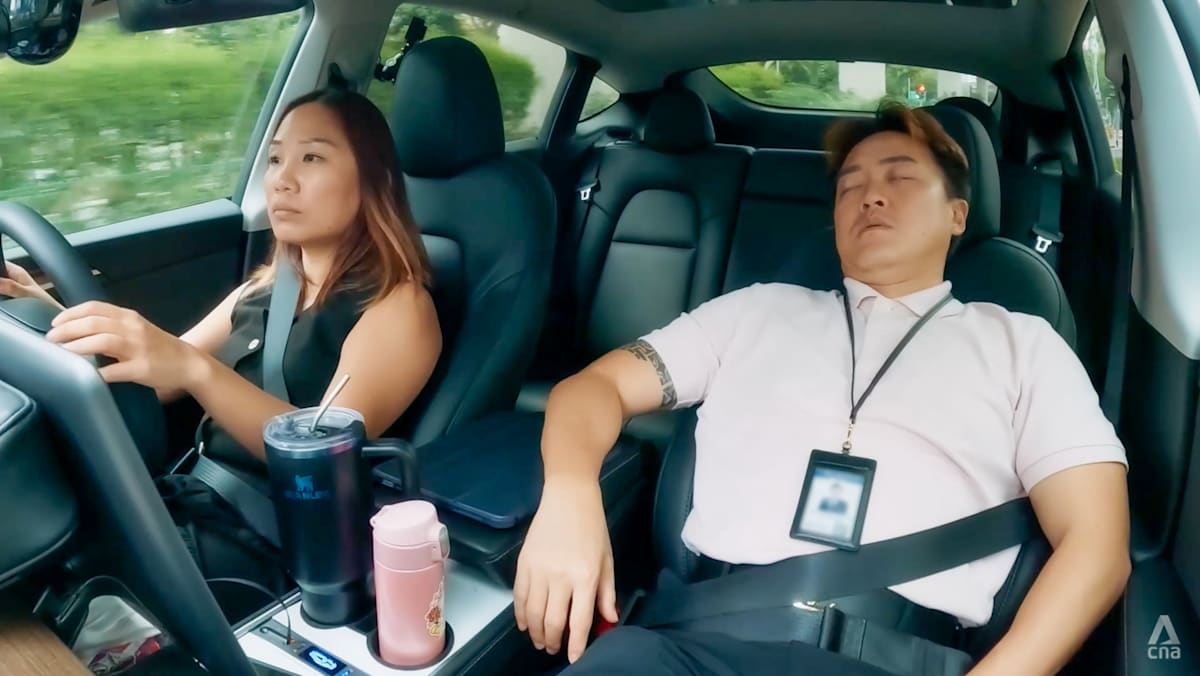
Genevieve Pay taking the wheel as her husband, Jeffrey Pang, a real estate salesperson, takes a quick snooze.
This audio is generated by an AI tool.
SINGAPORE: By the early afternoon, Jeffrey Pang usually feels what he calls the “Z monster” coming.
The 42-year-old property agent spends four to five hours a day behind the wheel, what with the school run and property viewings. Around 2pm, fatigue sets in. His eyelids flutter, and at times, he groans involuntarily and is jolted awake.
On bad days, his wife tells him to pull over so she can drive instead. “I’ll tend to doze off,” said the father of three. “It gets very worrying because I become a road hazard.”
The exhaustion follows him home, where he can become short-tempered. “My whole focus is to provide for my family, but (in the end), I’m causing all this unhappiness and arguments,” he said.
CNA Games Guess Word Crack the word, one row at a time Buzzword Create words using the given letters Mini Sudoku Tiny puzzle, mighty brain teaser Mini Crossword Small grid, big challenge Word Search Spot as many words as you can Show More Show Less He is not alone in struggling to feel well-rested. For many Singaporeans, work and study hours, family responsibilities and social commitments fill the day, leaving little time for recovery.
He is not alone in struggling to feel well-rested. For many Singaporeans, work and study hours, family responsibilities and social commitments fill the day, leaving little time for recovery.
Pang is glued to his phone anywhere between 30 minutes and two hours at night.
With those demands unlikely to disappear, what could help people feel more energised?
In the two-part series, Restless: Biohacking Better Health , six Singaporeans spend several weeks using data from smartwatches and continuous glucose monitors to see how their sleep, diet and exercise affect them. Then they test small changes to their everyday routines.
Guiding them is digital medicine expert Dean Ho, the director of the Institute for Digital Medicine at the National University of Singapore Yong Loo Lin School of Medicine (NUS Medicine) and head of biomedical engineering at the university.
Rather than overhauling their lives, he favours personalised “micro adjustments”. Lifestyle changes must be things they are “willing to do” and that are not “so drastic” as to be hard to sustain, said the professor.
WATCH PART 1: We’re so tired — Can these working parents and a nurse reclaim their energy? (46:54)
Here are six recommendations for better health, for the participants and others too:
1. PRIORITISE RECOVERY TIME OVER LONG WORKOUTS
One of the first discoveries Ho made about Pang’s usual routine was that the latter did strength training four times a week, for about three hours in the morning, but slept as little as four to five hours at night.
This was a mismatch between training load and recovery time. Weight training and sufficient sleep can both support testosterone levels, but when someone over-exercises while under-sleeping, “it’s possible that the opposite happens”, said Ho.
To Pang’s surprise, a blood test showed that his total testosterone level was borderline low. He had thought the more he worked out, the higher his testosterone level.
Pang used to stretch his workouts from 8.30am to about 11.30am each time.
To free up time for recovery, Ho asked him to cut his workouts to 90 minutes. So he streamlined his training — while going to bed earlier and keeping his phone out of the bedroom.
By the third week, his average sleep time had exceeded seven hours. After five weeks of changes to his sleep, diet and exercise, his total testosterone level had risen by almost 50 per cent.
“Serious?!” he exclaimed when told the result. “Wow!”
He also reported having more energy in the afternoon. At home his family found him more engaged with them and less irritable. His emotions have “improved a lot”, said wife Genevieve Pay. “It’s like I (got) my best friend back.”
2. DIAL DOWN STIMULATION AS THE DAY GOES ON
Pang was not the only who needed an afternoon boost. On an internship and mentally drained by 3pm, final-year undergraduate Tommy Yeow, 25, relied on coffee and a muffin to get through the days.
University student Tommy Yeow with Professor Dean Ho.
He would go for an evening run and supper twice a week, then return home to work on his resume or coding.
Though exhausted by bedtime, he would still doomscroll until 2am or 3am to switch off, leaving him with four to five hours of sleep.
Without enough time to wind down, anxiety can “creep in” and trigger people to doomscroll, said Jocelyn Chew, an assistant professor at NUS Medicine who leads its Digital Behavioural Insights Lab.
The habit taps the brain’s reward-seeking system, and a constant stream of content keeps people stimulated even late into the night.
Ho also flagged Yeow’s evening runs. Late workouts affect sleep, and the data showed Yeow’s heart rate was still elevated when he went to bed.
WATCH PART 2: Doomscrolling and late workouts — Why are these young people so tired? (46:37)
To let his body wind down earlier, Yeow moved his coffee and muffin break from 3pm to 2pm and his runs to the weekend. On weeknights, he switched to a walk after dinner, with no supper.
“I can reach home much earlier and then sleep much earlier to have more energy for the next day,” said Yeow, who also tried deep breathing exercises to manage stress.
In the end, he was averaging more than 7.5 hours in bed, including more than 80 minutes of deep sleep. And his daily screen time had fallen from 10 hours to about seven hours.
3. ME-TIME SHOULD HELP YOU WIND DOWN, NOT STAY UP
Evenings for Gelsey Tan, meanwhile, are when her second shift begins. The information technology business partner and mother of two ensures homework is done and bedtime routines are followed and prepares for the next day.
Gelsey Tan reading a bedtime story to her son.
Only then can she “rest (her) mind”. Despite feeling tired, the 45-year-old would often stay up until 1am to watch television with chips and a glass of wine, leaving her with five to six hours of sleep.
She would sometimes catch up on sleep on days off, once sleeping for nearly 12 hours on the eve of a public holiday. But building up this sleep debt, warned Ho, could affect her heart and cognitive health.
To help her rest more, he suggested that she start by sleeping 15 minutes earlier. A small change such as this requires less mental effort and, with repetition, is more likely to stick, said Chew.
And when Tan turned in earlier, her wearable data showed a longer stretch of deep sleep, and she felt happier and energetic.
She also began meditating with her husband before bedtime. Over time, she was sleeping before 11pm and getting seven to eight hours of rest. Her takeaway was this: “Mindless me-time drains. Intentional me-time restores.”
Tan’s husband, Ko Jun Jie, was the one who suggested meditation as a way to wind down.
4. MAKE THE HEALTHIER CHOICE THE EASIER CHOICE
For nurse Mishel Teo, 33, her hospital duties rotate between shifts, and it is the nights that test her the most. Between 3am and 5am, she would start dozing off and sometimes have two, three or four coffees.
Proper meals are hard to come by at the hospital late at night, leaving her with options such as chips, biscuits, cakes and instant noodles.
To avoid relying on less nutritious snacks, she has made a habit of preparing balanced meals and protein-rich snacks, such as rice cakes with cottage cheese and fruit with Greek yoghurt, to bring on her night shifts.
Over four weeks, Ho’s team saw that there were no very late sugar spikes in her blood glucose data. He said her attention to what and when she ate could support more consistent sleep.
Mishel Teo snacking healthily, which can help her achieve better sleep consistency.
Teo realised “the trick is (to) not buy all these chips and stuff … so that you don’t have a choice — if you’re hungry, this is all you have”.
5. CUT BACK WITHOUT CUTTING OUT EVERYTHING
Late nights for Muhammad Nasrulhaq, meanwhile, were part of his “work hard, play hard” lifestyle. The trade compliance analyst often stayed up to trade stocks or socialise; sometimes he woke at 3am to watch football.
On some nights, the 32-year-old slept for only a couple of hours, leaving him tired and cranky.
Food and smoking also figured prominently in his life. He enjoyed his parents’ home-cooked food — even when it was oily — often ate fried food outside and smoked a pack a day to relieve stress and bond with his father.
Just another routine late night for Muhammad Nasrulhaq.
His blood tests, however, showed elevated levels of two markers: high sensitivity C-reactive protein (hs-CRP), which indicates inflammation in the body, and homocysteine, which is associated with cardiovascular risk.
Ho told a shocked Nasrulhaq that the numbers more closely resembled those of someone in their 50s or 60s.
Consultant cardiologist Laureen Wang at Alexandra Hospital said chemicals in cigarette smoke promote inflammation and damage blood vessels. “It’s like rusting your pipes,” she added, warning that narrowed or blocked blood vessels can lead to a heart attack.
Rather than cutting out everything, Ho stressed balance and respecting food and family traditions. So Nasrulhaq had his family meals but ate less fried and ultra-processed foods outside and left social gatherings earlier.
He also cut back on smoking, especially after his father offered to “quit together”.
Nasrulhaq hugging his father, Nash Rashid, after they decided to try to quit smoking together.
Within five weeks, his sleep score had risen from 60-plus to more than 90. In less than 13 weeks, he had cut his smoking down to as little as two cigarettes in one week.
His hs-CRP fell by 80 per cent and his homocysteine by about 30 per cent. Reflecting on how much he had reduced his smoking, Nasrulhaq said: “Never in my wildest dreams (did) I think I could. But I did it.”
6. STRUGGLING TO WAKE UP? LET THERE BE LIGHT
For project manager Nicole Lum, 30, sleeping less than five hours a day had become routine. She was juggling work, a part-time master’s degree course, four or five workouts a week and, when filming began, wedding preparations.
Getting out of bed was her biggest struggle. She would set her alarm for multiple times and repeatedly hit the snooze. She once overslept and missed an important meeting.
After meeting Nicole Lum, Prof Ho said he thought of the words “ambition” and “drive”, which he hoped she could channel into “taking better care of her own health”.
The problem persisted even after she started a job with a later start time. Despite averaging more than eight hours of sleep, she found it “very hard to wake up” — this and her “repeated snoozing” stood out, observed Ho.
He suggested another wake-up cue that can signal to the body that it is time to rouse, namely morning light. One option was a smart bulb timed to switch on with her alarm.
Lum tried switching on a bedside light when she woke. “It feels a bit weird, but I think it helps,” she said. “I feel less tired when I get out of bed. I don’t feel so groggy.”
Watch the series, Restless: Biohacking Better Health, here: Part 1 and Part 2 .
CNA's best current affairs documentaries with a deeper look at issues affecting Asia, sent to your inbox weekly.
Get our pick of top stories and thought-provoking articles in your inbox
Stay updated with notifications for breaking news and our best stories
Join our channel for the top reads for the day on your preferred chat app
从深夜锻炼到沉迷于负面新闻,日常习惯都会对健康造成损害。在新加坡国立大学研究人员的指导下,《躁动不安:生物黑客改善健康》系列节目中的六位参与者将探索“微小”的调整如何带来改变。
Genevieve Pay 掌舵,而她的丈夫 Jeffrey Pang,一位房地产销售员,则小憩片刻。
这段音频由人工智能工具生成。
新加坡:到了下午早些时候,Jeffrey Pang 通常都会感觉到他所谓的“Z 怪兽”即将到来。
这位42岁的房产经纪人每天要花四到五个小时开车,既要接送孩子上下学,又要带人看房。下午两点左右,他开始感到疲倦。眼皮打架,有时还会不由自主地呻吟一声,然后猛然惊醒。
状态不好的时候,他妻子会让他靠边停车,让她来开车。“我经常会打瞌睡,”这位三个孩子的父亲说,“这很让人担心,因为我会成为道路上的安全隐患。”
疲惫感也随之而来,他回到家后容易变得暴躁易怒。“我一心只想养家糊口,但(最终),我却造成了这一切不快乐和争吵,”他说。
CNA游戏 猜词游戏 逐行破解单词 流行词游戏 用给定的字母组成单词 迷你数独 小谜题,大挑战 迷你填字游戏 小方格,大挑战 单词搜索 尽可能多地找出单词 显示更多 显示更少 他并非唯一一个难以获得充分休息的人。对许多新加坡人来说,工作和学习时间、家庭责任和社交活动填满了每一天,几乎没有时间休息。
他并非唯一一个难以获得充分休息的人。对许多新加坡人来说,工作、学习、家庭责任和社交活动填满了他们的一天,几乎没有时间休息。
庞晚上经常会花半小时到两个小时的时间盯着手机。
鉴于这些需求不太可能消失,什么能帮助人们感到更有活力呢?
在两集系列纪录片《躁动不安:生物黑客改善健康》中,六位新加坡人花了数周时间,利用智能手表和连续血糖监测仪收集的数据,观察睡眠、饮食和运动如何影响他们的健康。然后,他们测试了对日常生活习惯进行一些小的改变。
指导他们的是数字医学专家何迪安(Dean Ho),他是新加坡国立大学杨潞琳医学院(NUS Medicine)数字医学研究所所长兼该大学生物医学工程系主任。
他更倾向于个性化的“微调”,而不是彻底改变他们的生活方式。这位教授说,生活方式的改变必须是他们“愿意去做”的事情,而且不能“过于剧烈”,以至于难以长期坚持。
观看第一部分:我们太累了——这些职场父母和一位护士能否重拾活力?(46:54)
以下六条建议有助于改善参与者及其他人群的健康:
1. 优先考虑恢复时间,而不是长时间的训练
何先生对庞先生的日常作息发现的第一件事是,庞先生每周进行四次力量训练,每次大约三个小时,但晚上只睡四到五个小时。
这是训练负荷和恢复时间不匹配造成的。力量训练和充足的睡眠都能提高睾酮水平,但当一个人过度锻炼而睡眠不足时,“可能会产生相反的效果”,Ho说道。
令庞惊讶的是,血液检查结果显示他的总睾酮水平偏低。他原以为锻炼越多,睾酮水平就越高。
庞以前每次都会把训练时间从早上 8 点 30 分延长到大约 11 点 30 分。
为了腾出时间恢复,何教练要求他将训练时间缩短到90分钟。于是他简化了训练计划——同时早点睡觉,并且把手机放在卧室外。
到第三周,他的平均睡眠时间超过了7小时。经过五周对睡眠、饮食和运动的调整,他的总睾酮水平上升了近50%。
“真的吗?!”得知结果后他惊呼道。“哇!”
他还表示,自己下午精力更充沛了。在家时,家人发现他更愿意与他们交流,也不那么容易烦躁了。妻子吉纳维芙·佩说,他的情绪“好多了”,“感觉就像我找回了最好的朋友。”
2. 随着时间的推移,逐渐减少刺激
庞并非唯一一个需要在下午提神的人。25岁的大四学生汤米·叶(Tommy Yeow)正在实习,下午三点就已精疲力竭,他只能靠咖啡和松饼来支撑自己度过每一天。
大学生 Tommy Yeow 与 Dean Ho 教授合影。
他每周有两次晚上会出去跑步和吃晚饭,然后回家修改简历或编写代码。
尽管到了睡觉时间他已经筋疲力尽,但他仍然会一直刷到凌晨两三点才关机,这样他就能睡上四到五个小时。
新加坡国立大学医学院数字行为洞察实验室负责人、助理教授 Jocelyn Chew 表示,如果没有足够的时间放松下来,焦虑就会“悄悄袭来”,并引发人们沉迷于浏览负面新闻。
这种习惯会刺激大脑的奖励机制,源源不断的内容能让人们即使在深夜也保持兴奋。
何先生还指出了叶先生的夜间跑步习惯。深夜锻炼会影响睡眠,数据显示叶先生入睡时心率仍然偏高。
观看第二部分:沉迷于浏览负面新闻和深夜锻炼——为什么这些年轻人如此疲惫?(46:37)
为了让身体更早放松下来,叶先生把喝咖啡吃松饼的时间从下午3点提前到了2点,跑步也安排在了周末。工作日的晚上,他改成晚饭后散步,不吃夜宵。
“我可以更早到家,然后更早睡觉,这样第二天就更有精力了,”叶说,她还尝试了深呼吸练习来缓解压力。
最终,他平均每天卧床超过7.5小时,其中包括超过80分钟的深度睡眠。而他每天的屏幕使用时间也从10小时减少到大约7小时。
3. 独处时间应该帮助你放松身心,而不是熬夜。
与此同时,对于盖尔西·谭来说,晚上才是她第二班工作的开始。这位信息技术业务伙伴兼两个孩子的母亲要确保孩子们完成作业、按时睡觉,并为第二天做好准备。
Gelsey Tan正在给儿子读睡前故事。
只有这样她才能“放松心情”。尽管感到疲倦,这位45岁的女子经常熬夜到凌晨1点,一边吃薯片一边喝葡萄酒看电视,这样她每天只能睡五六个小时。
她有时会在休息日补觉,有一次甚至在公众假期前夜睡了将近12个小时。但何女士警告说,长期累积睡眠不足可能会影响她的心脏和认知健康。
为了帮助她更好地休息,他建议她先从早睡15分钟开始。周医生说,像这样的小改变不需要花费太多精力,而且反复练习更容易坚持下去。
而当谭女士早早入睡时,她的可穿戴设备数据显示她深度睡眠的时间更长,她也感到更快乐、更有活力。
她还开始和丈夫一起在睡前冥想。久而久之,她晚上11点前就能入睡,睡眠时间也达到了七八个小时。她从中得到的启示是:“漫无目的的独处会消耗精力,而有意识的独处则能恢复精力。”
是谭的丈夫高俊杰建议她通过冥想来放松身心。
4. 让更健康的选择成为更轻松的选择
33岁的护士米歇尔·特奥(Mishel Teo)在医院轮班工作,夜班对她来说最具挑战性。凌晨3点到5点之间,她经常开始打瞌睡,有时甚至要喝两三杯咖啡。
深夜在医院很难找到像样的饭菜,她只能选择薯片、饼干、蛋糕和方便面之类的食物。
为了避免依赖营养价值较低的零食,她养成了准备营养均衡的饭菜和富含蛋白质的零食的习惯,例如米饼配乡村奶酪和水果配希腊酸奶,以便在上夜班时食用。
在为期四周的观察中,何医生的团队发现她的血糖数据中没有出现非常晚期的血糖峰值。他表示,她对饮食内容和时间的关注有助于改善睡眠质量。
Mishel Teo 喜欢健康零食,这有助于她获得更规律的睡眠。
Teo意识到“诀窍在于不要买那么多薯片之类的东西……这样你就没得选了——如果你饿了,这就是你唯一能吃的”。
5. 减少开支,但不要完全取消
与此同时,对穆罕默德·纳斯鲁哈克来说,熬夜是他“努力工作,尽情玩乐”生活方式的一部分。这位交易合规分析师经常熬夜交易股票或与人社交;有时他甚至凌晨三点就起床看足球比赛。
有些晚上,这位 32 岁的男子只睡了几个小时,这让他感到疲惫和烦躁。
食物和吸烟在他的生活中也占据了重要地位。他喜欢父母做的家常菜——即使有些油腻——经常在外面吃油炸食品,每天抽一包烟来缓解压力,并与父亲增进感情。
对穆罕默德·纳斯鲁哈克来说,这不过是又一个例行的深夜。
然而,他的血液检查显示两种指标水平升高:高敏 C 反应蛋白 (hs-CRP),表明体内存在炎症;以及同型半胱氨酸,与心血管风险相关。
何告诉震惊的纳斯鲁哈克,这些数字更像是五六十岁的人的。
亚历山大医院的心脏病专家劳伦·王表示,香烟烟雾中的化学物质会促进炎症并损伤血管。“这就像管道生锈一样,”她补充道,并警告说,血管狭窄或阻塞会导致心脏病发作。
何先生并没有完全摒弃饮食,而是强调平衡,尊重食物和家庭传统。因此,纳斯鲁哈克会和家人一起吃饭,但会减少在外食用油炸和超加工食品,并且会更早离开社交聚会。
他也减少了吸烟量,尤其是在他父亲提出“一起戒烟”之后。
纳斯鲁哈克和他的父亲纳什·拉希德决定一起戒烟后,纳斯鲁哈克拥抱了父亲。
五周内,他的睡眠评分从 60 多分提高到 90 多分。不到 13 周,他的吸烟量就减少到每周只抽两支烟。
他的高敏C反应蛋白(hs-CRP)下降了80%,同型半胱氨酸下降了约30%。纳斯鲁哈克在回顾自己戒烟的程度时说:“我做梦都没想到自己能做到。但我做到了。”
6. 难以醒来?让光明照耀你
对于30岁的项目经理妮可·卢姆来说,每天睡眠不足5小时已成常态。她要兼顾工作、兼职硕士学位课程、每周四五次的锻炼,以及拍摄开始后的婚礼筹备工作。
起床是她最大的难题。她会设置好几次闹钟,然后反复按下贪睡键。有一次,她睡过头,错过了一个重要的会议。
何教授在与林妮可见面后表示,他想到了“雄心”和“干劲”这两个词,希望她能将这些品质转化为“更好地照顾自己的健康”。
即使换了一份上班时间较晚的工作,这个问题依然存在。尽管她平均睡眠时间超过八小时,但她发现自己“很难醒来”——这一点以及她“反复打盹”的现象尤为突出,何女士观察到。
他还建议使用另一种可以唤醒身体的信号,那就是晨光。其中一个方案是安装一个智能灯泡,使其与闹钟同步亮起。
卢女士尝试在醒来后打开床头灯。“感觉有点奇怪,但我认为有用,”她说。“起床后我感觉没那么累了,也不那么昏昏沉沉的了。”
观看系列节目《不安分:生物黑客改善健康》,请点击此处:第 1 部分和第 2 部分。
每周将 CNA 精选的、深入探讨影响亚洲问题的时事纪录片发送到您的邮箱。
订阅我们的邮件,即可获取精选热点新闻和引人深思的文章。
订阅通知,第一时间获取突发新闻和精彩报道。
加入我们的频道,即可在您常用的聊天应用上获取当日热门文章。