GIC, Temasek rebut allegations of pressuring MSCI to downgrade Indonesia新加坡政府投资公司(GIC)和淡马锡控股驳斥了有关其施压MSCI下调印尼信用评级的指控。
GIC and Temasek deny allegations of pressuring MSCI to downgrade Indonesia’s stock market classification amid index review concerns. Read more at straitstimes.com.
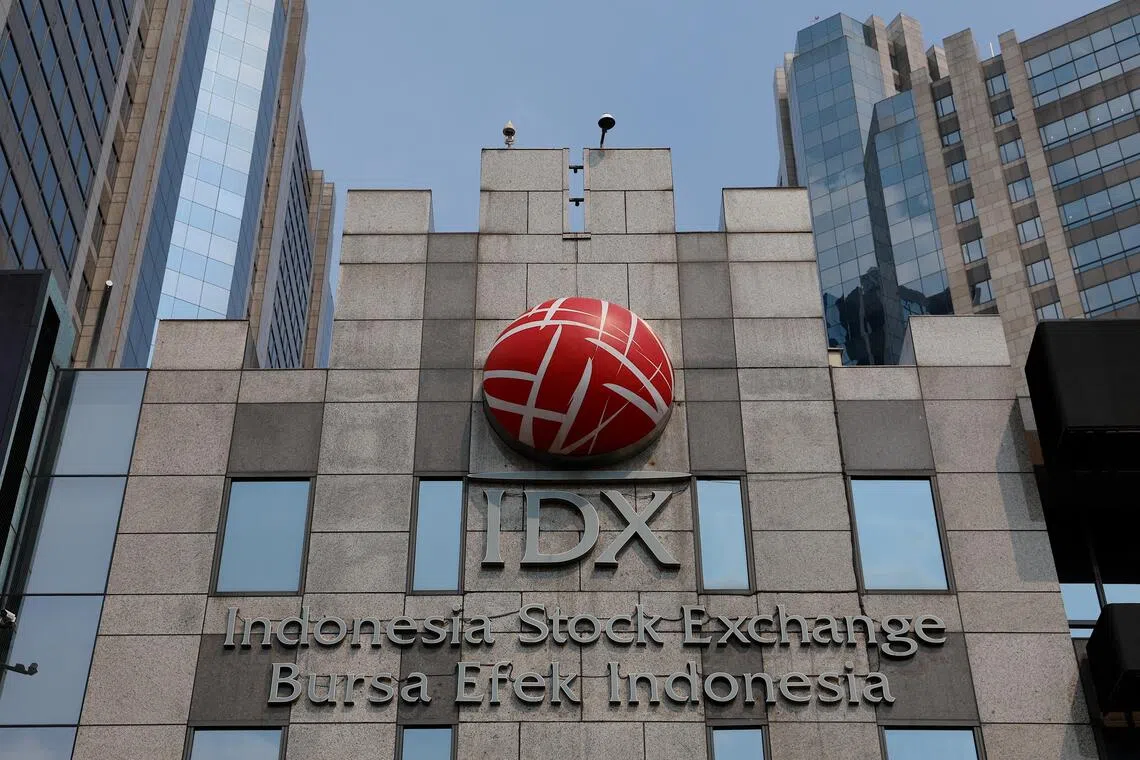
This was not the first time MSCI has warned that it would downgrade Indonesia. It previously warned in January that it could downgrade the country from emerging to frontier market.
Published Oct 21, 2026, 04:35 PM
Updated Oct 21, 2026, 08:52 PM
GIC and Temasek denied claims they pressured MSCI to downgrade Indonesia. GIC said it invests based on “company- and asset-level fundamentals”, while Temasek said the claims are “patently untrue”.
MSCI is reviewing whether to reclassify Indonesia from an emerging market to standalone status. It says its decisions use “transparent and rules-based methodologies” and will decide by June 30, 2027.
The warning has shaken Indonesian stocks, with the Jakarta Composite Index falling more than 14% before recovering 5%. IDX is tightening rules on concentrated share ownership to avoid exclusion from MSCI benchmarks.
SINGAPORE – Singapore’s sovereign wealth fund GIC and investment company Temasek have rejected allegations that they or their staff pressured index provider MSCI to consider downgrading Indonesia’s stock market classification.
This follows accusations on Oct 20 by former Indonesian trade minister Muhammad Lutfi that the two investors coerced MSCI to consider downgrading Indonesia.
The former minister claimed that a downgrade could trigger market panic and create opportunities to acquire Indonesian equities at lower prices.
A GIC spokesperson told The Straits Times: “Our investment decisions are not driven by index classifications or top-down views of a market, and instead by company- and asset-level fundamentals.
“We have been invested in Indonesia for over 30 years across asset classes and will continue to invest where we find good, bottom-up, risk-adjusted opportunities.”
Fock Wai Hoong, head of Asia-Pacific excluding China and India at Temasek Global Investments, said the allegations have “no basis and are patently untrue”.
“No one from Temasek – neither the institution nor the individuals working for the institution – has ever reached out to MSCI in order to influence any decisions they have ever made around any exchange across the region.
“Maybe I’ll leave it at that,” he said.
Fock was responding to the media during the launch of the e-Conomy SEA 2026 report at Google’s office in Mapletree Business City on Oct 21.
Indonesia Stock Exchange (IDX) president director Jeffrey Hendrik defended the independence of MSCI on Oct 20 following the allegations.
“We have always believed, and continue to believe, that global index providers are independent,” he told reporters at the IDX building in Jakarta.
MSCI, meanwhile, told ST that its index decisions follow transparent and rules-based methodologies.
It is accepting market feedback until April 30, 2027, and will announce its decision by June 30.
“MSCI will continue to monitor developments in the Indonesian market and engage with market participants and authorities,” it said, adding that it does not disclose investor feedback during an open consultation period.
The controversy comes after a record two-day market sell-off following MSCI’s warning on Oct 15 of the possible removal of Indonesia from its global indexes. Among its concerns were shareholding opacity, insider trading and regulatory enforcement.
Every year, MSCI reviews all global markets and determines whether they should be classified as developed, emerging, frontier or standalone, based on economic development, market size, liquidity and accessibility.
The index provider has launched a consultation on whether to reclassify Indonesia from an emerging market to standalone status, a move which can be a big blow for the country as its stocks would be excluded from indexes used by investors.
Any reclassification could have significant implications for Indonesian equities, including investment flows from funds that track MSCI indexes , which are widely used as benchmarks for tracking different global markets.
The index provider’s move indicates that the concerns extend beyond market size or liquidity and relate to more fundamental issues involving the integrity and credibility of trading mechanisms, said Eastspring Investments, an asset management business of Prudential.
Other standalone markets include Argentina, Lebanon and Zimbabwe.
The Jakarta Composite Index fell more than 14% from Oct 16 to 19 following MSCI’s warning.
However, the index recovered 5% on Oct 20, after IDX said the night before that it would expel companies with highly concentrated share ownership from its flagship index in its latest attempt to avoid ejection from MSCI’s global emerging markets benchmark.
The announcement followed a virtual meeting between the exchange and MSCI officials.
Such companies, which make up almost a fifth of the index’s combined market value, include Dian Swastatika Sentosa and Barito Renewables Energy – two of the biggest companies in the index by market value.
The exchange did not say when the expulsions would take effect.
The Jakarta exchange has since introduced reforms, including cutting the minimum price at which a stock can trade from 50 rupiah to one rupiah in an attempt to promote liquidity, and doubling the minimum free float – the portion of stocks available for trading – to 15% of a company’s shares.
这并非MSCI首次发出下调印尼评级的警告。该公司此前曾在1月份发出警告,可能将印尼的评级从新兴市场下调至前沿市场。
发布于 2026 年 10 月 21 日下午 4:35
更新于2026年10月21日晚上8:52
新加坡政府投资公司(GIC)和淡马锡否认了他们施压摩根士丹利资本国际(MSCI)下调印尼信用评级的指控。GIC表示,其投资基于“公司和资产层面的基本面”,而淡马锡则称这些指控“显然不实”。
MSCI正在评估是否将印度尼西亚从新兴市场重新归类为独立市场。该公司表示,其决策采用“透明且基于规则的方法”,并将于2027年6月30日前做出决定。
这一警告震荡了印尼股市,雅加达综合指数一度下跌超过14%,随后反弹5%。印尼证券交易所(IDX)正在收紧股权集中度监管规定,以避免被MSCI基准指数剔除。
新加坡——新加坡主权财富基金GIC和投资公司淡马锡否认了有关他们或其员工向指数提供商MSCI施压,要求其考虑下调印尼股市评级的指控。
此前,印尼前贸易部长穆罕默德·卢特菲于 10 月 20 日指控这两名投资者胁迫 MSCI 考虑下调印尼的信用评级。
这位前部长声称,评级下调可能会引发市场恐慌,并创造以更低价格购买印尼股票的机会。
新加坡政府投资公司 (GIC) 的一位发言人告诉《海峡时报》:“我们的投资决策并非由指数分类或自上而下的市场观点驱动,而是由公司和资产层面的基本面驱动。”
“我们在印尼的投资已超过30年,涵盖各类资产,并将继续在我们发现良好的、自下而上、风险调整后的投资机会的地方进行投资。”
淡马锡环球投资亚太区(除中国和印度外)主管福伟雄表示,这些指控“毫无根据,显然是错误的”。
“淡马锡的任何一方——无论是该机构还是在该机构工作的个人——都从未与MSCI接触,以影响其在区域内任何交易所做出的任何决定。
“也许我就说到这儿吧,”他说。
10 月 21 日,在谷歌位于丰树商业城的办公室举行的《2026 年东南亚电子经济报告》发布会上,福克在接受媒体采访时作出了上述回应。
印尼证券交易所(IDX)总裁杰弗里·亨德里克 (Jeffrey Hendrik) 于 10 月 20 日就 MSCI 的独立性指控进行了辩护。
“我们一直相信,并且仍然相信,全球指数提供商是独立的,”他在雅加达IDX大楼告诉记者。
与此同时,MSCI告诉《海峡时报》,其指数决策遵循透明且基于规则的方法。
公司将接受市场反馈意见至 2027 年 4 月 30 日,并将于 6 月 30 日前公布决定。
“MSCI将继续关注印尼市场的发展动态,并与市场参与者和监管机构进行沟通,”该公司表示,并补充说,在公开咨询期间,不会披露投资者的反馈意见。
此次争议源于MSCI于10月15日发出的警告,称印尼可能被从其全球指数中剔除。警告内容包括股权结构不透明、内幕交易以及监管执法等问题。此后,印尼股市遭遇了创纪录的两日抛售潮。
MSCI 每年都会对所有全球市场进行审查,并根据经济发展水平、市场规模、流动性和可及性,确定它们应该被归类为发达市场、新兴市场、前沿市场还是独立市场。
指数提供商已就印尼是否从新兴市场重新归类为独立市场展开咨询,此举可能对印尼造成重大打击,因为其股票将被排除在投资者使用的指数之外。
任何重新分类都可能对印尼股市产生重大影响,包括追踪 MSCI 指数的基金的投资流动,这些指数被广泛用作追踪不同全球市场的基准。
保德信旗下资产管理公司东亚投资表示,指数提供商的这一举动表明,人们的担忧不仅限于市场规模或流动性,还涉及交易机制的完整性和可信度等更根本的问题。
其他独立市场包括阿根廷、黎巴嫩和津巴布韦。
受MSCI警告影响,雅加达综合指数在10月16日至19日期间下跌超过14%。
然而,在IDX前一天晚上表示将把股权高度集中的公司从其旗舰指数中剔除后,该指数在10月20日反弹了5%,这是IDX为避免被MSCI全球新兴市场基准指数剔除而做出的最新努力。
该公告是在交易所与MSCI官员举行线上会议后发布的。
这些公司占该指数总市值的近五分之一,其中包括 Dian Swastatika Sentosa 和 Barito Renewables Energy——这两家公司是该指数中市值最大的公司之一。
双方并未说明驱逐令何时生效。
雅加达交易所随后进行了一系列改革,包括将股票的最低交易价格从 50 印尼盾降至 1 印尼盾,以促进流动性,并将最低自由流通股(可供交易的股票比例)提高到公司股份的 15%。