About 40 cat fosterers approved under new pilot scheme as rescuers weigh benefits, restrictions约40名猫咪寄养者已获准参与一项新的试点计划,救援人员正在权衡该计划的益处和限制。
About 30 applications were rejected over eligibility or assessment issues, or withdrawn by applicants who could no longer foster cats.
About 30 applications were rejected over eligibility or assessment issues, or withdrawn by applicants who could no longer foster cats.
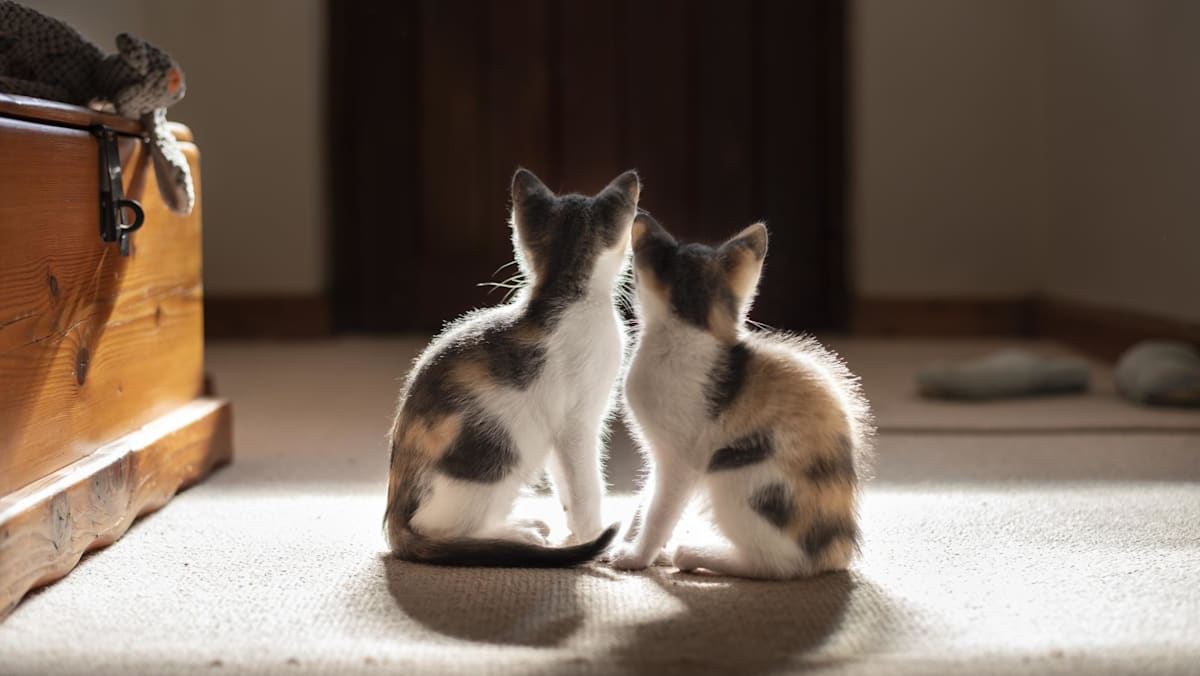
A pair of kittens. (File photo: iStock)
This audio is generated by an AI tool.
SINGAPORE: About 40 cat fosterers have been approved under a new pilot scheme that formally recognises them, out of around 90 applications received in its first two months.
About 30 were rejected or withdrawn as of Oct 9, group director of the Animal and Veterinary Service (AVS) Anna Wong told CNA.
These included applicants who did not meet the eligibility criteria or pass the assessment, as well as those who withdrew because they were no longer able to foster cats or were temporarily unable to commit, she added.
Another 20 applications are being reviewed.
The two-year pilot, which began on Aug 3, allows cat fosterers to keep up to six cats in Housing and Development Board (HDB) flats and 10 in private premises, including their own pet cats. The previous household limits were two cats in HDB flats and three in private premises.
While some cat fosterers welcomed the formal recognition and additional support, others raised concerns about restrictions that could limit their ability to help cats in need.
Accountant Lee Sok Khoong, whose application was approved, said that the free licences for cats under the pilot scheme help fosterers, particularly those who look after multiple cats. As part of the pilot, AVS is waiving licensing fees for cats fostered by approved applicants.
“It formalises what I'm already doing and registration doesn't cost anything,” the 34-year-old said.
Ms Lee, who has been fostering cats for over a year, typically cares for one to two cats at a time and is expecting to foster one soon.
She is among those who hope for the fee waiver to continue beyond the pilot.
“Fosterers give their time and space voluntarily,” Ms Lee said. “Keeping the fee waived not only allows fosterers to dedicate more resources to supporting their fosters, but also shows that foster work is valued.”
CNA Games Guess Word Crack the word, one row at a time Buzzword Create words using the given letters Mini Sudoku Tiny puzzle, mighty brain teaser Mini Crossword Small grid, big challenge Word Search Spot as many words as you can Show More Show Less
Ms Lee Sok Khoong and her husband with their foster cat on its adoption day. (Photo: Lee Sok Khoong)
Another successful applicant, Ms Fiona Hsu, 33, said that the scheme gives fostering a clear framework and sets positive standards for how cats in foster care should be looked after.
Some of the scheme's requirements include prior experience looking after cats, sufficient time and financial resources to care for them and ensuring that all cats in the household are sterilised and microchipped at the time of application.
“I see it as a meaningful investment in cat welfare, and a safeguard for cats who might otherwise be fostered in poor conditions,” said Ms Hsu, who works in human resources.
“Being recognised at a national level is also important to us,” Ms Hsu said, adding that it is “reassuring” for agencies and fosterers to work towards a shared national standard.
“It also gives adopters, cat owners and other welfare groups confidence that the cats in our care are being looked after to a high standard,” said Ms Hsu, who has been fostering cats for over a year and recently fostered a bonded mother-and-kitten pair.
Ms Fiona Hsu with her foster cat. (Photo: Fiona Hsu)
While she is supportive of the framework, she hopes for AVS to consider flexibility on the household cat limit in the case of an emergency, such as taking in a rescued mother with a litter of kittens.
She also suggested incentives for those who adopt from approved fosterers, such as waiving the first licence fee, so that more foster cats find permanent homes and fosterers can make room for the next cat in need.
The Society for the Prevention of Cruelty to Animals (SPCA) welcomed the greater access to veterinary support under the scheme.
It said that the framework could help ensure that foster homes are adequately equipped to care for cats with more complex needs, such as those that are injured, abandoned or surrendered.
“While the eligibility criteria and terms may seem onerous at first glance, they are not meant to encumber but to empower fosterers for success right from the start,” said SPCA.
Independent cat rescuer Jenna, who has been fostering cats for six years and wanted to be known by only her first name, said that basic requirements such as home assessments and checks on fosterers’ ability to care for cats would help ensure appropriate standards of care.
However, she was concerned about the six-cat limit for HDB fosterers. While approved fosterers living in private premises can appeal to keep more than 10 cats on a case-by-case basis, those in HDB flats cannot do the same.
Ms Jenna with her cat, Pat, whom she fostered before eventually adopting. (Photo: Jenna)
According to AVS, around two-thirds of applications come from HDB residents, with the rest from those living in private housing.
“I’m not suggesting that fosterers should be allowed to keep an unlimited number of cats. I just think there should be room for individual assessment,” said Ms Jenna, who lives in private housing and plans to apply for the scheme soon.
She suggested AVS consider factors such as home size and condition, standard of care provided and whether there were complaints when assessing appeals.
Ms Jenna, who has six pet cats and is currently fostering a pair of kittens, said foster homes are hard to find and independent rescuers rely heavily on them.
“Ultimately, foster homes are part of the safety net for cats that have nowhere else to go,” said Ms Jenna. “Sometimes, whether a foster space is available can directly determine whether a cat can be rescued at all.”
Similarly, Ms Lynnett Yip, who has been fostering cats for six years, disagrees with the household limits.
“I feel the scheme acts more like a band-aid than actually solving the problem itself,” said the 36-year-old cat sitter, who has not applied for the scheme as she is taking a break from fostering.
Ms Lynnett Yip with a foster cat. (Photo: Lynnett Yip)
While she acknowledged that the scheme could prevent “unintentional hoarding” and abuse, Ms Yip felt that it does not address underlying issues, such as cat abandonment and overpopulation.
“For a lot of us in the community, it feels like it’s easier for people nowadays to just spend the money to buy a pet and it somehow feels like that makes it easier for them to abandon the pet when there’s a problem,” said Ms Yip.
She called for greater engagement with those on the ground to understand these challenges better.
Cat rescue group Luni said that it welcomed the scheme, though it has not seen a noticeable increase in fostering applications since it was announced.
“We see the support for microchipping and sterilisation as helpful for independent fosterers,” a spokesperson for the non-profit organisation said.
Luni added that these benefits may be less relevant to its own fosterers, as the group already covers their veterinary expenses through partner clinics that offer discounted rates for rescued cats.
SPCA also said that formal recognition alone would not fully address all the challenges faced by fosterers, including the time commitment, financial costs and risk of burnout.
It pointed out that neonatal animals may require feeding every two hours, while sick animals require close monitoring and potentially costly veterinary treatment.
“Since fosterers would have firsthand experience of any challenges and mitigating factors, we urge the government to involve them thoroughly when evaluating the pilot scheme,” said SPCA.
“If the pilot scheme yields positive outcomes, it may be proof of concept to raise animal welfare standards across the board for all pet guardians, bringing the requirements into alignment with those asked of cat fosterers,” it added.
“This would improve pet welfare at the upstream level, minimising the chances that these pets will ever fall through the cracks and become candidates for fostering.”
However, Luni said the scheme is unlikely to significantly influence people's decisions to foster.
“Fostering is rewarding but demanding, and prospective fosterers weigh their time, finances and capacity when deciding whether to volunteer,” the Luni spokesperson said.
Applications for the pilot scheme are assessed by AVS, the Cat Welfare Society and HDB, if applicants are staying in HDB flats.
The agencies will review the scheme following the pilot to assess whether it meets the needs of fosterers and gather feedback from the wider community.
“The findings will inform the longer-term approach to fosterer recognition, including the limits for cat fosterers,” said Dr Wong of AVS.
Get our pick of top stories and thought-provoking articles in your inbox
Stay updated with notifications for breaking news and our best stories
Join our channel for the top reads for the day on your preferred chat app
约有 30 份申请因资格或评估问题而被拒绝,或者因申请人无法继续饲养猫而被撤回。
一对小猫。(图片来源:iStock)
这段音频由人工智能工具生成。
新加坡:一项新的试点计划正式认可了猫咪寄养者,在前两个月收到的约 90 份申请中,约有 40 名猫咪寄养者获得批准。
动物及兽医服务(AVS)集团总监Anna Wong告诉CNA,截至10月9日,约有30个申请被拒绝或撤回。
她补充说,这些申请人包括不符合资格标准或未通过评估的申请人,以及因无法继续寄养猫或暂时无法做出承诺而退出的申请人。
另有20份申请正在审核中。
这项为期两年的试点计划于8月3日启动,允许寄养家庭在组屋中饲养最多6只猫,在私人住宅中饲养最多10只猫,其中包括他们自己的宠物猫。此前,组屋家庭最多只能饲养两只猫,私人住宅最多只能饲养三只猫。
虽然一些猫咪寄养者对正式认可和额外支持表示欢迎,但另一些人则对可能限制他们帮助有需要的猫咪能力的限制表示担忧。
申请获批的会计师李淑琼表示,试点计划下的免费猫咪许可证制度对寄养家庭,特别是那些照顾多只猫咪的家庭,大有裨益。作为试点计划的一部分,新加坡动物福利协会(AVS)将免除获批申请人寄养猫咪的许可证费用。
这位34岁的男子说:“它使我目前所做的事情正式化,而且注册是免费的。”
李女士已经照顾猫咪一年多了,她通常一次照顾一到两只猫,并且预计很快会再照顾一只。
她和其他一些人希望这项费用豁免政策能在试点项目结束后继续实施。
李女士说:“寄养家庭都是自愿付出时间和空间的。免除费用不仅能让寄养家庭投入更多资源来支持寄养儿童,也表明寄养工作得到了认可。”
CNA游戏 猜词游戏 逐行破解单词 流行词游戏 用给定的字母组成单词 迷你数独 小小谜题,挑战你的大脑 迷你填字游戏 小方格,大挑战 单词搜索 尽可能多地找出单词 显示更多 显示更少
李淑琼女士和她的丈夫与他们收养的猫咪在领养日合影。(照片:李淑琼)
另一位申请成功的申请人,33岁的许菲奥娜女士表示,该计划为寄养提供了一个清晰的框架,并为寄养家庭中的猫咪应该如何被照顾设定了积极的标准。
该计划的一些要求包括:有照顾猫的经验,有足够的时间和经济资源来照顾它们,并确保申请时家中所有猫都已绝育并植入芯片。
“我认为这是对猫咪福利的一项有意义的投资,也是对那些可能在恶劣条件下寄养的猫咪的一种保障,”从事人力资源工作的许女士说道。
许女士表示:“获得国家层面的认可对我们来说也很重要。”她还补充说,机构和寄养家庭共同努力制定国家标准,这令人感到“安心”。
“这也让领养者、猫主人和其他福利团体确信,我们照顾的猫咪得到了高标准的照料,”许女士说道。她已经寄养猫咪一年多了,最近还寄养了一对感情很好的母子猫。
许菲奥娜女士和她收养的猫。(照片:许菲奥娜)
虽然她支持该框架,但她希望AVS在紧急情况下(例如收养一头带着一窝小猫的获救母猫)能够考虑灵活调整家猫数量限制。
她还建议对从合格的寄养家庭领养猫咪的人给予奖励,例如免除首次领养费,以便让更多寄养猫咪找到永久的家,也让寄养家庭腾出空间来照顾下一只需要帮助的猫咪。
防止虐待动物协会(SPCA)对该计划下更容易获得兽医支持表示欢迎。
该机构表示,该框架有助于确保寄养家庭有足够的设备来照顾有更复杂需求的猫,例如受伤、被遗弃或被放弃的猫。
SPCA表示:“虽然资格标准和条款乍一看可能很苛刻,但它们的目的不是为了阻碍寄养家庭,而是为了从一开始就赋予他们成功的能力。”
独立猫咪救助者 Jenna 已经收养猫咪六年了,她希望只透露自己的名字。她说,诸如家庭评估和检查寄养者照顾猫咪的能力等基本要求将有助于确保适当的护理标准。
然而,她担心组屋寄养家庭最多只能养六只猫。虽然居住在私人住所的获准寄养家庭可以根据具体情况申请饲养超过十只猫,但居住在组屋的寄养家庭却不能这样做。
珍娜女士和她的猫帕特,帕特是她先寄养后收养的。(照片:珍娜)
根据AVS的数据,大约三分之二的申请来自组屋居民,其余的来自私人住宅居民。
“我并不是建议允许寄养家庭饲养无限数量的猫。我只是觉得应该留有个别评估的空间,”住在私人住宅并计划尽快申请该计划的詹娜女士说道。
她建议AVS在评估上诉时考虑房屋大小和状况、提供的护理标准以及是否有投诉等因素。
珍娜女士自己养了六只宠物猫,目前还寄养着两只小猫。她说,寄养家庭很难找到,独立救援人员非常依赖寄养家庭。
“归根结底,寄养家庭是那些无家可归的猫咪的安全网的一部分,”珍娜女士说。“有时候,是否有寄养家庭直接决定了一只猫咪能否被救助。”
同样,已经收养猫咪六年的 Lynnett Yip 女士也不同意家庭数量限制。
“我觉得这项计划更像是权宜之计,而不是真正解决问题本身,”这位36岁的猫咪照看者说道。她目前暂停了寄养工作,所以没有申请这项计划。
叶琳妮女士与一只寄养的猫咪合影。(照片:叶琳妮)
虽然她承认该计划可以防止“无意囤积”和虐待,但叶女士认为它并没有解决根本问题,例如遗弃猫和猫数量过剩。
“对我们社区的很多人来说,感觉现在人们更容易花钱买宠物,但这似乎也让他们更容易在宠物出现问题时遗弃宠物,”叶女士说。
她呼吁加强与基层民众的沟通,以便更好地了解这些挑战。
猫咪救助组织 Luni 表示欢迎这项计划,尽管自该计划宣布以来,他们尚未看到寄养申请数量出现明显增长。
“我们认为支持给宠物植入芯片和进行绝育手术对独立寄养家庭很有帮助,”该非营利组织的发言人表示。
Luni补充说,这些福利可能与该组织自己的寄养者关系不大,因为该组织已经通过合作诊所支付了他们的兽医费用,这些诊所为获救的猫提供折扣价。
SPCA 还表示,仅靠正式认可并不能完全解决寄养家庭面临的所有挑战,包括时间投入、经济成本和倦怠风险。
报告指出,新生动物可能需要每两小时喂一次奶,而生病的动物需要密切监测,并可能需要昂贵的兽医治疗。
“由于寄养家庭对任何挑战和缓解因素都有第一手经验,我们敦促政府在评估试点计划时让他们充分参与进来,”防止虐待动物协会表示。
“如果试点计划取得积极成果,这或许可以证明提高所有宠物主人的动物福利标准是一个可行的方案,使相关要求与对猫咪寄养者的要求保持一致,”声明补充道。
“这将从源头上改善宠物福利,最大限度地减少这些宠物被遗弃并成为寄养对象的可能性。”
然而,卢尼表示,该计划不太可能对人们是否选择寄养产生重大影响。
“寄养是一项很有意义的事情,但也要求很高,有意成为寄养家庭的人在决定是否成为志愿者时,会权衡自己的时间、经济状况和能力,” Luni 的发言人说。
试点计划的申请将由AVS、猫福利协会和建屋发展局(如果申请人居住在建屋发展局组屋)进行评估。
试点结束后,相关机构将对该计划进行审查,以评估其是否满足寄养家庭的需求,并收集来自更广泛社区的反馈意见。
“研究结果将为寄养者认可的长期方法提供依据,包括对猫咪寄养者的限制,”AVS 的黄博士说。
订阅我们的邮件,即可获取精选热点新闻和引人深思的文章。
订阅通知,第一时间获取突发新闻和精彩报道。
加入我们的频道,即可在您常用的聊天应用上获取当日热门文章。