Everything You Ever Wanted To Know About The Navy’s Ever-Evolving Aegis Combat System关于海军不断发展的宙斯盾作战系统,你想知道的一切
We go in-depth with Lockheed's point man on Aegis about the combat system's revolutionary past, evolving present, and universal future.
新闻视频
Updated Mar 4, 2021 4:10 PM EST
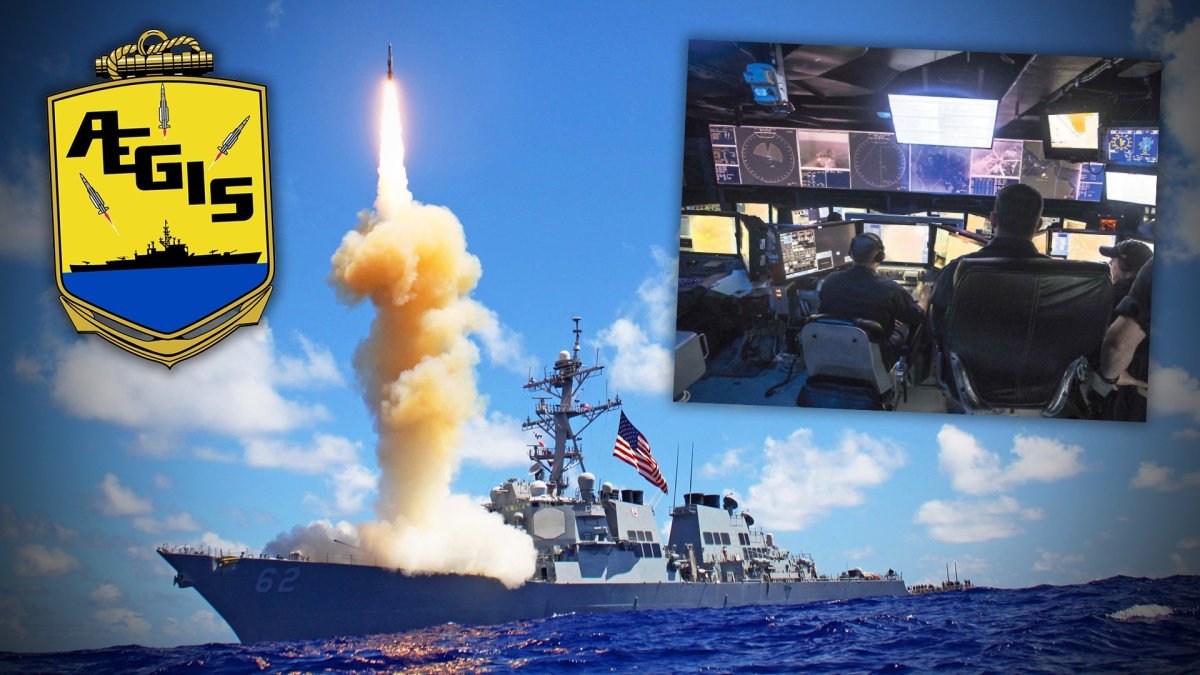
The Aegis Combat System, aptly named after the shield of the Greek god Zeus, represented an absolute revolution in how naval surface warfare could be conducted when it first emerged in an operational form nearly four decades ago. At its core, Aegis was a monumental technological triumph made possible by combining advances in computers, sensors, weapons, communications, and human interfaces into a highly automated system the likes of which would have been considered science fiction not long before its arrival. Since then, Aegis has grown massively in capability and has largely dictated what is possible when it comes to the ability of warships to exert control over the massive volumes of air and sea surrounding them.
While the system is still going strong today—it continues to serve aboard nearly all the U.S. Navy major surface combatants, as well as a number of allies’, its perpetual development has resulted in something of a blurry picture as to just how much it has evolved over the years and where it is headed in the future.
With that in mind, The War Zone talked in-depth with Rich Calabrese, Director of Surface Navy Mission Systems for Lockheed Martin, in an attempt to bring clarity to the state of Aegis today, as well as to better understanding its past. And above all else, we wanted to learn about what is on the horizon for what is one of the most important, but often misunderstood weapon systems in the Pentagon’s portfolio. What we found out was downright amazing.
So, without further ado, here is our exchange nearly in its entirety:
Tyler: How has the Aegis Combat System evolved over nearly four decades since it first entered service aboard the USS Ticonderoga ? Are there any moves to create a new system or call it something else or is the Aegis legacy going to stay put for the time being?
Rich: The short answer is, dramatically. What a lot of people don’t realize, is that we have been continuously evolving the Aegis architecture. There are a couple of points in time where the architecture has taken what I would call some step functions, but generally speaking, we do what we call “while we’re under the hood” changes. Essentially, as we add new capabilities, capabilities drive, form follows function, and a lot of times, that results in a change to the architecture, as well as the technology has changed.
USS Norton Sound, originally built as a seaplane tender and later refitted as an Aegis test ship, seen in 1980. It was outfitted to test components of the Aegis system from 1973 on. The installation containing the fixed arrays of the AN/SPY-1A radar that can be seen mounted at the top of the forward superstructure. Aegis development goes back to the 1960s and was first fielded operationally in the early 1980s., USN
If you think about back to when Aegis was first started and it was written in CMS-2 computer language , which is essentially like an assembly language, evolved through the introduction of COTS languages, C++ and Java, and now a lot of script languages and things like that. The processing power that’s available to us, all those things have contributed to a dramatic change in the Aegis Weapon System over the 40 years.
The names remain the same in terms of what are the elements of the Aegis Weapon System, but inside of them, the changes that we have made, have made the software more modular, made it more flexible… and facilitated the integration of new capabilities, new weapons and sensors…
As we look forward, the number of sources of information and the number of the data sources that we’re looking to incorporate are driving us to change some basic paradigms of how the system works and how it’s architected.
An aerial port bow view of the U.S. Navy guided-missile cruiser USS Ticonderoga (CG-47) underway during Standard II missile tests near the Atlantic Fleet Weapons Training Facility, Roosevelt Roads, Puerto Rico (USA), on 9 April 1983. Ticonderoga was the first operational Aegis warship. , USN
Tyler: I think one of the things that people don’t realize is it’s the same system, but it’s also really a totally different system. As time has gone on, there’s so much difference there that it’s the same concept, but it’s very much a different, modernized system compared to what existed 40 years ago. Would that be a correct assumption?
Rich: Yeah, that’s correct and a lot of people don’t realize that. The other thing… Are you familiar with the Common Source Library? Does that term mean something to you?
Tyler: Not off the top of my head, no.
Rich: So, the power of the architecture really is demonstrated by what we call the Common Source Library or CSL. What the CSL does is it allows us to use a common computer program based on the Aegis computer program to support a large number of different ships. So, essentially, all the surface combatants now, LCS , the frigate (FFG-X/ Constellation class) which we’re developing, even the Coast Guard, Aegis cruisers and destroyers, international programs, they are all now built out of the same Aegis Common Source Library.
CSL is the heart of all Aegis and associated installations across many types of surface combatants., Lockheed Martin
Because the architecture has the flexibility and Lockheed Martin has the tools and knowledge of the domains, we’re able to deliver… I’ll say specifically tailored computer programs for each of those different missions. And if you look at that range of missions, a Coast Guard cutter whose job is primarily to do drug interdiction missions up to a Aegis destroyer who’s doing integrated air missile defense capability at the highest end is quite a range of—and in between, you’ve got LCS and ships like that—quite a range of missions and capabilities, different sensors, different weapons, all being driven by the same Aegis computer program in the form of the CSL.
A Freedom class LCS is seen underway. These ships use a version of the CSL that is tailored to their more limited capabilities compared to a destroyer or cruiser. , USN
That’s been a major change in the way we deliver capability, and we’re able to, like I said, tailor specific functionality and essentially, not to trivialize it, turn on and off functionality. So, in that way, if somebody later decides, “Hey, I would like that capability on my program, on my ship,” it’s already built into the CSL, we can effectively turn it on for that particular ship assuming they have the sensors and weapons that are necessary to support that mission.
Tyler: Interesting. That’s a very automotive trend too, a standardized software platform where they can say just, “Yeah, you want the extra range in the Tesla? We can turn it on.” It seems like that’s bled over into your space, and obviously, software is being one of the biggest hurdles to any program these days…
Aegis Baseline 9 allowed ballistic missile defense and defense against air-breathing threats, such as cruise missiles and aircraft, simultaneously. Can you talk a little bit about that, what the challenges are to actually making something like that happen and how that is a game-changer for the surface combatants that receive it?
Rich: Yeah, so the game-changing aspect of it is that prior to Integrated Air Missile Defense, the ships were either or AAW capability or ballistic missile defense capability . And essentially, for the longest period of time, separate computer programs were actually developed and you switch between the computer programs depending on the posture of the ship. With the introduction of Integrated Air Missile Defense, it allows you to conduct both missions.
In the past, a properly outfitted cruiser or a destroyer could only conduct ballistic missile defense or anti-air warfare, not both at the same time. , USN
The biggest architectural driver I would say is the Mission Planner, which allows you to set up your resources accordingly based on your ship position, your mission, priorities, and so forth, and helps you to set up and plan for how you need to allocate your radar resources to support both missions. Obviously, there’s a ripple effect throughout the system in terms of how the signal processor works, how the weapon control system works. Everything is tuned to be able to support the simultaneous execution of those two missions. But the biggest result being for the warfighter is them being able to simultaneously execute those missions as opposed to separately.
Each of the functions of the Aegis Weapon System was evaluated to see what changes would need to be made internal to each of the components in order to support that integrated Air Missile Defense. And again, the Mission Planner is a key element of how we are able to manage those resources, and then obviously, we’re monitoring the performance against that plan and are able to react in real-time to the evolving mission.
Tyler: If I’m in the CIC ( Combat Information Center —the nerve center of the ship) or whatever, I can say, “Hey, listen, the ballistic missile threat is prominent versus the air threat” and I could configure my operations based on what I perceive is the major threat at the time. Is that what the Mission Planner gives you in terms of tailored flexibility?
Rich: Yeah, and you know your operating area, you know geographically where you are, you know what the threats are, so basically you are fine-tuning the system to be prepared to respond to the most likely scenario that you’re going to face that day.
Inside the CIC aboard the cruiser USS Normandy (CG-60). , USN
Tyler: With all this, we will be seeing, pretty soon, the introduction of an AESA technology, the SPY-6 radar , and then Aegis Baseline 10 configuration to go with it. What will that bring to the Navy? There’s obviously the next Flight III Arleigh Burke class destroyers, they’ll have that, but also there’s going to be potentially a back-fit program for some existing Flight II destroyers. What does that sensor upgrade and also Baseline 10 give for this next step we’re going to see in the evolution of the Aegis system?
Rich: Yeah, so I’m not really the radar guy, but I’ll tell you, primarily, the difference from the radar perspective is performance—its ability of what it can see and what it can discriminate. So, I’ll leave it at that from a classification perspective, it’s going to buy you extra performance, it’s going to buy you some extra battle space and decision time. Of course, that’s needed as the threat is increasing. What’s different is that the radar is a task-based radar, so the combat system now is evolving, and we talked about how is it changing.
Basic configuration for the Flight III Arleigh Burke class destroyers which will come equipped with the SPY-6 radar., GAO/Navy
With Baseline 10, we’re introducing the ability to plan and manage a task-based radar so that you can tell the radar what it is your objectives are for it to perform, and it’ll go off and perform to the request of the combat system. That’s a big deal. The other thing is integrating that with all the other sensors and that’ll be on board. So the introduction of an Above Water Sensor Coordinator, that allows us to make resource determinations across multiple sensors on the ship, and again fine-tune your sensor posture for your environment, for your threat space, for your geography.
That’s where the introduction of SPY-6 brings that task-based radar capability, it brings higher performance and sensitivities, and then the combat system has evolved along with it to be one able to control and manage the task-based radar. But also the next architectural step was really to abstract away all the specifics of the sensors to allow for effectively all data sources to be able to be used by the combat system in a similar way.
The massive SPY-6 radar unit. , Raytheon
Then we’ve architected it such that a non-task-based radar, back to the Common Source Library concept, that same software architecture can be applied to all of the Baseline 9 ships that will be out there. And we’re heading towards what we call CSL Continuity, which means there will truly be a single baseline of capability across the Baseline-9 and the Flight III ships that’ll be out there. So, the Flight IIs and the Flight III ships will have a common architecture, a common functionality, and performance will differ based on the radar. SPY-6 on a DDG will be different than a potential SPY-6 back-fit, which will be smaller, maybe even a rotating radar. Then there are other radar upgrades that are being looked at from a legacy radar perspective that Lockheed is working with the Navy on now to provide similar solid-state capabilities, as you would see on SPY-6, but on the legacy SPY-1 platforms.
Tyler: Will Aegis fuse new sensors like infrared surveillance systems, or weapons like directed energy weapons ? What do you see being tied into the system in the future that maybe isn’t a priority now, or is at least not fielded now?
Rich: Again, the short answer is everything. We’re continuously upgrading the multi-source integration infusion capability of the Aegis weapon system and looking to bring in new weapons and sensors and do coordinated hard kill and soft kill. Directed energy weapons… We’re really already integrating the Helios Laser Weapon System with the Aegis Weapon System CSL in our lab here in New Jersey. In fact, we’ve… The guy who’s now managing the laser program… He let me know the other day that we recently fired a laser here under the control of the Aegis Weapon System computer program. So, we’re building in the capability to do that weapon coordination and to do the hard kill, soft kill coordination in an automated fashion, working with the Helios Weapon System.
USS Rancocas, “The Cornfield Cruiser,” Aegis lab located in New Jersey. , Lockheed Martin
Similarly, EW (electronic warfare) with SEWIP and really even beyond all data sources, if you think of anything that could provide data to the ship, and traditionally, there was a harder boundary between what some would call C4I (Command, Control, Communications, Computers, and Intelligence) or C6I systems, C6ISR, whatever combination of letters you like, there was typically a segregation, there were some data sources that stayed in the C4 system and the Aegis Weapon System was primarily just driven by the SPY radar. Today, what we’re doing is fusing all of that data to create a better situational awareness, and we’re able to engage on data that’s non-traditional in the form of data that may come from, I’ll say non-organic sensors.
Tyler: That level of automation would allow those at the controls to use the weapons they have more efficiently and to better classify, sort, and engage targets that are of higher priority than just having a bunch of federated systems or even those that are talking to each other in limited ways, but not actually fully fused into the system seamlessly. That’s the goal, correct?
Rich: Yeah. So, the Above Water Sensor Coordinator gives us that level of automation that allows us to recognize, set the objectives for the mission and monitor against that, and then really essentially be more effective and more efficient with your weapons and your sensors. So, you’re not using all of your sensor resources looking at one thing. If you have another sensor that can give you the same information with the same… I’ll say our budgets, that allows us to trade-off again. Say maybe I don’t need to use all of the primary radar resources, if I have a SPQ-9 or something like that, that I can use to give me good enough data for the mission that I’m trying to achieve.
Aegis is in service with six nations’ navies. , Lockheed Martin
Tyler: We’ve seen Evolved Sea Sparrow Missile Block 2 and SM-6 that are networked and the moving away from having to rely on radar illuminators to paint targets for missiles to engage them in their end-game phase of flight. How is that going to change the system? Is this going to be able to simplify things in some ways, eventually not having to integrate target illumination using discreet illuminators aboard Aegis-equipped ships like U.S. Navy destroyers and cruisers?
Rich: Yeah, and it’s really on a mission-by-mission basis as to whether how much you can rely on the ‘fire and forget’ missiles. It’s certainly an assist to us to be able to perhaps get more missiles and missiles in flight if you’re not bounded by the illuminator resources [four on Ticonderoga class cruises, three on Arleigh Burke class destroyers]. But again, that comes into… What comes into play there is our weapon control architecture, which allows us to do smart weapon scheduling and trying to do the best weapon target pairing. That’s some of that automation that we talked about that’s built into the Aegis Weapon System.
It is able to do that weapon selection and weapon target pairing, knowing what your resources are. “Hey, do I have… What’s my depth of fire? Do I shoot a long-range weapon at this thing and take it out early? Do I try to shoot the archer [the launch platform before it can fire]? Can I wait? If I wait, what am I using?” So, those are the kind of trade-offs in terms of which missiles I’m using against which targets. The fire-and-forget does give us a little bit more flexibility, but again, it all comes down to understanding the mission, the target, and the timelines involved.
USS John Paul Jones test-fires an SM-6 which features an active radar seeker., USN
Tyler: How automated is that process, if I’m there on the controls, is the system at a point now where it’s giving me recommendations as far as what it thinks is best? How does that work?
Rich: It’s always been an interesting question to me because really from day one, automation… Aegis theoretically could operate fully autonomously it’s really a choice of the warfighters in terms of how much they trust the system. So, what’s improving now is that we’re providing algorithms that give you a little bit more confidence in the selections that the system is making and the system is giving, is putting up, is making decisions. We’re able to give you probabilities or the rationale behind the decisions that the system’s making so the operator can look at it. But frankly, the timelines are happening so fast, which is why we’re putting in things like Above Water Sensor Coordinators and Weapon Coordinators and things like that, that provide a high degree of automation, because there’s really no time for the operator to be in the loop.
We talk about the operator being in the loop. So, they know what’s happening, they know why things are happening, and if they’re gonna negate something, they wanna do command by negation. They have information there that will allow them to do that. But more and more, they’re going to have to rely on the automation that’s, like I said, really been in the system since the beginning of the Aegis Weapon System. It’s just that we may have more information now through the fusion of data, we may have more options now in terms of the weapons that are going to go after it. So, the environment is certainly getting more complex, the threats are getting more challenging and so the reliance on the automation and the provision of things like decision aids that make some of those decisions for them, like balancing sensor resources or doing the weapon selection, and weapon-target pairing, just become more essential to the success of the mission.
Senior Chief Fire Controlman Michael Cullinan monitors a radar console for air and surface contacts in the combat information center aboard the forward-deployed Arleigh Burke -class guided-missile destroyer USS Donald Cook (DDG-75)., USN
Tyler: What if we were to take the Baseline 10 configuration and put it into an older ship? What does that look like? When we hear an upgrade happening, what does that include? Do you have to rip all the hardware out and then also put in new software with new hardware to support it? Or is this something that is more of a software transplant?
Rich: Well, it depends on the state of the ship. So for example, in doing Baseline 9, we’re putting out hardware that is referred to as TI-12H and TI-16. Just think of those as a level of computing capacity and a generation of hardware that’s out there. What that enables us to do is a couple of things.
If a Baseline 9 ship is already running that later hardware, then it’s primarily just a software back-fit to say, take Baseline 10 when it’s complete and put it back to a Baseline 9. Now, when you do that, of course, you may not have all the same sensors and weapons available to you on the ship, so you may not get the same performance, but you would get the same functionality and you can get commonality across Baseline 9 and Baseline 10 ships.
If the ship hasn’t been updated then to date, what that has involved would be called a modernization. That would be typically taking out all the racks of old equipment and upgrading them with modern computing, something along the lines of what I would call a TI-16 hardware. That’s a bigger deal, that’s more of a ship impact in terms of the amount of time it takes and the cost associated with it, if you have to take out really old hardware.
But what we’re providing now is that on those older ships, what we can do is we can bring a ‘virtualized’ Aegis Weapon System back, and the amount of hardware, the footprint required to run the virtualized Aegis Weapon System is significantly less.
Aegis-equipped warships are designed to be networked together and work as a combat team. , USN
So, for a while, we were looking at the Baseline 5 ships, for example, which were primarily BMD ships, they already had some computing equipment, they were talking about doing a tech refresh. That tech refresh would have brought the computing environment for essentially what would have been just adjunct computing, but because we’re able to use a smaller computing footprint with a virtualized Aegis Weapon System, we would have been able to bring a Baseline-9 or a Baseline-10 computer program back to those Baseline-5 ships without as much of a substantial hardware impact because the footprint is smaller than otherwise required with what prior modernizations used to require.
Tyler: When you say virtual, what exactly is that? How is it defined in terms of Aegis?
Rich: So, virtual meaning that we would have a set of virtual machines. A virtual machine is, think of it as a software representation of a computing platform. On the raw hardware, if you think of the bare-bones metal of the hardware, you would run these virtual machines, which is in a sense present to the computer, to the computer program, it presents the look of, you think you are running in the computer that you’ve always run in.
So, if I used to run in a TI-16 rack of hardware, and I had a bunch of blade servers in there, well, it might not actually be on a bunch of physical blade servers anywhere because inside of a server, I may be able to create, I’m just making up a number, 10 virtual TI-16 blade servers. So, now I could run all of Aegis Weapon Systems software on a much smaller set of [computer hardware]… Taking advantage essentially of the horsepower that’s available to us now in the modern computing market, we can now run… So think of that stack, bare-metal hardware, virtual machine, which is a commercial product, native Aegis Weapon System computer program and operating systems, and so forth, sitting on top of that.
Aegis and the CICs aboard ships equipped with the system have evolved along with advances in sensor, communications, and computing technology. But its interfaces have always looked like something out of a sci-fi military thriller. Now, with miniaturized computers with far more power than their predecessors, less space is needed to install far more capability. Here is a photo of Aegis aboard a Ticonderoga cruiser from the system’s first decade of service. , USN
This is a rare photo of the CIC within the cruiser USS Normandy today. As you can see, there are similarities, but overall it is a much more advanced technology space than it was years ago., USN
So, that is what we’re using now, and a lot of deploying as I’ll say of Aegis, including some non-traditional form factors where there’s a desire to have an Aegis Weapon System on either a smaller platform or on a ground-based configuration… So, a lot of the things we’re doing now in terms of experiments like the upcoming Valiant Shield , the computer program that we’ll be delivering will be a single small box with a virtual Aegis Weapon System inside of it, and delivering all the same functionality, but without the same number of cabinets and racks…
Tyler: You’re saying basically that the miniaturization of computer hardware has made it so the invasive, rip everything out and start from scratch, huge hardware refits aren’t maybe as necessary as they used to be to deploy these new Aegis capabilities on older ships?
Rich: Yeah, it certainly reduces that effort. I won’t say that I’ve gone in and done the ship inventory, but we do know that in some cases, you might even be able to leave the old stuff there and bring in a smaller box if there’s space and run the virtualized Aegis Weapon System in there. The challenge becomes some of the legacy interfaces and we’re working solutions with the government to handle some of the legacy systems that may not be compatible with the newer networking technologies or the upgraded computing plants and virtualized configurations.
Sailors track contacts in the CIC aboard the Aegis cruiser USS Shiloh ., USN
Tyler: As far as future capabilities go, what is the future for the system when it comes to things like hypersonic missile defense and also being tied into and acting as the command and control node for unmanned vessels that will have their own weapon systems on board and will need some sort of control? Can you speak to those two leading-edge capabilities that we’re seeing actually coming down the line rapidly, and how that’s intertwined with Aegis?
Rich: We’re already starting work on the LUSV, the Large Unmanned Surface Vehicle . So, we’re already defining what the combat system will look like between the controlling unit, which they call the UOC—Unmanned Operations Center—which will likely be on an Aegis or maybe a frigate platform. And the vehicle itself, the Large Unmanned Surface Vehicle, and looking to leverage the Common Source Library again. So, that the control of weapons will be on the remote unmanned vehicle under the control of an Aegis weapon system type of computer program or paradigm and controlled by the controlling unit, which would be another Aegis CSL instance.
Sea Hunter has proven itself as a technology demonstrator and has jumped started a whole “Ghost Fleet’ initiative within the Navy, in cooperation with the Pentagon’s Strategic Capabilities Office, which focuses on fielding various unmanned ships that will work with existing ships in the fleet. As such, they will need remote command and control, not just of the ships themselves, but also the weapons they carry. Aegis will likely provide the groundwork for that capability. , USN
It starts to become a family of Common Source Library instances communicating with each other… Really, you can think of it like as an extension of the magazine size of the ships. So, that’s already in progress now. And very early in the design of that, they just awarded the LUSV ship side of things, but on the combat systems side, the plan is to use a, I’ll call it a networked family of Common Source Library computer programs.
As far as the threats are concerned, that’s a continuous upgrade. We have something that we call Aegis Speed To Capability or ASTOC. And ASTOCs look at the threats that are out there, look at any perceived gaps, anticipate some perceived gaps and then address them with short sprints of bringing capability faster to the fleet. One of those ASTOCs did look at hypersonic as far as tracking, and then there’s ongoing work, looking at engagement, engageability of hypersonics. So, it’s definitely a focus going forward and I probably can’t say much more about that at this point…
Suffice it to say, Aegis has a continuing cycle of threat assessments working with the government. The government really defines what the threats are, the government defines what their priorities are. We use that information to inform our internal research and development and then we collaborate with the government to recommend changes architecturally, design-wise to the Aegis Weapon System to support, providing performance against those evolving threats. It’s a constant state of getting the intel and assessing what it’s telling us about the threats and ensuring that the Aegis Weapon System is keeping pace with those threats.
A Ghost Fleet Overlord test vessel takes part in a capstone demonstration during the conclusion of Phase I of the program in September. Two existing commercial fast supply vessels were converted into unmanned surface vessels (USVs) for Overlord testing, which will play a vital role in informing the Navy’s new classes of USVs. , USN
Tyler: On Cooperative Engagement Capability (CEC) and the ability to network fires across different platforms—the Aegis system is, I believe, central to that. What is that looking like and what do you see that turning into for Aegis in the future?
Rich: I think there’s going to be continued evolution. I think CEC was purpose-built and has some limitations. I think what we’re looking to do is really break the bounds of communication, so that the communication is not dependent on just CEC networking, but really any available communication sources that allow us to be a node in the network.
Ultimately what our objective is, is that all of the CSL platforms, and we’re talking primarily about Aegis, but when I say Aegis, I’m really also talking about LCSs and frigates. And also going forward you may know that we recently won the Ship Self-Defense System, the SSDS contract. So, we’re also providing the combat system for the carriers and amphibs. And so what we’re looking to do is identify any areas of commonality across all of those and to make recommendations back in terms of what changes will be required to CEC, but also what other communication paths are available to us.
Networking most everything in the battlespace to leverage distributed weapons and sensor capabilities is the primary goal of the Navy and the DoD as a whole going forward. Aegis is a critical component of that. , USN
So, if you look at, for example, capabilities like NIFC-CA [Naval Integrated Fire Control-Counter-Air]. NIFA-CA uses other communication paths in order to share data that can be used in the engagement of targets…
Tyler: Is that something where if I’m on the destroyer or the cruiser, and there’s an F-35 150 miles away and I want to shoot a target maybe I can’t see at that time, I do so leveraging the F-35’s sensors via the network, is that something that the decision is made within the weapon system or how is the architecture set up for that?
Rich: So the integration of F-35 is something that we did. We’ve done it in experiments , it’s not yet a program of record. But essentially the way the architecture is set up is that we created a component, which is able to receive the data that would come from the F-35 and provide it in a form that the weapon control system is able to use for engagement. It’s really more about using the F-35 as a, I’ll say, extended pair of eyes for them to be able to provide data from what they see, and they have terrific data fusion capabilities onboard their ships, some great sensors, and some great ability to fuse things. So, if we can take advantage of that data, and again, back to the fire-forget missile capabilities, you can start to extend the battlespace by making F-35 a part of the network that is shared with Aegis components or Aegis nodes.
Tyler: We hear a lot that ‘Aegis light,’ known officially as COMBATTS-21 , and that it’s going into the new frigate, FFG-X, and a version of it is on LCS, as well and other ships. Can you explain really what the difference is between the two—Aegis and COMBATTS-21?
Rich: It’s really just the decision on what functionality was required for LCS versus the Aegis platform. So again, COMBATSS-21 is just another instance of the Common Source Library. And to be honest, on the frigate, although some people think of it as a growth of the LCS program [the combat system], they’re actually calling it now the Frigate Aegis Weapon System, as an indication that the intention is that the frigate will be closer in capability to an Aegis ship than it will be to an LCS ship.
An artist’s conception of a Constellation class guided missile frigate, formally known as the FFG(X)., USN
The real primary differences are that the weapons… There was a more simplistic weapons complement on LCS that did not require the full weapon control system that we have on Aegis… You can think of COMBATSS-21, if you’re familiar with the terminology of Aegis, the C&D, which is the command and decision element, ADS which is Aegis Display System, and ACI, which is the Aegis Computing Infrastructure. It’s primarily those three elements or all that is part of an LCS configuration, and that gives them the ability to process the TRS-3D or 4D radar that’s on an LCS, and to control the gun and the RAM missile , that’s the weapons that are on an LCS.
For what’s common for those elements, they’re effectively the same as what’s on an Aegis system. When you go to Aegis now, you’re adding in a SPY computer program and you’re adding in a weapon control system because it’s a more robust weapon complement and a more robust sensor suite. So, you add in those capabilities, but if you were to draw it out in like a Venn diagram, you’d see, again, a big common core, of Aegis, inside of an LCS with a label over it saying COMBATSS-21. And then the additional functionality that’s not needed by LCS makes up the difference between a COMBATSS-21 ship and what we would otherwise call an Aegis ship.
Legend class National Security Cutters and Flight II Arleigh Burke class destroyers both share in the Aegis lineage, with each ship’s combat system being part of the CSL., USN
Tyler: Do you see the Aegis system moving onto the future Large Surface Combatant initiative that they’re talking about? Would this be yet another iteration of the CSL? Obviously, you’d have a lot more real estate to play with on something like that.
Tyler: Yeah, and again, the real estate is not a big deal for us in terms of the software, so our footprint is actually going down. The Navy’s plan is that the CSL will evolve to be the combat system for the future combat system, they call it the Integrated Combat System, which will go on the future combat ship… the Large Surface Combatant.
And so back almost full circle, the continuing evolution, we’re doing things now to the architecture to bring it into a more componentized state and trying to do things which will increase the speed at which we can deliver capability to the hands of the sailor. So, we’re transitioning all of our elements into what they call continuous integration, continuous delivery, paradigm, which will allow us to introduce new capabilities faster in smaller increments and get it out to the fleet.
So, instead of having the current large baselines which take multiple years from conception through verification, where we’re moving for the Large Surface Combatant and for the Integrated Combat System is more rapid introduction of incremental capability. And now you can think back to what I said about ASTOCs [Aegis Speed To Capability].
The Navy is desperately trying to expand its fleet size. While unmanned hulls will be a facet of this initiative, procuring more CSL-equipped traditional surface combatants is an extremely pressing issue. , USN
Everything that we’re doing is pointed towards how we’re going to achieve the goals of the Integrated Combat System and the goals of a Large Surface Combatant and all the other LUSVs and the USVs, and all those other vehicles and platforms. It’s all centered around delivering capability faster to the hands of a sailor, meaning design time, compile times, delivery times all through like a DevSecOps pipeline . So, that’s going to be a continuous evolution because there are some elements of the Aegis Weapon System that we’re still working to get into the pipeline and we’re partnering with the Navy to do that.
Tyler: Is one of those DDG-1000? Isn’t that on a separate system? It seems like that would be the only one left that isn’t…
Rich: The DDG-1000 is the oddball out . We have ideas on how, again, leveraging the virtual Aegis Weapon System you could bring Aegis capability to a DDG-1000. Especially now that they’re looking at a back-fit of a SPY radar back to a DDG-1000 replacing the current radar. There would be a pretty straightforward approach that we’ve developed some concepts for and that would be ready to introduce should the Navy have interest in doing that. But yeah, currently that’s the sort of the odd duck out . That’s not a CSL, SSDS is not a CSL either. But because we’re working SSDS and frigate and Aegis, we’re able to look across all the programs and identify opportunities for sharing across the programs in both directions.
USS Michael Monsoor. One of just three Zumwalt class destroyers. , DDG-1001 Facebook Page
If there’s something that has been developed for the carrier that would be a benefit to an Aegis ship, great. If something on a frigate that would help SSDS, great. And so that’s why those programs are in my portfolio, so that we could take advantage of the synergy across all those surface Navy programs. And I look at DDG-1000 as an opportunity for further commonality because it is currently the one-off of the combat systems in terms of being able to take advantage of synergies across the programs.
Again, I want to be clear, SSDS is not in the Common Source library, but it is in the family of combat systems that we’re working on. So, there’s the opportunity to share subject matter expertise as well as requirements, design, and hopefully even computer software.
Tyler: Is there anything else you would like to add? Any other thoughts about Aegis and maybe people’s perception of the system?
I’d just like to say is that this is not your father’s Aegis anymore. Aegis is now the center of a family of ships that share the Common Source Library pedigree, and we’re going to continue to evolve. We’ve evolved to get to this point. We’re going to continue to evolve the system to meet the new threats, but also to change and transform the way we deliver the capabilities so that we can get more capability faster to the hands of the sailors through the DevSecOps pipeline that we’re implementing now. We’re demonstrating that on Baseline-10 and on Baseline-9, both of those programs are demonstrating breaking up what traditionally was a large baseline into smaller incremental developments of capability that we can get out there faster.
A huge thanks to Rich Calabrese and Melissa Chadwick, our very patient media relations representative, for making this in-depth interview happen.
Contact the author: Tyler@thedrive.com
Comments couldn’t be loaded. Please refresh the page.
更新于美国东部时间2021年3月4日下午4:10。
宙斯盾作战系统,顾名思义,以希腊神话中宙斯的盾牌命名,在近四十年前首次投入实战时,彻底革新了海战的作战方式。宙斯盾的核心是一项意义非凡的技术成就,它将计算机、传感器、武器、通信和人机交互等领域的先进技术融为一体,构建了一个高度自动化的系统。在它问世之前不久,这样的系统还被认为是科幻小说里的情节。自那时起,宙斯盾的性能得到了极大的提升,并在很大程度上决定了军舰在控制周围广阔海域方面的能力。
虽然该系统至今仍然运行良好——它继续在美国海军几乎所有主要水面作战舰艇以及许多盟国的舰艇上服役,但其持续发展导致人们对它这些年来究竟发展了多少以及它未来的发展方向感到有些模糊不清。
鉴于此,《战区》栏目与洛克希德·马丁公司水面海军任务系统主管里奇·卡拉布雷斯进行了深入访谈,旨在厘清宙斯盾系统的现状,并更好地了解其发展历程。更重要的是,我们想了解五角大楼武器库中最重要但又常常被误解的这一武器系统的未来发展方向。我们的发现着实令人惊叹。
那么,事不宜迟,以下是我们几乎完整的对话内容:
泰勒:自“提康德罗加”号航空母舰首次服役以来,近四十年间,宙斯盾作战系统发生了哪些变化?是否有计划开发新系统或更改名称,还是宙斯盾系统暂时会保持不变?
Rich:简而言之,变化非常显著。很多人可能没有意识到,我们一直在持续演进Aegis架构。架构在某些阶段经历了我所谓的阶跃式发展,但总的来说,我们主要进行的是“底层改进”。本质上,随着新功能的加入,功能驱动着架构的更新,形式服从功能,很多时候,这会导致架构的改变,当然,技术本身也在不断变化。
诺顿海峡号(USS Norton Sound)最初是一艘水上飞机母舰,后改装为宙斯盾系统测试舰,照片摄于1980年。该舰自1973年起便用于测试宙斯盾系统的各个组件。图中可见安装在舰首上层建筑顶部的AN/SPY-1A固定式雷达阵列。宙斯盾系统的研发可以追溯到20世纪60年代,并于20世纪80年代初首次投入使用。
回想一下宙斯盾系统最初是如何诞生的,它最初是用CMS-2计算机语言编写的,这种语言本质上是一种汇编语言。后来,随着商用现成语言(如C++和Java)的引入,以及现在各种脚本语言的出现,宙斯盾系统不断发展演变。我们所拥有的处理能力,所有这些因素都促成了宙斯盾武器系统在过去40年中的巨大变革。
宙斯盾武器系统的各个组成部分名称保持不变,但我们对它们内部进行的更改,使软件更加模块化、更加灵活……并促进了新功能、新武器和传感器的集成……
展望未来,信息来源的数量以及我们希望整合的数据源的数量,正促使我们改变系统运作方式和架构方式的一些基本范式。
1983年4月9日,美国海军导弹巡洋舰“提康德罗加”号(CG-47)在波多黎各罗斯福路大西洋舰队武器训练基地附近进行“标准II”导弹测试时,从左舷拍摄的舰艏照片。“提康德罗加”号是第一艘投入使用的宙斯盾战舰。
泰勒:我觉得人们没有意识到的一点是,虽然是同一个系统,但实际上又完全不同了。随着时间的推移,两者之间发生了很大的变化,虽然概念相同,但与40年前的系统相比,它已经是一个截然不同、高度现代化的系统了。我的理解正确吗?
Rich:是的,没错,很多人都没意识到这一点。还有一件事……你听说过通用源代码库(Common Source Library)吗?你了解这个术语吗?
泰勒:我一时想不起来。
里奇:所以,这种架构的强大之处真正体现在我们称之为通用源代码库(CSL)的东西上。CSL 的作用在于,它允许我们使用基于宙斯盾计算机程序的通用计算机程序来支持大量不同的舰艇。因此,基本上现在所有水面作战舰艇,包括濒海战斗舰(LCS)、我们正在开发的护卫舰(FFG-X/星座级)、海岸警卫队、宙斯盾巡洋舰和驱逐舰,以及国际合作项目,它们现在都是基于同一个宙斯盾通用源代码库建造的。
CSL是所有宙斯盾系统及其相关装置的核心,这些系统分布在多种类型的水面作战舰艇上。——洛克希德·马丁公司
由于该架构具有灵活性,而洛克希德·马丁公司又拥有相关领域的工具和知识,因此我们能够提供……我指的是针对每项不同任务量身定制的计算机程序。如果你看看这些任务的范围,从主要执行缉毒任务的海岸警卫队巡逻舰,到执行最高级别综合防空导弹能力的宙斯盾驱逐舰,范围相当广泛——中间还有濒海战斗舰(LCS)之类的舰艇——任务和能力也各不相同,配备不同的传感器和武器,所有这些都由同一个宙斯盾计算机程序(即CSL)驱动。
一艘自由级濒海战斗舰正在航行中。这些舰艇使用一种针对自身性能限制而定制的战斗支援舰(CSL)版本,与驱逐舰或巡洋舰相比,它们的性能更为有限。
这极大地改变了我们交付能力的方式,正如我所说,我们能够定制特定功能,并且本质上(并非轻描淡写地说明这一点)可以开启和关闭功能。因此,如果有人之后决定“嘿,我希望我的项目、我的舰艇具备这项能力”,由于它已经内置在作战支援层(CSL)中,我们可以有效地为特定舰艇启用该能力,前提是他们拥有支持该任务所需的传感器和武器。
泰勒:有意思。这也是汽车行业的一个趋势,即采用标准化的软件平台,他们可以简单地说:“特斯拉想要增加续航里程?我们可以帮你开启。”看来这种趋势也渗透到了你们的领域,而且很显然,如今软件是任何项目面临的最大障碍之一……
“宙斯盾”基线9系统能够同时防御弹道导弹和吸气式威胁,例如巡航导弹和飞机。您能否谈谈这方面,实现这一目标面临哪些挑战,以及这对装备该系统的水面作战舰艇来说将如何改变战局?
里奇:是的,这项技术颠覆性的变革在于,在综合防空导弹系统出现之前,舰艇要么具备防空能力,要么具备弹道导弹防御能力。实际上,在很长一段时间里,都是开发不同的计算机程序,并根据舰艇的姿态在不同的程序之间切换。而综合防空导弹系统的引入,使得舰艇能够同时执行这两种任务。
过去,一艘装备精良的巡洋舰或驱逐舰只能执行弹道导弹防御或防空作战,而不能同时进行这两项任务。——美国海军
我认为最重要的架构驱动因素是任务规划器,它允许您根据舰船位置、任务、优先级等因素相应地设置资源,并帮助您设置和规划如何分配雷达资源以支持两项任务。显然,这会对整个系统产生连锁反应,影响信号处理器和武器控制系统的运行方式。所有组件都经过调整,以支持同时执行这两项任务。但对作战人员而言,最大的好处是他们能够同时执行这两项任务,而不是分别执行。
我们对宙斯盾武器系统的每项功能都进行了评估,以确定需要对各个组件进行哪些内部更改,从而支持一体化防空导弹防御。此外,任务规划器是我们管理这些资源的关键要素,显然,我们会监控计划的执行情况,并能够根据不断变化的任务实时做出反应。
泰勒:如果我在作战信息中心(CIC,也就是舰艇的神经中枢)或其他什么地方,我可以说:“嘿,听着,弹道导弹威胁比空中威胁更突出”,然后我可以根据我当时认为的主要威胁来调整我的作战行动。任务规划器提供的这种定制化灵活性就是如此吗?
Rich:是的,你知道你的作战区域,你知道你的地理位置,你知道威胁是什么,所以基本上你是在微调系统,以便为应对当天最可能遇到的情况做好准备。
在诺曼底号巡洋舰(CG-60)的作战信息中心内。
泰勒:随着这些技术的进步,我们很快就会看到有源相控阵雷达(AESA)技术、SPY-6雷达以及与之配套的宙斯盾10型基线配置的引入。这将给海军带来什么?显然,下一代阿利·伯克级驱逐舰(Flight III)将会配备这些雷达,此外,一些现有的Flight II级驱逐舰也可能进行改装升级。这种传感器升级以及10型基线配置将为宙斯盾系统的下一步发展带来哪些优势?
里奇:是的,我其实不是雷达专家,但我可以告诉你,从雷达的角度来看,主要区别在于性能——它能探测到什么以及能区分什么。所以,我就说到这里吧。从分类的角度来看,它能为你带来额外的性能,为你争取更多的作战空间和决策时间。当然,随着威胁的增加,这些都变得至关重要。不同之处在于,现在的雷达是基于任务的雷达,所以作战系统正在不断发展,我们之前也讨论过它是如何变化的。
配备SPY-6雷达的阿利·伯克级驱逐舰Flight III的基本配置。(美国政府问责局/海军)
在 Baseline 10 中,我们引入了基于任务的雷达规划和管理功能,您可以告诉雷达您的任务目标,它就会根据作战系统的请求执行相应的任务。这意义重大。另一项重要内容是将这项功能与舰载所有其他传感器集成。因此,我们引入了水面传感器协调器,它使我们能够对舰载多个传感器进行资源分配,并根据环境、威胁区域和地理位置微调传感器姿态。
SPY-6的引入带来了基于任务的雷达能力,它具有更高的性能和灵敏度,作战系统也随之发展,能够控制和管理这种基于任务的雷达。此外,下一步的架构改进在于抽象化所有传感器的具体细节,从而使作战系统能够以类似的方式有效地利用所有数据源。
雷神公司生产的巨型SPY-6雷达装置
然后,我们设计了一种非任务型雷达架构,回归通用源代码库(CSL)的概念,即相同的软件架构可以应用于所有即将服役的Baseline 9舰艇。我们正朝着所谓的CSL连续性迈进,这意味着Baseline 9和即将服役的Flight III舰艇将真正拥有统一的能力基线。因此,Flight II和Flight III舰艇将拥有通用的架构和功能,性能会根据雷达的不同而有所差异。例如,DDG上的SPY-6雷达与潜在的SPY-6后加装雷达有所不同,后者尺寸更小,甚至可能是旋转雷达。此外,洛克希德公司目前正与海军合作,从传统雷达的角度研究其他雷达升级方案,以在传统的SPY-1平台上提供与SPY-6类似的固态性能。
泰勒:宙斯盾系统会融合红外监视系统之类的新型传感器,或者定向能武器之类的武器吗?你认为未来哪些东西会被整合到该系统中,而现在可能并非优先事项,或者至少目前还没有部署?
Rich:再说一遍,简而言之,就是一切。我们正在不断提升宙斯盾武器系统的多源集成融合能力,并寻求引入新型武器和传感器,实现协同硬杀伤和软杀伤。定向能武器……我们实际上已经在位于新泽西的实验室里将赫利俄斯激光武器系统与宙斯盾武器系统的计算机软件实验室(CSL)进行集成。事实上,我们……现在负责激光项目的负责人……前几天告诉我,我们最近在宙斯盾武器系统计算机程序的控制下发射了一枚激光。所以,我们正在构建武器协同能力,并以自动化的方式与赫利俄斯武器系统协同进行硬杀伤和软杀伤的协同作战。
“兰科卡斯”号(USS Rancocas),又称“玉米田巡洋舰”,是位于新泽西州的宙斯盾实验室,由洛克希德·马丁公司制造。
同样,电子战(EW)结合了空间工程和信息处理(SEWIP)技术,甚至超越所有数据源,想想任何能为舰船提供数据的来源。传统上,指挥、控制、通信、计算机和情报(C4I)或C6I系统、C6ISR系统(或其他任何字母组合)之间存在着一条泾渭分明的界限,通常情况下,某些数据源被保留在C4系统中,而宙斯盾武器系统则主要由SPY雷达驱动。如今,我们正在做的是将所有这些数据融合起来,以创建更好的态势感知能力,并且能够利用来自非传统传感器(例如非舰载传感器)的非传统数据进行作战。
泰勒:这种程度的自动化可以让操控人员更高效地使用现有武器,更好地对优先级更高的目标进行分类、排序和打击,而不是仅仅依靠一堆联邦系统,或者那些彼此之间通信有限但并未真正无缝融合的系统。这就是目标,对吗?
里奇:是的。水面传感器协调器赋予我们这种自动化程度,使我们能够识别任务目标并进行监控,从而更有效地利用武器和传感器。这样,我们就不会把所有传感器资源都用在单一目标上。如果有其他传感器能在相同的预算下提供相同的信息,我们就可以进行权衡。比如说,如果我有SPQ-9之类的传感器,我就不需要使用所有主雷达资源,它就能提供足够好的数据来完成任务。
宙斯盾系统已在六个国家的海军服役。——洛克希德·马丁公司
泰勒:我们已经看到了改进型海麻雀导弹Block 2和SM-6,它们都实现了联网,不再需要依赖雷达照射器来为导弹在飞行末段瞄准目标。这将如何改变整个系统?它是否能够在某些方面简化操作,最终无需在配备宙斯盾系统的舰艇(例如美国海军驱逐舰和巡洋舰)上使用独立的照射器进行目标照射?
里奇:是的,能否依赖“发射后不管”导弹,确实要视具体任务而定。如果不受照明弹资源的限制(提康德罗加级巡洋舰配备四枚,阿利·伯克级驱逐舰配备三枚),能够发射更多导弹,这当然对我们大有裨益。但话说回来,这又涉及到……这里的关键在于我们的武器控制架构,它使我们能够进行智能武器调度,并尽可能实现最佳的武器目标匹配。这就是我们之前提到的,宙斯盾武器系统内置的自动化功能。
它能够根据自身资源进行武器选择和目标匹配。“嘿,我有什么……我的射程有多远?我应该用远程武器攻击这个目标并尽早将其摧毁吗?我应该尝试在发射平台发射前将其摧毁吗?我可以等待吗?如果等待,我该使用什么武器?”所以,这些都是我在选择使用哪些导弹攻击哪些目标时需要考虑的权衡因素。发射后不管的战术确实给了我们更大的灵活性,但归根结底,一切都取决于对任务、目标和时间节点的理解。
美国海军“约翰·保罗·琼斯”号航空母舰试射了一枚配备主动雷达导引头的SM-6导弹。
泰勒:如果我在控制面板前操作,这个过程的自动化程度如何?系统现在是否已经能够根据它认为的最佳方案给我提出建议?它是如何运作的?
里奇:这对我来说一直是个很有意思的问题,因为从一开始,自动化……宙斯盾理论上可以完全自主运行,但实际上,这取决于作战人员对系统的信任程度。所以,现在改进的地方在于,我们提供的算法能够让用户对系统做出的选择和决策更有信心。我们能够提供系统决策背后的概率或理由,以便操作员可以进行分析。但坦白说,时间流逝得太快了,所以我们才引入了水面传感器协调员和武器协调员之类的系统,这些系统能够提供高度自动化,因为操作员根本没有时间去了解整个过程。
我们常说操作员要参与整个流程。也就是说,他们了解正在发生的事情,知道事情发生的原因,如果他们要否决某个目标,他们会通过指令来否决。他们掌握的信息足以让他们做到这一点。但是,他们越来越需要依赖自动化系统,就像我刚才说的,这个系统从宙斯盾武器系统诞生之初就已存在。只不过现在通过数据融合,我们掌握了更多信息,在武器选择方面也拥有了更多选择。因此,环境无疑变得更加复杂,威胁也更具挑战性,所以,依赖自动化系统以及提供决策辅助工具(例如平衡传感器资源、选择武器和进行武器目标匹配等)对于任务的成功变得至关重要。
美国海军高级火控军士长迈克尔·库利南正在前沿部署的阿利·伯克级导弹驱逐舰“唐纳德·库克”号(DDG-75)的作战信息中心监控雷达控制台,以获取空中和水面目标信息。
泰勒:如果我们把Baseline 10的配置移植到一艘老旧的飞船上会怎么样?会是什么样子?当我们听说要升级时,这都包括哪些内容?是不是需要把所有硬件都拆掉,然后再安装新的软件和配套硬件?还是说这更像是软件移植?
Rich:嗯,这取决于飞船的状态。例如,在进行 Baseline 9 测试时,我们推出了被称为 TI-12H 和 TI-16 的硬件。你可以把它们理解为一种计算能力级别和一代硬件。这使我们能够做到以下几点。
如果一艘 Baseline 9 舰船已经运行了较新的硬件,那么主要就是软件上的回溯改装,比如说,把完成后的 Baseline 10 系统移植回 Baseline 9 舰船。当然,这样做之后,舰船上可能无法使用所有相同的传感器和武器,因此性能可能有所不同,但功能会保持一致,Baseline 9 和 Baseline 10 舰船之间可以实现通用性。
如果这艘船至今还没有进行过升级,那么相关的升级就叫做现代化改造。这通常意味着拆除所有老旧的设备机架,并用现代化的计算设备进行升级,类似于我所说的TI-16硬件。这工程量更大,耗时更长,成本也更高,尤其是在需要更换非常老旧的硬件时。
但我们现在提供的是,在这些老旧的舰船上,我们可以重新启用“虚拟化”的宙斯盾武器系统,而且运行虚拟化宙斯盾武器系统所需的硬件数量和占地面积要少得多。
配备宙斯盾系统的战舰设计成可以联网协同作战。
例如,我们曾关注过Baseline 5舰艇,它们主要是弹道导弹防御舰,已经配备了一些计算设备,当时正在讨论进行技术升级。这项技术升级原本只是为辅助计算环境升级,但由于我们能够利用虚拟化的宙斯盾武器系统,从而减少计算资源占用,因此我们可以将Baseline 9或Baseline 10的计算机程序移植到这些Baseline 5舰艇上,而不会对硬件造成太大影响,因为其资源占用比以往现代化改造所需的要小得多。
泰勒:你说的虚拟,具体指的是什么?在Aegis框架下,它是如何定义的?
Rich:所以,虚拟的意思是我们会有一组虚拟机。虚拟机可以理解为计算平台的软件表示。在原始硬件上,也就是硬件的底层硬件上,你会运行这些虚拟机。从某种意义上说,虚拟机对于计算机和计算机程序来说是“存在”的,它呈现出的效果让你感觉就像是在你一直以来使用的那台计算机上运行程序一样。
所以,如果我以前用的是TI-16机架式硬件,里面有很多刀片服务器,那么现在可能根本不需要那么多物理刀片服务器,因为在服务器内部,我可以创建——我只是举个例子——10个虚拟的TI-16刀片服务器。这样,我就可以在更小的硬件配置上运行所有宙斯盾武器系统软件了……充分利用现代计算市场强大的计算能力,我们现在可以运行……想象一下这个堆栈:裸机硬件、虚拟机(一个商业产品)、原生宙斯盾武器系统计算机程序和操作系统等等,所有这些都运行在这个堆栈之上。
随着传感器、通信和计算技术的进步,宙斯盾系统及其舰载作战信息中心(CIC)也随之发展演变。但其界面一直以来都像是科幻军事惊悚片里的道具。如今,小型化计算机的性能远超以往,占用空间更小,却能实现更强大的功能。下图是宙斯盾系统服役十年后,安装在提康德罗加级巡洋舰上的一张照片。(美国海军)
这是一张难得一见的诺曼底号巡洋舰作战信息中心(CIC)的照片。正如你所见,虽然有些相似之处,但总体而言,如今的作战信息中心比几年前的技术水平要先进得多。(美国海军)
所以,这就是我们目前正在使用的技术,而且正如我之前提到的,我们正在大量部署宙斯盾系统,包括一些非传统的外形尺寸,例如希望将宙斯盾武器系统部署在更小的平台上或地面上……因此,我们目前正在进行的许多实验,例如即将推出的“英勇之盾”(Valiant Shield),我们将交付的计算机程序将是一个小型盒子,其中包含一个虚拟的宙斯盾武器系统,提供所有相同的功能,但无需那么多机柜和机架……
泰勒:你的意思是,计算机硬件的小型化使得以前那种侵入性极强、需要全部拆除并从头开始的大规模硬件改装,对于在旧舰船上部署这些新的宙斯盾功能来说,可能不再像以前那么必要了?
里奇:是的,这确实能减少很多工作量。我不会说我已经亲自清点过舰船设备,但我们知道,在某些情况下,如果空间允许,甚至可以把旧设备留在那里,换成一个更小的设备,然后在里面运行虚拟化的宙斯盾武器系统。真正的挑战在于一些遗留接口,我们正在与政府合作,寻找解决方案,以处理一些可能与新型网络技术、升级后的计算设备和虚拟化配置不兼容的遗留系统。
水兵们在宙斯盾巡洋舰“希洛”号的作战信息中心追踪目标。
泰勒:就未来能力而言,该系统在诸如高超音速导弹防御以及与搭载自身武器系统的无人舰艇连接并作为其指挥控制节点等方面,未来发展方向是什么?这些无人舰艇需要某种形式的控制。您能否谈谈我们正在快速推进的这两项前沿能力,以及它们与宙斯盾系统的关联?
Rich:我们已经开始着手研发大型无人水面舰艇(LUSV)。我们正在定义作战系统,包括控制单元(他们称之为无人作战中心,UOC),它很可能部署在宙斯盾系统或护卫舰平台上;以及舰艇本身,即大型无人水面舰艇。我们计划再次利用通用源代码库(CSL)。武器控制将由远程无人舰艇完成,并由宙斯盾武器系统类型的计算机程序或范式控制,最终由控制单元(另一个宙斯盾CSL实例)进行控制。
“海上猎人”号已证明其作为技术验证舰的价值,并启动了海军内部一项名为“幽灵舰队”的计划。该计划与五角大楼战略能力办公室合作,旨在部署各种可与现有舰队舰艇协同作战的无人舰艇。因此,这些舰艇不仅需要远程指挥和控制,还需要远程控制其搭载的武器系统。“宙斯盾”系统很可能为实现这一能力奠定基础。
它开始发展成一个由多个通用源代码库实例组成的相互通信的体系……实际上,你可以把它想象成舰船弹药库容量的扩展。目前,这项工作已经在进行中。在设计初期,他们只负责了LUSV舰船部分,但在作战系统方面,计划使用一个我称之为“联网的通用源代码库计算机程序体系”的系统。
就威胁而言,这是一个持续升级的过程。我们有一个名为“宙斯盾快速能力提升计划”(Aegis Speed To Capability,简称ASTOC)的项目。ASTOC会分析现有威胁,找出任何潜在的差距,预测可能出现的差距,然后通过快速迭代的方式,迅速提升舰队的能力。其中一个ASTOC项目就研究了高超音速武器的跟踪能力,目前我们还在研究如何拦截和应对高超音速武器。所以,这无疑是我们未来的重点工作,但目前我可能无法透露更多细节……
简而言之,宙斯盾系统与政府持续开展威胁评估工作。政府负责界定威胁及其优先事项。我们利用这些信息指导内部研发,并与政府合作,就宙斯盾武器系统的架构和设计提出改进建议,以应对不断演变的威胁。这是一个持续不断的过程,我们需要不断获取情报,评估其所揭示的威胁信息,并确保宙斯盾武器系统能够与时俱进,应对这些威胁。
一艘“幽灵舰队霸王行动”测试舰艇在9月份该项目第一阶段结束时参与了一项总结性演示。两艘现有的商用快速补给舰被改装成无人水面舰艇(USV)用于“霸王行动”的测试,这些测试将在为海军新型无人水面舰艇的研发提供重要参考方面发挥关键作用。
泰勒:关于协同作战能力(CEC)以及跨不同平台火力联网的能力——我认为宙斯盾系统是其中的核心。目前这方面的情况如何?您认为宙斯盾系统未来会发展成什么样子?
Rich:我认为通信技术会不断发展演进。CEC是专门设计的,存在一些局限性。我们真正想要做的是突破通信的界限,让通信不再仅仅依赖于CEC网络,而是能够利用任何可用的通信资源,使我们成为网络中的一个节点。
最终,我们的目标是让所有CSL平台——我们主要指的是宙斯盾系统,但实际上也包括濒海战斗舰和护卫舰——都能使用CSL系统。此外,您可能知道,我们最近赢得了舰艇自卫系统(SSDS)合同。因此,我们也在为航母和两栖舰艇提供作战系统。所以,我们正在努力找出所有这些系统之间的共性,并就CEC需要进行的更改以及其他可用的通信途径提出建议。
将战场上几乎所有要素联网,以充分发挥分布式武器和传感器能力,是海军和整个国防部未来发展的首要目标。宙斯盾系统是其中的关键组成部分。——美国海军
例如,如果你看一下NIFC-CA(海军一体化火控-反空袭)这样的能力。NIFC-CA使用其他通信路径来共享可用于打击目标的数据……
泰勒:如果我在驱逐舰或巡洋舰上,150 英里外有一架 F-35,我想射击一个我当时可能看不到的目标,我是否可以通过网络利用 F-35 的传感器来执行射击?这种决策是在武器系统内部做出的,还是架构是如何为此设置的?
Rich:所以,F-35的集成是我们已经做过的。我们已经在实验中进行了测试,但目前还不是正式项目。但本质上,架构的设置方式是,我们创建了一个组件,能够接收来自F-35的数据,并将其转换为武器控制系统可用于交战的形式。这实际上是将F-35作为他们的“延伸眼睛”,让他们能够提供所见的数据。他们的舰载机拥有强大的数据融合能力、一些优秀的传感器以及强大的数据融合能力。因此,如果我们能够利用这些数据,再回到“发射后不管”导弹的能力,就可以通过将F-35纳入与宙斯盾组件或宙斯盾节点共享的网络,来扩展战场。
泰勒:我们经常听到“轻型宙斯盾”(正式名称为COMBATTS-21)的说法,它将被部署到新型护卫舰FFG-X上,而且它的一个版本也装备在濒海战斗舰(LCS)和其他一些舰艇上。您能详细解释一下宙斯盾和COMBATTS-21之间的区别吗?
Rich:这实际上只是决定LCS和宙斯盾平台需要哪些功能的问题。所以,COMBATSS-21只是通用源代码库的另一个例子。说实话,关于护卫舰,虽然有些人认为它是LCS项目(作战系统)的延伸,但他们现在实际上称之为护卫舰宙斯盾武器系统,这表明护卫舰的性能将更接近宙斯盾舰,而不是LCS舰。
这是艺术家绘制的星座级导弹护卫舰(正式名称为FFG(X))的概念图,美国海军
真正的主要区别在于武器……濒海战斗舰(LCS)的武器配置更为简单,不需要像宙斯盾系统那样完整的武器控制系统……如果你熟悉宙斯盾的术语,可以想象一下COMBATSS-21系统,它由C&D(指挥与决策单元)、ADS(宙斯盾显示系统)和ACI(宙斯盾计算基础设施)组成。LCS的配置主要由这三个单元组成,它们使LCS能够处理其搭载的TRS-3D或TRS-4D雷达,并控制舰炮和RAM导弹——这些就是LCS的武器。
这些要素的共同之处,实际上与宙斯盾系统上的要素相同。现在升级到宙斯盾系统,需要额外添加间谍计算机程序和武器控制系统,因为它拥有更强大的武器装备和更强大的传感器套件。所以,虽然增加了这些功能,但如果用维恩图来表示,你会看到,在濒海战斗舰(LCS)内部,宙斯盾系统的核心部分仍然很大,上面贴着“COMBATSS-21”的标签。而濒海战斗舰不需要的额外功能,则构成了COMBATSS-21舰艇与我们通常所说的宙斯盾舰艇之间的区别。
传奇级国家安全舰和阿利·伯克级驱逐舰(Flight II)都属于宙斯盾系统,两舰的作战系统均为CSL的一部分。
泰勒:你认为宙斯盾系统会应用到他们正在讨论的未来大型水面作战舰艇计划中吗?这会是CSL的又一次迭代吗?显然,在这样的项目上,你将有更大的发挥空间。
泰勒:是的,而且就软件而言,对我们来说,存储空间并不重要,所以我们的占用空间实际上正在减少。海军的计划是,CSL 将发展成为未来作战系统(他们称之为集成作战系统)的作战系统,该系统将部署在未来的作战舰艇上……也就是大型水面作战舰艇上。
因此,我们几乎又回到了原点,继续演进。我们现在正在对架构进行调整,使其更加组件化,并努力加快将功能交付给水兵的速度。所以,我们正在将所有元素过渡到所谓的持续集成/持续交付模式,这将使我们能够以更小的增量更快地引入新功能,并将其交付给舰队。
因此,我们正在为大型水面作战舰艇和综合作战系统推进的,不再是目前从概念到验证需要数年时间的大型基线项目,而是更快地引入增量能力。现在,你可以回想一下我之前提到的“宙斯盾快速部署能力”(ASTOC)。
美国海军正竭力扩大舰队规模。虽然无人舰艇是这项计划的一部分,但采购更多配备巡航导弹系统(CSL)的传统水面作战舰艇才是当务之急。
我们所做的一切都是为了实现一体化作战系统、大型水面作战舰艇以及所有其他大型水下航行器(LUSV)、无人水面航行器(USV)和其他所有舰艇和平台的目标。这一切都围绕着更快地将能力交付给水兵,这意味着设计时间、编译时间、交付时间,所有这些都将通过类似DevSecOps的流程来实现。因此,这将是一个持续演进的过程,因为我们仍在努力将宙斯盾武器系统的某些组件纳入流程,并且我们正在与海军合作完成这项工作。
泰勒:其中一台是DDG-1000吗?它不是在一个独立的系统里吗?好像只剩下它不是了……
里奇:DDG-1000是个特例。我们有一些想法,可以利用虚拟宙斯盾武器系统,将宙斯盾能力引入DDG-1000。尤其现在他们正在考虑将SPY雷达改装回DDG-1000,替换现有的雷达。我们已经开发了一些概念方案,如果海军对此感兴趣,我们可以立即提出一个相当直接的方案。但没错,目前DDG-1000确实有点特殊。它不是CSL(通用支援舰),SSDS(护卫舰系统)也不是。但由于我们同时参与SSDS、护卫舰和宙斯盾系统的研发,我们能够纵览所有项目,并找到双向共享的机会。
“迈克尔·蒙苏尔”号驱逐舰,仅有的三艘朱姆沃尔特级驱逐舰之一。DDG-1001 Facebook主页
如果航母上研发的某些技术能够惠及宙斯盾舰,那就太好了。如果护卫舰上的某些技术能够帮助舰载防空系统(SSDS),那也很好。正因如此,这些项目才纳入我的职责范围,以便我们能够充分利用海军所有水面舰艇项目之间的协同效应。我认为DDG-1000驱逐舰是进一步提升通用性的契机,因为就目前作战系统而言,它是独一无二的,无法充分利用各个项目之间的协同效应。
再次强调,SSDS 不在通用源代码库中,但它属于我们正在开发的作战系统系列。因此,我们有机会分享专业知识、需求、设计,甚至计算机软件。
泰勒:你还有什么要补充的吗?关于宙斯盾系统,以及人们对该系统的看法,你还有什么其他想法吗?
我想强调的是,这已经不是你父亲那一代的宙斯盾系统了。宙斯盾系统现在是共享通用源代码库(CSL)的一系列舰艇的核心,我们将继续发展。我们一路走来,才达到了今天的成就。我们将继续改进系统,以应对新的威胁,同时也将改变和革新我们交付能力的方式,以便通过我们正在实施的DevSecOps流程,更快地将更多能力交付给水兵。我们在Baseline-10和Baseline-9项目中都展示了这一点,这两个项目都展示了如何将传统的大型基线拆分成更小的增量式能力开发,从而更快地交付给用户。
非常感谢 Rich Calabrese 和我们非常有耐心的媒体关系代表 Melissa Chadwick,感谢他们促成了这次深入的采访。
联系作者:Tyler@thedrive.com
评论加载失败,请刷新页面。