Air quality in Singapore improves; hourly PM2.5 readings normal islandwide新加坡空气质量改善;全岛PM2.5小时读数恢复正常
The west was the only region as of 8am to record unhealthy air quality on the 24-hour PSI.
The west was the only region as of 8am to record unhealthy air quality on the 24-hour PSI.
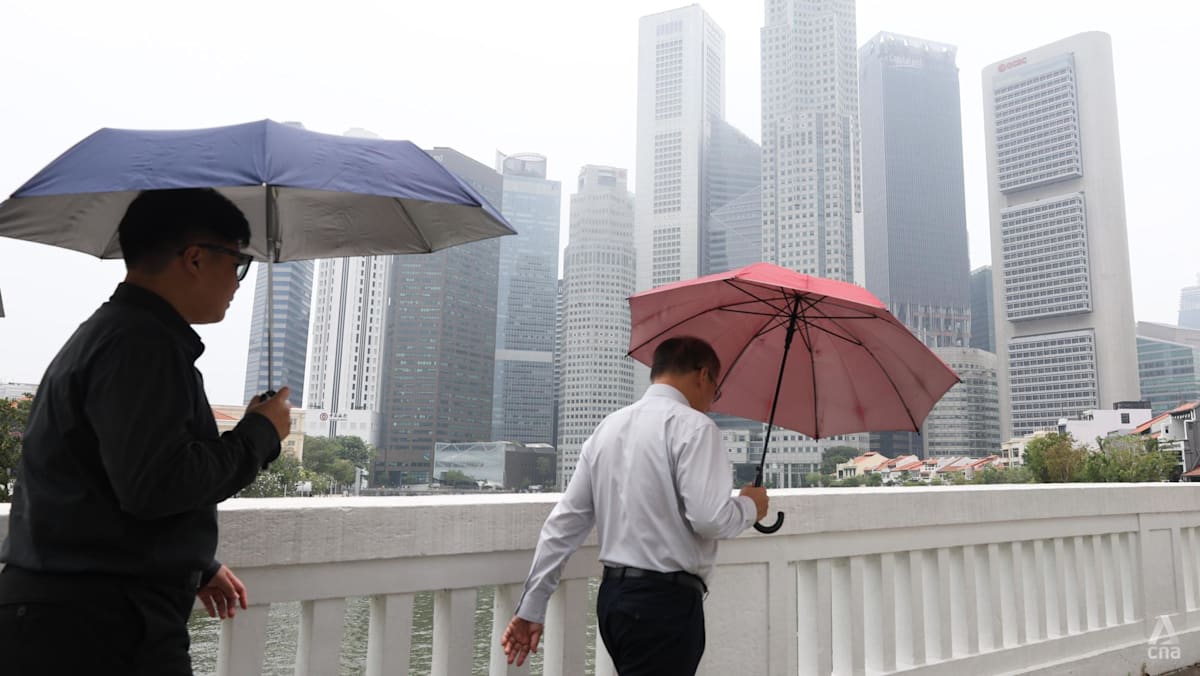
Haze shrouding buildings in the CBD from Elgin Bridge at 1.10pm on Oct 21, 2026. (Photo: CNA/Ooi Boon Keong)
This audio is generated by an AI tool.
SINGAPORE: Air quality across Singapore improved on Thursday (Oct 22), with hourly PM2.5 readings falling within the normal range in all regions as of 8am.
The western region was the last to return to the normal band at midnight, joining the other four regions. Hourly PM2.5 readings ranged from 22 to 42.
At 8am, the 24-hour Pollutant Standards Index (PSI) remained unhealthy in western Singapore with a reading of 108. Readings in the other four regions remained moderate, ranging from 74 to 95.
On Monday, Singapore saw a brief improvement in air quality when PSI readings fell into the moderate range in three of the country's five regions for the first time in more than a week.
CNA Games Guess Word Crack the word, one row at a time Buzzword Create words using the given letters Mini Sudoku Tiny puzzle, mighty brain teaser Mini Crossword Small grid, big challenge Word Search Spot as many words as you can Show More Show Less Before Monday, the last time Singapore recorded moderate air quality was on Oct 9.
Before Monday, the last time Singapore recorded moderate air quality was on Oct 9.
ADVICE FOR VULNERABLE GROUPS
When the 24-hour PSI is in the unhealthy range, NEA advises the elderly, pregnant women and children to minimise prolonged or strenuous outdoor physical exertion.
People with chronic diseases, including heart or lung conditions, should avoid such activities.
For decisions on mask use and immediate outdoor activities, the public should refer to the one-hour PM2.5 readings instead.
When the 1-hour PM2.5 readings are in the high band, vulnerable individuals, including the elderly, pregnant women and those with chronic heart or lung conditions, should avoid outdoor activities, according to the Ministry of Health (MOH).
Those who need to go outdoors for immediate activities may wear a well-fitting N95 mask or equivalent to reduce their exposure to haze particles.
When 1-hour PM2.5 readings reach the very high band of 251 and above, healthy individuals should also minimise all outdoor activities. Those who need to venture outdoors may similarly use an N95 mask for protection.
However, MOH said N95 masks are generally not needed for commuting between home and school or work, or in indoor environments.
The ministry has also advised the elderly, pregnant women and those with severe heart or lung conditions who experience breathing difficulties to consult their doctor before using an N95 mask.
Those who experience discomfort while wearing one should take a break from using it.
Besides N95 masks, KN95, FFP2 and KF94 masks are also effective in reducing exposure to haze particles, according to MOH.
Members of the public can visit the HazeMaskGoWhere website for more information on collection locations and live updates on mask availability at the vending machines.
MOH had also issued guidance on Oct 13 on the types of masks that can be used for protection against haze.
It said surgical masks can help reduce discomfort and the risk of infections by providing a barrier against larger irritant particles.
However, if PM2.5 readings are above 250 and people need to be outdoors for several hours, MOH recommends wearing an N95 or equivalent mask.
Cloth masks generally do not filter fine particles effectively, although they can reduce discomfort by blocking larger irritant particles in the air.
Get our pick of top stories and thought-provoking articles in your inbox
Stay updated with notifications for breaking news and our best stories
Join our channel for the top reads for the day on your preferred chat app
截至上午 8 点,西部地区是唯一一个 24 小时 PSI 空气质量指数显示空气质量不健康的地区。
2026年10月21日下午1点10分,从埃尔金桥拍摄的中央商务区建筑物被薄雾笼罩的景象。(图片:CNA/Ooi Boon Keong)
这段音频由人工智能工具生成。
新加坡:周四(10 月 22 日),新加坡各地空气质量有所改善,截至上午 8 点,所有地区的 PM2.5 小时读数均已降至正常范围。
西部地区是最后一个恢复正常浓度范围的地区,于午夜时分与其他四个地区汇合。PM2.5每小时读数在22至42之间。
上午 8 点,新加坡西部 24 小时污染物标准指数 (PSI) 仍处于不健康水平,读数为 108。其他四个地区的读数保持中等水平,范围在 74 至 95 之间。
周一,新加坡空气质量出现短暂改善,该国五个地区中的三个地区的空气污染指数(PSI)读数一周多以来首次降至中等水平。
CNA游戏 猜词游戏 逐行破解单词 流行词游戏 用给定的字母组成单词 迷你数独 小小的谜题,强大的脑力挑战 迷你填字游戏 小方格,大挑战 单词搜索 尽可能多地找出单词 显示更多 显示更少 在周一之前,新加坡上一次记录到中等空气质量是在10月9日。
在周一之前,新加坡上一次空气质量达到中等水平是在10月9日。
给弱势群体的建议
当 24 小时 PSI 处于不健康范围时,新加坡国家环境局建议老年人、孕妇和儿童尽量减少长时间或剧烈的户外体力活动。
患有慢性疾病(包括心脏病或肺病)的人应避免进行此类活动。
对于是否佩戴口罩以及是否立即进行户外活动,公众应参考一小时 PM2.5 读数。
根据卫生部 (MOH) 的说法,当 1 小时 PM2.5 读数处于高位时,包括老年人、孕妇和患有慢性心脏或肺部疾病的人在内的弱势群体应避免户外活动。
那些因紧急情况需要外出的人可以佩戴贴合度良好的 N95 口罩或同等防护等级的口罩,以减少接触雾霾颗粒。
当1小时PM2.5读数达到251及以上的高值区间时,健康人群也应尽量减少所有户外活动。必须外出的人群同样可以佩戴N95口罩进行防护。
然而,卫生部表示,一般情况下,往返家和学校或工作场所的通勤途中,或在室内环境中,不需要佩戴 N95 口罩。
该部还建议老年人、孕妇以及患有严重心脏或肺部疾病且出现呼吸困难的人在使用 N95 口罩前咨询医生。
如果佩戴时感到不适,应暂停使用。
卫生部表示,除了 N95 口罩外,KN95、FFP2 和 KF94 口罩也能有效减少接触雾霾颗粒。
公众可以访问 HazeMaskGoWhere 网站,了解更多关于口罩收集地点和自动售货机口罩供应情况的实时更新信息。
卫生部也于 10 月 13 日发布了关于可用于防雾霾的口罩类型的指导意见。
报告称,外科口罩可以阻挡较大的刺激性颗粒,从而帮助减少不适感和感染风险。
但是,如果 PM2.5 读数超过 250,并且人们需要在户外待几个小时,卫生部建议佩戴 N95 或同等口罩。
布口罩通常不能有效过滤细小颗粒,但可以通过阻挡空气中较大的刺激性颗粒来减轻不适感。
订阅我们的邮件,即可获取精选热点新闻和引人深思的文章。
订阅通知,第一时间获取突发新闻和精彩报道。
加入我们的频道,即可在您常用的聊天应用上获取当日热门文章。