Who was trying to topple the government? — Khoo Ying Hooi谁试图推翻政府?——邱英辉
SEPTEMBER 7 — Tan Sri Abdul Hadi Awang has made a serious claim.At the PAS muktamar, Hadi alleged that during Barack Obama’s 2014 visit to Malaysia, representatives at the US...
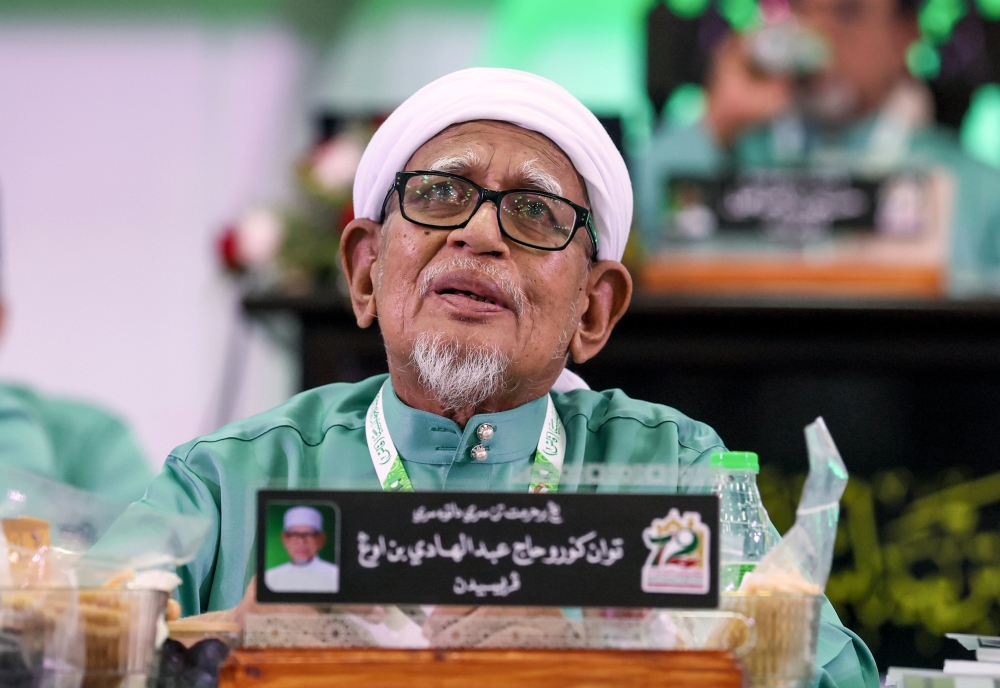
At the PAS muktamar, Tan Sri Abdul Hadi Awang claimed that during Barack Obama's 2014 visit to Malaysia, the US Embassy offered assistance to PAS to undermine the Barisan Nasional government.
The US Embassy has denied these allegations, affirming that the US does not interfere in Malaysia's political leadership decisions.
The article examines the distinction between foreign influence and interference, highlighting the need for Malaysia to develop transparent political funding regulations.
It underscores the importance of scrutinizing foreign involvement without overlooking domestic factors that allow such influence to be effective.
SEPTEMBER 7 — Tan Sri Abdul Hadi Awang has made a serious claim.
At the PAS muktamar , Hadi alleged that during Barack Obama’s 2014 visit to Malaysia, representatives at the US Embassy offered assistance to PAS to help bring down the Barisan Nasional (BN) government.
He further claimed that, after that meeting, the US ambassador requested a separate meeting with him and asked whom PAS would propose as prime minister.
The US Embassy has issued a statement saying that the US has never sought to decide Malaysia’s political leadership.
I cannot verify what was said in those meetings. At present, neither Hadi’s account nor Washington’s denial gives the public enough evidence to settle the matter. That is where I think the discussion should begin.
But neither should we be naïve about foreign influence. States routinely seek influence beyond their borders, and this is certainly not unique to the US.
That is hardly controversial in international relations. But influence and interference are not synonymous.
There is no universally accepted definition of foreign interference, but contemporary definitions generally distinguish it from ordinary foreign influence by looking for elements such as covert, deceptive, coercive, corrupting or non-transparent conduct.
The Organisation for Economic Co-operation and Development (OECD) explicitly warns against collapsing legitimate foreign influence and foreign interference into the same category.
The US also has a long and very public history of “democracy assistance”. Scholar Thomas Carothers has spent decades documenting this field, which has included support for elections, political parties, civil society, independent media and institutional reform.
None of this is secret. However, that does not mean we should be uncritical of it too.
Scholars Thomas Carothers and Saskia Brechenmacher made an important point in their 2014 report on international democracy support.
In the report, it is stated that even assistance presented as non-partisan can have different political effects on different actors.
Money, training, international access and institutional connections can change the balance of resources inside a political system.
Foreign funding therefore deserves scrutiny. So do the interests of the governments and foundations providing it.
But having an effect is still not the same as exercising control. I am not naïve about the historical record either.
Lists are now circulating online pointing to countries where the US has been accused of, or documented as having, intervened in domestic political outcomes.
There is substantial scholarship behind the broader concern. Lindsey O’Rourke’s Covert Regime Change (2018), among other works, documents an extensive history of US covert efforts to influence or change governments during the Cold War, for instance.
That history deserves to be taken seriously. But it cannot, by itself, establish what happened in Malaysia in 2014. That requires evidence specific to the Malaysian case.
Malaysia was not somehow outside this world. Malaysian organisations have received foreign support.
This is where the literature on transnational advocacy is useful. Scholars Margaret Keck and Kathryn Sikkink argued years ago that domestic actors often reach outward when political channels at home are blocked, forming networks with international organisations, foreign governments and activists elsewhere.
Their well-known “boomerang” model was important precisely because it restored agency to local actors.
Malaysians engaging international organisations are not necessarily passive instruments of foreigners. They may be using international relationships to pursue political objectives of their own.
The reverse is equally possible. Foreign governments can use those relationships to advance their interests. Both things can be true at once.
So yes, foreign money exists, so does foreign influence. Foreign governments have interests. Pretending otherwise would be rather innocent.
But there is an equally serious mistake in moving from foreign funding to foreign control, as though the two mean the same thing.
We should not also dismiss the historical context. When Obama visited Malaysia in 2014, Washington was simultaneously deepening relations with Najib Razak’s government.
The two governments elevated bilateral co-operation, discussed trade and security, and publicly described the relationship in positive terms.
Obama also raised the issue of civil liberties and met Malaysian civil society representatives. Foreign policy frequently involves working closely with governments while maintaining relationships with people who criticise those governments.
Nor should Najib’s eventual defeat in 2018 be treated, in itself, as evidence of an American operation. The story is not that simple.
There is already substantial literature explaining GE14 through Malaysian political dynamics such as elite rupture within Umno, Mahathir Mohamad’s return, the construction of a more credible opposition coalition, 1MDB and other governance concerns, changing patterns of political mobilisation and, ultimately, voter choice.
If we are genuinely concerned about foreign interference, then we should establish transparent rules and require disclosure.
As of 2026, Malaysia still does not have a specific law regulating political funding, while the proposed Political Funding Bill remains under study, with questions such as contribution limits and the appropriate regulatory body still unresolved.
Malaysia is neither immune from foreign influence nor simply a political arena shaped from outside.
Foreign powers have interests here. Of course they do. But the language of “foreign agents”, outside interference and foreign-funded attempts to destabilise governments is hardly new in Malaysian politics.
It has surfaced repeatedly in debates around opposition politics and civil society, now and then.
That history is precisely why we need to be careful. Foreign actors can take advantage of divisions, relationships, institutional weaknesses and political opportunities that already exist.
But the harder question is what was happening within Malaysia itself that made such influence possible, useful or politically consequential in the first place.
The foreign hand is worth scrutinising. It just should not become an excuse for pretending the local hands are clean.
* Khoo Ying Hooi, PhD is an associate professor at Universiti Malaya.
** This is the personal opinion of the writer or publication and does not necessarily represent the views of Malay Mail.
When an experiment ‘fails’, science may actually win — Manorenjitha Malar Sivanathan
When farmers wait for fertiliser, time does not wait — Nurul Fardini Zakaria
FMM and Malaysian SMEs must pay attention to China’s ultra-competitiveness — Phar Kim Beng
Four helicopter passes, 30km downstream – still no sign of Malaysians missing in flood-hit Nepal
Malaysian newlyweds’ Bali high turns into five-day airport nightmare, no thanks to Anak Krakatau ash cloud
Penang govt auctions Tanjung Pinang land as bypass project races towards 2027 finish
在伊党穆克塔玛,丹斯里阿都哈迪阿旺声称,在巴拉克奥巴马2014年访问马来西亚期间,美国大使馆向伊党提供援助,以破坏国阵政府。
美国大使馆否认了这些指控,并重申美国不会干涉马来西亚的政治领导层决策。
文章探讨了外国影响和干涉之间的区别,强调马来西亚需要制定透明的政治资金监管规定。
它强调了在审查外国干预的同时,也要重视那些使这种影响得以发挥作用的国内因素。
9 月 7 日——丹斯里阿都哈迪阿旺做出了严肃的声明。
在伊斯兰党(PAS)的公开会议上,哈迪声称,在巴拉克·奥巴马 2014 年访问马来西亚期间,美国大使馆的代表向伊斯兰党提供援助,以帮助推翻国民阵线(BN)政府。
他还声称,在那次会面之后,美国大使要求与他单独会面,并询问伊斯兰党会提名谁担任总理。
美国大使馆发表声明称,美国从未试图决定马来西亚的政治领导层。
我无法证实那些会议的内容。目前,无论是哈迪的说法还是华盛顿的否认,都无法为公众提供足够的证据来解决这个问题。我认为,讨论应该从这里开始。
但我们也不应天真地认为外国影响不可忽视。各国都会寻求在其境外施加影响,这绝非美国独有。
这在国际关系中几乎算不上什么争议。但影响力与干涉并非同义词。
虽然没有普遍接受的外国干涉定义,但当代定义通常通过寻找诸如秘密的、欺骗性的、胁迫性的、腐败的或不透明的行为等要素,将其与普通的外国影响区分开来。
经济合作与发展组织(OECD)明确警告不要将合法的外国影响和外国干涉混为一谈。
美国在“民主援助”方面也有着悠久而公开的历史。学者托马斯·卡罗瑟斯数十年来一直致力于记录这一领域,其中包括对选举、政党、公民社会、独立媒体和制度改革的支持。
这些都不是什么秘密。但是,这并不意味着我们应该对此不加批判。
学者托马斯·卡罗瑟斯和萨斯基亚·布雷亨马赫在他们 2014 年关于国际民主支持的报告中提出了一个重要的观点。
报告指出,即使是标榜为非党派的援助,也可能对不同的参与者产生不同的政治影响。
资金、培训、国际交流机会和机构关系可以改变政治体系内部的资源平衡。
因此,外国资金理应受到审查。提供资金的政府和基金会的利益也同样值得关注。
但产生影响并不等同于行使控制权。我对历史记录也并非一无所知。
现在网上流传着一些名单,列出了美国被指控或有记录表明干预过其国内政治结果的国家。
这一更广泛的关注点背后有大量的学术研究。例如,林赛·奥罗克的《秘密政权更迭》(2018)等著作详细记录了冷战期间美国为影响或改变他国政府而进行的大量秘密行动。
这段历史值得认真对待。但它本身并不能确定2014年马来西亚究竟发生了什么。这需要针对马来西亚具体情况的证据。
马来西亚并非与世隔绝。马来西亚的组织也曾接受过外国援助。
跨国倡导方面的文献在此就显得尤为重要。学者玛格丽特·凯克和凯瑟琳·西金克多年前就指出,当国内政治渠道受阻时,国内行动者往往会向外寻求帮助,与国际组织、外国政府以及其他地区的活动人士建立联系网络。
他们著名的“回旋镖”模式之所以重要,正是因为它恢复了地方行动者的自主权。
马来西亚人与国际组织互动并非一定是外国人的被动工具。他们也可能利用国际关系来实现自身的政治目标。
反过来也同样有可能。外国政府可以利用这些关系来推进自身利益。这两种情况可以同时存在。
所以,没错,外国资金确实存在,外国影响力也确实存在。外国政府也有自己的利益。否认这一点倒也无可厚非。
但从外国资金转向外国控制,却犯了一个同样严重的错误,仿佛两者含义相同。
我们也不应忽视历史背景。2014年奥巴马访问马来西亚时,华盛顿也在同时深化与纳吉布·拉扎克政府的关系。
两国政府提升了双边合作水平,讨论了贸易和安全问题,并公开对两国关系给予了积极评价。
奥巴马还提出了公民自由问题,并会见了马来西亚民间社会代表。外交政策通常需要在与各国政府密切合作的同时,与批评这些政府的人士保持良好关系。
纳吉布最终在2018年落败,本身也不应被视为美国干预的证据。事情远没有那么简单。
已有大量文献从马来西亚政治动态的角度解释了第 14 届全国大选,例如巫统内部精英分裂、马哈蒂尔·穆罕默德回归、构建更可信的反对派联盟、1MDB 和其他治理问题、政治动员模式的变化以及最终的选民选择。
如果我们真的担心外国干涉,那么我们就应该制定透明的规则并要求信息公开。
截至 2026 年,马来西亚仍未制定专门规范政治资金的法律,而拟议的《政治资金法案》仍在研究中,捐款限额和适当的监管机构等问题仍未得到解决。
马来西亚既不是不受外国影响的,也不是一个完全由外部塑造的政治舞台。
外国势力在这里有利益考量,这当然是毋庸置疑的。但是,在马来西亚政坛,“外国代理人”、外部干涉以及外国资助的破坏政府稳定的企图等说法并非新鲜事。
它时不时地在围绕反对派政治和公民社会的辩论中反复出现。
正是因为这段历史,我们才更需要谨慎。外国势力可以利用现有的分歧、关系、制度漏洞和政治机会。
但更难的问题是,马来西亚自身内部究竟发生了什么,才使得这种影响力成为可能、有用或具有政治意义。
外国势力介入固然值得审视,但这绝不能成为掩盖本地势力清白的借口。
* Khoo Ying Hooi 博士是马来亚大学副教授。
**本文仅代表作者或刊物个人观点,并不一定代表《马来邮报》的立场。
当一项实验“失败”时,科学实际上可能才是最终的赢家——马诺伦吉塔·马拉尔·西瓦纳坦
当农民等待化肥时,时间却不会等待——努鲁尔·法尔迪尼·扎卡里亚
马来西亚制造商联合会(FMM)和马来西亚中小企业必须关注中国的超强竞争力——法金明
四架直升机飞越下游30公里——仍未发现尼泊尔洪灾中失踪的马来西亚人。
马来西亚新婚夫妇巴厘岛之旅因喀拉喀托火山灰云而变成五天的机场噩梦。
槟城政府拍卖丹绒槟榔土地,绕城公路项目正加速推进,力争在2027年完工。