Pledges on investment are up but Foreign Direct Investment for the first six months is down nearly 5%投资承诺有所增加,但上半年外国直接投资下降了近5%。
Foreign investment warning for Thailand: actual FDI slumps 24.6% in Q2 despite ฿271 billion in commitments. DBD chief Kittiwat Patchimnan reports rising approvals as Prime… Read More ›
新闻视频
October 22, 2026 at 2:27 pm
in Economy , Living , Media , Politics , Thailand
Thailand is boasting of rising foreign investment as actual capital inflows plunge and Prime Minister Anutin Charnvirakul launches a nationwide crackdown on foreign property ownership. Bank of Thailand figures expose a 24.6% second-quarter collapse in inward investment, dragging first-half FDI down 4.7%. Meanwhile, foreign property owners and smaller investors face mounting uncertainty over assets acquired decades ago, with unlawful holdings facing forced sales. Japanese carmakers are also reportedly reviewing investment plans as Vietnam and Indonesia compete for their business. Yet the government is promoting ฿271 billion in foreign investment commitments, up 7%, despite those figures representing business approvals rather than actual capital inflows.
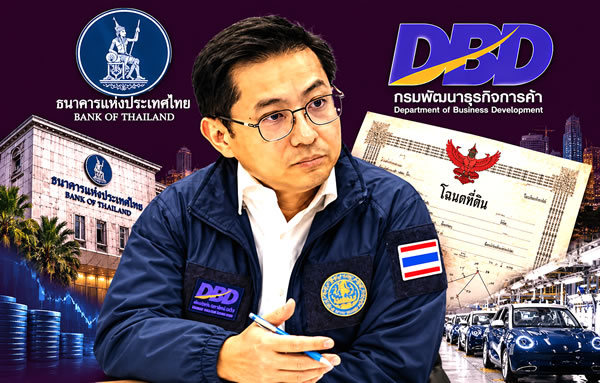
Thailand’s FDI fell 24.6% in Q2 despite rising pledges reported by Department of Business Development (DBD) Director-General Kittiwat Patchimnan, as Prime Minister Anutin Charnvirakul targets foreign nominee firms. ( Source: Thai Examiner Investigation )
Thailand’s government is promoting rising foreign investment while intensifying a nationwide crackdown on foreign-controlled businesses and property ownership. However, the latest figures for actual foreign direct investment tell a different story.
Foreign business approvals increased sharply during the first nine months of 2026. Yet actual foreign capital inflows declined during the first half. The contrast comes amid growing uncertainty among foreign property owners and smaller investors over holdings established decades ago.
The Bank of Thailand recorded a 4.7% decline in inward foreign direct investment (FDI) between January and June. In contrast, the Commerce Ministry reported a 7% increase in investment associated with foreign business approvals and certifications.
Foreign investment approvals rise as Anutin orders scrutiny of long-standing property ownership
The figures measure different activities. Crucially, business permissions and investment commitments do not establish how much foreign capital has actually entered Thailand. The distinction is significant as officials seek to reassure investors about the country’s business environment.
Prime Minister Anutin Charnvirakul has ordered nationwide investigations into companies suspected of concealing foreign control of land and businesses. Under his latest instructions, investigators must establish who actually controls properties and receives their economic benefits.
High-risk cases must reach conclusions by December. Furthermore, the government wants compulsory sales of land found to be unlawfully held. The operation places existing foreign-linked investments under renewed scrutiny.
The crackdown has revived questions about investments established over the past 20 or 30 years. These include property holdings and businesses involving long-term foreign residents and regular visitors. Some investors acquired property interests through Thai companies, spouses or leasehold agreements.
However, arrangements previously regarded by participants as legitimate are now receiving closer attention. The central issue is whether their ownership and control comply with Thai law.
Thai nominee ownership restrictions bring foreign-funded properties and tourism businesses under scrutiny
Thai legislation restricts foreign ownership of land and prohibits nominee arrangements designed to circumvent those restrictions. Consequently, investigators are examining the substance of ownership structures rather than simply accepting registered company shareholders.
They have been instructed to establish who controls the property and who benefits financially. Names appearing on land titles and company records will not settle those questions alone.
Estate agencies are also beginning to acknowledge anxiety among foreign buyers and existing property owners. The uncertainty extends beyond residential property into commercial investments.
In particular, the tourism industry includes foreign-funded hotels, accommodation businesses, restaurants and related enterprises. Some investments represent substantial capital accumulated over decades. Others involve smaller businesses established by foreigners living and working in Thailand.
For these investors, the crackdown concerns existing assets rather than applications for new investment privileges. Meanwhile, the government is examining arrangements that may have been established many years before the latest enforcement campaign.
This includes companies holding property through Thai shareholders. The investigations will focus on whether those shareholders genuinely control the businesses or act for foreign beneficiaries.
Commerce Ministry insists lawful investors remain welcome as foreign business approvals climb sharply
Thai officials have repeatedly insisted that legitimate investors remain welcome. They emphasise that investments complying with Thai law are not targets of the campaign. At the same time, the Commerce Ministry is publicising increased foreign business activity. Its latest figures were released as the government stepped up investigations into nominee ownership.
On Wednesday, October 21, Department of Business Development (DBD) Director-General Kittiwat Patchimnan announced the latest foreign business statistics. According to Thai PBS, Thailand authorised 971 foreign businesses between January and September 2026.
Their associated investment totalled ฿271.18 billion. The number of approvals and certifications increased by 26% compared with the corresponding period in 2025. Notably, the associated investment value rose by ฿18.06 billion, representing an annual increase of 7%.
Businesses receiving foreign business licences also reported employing 6,134 Thai workers. This represented a 20% increase from the previous year. The figures indicated continuing foreign business activity despite increased scrutiny of ownership arrangements. However, they did not establish that actual foreign capital inflows were rising.
The distinction lies in what the DBD measures. Its figures concern investment associated with licences, certificates and qualifying foreign business activities. They are not a record of completed foreign capital transfers. An approved business investment may involve expenditure spread across several years. Equally, receiving permission to operate does not establish when the associated investment will be completed.
Foreign business licences and BOI-linked certificates account for most reported investment commitments
The DBD reported 228 foreign business licences and 743 business certificates issued under the Foreign Business Act of 1999. Together, these accounted for the 971 foreign businesses authorised during the nine months.
Separately, 494 approvals or certificates involved businesses operating through Board of Investment (BOI) promotion arrangements. Their associated investment reached ฿201.35 billion.
That amount represented approximately 74% of the total investment value reported by the department. Thus, nearly three-quarters of the headline figure involved businesses linked to BOI promotion arrangements. The remaining total concerned other qualifying foreign business activities. Nevertheless, the overall figure measured associated investment rather than verified inward FDI flows.
The Bank of Thailand provides a different measure through its balance-of-payments statistics. These record inward direct investment, including equity capital, reinvested earnings and financing between related companies. Its latest quarterly figures were updated on September 30. They cover the first six months of 2026 and show an annual decline.
Bank of Thailand figures reveal a fall in actual foreign investment despite rising business approvals
Between January and June, actual inward FDI reached ฿233.21 billion. This compared with ฿244.79 billion during the corresponding period in 2025.
Consequently, inward investment fell by approximately ฿11.58 billion, or 4.7%. The figures remain provisional and may be revised. However, they measure recorded investment flows rather than proposed projects or business permissions.
The quarterly breakdown reveals a substantial reversal during the first half. Between January and March, Thailand recorded inward FDI of ฿82.41 billion. That represented an increase of 83.6% from ฿44.89 billion during the same period in 2025. The opening quarter therefore produced a strong annual increase.
By April, however, the comparative picture had changed sharply. During the second quarter, inward FDI reached ฿150.80 billion. This compared with ฿199.91 billion between April and June 2025. The annual decline was 24.6%, equivalent to approximately ฿49.11 billion. As a result, the second-quarter reduction more than offset the first-quarter increase.
The six-month total consequently fell below the previous year’s level. Moreover, the second-quarter decline was considerably sharper than the overall first-half reduction. The figures show that inward FDI weakened during the latest available reporting period. They do not, however, establish what caused the decline.
Investment commitments offer little clarity on smaller Western investors and existing property holdings
Third-quarter figures have not yet been published. Therefore, a reliable comparison of actual inward FDI for January to September is unavailable. The DBD’s nine-month investment announcements cannot be treated as equivalent to nine months of completed foreign investment. The two datasets also cover different reporting periods.
The difference becomes particularly important when examining the composition of foreign investment. Large multinational projects can involve billions of baht in proposed expenditure.
Industrial plants, digital infrastructure and advanced manufacturing facilities feature prominently in Thailand’s investment promotion system. By comparison, smaller foreign investors often operate in property, hospitality and tourism-related businesses.
A foreign investor placing ฿10 million into a small hotel faces different conditions from a multinational building a factory. Both may involve foreign capital. However, their ownership arrangements, financing structures and exposure to property restrictions can differ substantially. National FDI figures do not separately identify the position of smaller Western investors.
Large industrial projects can also dominate aggregate investment totals. Consequently, substantial commitments by multinational manufacturers do not establish whether smaller investors are expanding or reducing their holdings. Nor do they measure the security of existing property investments held through Thai companies or leasehold structures.
Singapore leads investment value while China tops foreign business approvals and carmakers reassess
The DBD figures provide a breakdown of newly authorised foreign businesses by country. China accounted for the largest number, with 183 businesses involving ฿46.03 billion in associated investment. The United States followed with 160 businesses. Singapore and Japan each recorded 131. However, the rankings changed when measured by investment value.
Singapore led with ฿74.45 billion in associated investment. Japan followed with ฿56.56 billion. China therefore recorded the largest number of authorised businesses but ranked behind both countries by investment value. The comparison illustrates the difference between business numbers and the capital associated with those businesses.
Much of the investment was concentrated in advanced manufacturing, engineering and digital technology. Other prominent sectors included artificial intelligence, electric vehicles and clean energy. These activities frequently involve substantial capital commitments. As such, major industrial and technology projects account for a significant share of reported investment.
The Eastern Economic Corridor remained a major destination for foreign business activity. Covering Chon Buri, Rayong and Chachoengsao, the zone attracted 302 foreign businesses during the first nine months. Their associated investment reached ฿102.74 billion. This represented approximately 38% of the national investment value reported by the DBD.
Japanese automotive investment faces regional competition as Thailand expands its EV sector
The concentration highlights the importance of industrial development within Thailand’s foreign investment figures. However, it provides little information about smaller businesses operating outside major manufacturing centres.
These include foreign-funded tourism enterprises, restaurants, accommodation businesses and property companies. Their ownership arrangements are also among those receiving increased scrutiny.
On another front, Thailand faces changes in investment planning within its established automotive industry. There are persistent reports that Japanese car manufacturers are reviewing their long-term strategies for the kingdom. The developments follow Thailand’s growing emphasis on electric vehicle production, particularly investment by Chinese automotive manufacturers.
Japanese companies continue operating and investing in Thailand. However, reports indicate that some larger future investments are being considered for Vietnam and Indonesia. Indonesia, in particular, has sought to attract Japanese automotive manufacturers and associated investment. The country is competing for projects that might otherwise have been located in Thailand.
Investigators ordered to identify real property controllers and force sales of unlawfully held Thai land
The automotive sector has been central to Thailand’s manufacturing economy for decades. Japanese manufacturers established extensive vehicle assembly operations and component supply networks across the kingdom.
Their investments helped build Thailand’s position as a regional automotive production centre. Meanwhile, the country’s industrial strategy has increasingly incorporated electric vehicle manufacturing and related technologies.
The available figures do not establish how much Japanese automotive investment has been redirected elsewhere. Nor do they identify the effect of changing automotive strategies on first-half FDI.
Nevertheless, the reports concern future investment decisions within one of Thailand’s most established foreign-owned industries. They also coincide with increasing competition from neighbouring manufacturing economies.
Separately, the government’s nominee crackdown is focused on existing business and property ownership arrangements. On October 19, Prime Minister Anutin ordered nationwide investigations into suspected foreign nominee ownership of land. The instructions require officials to examine companies where Thai nationals may be concealing foreign control.
Long-established company structures and leaseholds face renewed scrutiny under foreign ownership laws
Investigators must establish who actually controls properties and receives the financial benefits. In doing so, they must look beyond names appearing in company registrations and land ownership records.
Registered Thai shareholders will not automatically establish genuine Thai control. Instead, investigators must examine the underlying ownership arrangements.
As part of the operation, high-risk cases must reach conclusions by December. Anutin has also called for compulsory sales where land is found to be unlawfully held. The instructions place renewed attention on property companies and foreign-linked ownership structures across Thailand.
Some arrangements were established decades before the current investigations. Others involve businesses and properties that have changed ownership over time. The enforcement campaign therefore reaches beyond newly registered companies. It also concerns existing investments held through structures now facing closer examination.
Thai law restricts foreign ownership of land. It also prohibits arrangements using Thai nominees to disguise foreign ownership or control contrary to those restrictions. However, foreign participation in businesses remains permitted through lawful structures, subject to applicable legislation. Leasehold agreements and property interests involving Thai spouses also have distinct legal requirements.
Smaller foreign investors face uncertainty as business approvals fail to show actual capital flows
The legality of individual arrangements depends on their circumstances and the relevant statutory provisions. Accordingly, the investigations must establish the actual ownership and control of each business or property. The presence of foreign funding alone does not establish an unlawful nominee arrangement.
The crackdown has particular significance for foreigners who acquired property interests through Thai companies. Some investors regarded these arrangements as established routes into Thailand’s property market. However, using Thai nominees to circumvent ownership restrictions is prohibited. The current campaign is bringing those arrangements under renewed scrutiny.
Estate agencies have begun acknowledging anxiety among foreign property buyers and existing owners. The concerns extend to investment security and the treatment of long-established holdings. In parallel, investigations into foreign-controlled businesses have widened attention beyond residential property.
Hotels, accommodation businesses and tourism enterprises are among the sectors involving foreign capital and property interests. Some operate through companies holding land or commercial premises. Others depend on long-term leases. Their legal structures differ, but the enforcement campaign has increased scrutiny of foreign-linked ownership.
Official figures cannot establish whether nominee investigations caused foreign investment decline
Smaller foreign investors face circumstances that differ from those of major industrial corporations. Their capital may be tied to a single property or business. By comparison, large manufacturers often operate through extensive corporate structures and investment promotion arrangements. The DBD’s headline figures do not separate these categories sufficiently to establish their individual investment performance.
In response to concerns over the crackdown, the government has repeatedly stressed that lawful foreign investment remains welcome. Anutin has emphasised that Thailand remains open to investors complying with Thai law. The Commerce Ministry has also continued publicising foreign business approvals and associated investment commitments.
September alone recorded 136 foreign business approvals and certificates. These involved ฿21.92 billion in associated investment. The figures show continued applications and authorisations during the month. However, they do not establish how much capital entered Thailand or whether existing investors retained their holdings.
Nor do they reveal whether foreign property owners are selling assets or postponing further investment. Such an assessment would require evidence from actual capital movements, ownership changes and property transactions. Business closures and investment decisions would also be relevant. Furthermore, a country-by-country breakdown would be needed to examine the position of Western investors.
Foreign business approvals rise while actual inward investment falls and nominee crackdown gathers pace
The available figures cannot establish whether Western investors are disproportionately affected by nominee enforcement. Equally, they cannot demonstrate that the crackdown caused the recorded decline in inward FDI. The first-half reduction is documented, but its causes remain unidentified in the supplied data.
The timing also matters. The Bank of Thailand’s latest figures cover January to June. Anutin’s latest nationwide instructions were issued on October 19. Therefore, the first-half investment decline cannot be attributed to those October orders.
Nevertheless, the government’s announcements present sharply different measures of foreign investment activity. The Commerce Ministry reported 971 authorised foreign businesses during the first nine months. Their associated investment exceeded ฿271 billion, representing an annual increase of 7%.
In contrast, the Bank of Thailand recorded a 4.7% decline in actual inward FDI during the first six months. Notably, the second-quarter reduction reached 24.6% compared with the same period in 2025. That represented a fall of more than ฿49 billion in recorded inward investment.
These figures establish that investment approvals and actual capital flows were not following the same annual pattern. The Commerce Ministry’s figures reflect approved and certified business activities. The Bank of Thailand’s figures record capital movements, reinvested earnings and related financing.
Nominee investigations proceed as Thailand awaits fresh data on foreign capital inflows and confidence
Meanwhile, the government is pressing ahead with investigations into foreign nominee companies and unlawful land ownership. Officials must identify the individuals controlling and benefiting from suspect properties. High-risk cases are expected to reach conclusions by December. Where unlawful holdings are established, the government wants compulsory sales.
The enforcement campaign is proceeding alongside continued promotion of foreign manufacturing, technology and industrial investment. However, the headline approval figures do not establish conditions facing smaller foreign investors or existing property owners. Nor do they determine whether capital is leaving particular sectors.
The next Bank of Thailand quarterly figures will provide a clearer picture of inward FDI during 2026. They will show whether the first-half annual decline continued into the third quarter. Until then, the government’s nine-month approval figures cannot establish that actual foreign direct investment is rising.
For now, two developments are confirmed. Thailand is authorising more foreign businesses and reporting higher associated investment commitments. Yet its latest recorded inward FDI fell during the first half of 2026. At the same time, the government is examining foreign-linked property and business arrangements established over decades, with high-risk investigations due by December.
Crackdown on smaller foreign investors in Thailand has wider implications for external investment going forward
Expanding probe into foreign property ownership looking at company ownership of condos in 16 provinces
Drive against foreign owned property and business on Koh Samui and Koh Phangan now targets leases
International reservations system used by hotels targeted in latest Koh Phangan swoop by ministers
Anutin visits Koh Phangan as nominee crackdown shows 68% of firms with foreign ownership links
Blitzkrieg on foreign firms and enterprises on Koh Phangan continues with French owned resort busted
35-year-old Frenchman arrested on Koh Phangan on Sunday for rape as island-wide swoop nets 6 suspects
Ten foreign Poker players arrested in a police swoop on a rented house in Koh Phangan on Tuesday night
Russian-Chinese Koh Phangan alliance to sell drugs to foreigners. Accused entered Thailand illegally
Sex, drugs, business and work abuses linked to expats targeted this week by police raids on Koh Phangan
Ten arrested and two illegal hostels shuttered on Koh Phangan as fierce crackdown continues on the island
Crackdown aimed at upending foreign business trade moves from Koh Phangan to Phuket. Four arrested
Crackdown to wipe out foreign business abuses and ownership on Koh Phangan & Koh Samui intensifies
Joseph Anthony is an expat from Ireland who has lived in Thailand for the last decade. He has worked extensively in the media including editorial positions in Ireland and Thailand. He is focused on economic and business stories in Thailand as well as the expat lifestyle.
All posts by Joseph O' Connor
Midnight raids in Rayong on karaoke clubs fronting for prostitution see local police chief sidelined pending enquiries October 17, 2026 Four unlicensed KTV clubs serving Chinese customers
American company director arrested in Bangkok Thursday for failing to over a million baht in wages October 17, 2026 Nearly four months after a court issued its first
Pheu Thai leadership assures PM of support in the No Conference debate and vote at the end of October October 17, 2026 Pheu Thai chiefs promise Anutin all 71 MPs to defeat a
Justice Ministry boss reveals ‘Black Research’ aimed at High School students. 3,000 sexual abuse images October 16, 2026 Schoolboys aged 15–17 were tricked into supplying
Man gunned down by motorcycle assassins outside a weed shop in Bangkok’s Laksi district early Friday October 16, 2026 Two motorcycle gunmen unleash more than ten shots
Police arrest South Korean after child reports mother being abused. Man found to have overstayed his visa October 16, 2026 A sudden call from a Thai woman’s child triggers
Base pipe bomb attack on Thursday in southern Yala province left five army officers with minor injuries October 16, 2026 Yala security forces come under bomb attack as
Prime Minister Anutin talks of an economy driven by ‘quality growth’ at the Bangkok IMF World Bank forum October 15, 2026 Anutin promises advanced industries, richer tourists
Thai Airways now says baggage failure was five times worse than admitted. Board orders compensation October 15, 2026 Thai Airways faces a worldwide reckoning after 25,000
Boss Surat Thani woman shot worker who borrowed a cooking pot and motorbike dead after he attacked her October 15, 2026 Roadside bloodshed in Surat Thani as a woman shoots
Malaysian couple on honeymoon with 40 litres of petrol spark security crisis at IMF World Bank summit October 14, 2026 Bomb squad police search a Malaysian couple’s
Ekniti clings to AI to buoy the Thai economy and even promises a second life for the ‘sick man of Asia’ October 14, 2026 Ekniti pitches an AI-powered revival at the
Child trafficked from Burma sold for 30k baht by her mother as top ministers smash vile ring in Bangkok October 13, 2026 Two arrested and six Burmese children rescued in
Action underway against adventure sports organisers after two foreign tourists are injured abseiling October 13, 2026 An adventure trip in Phetchabun ended with two foreign
Southern senator warns Thais losing out in Malaysia’s service economy due to an Immigration crackdown October 13, 2026 Malaysia targets undocumented workers in 10,374
Thai UK beauty wins Ms Global title. Highly educated marketing whiz stormed to victory in home pageant October 13, 2026 Beauty, brains and grit! Thai-British Saffron Maya
People’s Party bigwig calls on Pheu Thai to put the country first in the forthcoming no confidence vote October 12, 2026 Anutin faces a political showdown as the
Thai star Nene Royal faces trademark headaches in Thailand and South Korea as she secures her fortune October 18, 2026
Six dead in deadly clashes in Southern Thailand including a policeman killed on National Police Day October 17, 2026
Underfire southern MP says Prime Minister Anutin telephoned her and urged her to post a selfie online October 17, 2026
Prime Minister cock a hoop as IMF World Bank meet ends in Bangkok. Insists Thailand’s standing has risen October 17, 2026
Departures tax pushed by the Ministry of Finance is the death kiss for the tourist sector say top execs October 16, 2026
US Bangkok broadside to the IMF and the World Bank delivered by Scott Bessent who snubbed the meeting October 16, 2026
Friday protests by anti IMF World Bank activists continue after overnight camp event in central Bangkok October 16, 2026
Air hostess linked to international trafficking ring smuggling Chinese nationals in and out of Thailand October 16, 2026
Protests at the IMF World Bank meetings turn violent but Bangkok police deny being heavy handed October 15, 2026
Bhumjaithai Party Southern MP facing political strain as questions grow about her husband’s online fortune October 15, 2026
Portuguese woman’s 5 year stay in Thailand without a valid visa ends at a Phuket cookery class on Tuesday October 15, 2026
Thai police get involved in Hong Kong prostitution ring smashed last weekend which yielded vast returns October 14, 2026
Police arrest Chinese tourist thief who used Thai flights to snatch credit cards and run up charges on them October 14, 2026
UK man urgently sought by family after vanishing in Thailand over a week ago just before his flight home October 13, 2026
Tax grab targeted at outbound passengers is opposed by travel industry as ministry pushes a new agenda October 13, 2026
Upmarket Thai prostitution racket smashed by Hong Kong police. 16 people arrested in separate swoops October 13, 2026
Air force monitors Chinese base operation in Laos as Beijing strengthens military ties with neighbours October 12, 2026
Tourist police reach out to Russian Embassy to inform tourists visiting Thailand about laws and customs October 12, 2026
Police chief says Bangkok is ready for World Bank and IMF meetings with over 18,000 delegates visiting October 12, 2026
Indian YouTube on tour of Thailand with no money hits a snag at Udon Thani temple and is asked to leave October 11, 2026
Chiang Rai river basin findings ramp up the pressure on Thailand to act over poison flowing from Burma October 11, 2026
Horrorific work incident saw woman (49) decapitated by a lift on Saturday. Police investigation underway October 10, 2026
© 2026 Thai Examiner. All rights reserved.
2026年10月22日下午2:27
经济、生活、媒体、政治、泰国
尽管实际资本流入大幅下降,泰国政府仍宣称外商投资增长,而总理阿努廷·查恩维拉库尔(Anutin Charnvirakul)则在全国范围内打击外国房产所有权。泰国央行的数据显示,第二季度外国直接投资暴跌24.6%,导致上半年外国直接投资下降4.7%。与此同时,外国房产所有者和小投资者面临着数十年前购置资产的日益增长的不确定性,非法持有的资产可能面临强制出售。据报道,由于越南和印尼正在争夺日本汽车制造商的业务,日本汽车制造商也在重新评估其投资计划。然而,尽管这些数字代表的是商业审批结果而非实际资本流入,泰国政府仍在宣传外商投资承诺额达2710亿泰铢,增长7%。
尽管泰国商业发展部部长吉提瓦·帕钦南报告称,第二季度外国直接投资承诺有所增加,但由于总理阿努廷·查恩维拉库尔对外国代理人公司采取了打击措施,泰国第二季度外国直接投资仍下降了24.6%。(来源:《泰国观察家报》调查)
泰国政府一方面鼓励吸引外资,另一方面加大力度在全国范围内打击外资控股企业和房产所有权。然而,最新的实际外商直接投资数据显示的情况却截然不同。
2026年前九个月,外国企业审批数量大幅增长。然而,上半年实际流入的外国资本却有所下降。这种反差出现在外国房地产所有者和小投资者对其数十年前持有的资产日益感到不确定之际。
泰国央行数据显示,1月至6月期间,外国直接投资(FDI)流入量下降了4.7%。相比之下,泰国商务部报告称,与外国企业审批和认证相关的投资增长了7%。
阿努廷下令审查长期存在的房产所有权,外国投资审批数量上升。
这些数据衡量的是不同的活动。至关重要的是,商业许可和投资承诺并不能确定实际有多少外资流入了泰国。这种区别意义重大,因为官员们希望借此让投资者对泰国的营商环境放心。
总理阿努廷·查恩维拉库尔已下令在全国范围内对涉嫌隐瞒外国对土地和企业控制权的公司展开调查。根据他的最新指示,调查人员必须查明谁实际控制着这些财产并获得其经济利益。
高风险案件必须在12月前结案。此外,政府希望强制出售被认定为非法持有的土地。此次行动将对现有的外商投资进行重新审查。
此次打击行动再次引发了人们对过去二三十年间设立的投资项目的质疑。这些项目包括涉及长期外国居民和定期访客的房产持有和商业活动。一些投资者通过泰国公司、配偶或租赁协议获得了房产权益。
然而,此前被参与者视为合法的安排现在正受到更严格的审查。核心问题在于,这些安排的所有权和控制权是否符合泰国法律。
泰国对名义所有权的限制使外国投资的房地产和旅游企业受到严格审查
泰国法律限制外国人拥有土地所有权,并禁止旨在规避这些限制的代理人安排。因此,调查人员正在审查所有权结构的实质内容,而不仅仅是接受注册公司股东的信息。
他们的任务是查明谁控制着这处房产,以及谁从中获利。仅凭土地所有权证和公司记录上的名字并不能解决这些问题。
房地产中介也开始意识到外国买家和现有业主普遍存在的焦虑情绪。这种不确定性不仅蔓延到住宅地产,也波及到商业投资领域。
旅游业尤其包括外资投资的酒店、住宿企业、餐厅及相关企业。部分投资代表着数十年积累的巨额资本,而另一些则是居住和工作在泰国的外国人创办的小型企业。
对于这些投资者而言,此次打击行动针对的是现有资产,而非新的投资优惠申请。与此同时,政府正在审查一些可能在最近这次执法行动开展多年前就已经存在的安排。
这包括通过泰国股东持有资产的公司。调查将重点关注这些股东是否真正控制这些企业,还是代表外国受益人行事。
商务部坚称,在外国企业审批数量大幅攀升之际,仍然欢迎合法投资者。
泰国官员一再强调,欢迎合法投资者。他们强调,符合泰国法律的投资并非此次行动的目标。与此同时,商务部公布了外国商业活动日益活跃的数据。就在政府加大对代理所有权调查力度之际,商务部发布了最新数据。
10月21日星期三,泰国商业发展部部长吉提瓦·帕奇姆南公布了最新的外商企业统计数据。据泰国公共广播公司(Thai PBS)报道,2026年1月至9月期间,泰国共批准了971家外商企业在泰国开展业务。
相关投资总额达2711.8亿泰铢。与2025年同期相比,审批和认证数量增长了26%。值得注意的是,相关投资额增长了180.6亿泰铢,年增长率为7%。
获得外国营业执照的企业报告称,共雇用了6134名泰国工人,比上年增长了20%。这些数据表明,尽管所有权安排受到更严格的审查,但外国商业活动仍在继续。然而,这些数据并未证实实际的外国资本流入量有所增加。
区别在于DBD的衡量标准。其数据涉及与许可证、证书和符合条件的外国商业活动相关的投资,而非已完成的外国资本转移记录。一项获批的商业投资可能涉及跨越数年的支出。同样,获得经营许可并不意味着相关投资何时完成。
外国营业执照和与泰国投资促进委员会(BOI)相关的证书占已报告投资承诺的大部分。
商务部报告称,根据 1999 年《外国企业法》,共颁发了 228 份外国企业营业执照和 743 份营业证书。这九个月内,共有 971 家外国企业获得授权。
此外,还有494项批准或证书涉及通过泰国投资促进委员会(BOI)促进安排运营的企业。这些企业的相关投资额达到2013.5亿泰铢。
该金额约占该部门报告的总投资额的74%。因此,近四分之三的总额涉及与投资促进委员会(BOI)促进安排相关的企业。剩余部分则涉及其他符合条件的外国商业活动。然而,该总额衡量的是关联投资,而非经核实的外国直接投资流入量。
泰国央行通过其国际收支统计数据提供了不同的衡量标准。这些数据记录了流入的直接投资,包括股权资本、再投资收益以及关联公司之间的融资。其最新的季度数据于9月30日更新,涵盖2026年上半年,并显示出同比下降的趋势。
泰国央行数据显示,尽管企业审批数量增加,但实际外国投资额却有所下降。
今年1月至6月,实际吸引到的外国直接投资达到2332.1亿泰铢,而2025年同期则为2447.9亿泰铢。
因此,外来投资减少了约115.8亿泰铢,降幅为4.7%。这些数据仍为初步数据,可能会进行修订。但需要注意的是,这些数据衡量的是已记录的投资流量,而非拟建项目或商业许可。
季度细分数据显示,上半年出现了显著逆转。1月至3月,泰国吸引外商直接投资824.1亿泰铢,较2025年同期的448.9亿泰铢增长83.6%。因此,第一季度实现了强劲的年度增长。
然而,到了4月份,情况发生了显著变化。第二季度,外国直接投资流入量达到1508亿泰铢,而2025年4月至6月期间为1999.1亿泰铢。同比下降24.6%,相当于约491.1亿泰铢。因此,第二季度的下降幅度超过了第一季度的增长幅度。
因此,上半年的总额低于上年同期水平。此外,第二季度的降幅远大于上半年的整体降幅。数据显示,在最近可获得的报告期内,外国直接投资流入有所减弱。然而,这些数据并未揭示造成下降的具体原因。
投资承诺并未明确说明小型西方投资者及其现有房产持有情况。
第三季度数据尚未公布。因此,目前无法对1月至9月的实际外国直接投资流入量进行可靠的比较。此外,DBD公布的九个月投资公告不能等同于九个月的实际外国投资额。这两个数据集涵盖的报告期也不同。
在分析外国投资构成时,这种差异就显得尤为重要。大型跨国项目可能涉及数十亿泰铢的拟议支出。
工业厂房、数字基础设施和先进制造设施在泰国的投资促进体系中占据重要地位。相比之下,规模较小的外国投资者通常从事房地产、酒店和旅游相关业务。
外国投资者投资1000万泰铢兴建小型酒店,与跨国公司兴建工厂,二者面临的情况截然不同。两者都可能涉及外资,但其所有权安排、融资结构以及所受的产权限制可能存在显著差异。各国公布的外国直接投资数据并未单独列出规模较小的西方投资者的情况。
大型工业项目也可能在总投资额中占据主导地位。因此,跨国制造商的大量投资承诺并不能反映小型投资者是在扩大还是减少其持股,也不能衡量通过泰国公司或租赁结构持有的现有房地产投资的安全性。
新加坡领跑投资额,中国在外国企业审批数量上居首位,汽车制造商重新评估战略
泰国商业发展局(DBD)的数据按国家/地区列出了新获批的外国企业数量。中国企业数量最多,共有183家,相关投资额达460.3亿泰铢。美国紧随其后,有160家企业。新加坡和日本各有131家。然而,如果按投资额计算,排名则有所不同。
新加坡以744.5亿泰铢的关联投资额位居榜首,日本紧随其后,投资额为565.6亿泰铢。因此,中国获批的企业数量最多,但投资额却落后于新加坡和日本。这一对比凸显了企业数量与相关资本之间的差异。
大部分投资集中在先进制造业、工程和数字技术领域。其他重点领域包括人工智能、电动汽车和清洁能源。这些活动通常涉及大量资本投入。因此,大型工业和技术项目在已公布的投资额中占据了相当大的比例。
东部经济走廊仍然是外国企业开展业务的重要目的地。该区域涵盖春武里府、罗勇府和北柳府,在前九个月吸引了302家外国企业入驻,相关投资额达1027.4亿泰铢,约占泰国投资发展部(DBD)公布的全国投资总额的38%。
随着泰国扩大电动汽车产业,日本汽车投资面临区域竞争。
这一集中体现了工业发展在泰国外商投资数据中的重要性。然而,它对在主要制造中心以外运营的小型企业的信息提供甚少。
这些企业包括外资旅游企业、餐饮企业、住宿企业和房地产公司。它们的股权结构也正受到越来越多的审查。
另一方面,泰国成熟的汽车产业也面临着投资规划的调整。不断有报道称,日本汽车制造商正在重新评估其在泰国的长期战略。此前,泰国日益重视电动汽车的生产,尤其是中国汽车制造商的投资。
日本企业继续在泰国开展业务和投资。然而,有报道指出,一些规模更大的未来投资项目正在考虑落户越南和印度尼西亚。特别是印度尼西亚,一直致力于吸引日本汽车制造商及其相关投资。该国正在与泰国竞争一些原本可能落户泰国的项目。
调查人员奉命查明房地产控制者,并强制出售非法持有的泰国土地。
几十年来,汽车行业一直是泰国制造业经济的核心。日本制造商在泰国各地建立了广泛的整车组装厂和零部件供应网络。
他们的投资帮助泰国确立了其作为区域汽车生产中心的地位。与此同时,泰国的产业战略也日益重视电动汽车制造及相关技术。
现有数据无法确定有多少日本汽车投资转移到了其他领域,也无法确定汽车行业战略的调整对上半年外国直接投资的影响。
然而,这些报告涉及泰国最成熟的外资产业之一的未来投资决策。同时,这些报告也与邻近制造业经济体日益激烈的竞争不谋而合。
此外,政府打击代理人的行动主要针对现有的商业和房地产所有权安排。10月19日,阿努廷总理下令在全国范围内调查涉嫌由外国人代持的土地所有权。该指示要求官员审查泰国公民可能隐瞒外国控制权的公司。
根据外资所有权法,长期存在的公司结构和租赁权将面临新的审查。
调查人员必须查明谁实际控制房产并获得经济利益。为此,他们必须超越公司注册信息和土地所有权记录中出现的名字进行调查。
注册的泰国股东并不能自动证明泰国拥有真正的控制权。调查人员必须审查实际的股权结构。
作为行动的一部分,高风险案件必须在12月前结案。阿努廷还呼吁对非法持有的土地进行强制出售。这些指示再次将泰国各地的房地产公司和外资关联所有权结构置于公众的密切关注之下。
有些安排早在本次调查开展前几十年就已确立。另一些则涉及随着时间推移所有权发生变更的企业和房产。因此,此次执法行动的范围不仅限于新注册的公司,还包括通过目前正接受严格审查的架构持有的现有投资。
泰国法律限制外国人拥有土地所有权。法律还禁止利用泰国代理人掩盖外国所有权或控制权,从而违反上述限制。但是,外国人可以通过合法的组织结构参与企业经营,但须遵守相关法律法规。涉及泰国配偶的租赁协议和财产权益也有其独特的法律要求。
由于商业审批未能反映实际的资金流动,规模较小的外国投资者面临不确定性。
个别安排的合法性取决于其具体情况和相关法律规定。因此,调查必须确定每项企业或财产的实际所有权和控制权。仅凭存在外国资金并不构成非法代理人安排。
此次打击行动对通过泰国公司购置房产的外国人尤为重要。一些投资者将此类安排视为进入泰国房地产市场的既定途径。然而,利用泰国代理人规避所有权限制是被禁止的。目前的行动旨在重新审视这些安排。
房地产中介机构已开始意识到外国购房者和现有业主普遍存在的焦虑情绪。这些担忧涵盖投资安全以及长期持有的房产将如何被妥善处理。与此同时,对外国控股企业的调查范围也已从住宅地产扩展到其他领域。
酒店、住宿和旅游企业等行业都涉及外国资本和房地产利益。有些企业通过持有土地或商业地产的公司进行运营,有些则依赖长期租赁。它们的法律结构各不相同,但执法行动加大了对外国关联所有权的审查力度。
官方数据无法确定提名人调查是否导致了外国投资下降
规模较小的外国投资者面临的情况与大型工业企业截然不同。他们的资金可能集中于单一资产或业务。相比之下,大型制造商通常通过庞大的公司架构和投资促进安排进行运营。DBD 的总体数据并未充分区分这些类别,因此无法确定它们各自的投资业绩。
针对外界对打击非法投资行动的担忧,泰国政府一再强调,欢迎合法的外国投资。阿努廷强调,泰国始终欢迎遵守泰国法律的投资者。商务部也持续公布外国企业审批结果及相关投资承诺。
仅9月份就记录了136项外国企业审批和认证,涉及相关投资额达219.2亿泰铢。数据显示,当月申请和授权数量持续增长。然而,这些数据并不能确定有多少资金流入泰国,也无法确定现有投资者是否继续持有股份。
报告也未揭示外国房地产所有者是否正在出售资产或推迟进一步投资。此类评估需要实际的资本流动、所有权变更和房地产交易的证据。企业倒闭和投资决策也具有相关性。此外,还需要逐国分析,以考察西方投资者的处境。
外商投资审批数量上升,但实际流入投资却下降,同时打击代持企业的力度也在加大。
现有数据无法确定西方投资者是否因代理人执法而受到不成比例的影响。同样,这些数据也无法证明此次打击行动导致了外商直接投资的下降。上半年的下降已有记录,但其原因在现有数据中仍未明确。
时机也很重要。泰国央行的最新数据涵盖1月至6月。阿努廷最近一次全国性指令发布于10月19日。因此,上半年的投资下降不能归因于10月份的指令。
然而,政府公布的外国投资活动数据却呈现出截然不同的面貌。商务部报告称,前九个月共有971家获准经营的外国企业,相关投资额超过2710亿泰铢,同比增长7%。
相比之下,泰国央行记录显示,今年上半年实际外国直接投资流入量下降了4.7%。值得注意的是,第二季度的降幅高达24.6%,与2025年同期相比,这意味着实际流入投资减少了超过490亿泰铢。
这些数据表明,投资审批和实际资本流动并未呈现相同的年度模式。商务部的数据反映的是已获批准和认证的商业活动。泰国银行的数据则记录了资本流动、收益再投资和相关融资情况。
泰国正等待有关外国资本流入和信心的新数据,同时继续进行代理人调查。
与此同时,政府正加紧调查外国代理人公司和非法土地所有权问题。官员必须查明控制和受益于可疑房产的个人。高风险案件预计将于12月结案。一旦查明存在非法持有房产的情况,政府将强制出售。
在持续促进外国制造业、技术和产业投资的同时,执法行动也在进行。然而,表面上的批准数量并不能反映规模较小的外国投资者或现有业主面临的具体情况,也无法确定资本是否正在流出特定行业。
泰国央行下一季度的数据将更清晰地展现2026年外国直接投资流入情况。这些数据将显示上半年的下滑趋势是否延续至第三季度。在此之前,政府公布的九个月审批数据尚不足以证明实际外国直接投资正在增长。
目前已确认两项进展。泰国正在批准更多外国企业入境,并报告称相关投资承诺有所增加。然而,其最新记录的2026年上半年外国直接投资流入量却有所下降。与此同时,泰国政府正在审查数十年来建立的与外国相关的房地产和商业安排,预计将在12月前完成对高风险项目的调查。
泰国对小型外国投资者的打压行动,对未来的对外投资产生了更广泛的影响。
扩大对外国房产所有权的调查,将目光投向16个省份的公司持有的公寓。
针对苏梅岛和帕岸岛外国所有房产和企业的打击行动,现在重点针对租赁合同。
部长们最近突击检查帕岸岛酒店时,目标酒店使用的国际预订系统
阿努廷访问帕岸岛,与此同时,打击代理人犯罪的行动显示,68%的公司与外国所有权有关联。
对帕岸岛外国公司和企业的闪电战仍在继续,一家法国拥有的度假村被查封。
周日,一名35岁的法国男子在帕岸岛因涉嫌强奸被捕,全岛范围的突击行动共抓获6名嫌疑人。
周二晚间,警方突袭帕岸岛一处出租屋,逮捕了十名外国扑克玩家。
俄罗斯与中国在帕岸岛结盟,向外国人贩卖毒品。被告非法入境泰国。
本周,警方突击搜查了帕岸岛上的外籍人士,调查内容涉及性侵、毒品、商业和工作方面的侵权行为。
帕岸岛持续开展严厉打击行动,十人被捕,两家非法旅馆被查封。
打击行动旨在扰乱从帕岸岛到普吉岛的外国商业贸易活动。四人被捕。
严厉打击在帕岸岛和苏梅岛非法经营和侵占外国企业的行动力度加大
约瑟夫·安东尼是一位来自爱尔兰的侨民,过去十年一直居住在泰国。他曾在爱尔兰和泰国的媒体行业担任过编辑职务,拥有丰富的媒体从业经验。他主要关注泰国的经济和商业新闻,以及侨民的生活方式。
约瑟夫·奥康纳的所有帖子
2026年10月17日午夜,罗勇府警方突击搜查以卖淫为幌子的卡拉OK俱乐部,当地警察局长因接受调查而被停职。四家无证KTV俱乐部为中国顾客提供服务。
一名美国公司董事周四在曼谷被捕,原因是拖欠超过一百万泰铢的工资(2026年10月17日)。此前近四个月,法院首次发出逮捕令。
为泰党领导层向总理保证,将在10月底的反对党大会辩论和投票中给予支持。2026年10月17日,为泰党领导人向阿努廷承诺,将动用全部71名议员的力量,击败反对党大会。
司法部部长揭露针对高中生的“黑名单”调查。2026年10月16日,3000张性虐待图片曝光。15至17岁的男学生被骗提供图片。
2026年10月16日星期五凌晨,一名男子在曼谷叻西区一家大麻店外遭摩托车枪手射杀。两名摩托车枪手开了十多枪。
警方逮捕一名韩国男子,此前一名儿童举报其母亲遭到虐待。该男子被发现签证过期滞留。2026年10月16日,一名泰国女子的孩子突然来电,引发了一系列事件。
2026年10月16日,亚拉省南部一处军事基地发生管状炸弹袭击,造成五名军官轻伤。亚拉安全部队遭到炸弹袭击。
2026年10月15日,阿努廷总理在曼谷举行的国际货币基金组织和世界银行论坛上谈到,经济将以“高质量增长”为驱动力。阿努廷承诺发展先进产业,并吸引更多富裕的游客。
泰国航空现称行李事故比之前承认的严重五倍。董事会于2026年10月15日下令赔偿。在造成25000人次事故后,泰国航空面临全球舆论的谴责。
2026年10月15日,素叻他尼一名女子枪杀了一名借给她锅碗瓢盆和摩托车的工人,此前该工人曾袭击她。
2026年10月14日,一对马来西亚夫妇蜜月旅行时携带40升汽油,引发国际货币基金组织世界银行峰会安全危机。警方拆弹小组搜查了这对马来西亚夫妇的行李。
Ekniti 力挺人工智能以提振泰国经济,甚至承诺让“亚洲病夫”重获新生。2026年10月14日,Ekniti 提出了一项人工智能驱动的复兴计划。
2026年10月13日,曼谷高级官员捣毁一个令人发指的贩卖儿童团伙,两名缅甸儿童被捕,六名缅甸儿童获救。一名从缅甸被拐卖的女童被其母亲以3万泰铢的价格卖掉。两名缅甸儿童被捕,六名缅甸儿童获救。
两名外国游客在2026年10月13日于碧差汶府进行绳索速降时受伤,目前已对探险运动组织者采取行动。
泰国南部参议员警告称,由于马来西亚移民局的严厉打击,泰国人在马来西亚的服务业经济中处于不利地位(2026年10月13日)。马来西亚将10374名无证工人列为打击目标。
泰英混血佳人摘得环球小姐桂冠。这位受过高等教育的营销奇才在本土选美大赛中一举夺魁(2026年10月13日)。美貌、智慧与毅力兼备!泰英混血的萨弗伦·玛雅
人民党重量级人物呼吁为泰党在即将于2026年10月12日举行的不信任投票中将国家利益放在首位。阿努廷面临一场政治摊牌。
泰国明星妮妮·罗亚尔(Nene Royal)在泰国和韩国面临商标纠纷,她正努力保住自己的财富。2026年10月18日
泰国南部发生致命冲突,造成六人死亡,其中包括一名在2026年10月17日国家警察日当天殉职的警察。
备受争议的南方议员称,总理阿努廷于2026年10月17日致电她,敦促她在网上发布一张自拍照。
泰国总理在曼谷举行的国际货币基金组织和世界银行会议闭幕之际沾沾自喜,坚称泰国的地位已经提升。(2026年10月17日)
财政部力推的离境税是旅游业的致命一击,高管们如是说 2026年10月16日
美国驻曼谷大使斯科特·贝森特向国际货币基金组织和世界银行发出严厉警告,他缺席了2026年10月16日举行的会议。
2026年10月16日,在曼谷市中心举行通宵露营活动后,反对国际货币基金组织和世界银行的活动人士的抗议活动仍在继续。
2026年10月16日,一名空姐被曝与国际人口贩运团伙有关联,该团伙负责将中国公民偷渡出泰国。
国际货币基金组织和世界银行会议期间的抗议活动演变为暴力事件,但曼谷警方否认使用暴力手段 2026年10月15日
泰自豪党南部议员因其丈夫的网上财富受到质疑而面临政治压力 2026年10月15日
一名葡萄牙女子在没有有效签证的情况下在泰国滞留了五年,于2026年10月15日星期二在普吉岛的一堂烹饪课上结束了她的滞留。
泰国警方参与了上周末捣毁的香港卖淫团伙,并缴获了巨额赃物 2026年10月14日
警方逮捕了一名利用泰国航班抢夺信用卡并进行高额消费的中国游客(2026年10月14日)
一名英国男子在泰国失踪,家人正在紧急寻找他。他于一周多前失踪,当时正准备搭乘2026年10月13日的航班回国。
针对出境旅客的税收政策遭到旅游业的反对,与此同时,该部正力推一项新议程 2026年10月13日
香港警方捣毁泰国高档卖淫团伙,16人于2026年10月13日分批出动逮捕。
美国空军密切关注中国在老挝的军事基地运作,北京正加强与邻国的军事联系 2026年10月12日
旅游警察联系俄罗斯大使馆,向前往泰国的游客介绍当地的法律和习俗(2026年10月12日)
曼谷警察局长表示,曼谷已为2026年10月12日举行的世界银行和国际货币基金组织会议做好准备,预计将有超过18000名代表到访。
2026年10月11日,一名身无分文的印度YouTube博主在泰国旅行时,在乌隆他尼寺庙遭遇阻碍,被要求离开。
清莱河流域调查结果加大了泰国应对缅甸毒物流入的压力 2026年10月11日
周六发生一起骇人听闻的工作场所事故,一名49岁女子被电梯斩首。警方已于2026年10月10日展开调查。
© 2026 Thai Examiner。版权所有。