Five days’ warning: New Malaysian model forecasts haze before it hits提前五天预警:马来西亚最新模型预测雾霾即将到来。
PUTRAJAYA, Oct 22 — Malaysia will introduce several transformative measures to strengthen efforts to tackle transboundary haze when it chairs the Sub-Regional Ministerial...
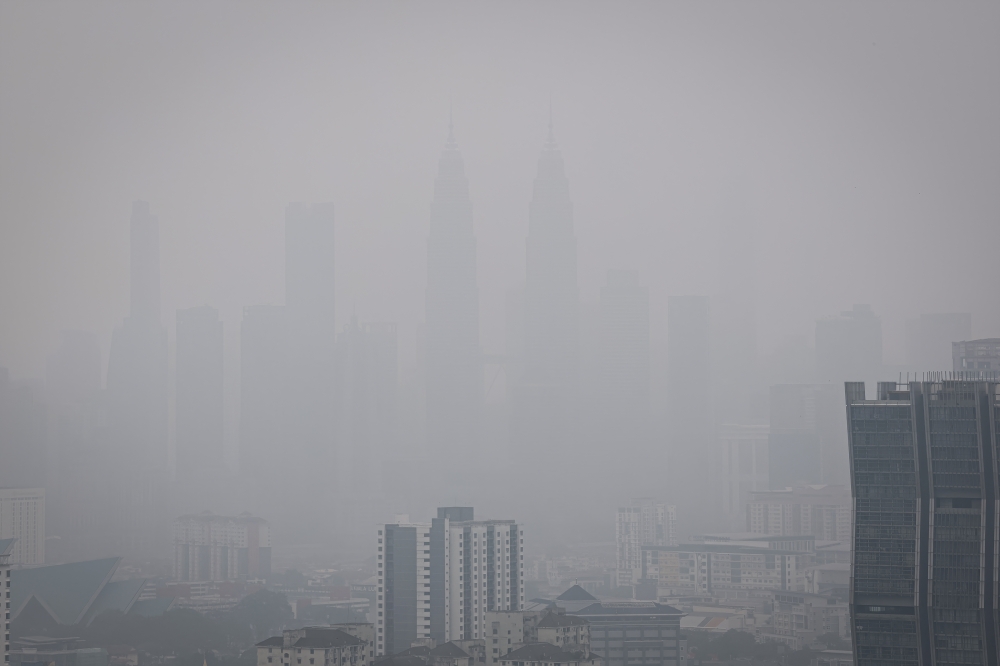
Malaysia is set to implement transformative measures to address transboundary haze as it assumes the chairmanship of the Sub-Regional Ministerial Steering Committee (MSC) next year.
The Natural Resources and Environmental Sustainability Ministry, led by Datuk Seri Arthur Joseph Kurup, is drafting initiatives such as science-based planning, a sustainable haze fund, and new firefighting technologies like dry ice-based methods.
Malaysia also introduced the Malaysian Community Multiscale Air Quality Model (CMAQ) for forecasting air pollution.
Compounding the challenge, the intensifying Super El Niño phenomenon is expected to heighten the risk of forest and peatland fires, exacerbating the haze issue.
PUTRAJAYA, Oct 22 — Malaysia will introduce several transformative measures to strengthen efforts to tackle transboundary haze when it chairs the Sub-Regional Ministerial Steering Committee (MSC) on Transboundary Haze Pollution next year.
Natural Resources and Environmental Sustainability Minister Datuk Seri Arthur Joseph Kurup said his ministry was conducting studies and drafting several new initiatives to ensure more effective and concrete action to address the recurring haze problem.
“Malaysia will take over the MSC chairmanship next year, and we are studying and planning several new initiatives to strengthen Asean-level efforts to tackle the haze problem.
“We hope to take more effective and concrete measures when we chair the MSC,” he told a press conference on the latest haze situation here today.
He said Malaysia proposed two key initiatives at the Asean ministerial meeting on July 9: science diplomacy, to ensure planning, action and spending to tackle haze are based on scientific data, enabling more targeted fire prevention and suppression efforts, and the setting up of a sustainable haze fund.
“The proposed sustainable haze fund, if approved, would serve as an Asean-level mechanism to help member states strengthen prevention, preparedness and monitoring measures,” he said.
He said most fires involved extremely dry peatland, where they could spread underground undetected for weeks or months, highlighting the need to study new technologies, including dry ice-based methods, to improve firefighting efforts.
In a related development, Arthur said Malaysia had also introduced the Malaysian Community Multiscale Air Quality Model (CMAQ), which can forecast potential air pollution and haze up to five days in advance.
He said the Malaysian Meteorological Department (MetMalaysia) had developed the platform to provide detailed air quality forecasts for Malaysia and the wider Southeast Asian region.
“We hope other countries will also adopt the system so that the public can plan and prepare up to five days in advance,” he said, adding that the platform began operating this year and is open to the public and Asean member states.
On the haze situation, Arthur said the transition to the Northeast Monsoon, expected to begin in late October, could alter the movement of transboundary haze currently affecting several areas in the south of the country, particularly Sarawak and Johor.
He said shifts in wind direction during the Northeast Monsoon could carry haze to other areas, easing its impact on areas currently affected, noting that haze drifting northwards from the south had significantly affected southern Sarawak, Johor and Singapore.
However, Arthur said Malaysia faced a greater risk of transboundary haze as the Super El Niño phenomenon was forecast to intensify from this month until January 2027, increasing the likelihood of forest and peatland fires in the region.
He said the El Niño phenomenon is expected to persist until mid-2027, with the year potentially among the hottest on record, bringing increasingly erratic rainfall, a higher risk of drought and more hotspots and fires that could worsen the haze.
“We also forecast that next year could be among the hottest on record, with temperature anomalies exceeding 2°C,” he said, adding that the government had taken into account the experience of the 2015-2016 Super El Niño, when rainfall decreased by up to 30 per cent in peninsular Malaysia and 45 per cent in Sabah.
He said prolonged hot and dry conditions would not only increase the risk of forest and peatland fires but could also affect agriculture, food security, water supplies and public health. — Bernama
Iran warns it will hit US bases if Hormuz ship escorts continue
Snip, snip, slip through? Wire fences cut at illegal crossings near Rantau Panjang-Thai border
No drones without approval, Melaka police tell election candidates
Court grants Perikatan stay on RoS deregistration, allows coalition to contest Melaka state polls
马来西亚将于明年担任次区域部长级指导委员会(MSC)主席国,并将采取变革性措施解决跨境烟霾问题。
由拿督斯里亚瑟·约瑟夫·库鲁普领导的自然资源和环境可持续发展部正在制定一些举措,例如基于科学的规划、可持续的雾霾基金以及新的消防技术,如干冰灭火方法。
马来西亚还推出了马来西亚社区多尺度空气质量模型(CMAQ),用于预测空气污染。
雪上加霜的是,日益加剧的超级厄尔尼诺现象预计将增加森林和泥炭地火灾的风险,从而加剧雾霾问题。
布城,10 月 22 日讯——马来西亚将在明年担任跨境烟霾污染次区域部长级指导委员会(MSC)主席国期间,推出几项变革性措施,以加强应对跨境烟霾的努力。
自然资源及环境可持续发展部长拿督斯里亚瑟·约瑟夫·库鲁普表示,他的部门正在进行研究并制定几项新举措,以确保采取更有效、更具体的行动来解决反复出现的雾霾问题。
“马来西亚将于明年接任海洋安理会轮值主席国,我们正在研究和计划几项新举措,以加强东盟层面应对雾霾问题的努力。
“我们希望在担任海洋安全委员会主席期间采取更有效、更具体的措施,”他今天在此举行的关于最新雾霾情况的新闻发布会上说。
他表示,马来西亚在7月9日的东盟部长级会议上提出了两项关键倡议:一是开展科学外交,确保应对雾霾的规划、行动和支出以科学数据为基础,从而能够更有针对性地开展防火和灭火工作;二是设立可持续的雾霾基金。
他说:“如果这项拟议的可持续雾霾基金获得批准,它将作为东盟层面的机制,帮助成员国加强预防、准备和监测措施。”
他表示,大多数火灾都发生在极其干燥的泥炭地,火势可以在地下蔓延数周甚至数月而不被察觉,这凸显了研究新技术(包括基于干冰的方法)以改进灭火工作的必要性。
亚瑟表示,在相关进展方面,马来西亚也推出了马来西亚社区多尺度空气质量模型(CMAQ),该模型可以提前五天预测潜在的空气污染和雾霾。
他表示,马来西亚气象局(MetMalaysia)开发了该平台,旨在为马来西亚和更广泛的东南亚地区提供详细的空气质量预报。
“我们希望其他国家也能采用这套系统,以便公众可以提前五天进行计划和准备,”他说道,并补充说该平台于今年开始运营,面向公众和东盟成员国开放。
关于雾霾情况,亚瑟表示,预计10月下旬开始的东北季风过渡可能会改变目前影响该国南部几个地区(特别是砂拉越和柔佛)的跨境雾霾的移动。
他表示,东北季风期间风向的变化可能会将雾霾带到其他地区,从而减轻其对目前受影响地区的影响。他还指出,从南部向北飘移的雾霾已经对沙捞越南部、柔佛和新加坡造成了严重影响。
然而,亚瑟表示,由于预计超级厄尔尼诺现象将从本月持续到 2027 年 1 月,马来西亚将面临更大的跨境烟霾风险,这将增加该地区森林和泥炭地发生火灾的可能性。
他表示,厄尔尼诺现象预计将持续到 2027 年年中,这一年可能成为有记录以来最热的年份之一,带来越来越不稳定的降雨、更高的干旱风险以及更多的热点和火灾,这可能会加剧雾霾。
“我们还预测,明年可能是史上最热的一年,气温异常将超过2摄氏度,”他说道,并补充说,政府已经考虑到了2015-2016年超级厄尔尼诺现象的经验,当时马来西亚半岛的降雨量减少了30%,沙巴的降雨量减少了45%。
他表示,持续的高温干燥天气不仅会增加森林和泥炭地火灾的风险,还可能影响农业、粮食安全、供水和公共卫生。——马新社
伊朗警告称,如果霍尔木兹号护航舰艇继续执行任务,伊朗将袭击美国基地。
剪断铁丝网,溜过去?兰道班让-泰国边境附近非法越境点的铁丝网被剪断。
马六甲警方告知候选人,未经批准不得使用无人机。
法院批准国民联盟暂缓注销党籍,允许该联盟参加马六甲州选举。