Shelters, NParks, Mandai Wildlife Group take haze-relief measures to protect animals动物收容所、国家公园局和万代野生动物保护小组采取缓解雾霾的措施来保护动物。
SPCA's most vulnerable animals are housed in air-conditioned clinic wards. Read more at straitstimes.com.
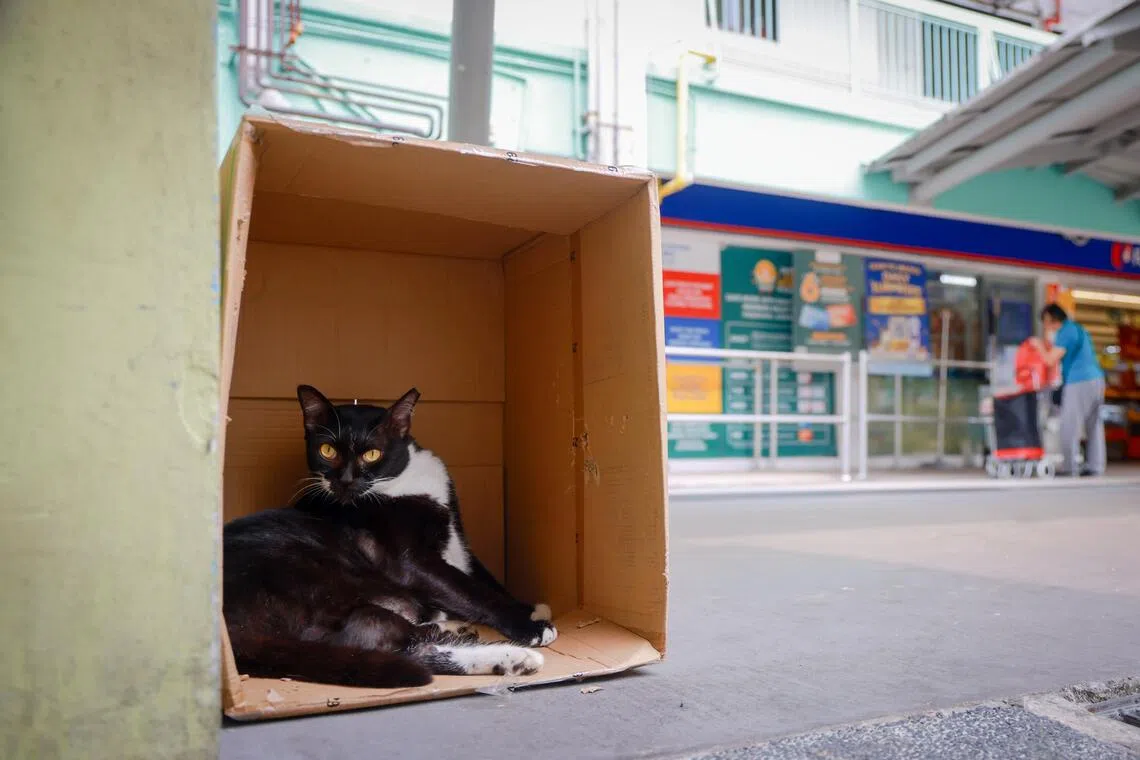
A community cat in Bukit Ho Swee in the haze on Oct 22.
ST PHOTO: JASON QUAH
Published Oct 22, 2026, 06:50 PM
Updated Oct 22, 2026, 06:50 PM
Air-conditioning, fans, cooling towers and shorter outdoor activities are among measures rolled out to protect animals from unhealthy haze.
Some are moving vulnerable animals indoors and watching for signs for discomfort, although those that The Straits Times has spoken to have yet to detect such indicators.
NParks says no haze-related rescue cases involving animals has been reported. It is also studying the impact of the El Nino climate phenomenon, including associated haze events, on Singapore's forest ecosystems, trees and native wildlife.
SINGAPORE – To protect animals from the toxic haze in Singapore, some organisations and shelters are moving their vulnerable charges to air-conditioned rooms and shortening outdoor activities, among other measures.
The Society for the Prevention of Cruelty to Animals (SPCA) Singapore told The Straits Times that its most vulnerable animals are housed in air-conditioned clinic wards because its shelter is not air-conditioned, making it difficult to deploy air purifiers effectively.
These animals include seniors and those with existing health conditions like asthma and kidney issues.
Where possible, the “next most vulnerable animals” are brought into other air-conditioned rooms such as SPCA’s offices and the SPCA shop, an SPCA spokesperson added.
She said: “Thus far in this haze season, we have not observed any signs of our animals struggling, although this could be due to the precautionary measures in place.
“We will continue to monitor them closely for symptoms (of haze-related distress), and encourage pet guardians to do the same at home.”
Since early September, bouts of smoke haze from fires in Indonesia have blanketed Singapore, causing the Republic’s air quality to turn unhealthy for 18 consecutive days in October.
As for humans, poor air quality can impact animal health .
Symptoms of distress include rapid or laboured breathing, red or watery eyes and changes in terms of appetite and water intake.
At the Animal & Veterinary Service’s (AVS) facilities, fans, cooling towers and air purifiers have been used to enhance ventilation, said National Parks Board’s (NParks) group director for wildlife management How Choon Beng.
More susceptible animals have also been moved indoors where possible, he added.
Outdoor activities like dog walks and toileting have also been shortened as part of precautions taken by AVS as well as animal welfare organisations SPCA, SOSD and Action for Singapore Dogs (ASD).
ASD founder Ricky Yeo said the shelter, which houses about 60 dogs across four units at The Animal Lodge in Sungei Tengah, has reduced walks for its animals from up to half an hour to enough time for a toilet break.
He added that the organisation is mindful to ensure the dogs still get a chance to stretch their legs, as the risk of fights breaking out between the animals rises if they are cooped up indoors for too long.
“They’ve been amenable to the shorter walks so far. There have been no complaints,” he said.
When asked, SOSD and ASD said they welcomed donations of masks for their volunteers and air purifiers to help cleanse the air.
A Mandai Wildlife Group spokesman said it has increased monitoring to look out for any changes in its animals’ health and behaviour, although no signs of concern have been observed.
She added: “Our animals have access to shelter, indoor or back-of-house areas, and our teams will relocate an animal if its condition calls for it.
“Activities such as presentations may also be modified or paused depending on prevailing conditions.”
She said depending on the readings and the work involved, staff duties are adjusted by rotating tasks to shorten time outdoors and non-essential outdoor work is deferred.
“Indoor rest breaks are available as needed,” she added .
NParks’ How said the statutory board has not received any haze-related animal rescue cases so far, although it has protocols to rescue and care for wildlife that are in distress during this period.
Addressing the long-term impact of haze on Singapore’s animals, he said NParks studies its forest plots to understand and manage the impacts of the El Nino climate phenomenon, which include associated haze events , on Singapore’s forest ecosystems, trees and native wildlife.
The El Nino climate cycle, which brings drier-than-normal weather to South-east Asia, has amplified the impact of haze-belching fires in Indonesia.
Said How: “By collecting baseline data before and after the El Nino period, we can better understand how forest ecosystems respond to both short-term disturbances as well as long-term pressures, which help to inform future forest management strategies.”
When the 2015 El Nino drought caused one of the worst forest and peatland fires in South-east Asia , researchers from NParks and the University of Kent found that sounds made by wildlife in Central Singapore dropped dramatically during the haze.
The disruption lasted for at least three weeks, they found.
Such noise, produced primarily by birds, only partially recovered to pre-haze levels 16 weeks after the smoke dissipated.
Ang Qing is a journalist covering local and international breaking news at The Straits Times, with a focus on the environment, crime, technology and social issues.
National Parks Board
10月22日,一只流浪猫出现在武吉胡绥的雾霾中。
《海峡时报》摄影:JASON QUAH
发布于2026年10月22日 下午6:50
更新于2026年10月22日下午6:50
为保护动物免受有害雾霾的影响,政府采取了一系列措施,包括安装空调、使用风扇、建造冷却塔以及缩短户外活动时间。
一些人将体弱的动物转移到室内,并观察它们是否有不适的迹象,但《海峡时报》采访过的人尚未发现此类迹象。
国家公园局表示,目前尚未接到任何与雾霾相关的动物救援报告。该局还在研究厄尔尼诺气候现象(包括相关的雾霾事件)对新加坡森林生态系统、树木和本土野生动物的影响。
新加坡——为了保护动物免受新加坡有毒烟霾的影响,一些组织和收容所正在采取一系列措施,包括将易受伤害的动物转移到有空调的房间里,并缩短户外活动时间。
新加坡防止虐待动物协会 (SPCA Singapore) 告诉《海峡时报》,由于其收容所没有空调,难以有效部署空气净化器,因此该协会最脆弱的动物被安置在有空调的诊所病房中。
这些动物包括老年动物和患有哮喘、肾脏疾病等基础疾病的动物。
SPCA发言人补充说,在条件允许的情况下,会将“次要的弱势动物”转移到其他有空调的房间,例如SPCA的办公室和SPCA商店。
她说:“到目前为止,在这个雾霾季节,我们还没有观察到任何动物出现不适的迹象,但这可能是由于我们采取了预防措施。”
“我们将继续密切观察它们是否有(与雾霾相关的)不适症状,并鼓励宠物主人在家中也这样做。”
自 9 月初以来,印尼山火产生的烟雾笼罩了新加坡,导致新加坡 10 月份空气质量连续 18 天处于不健康状态。
对人类而言,空气质量差也会影响动物健康。
不适症状包括呼吸急促或困难、眼睛发红或流泪以及食欲和饮水量发生变化。
国家公园局野生动物管理组组长何春明表示,动物与兽医服务处(AVS)的设施已使用风扇、冷却塔和空气净化器来增强通风。
他还补充说,较易感动物也已尽可能转移到室内。
作为新加坡兽医服务局 (AVS) 以及动物福利组织 SPCA、SOSD 和新加坡犬类行动组织 (ASD) 采取的预防措施的一部分,遛狗和如厕等户外活动也已缩短。
ASD 创始人 Ricky Yeo 表示,该收容所位于双溪登加的动物旅馆,共有四个单元,收容了约 60 只狗。目前,该收容所已将动物的散步时间从最多半小时缩短到只够它们上厕所的时间。
他还补充说,该组织很注意确保狗狗们仍然有机会舒展筋骨,因为如果它们长时间被关在室内,动物之间发生打架的风险就会增加。
他说:“到目前为止,他们对缩短步行距离的安排都表示接受,没有收到任何投诉。”
当被问及此事时,SOSD 和 ASD 表示欢迎捐赠口罩供志愿者使用,以及空气净化器以帮助净化空气。
万代野生动物保护组织发言人表示,该组织已加强监测,以观察动物的健康和行为是否有任何变化,但目前尚未发现任何令人担忧的迹象。
她补充说:“我们的动物可以进入庇护所、室内或后勤区域,如果动物的状况需要,我们的团队会将其转移。
“根据实际情况,演讲等活动也可能会进行调整或暂停。”
她表示,根据读数和工作量,会调整员工职责,轮换任务以缩短户外时间,并将非必要的户外工作推迟。
她补充说:“如有需要,可提供室内休息时间。”
国家公园局的豪表示,尽管该法定机构有相关规程来救援和照顾在此期间处于困境的野生动物,但到目前为止,该机构尚未收到任何与雾霾相关的动物救援案例。
针对雾霾对新加坡动物的长期影响,他表示,国家公园局对其森林地块进行研究,以了解和管理厄尔尼诺气候现象(包括相关的雾霾事件)对新加坡森林生态系统、树木和本土野生动物的影响。
厄尔尼诺气候周期给东南亚带来了比正常情况更干燥的天气,加剧了印度尼西亚烟雾弥漫的火灾的影响。
How表示:“通过收集厄尔尼诺现象发生前后的基线数据,我们可以更好地了解森林生态系统如何应对短期干扰和长期压力,这有助于为未来的森林管理战略提供信息。”
2015 年厄尔尼诺干旱导致东南亚最严重的森林和泥炭地火灾之一,新加坡国家公园局和肯特大学的研究人员发现,雾霾期间新加坡中部野生动物发出的声音急剧减少。
他们发现,这种混乱局面至少持续了三周。
这种噪音主要由鸟类产生,在烟雾消散 16 周后才部分恢复到雾霾前的水平。
Ang Qing是《海峡时报》的一名记者,负责报道本地和国际突发新闻,重点关注环境、犯罪、科技和社会问题。
国家公园管理局