Space Force shifts into high gear on cislunar warfare, with RFIs coming soon太空部队正全力推进近地月战争,征求意见稿即将发布
Gen. Stephen Purdy, the Space Force’s portfolio acquisition executive for advanced programs, said the service wants to field cislunar capabilities by the end of fiscal 2029.
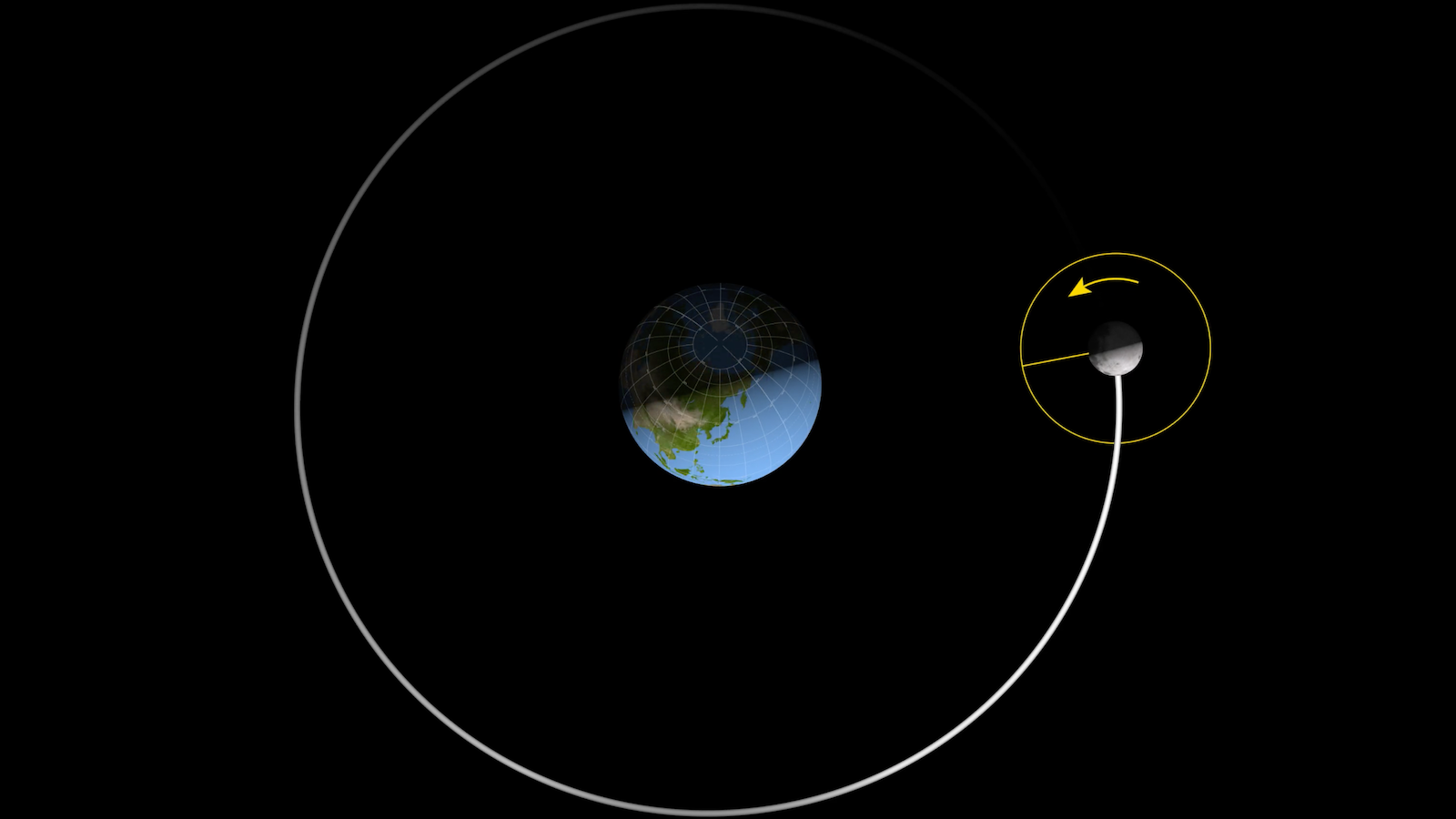
Cislunar space is the region beyond Earth's orbit all the way out to the Moon. (Image: NASA)
WASHINGTON — After years of sporadic experimentation, the Pentagon has embraced cislunar space as a high priority warfighting domain, pushing the Space Force to rapidly acquire commercially available technology and spacecraft, according to the service official leading the charge.
“At the beginning of the year … there was no talk of cislunar, and basically I was told: ‘Don’t talk about cislunar and stop getting into it.’ At the end of the year here, and we’re not even at the end, I’ve got the secretary of war and the chairman of the Joint Chiefs full on stating in public, ‘This is a warfighting domain’,” Maj. Gen. Stephen Purdy, Space Force portfolio acquisition executive for advanced programs, said Monday.
The Space Force plans to issue two requests for information (RFIs) in the near future seeking commercially available technology for cislunar missions and artificial intelligence software to help spacecraft operate autonomously between Earth and the Moon, Purdy said. The service wants capabilities it can field by the end of fiscal 2029.
The shift comes as senior defense officials increasingly frame cislunar space as a future battleground. Defense Secretary Pete Hegseth told an audience in Dayton, Ohio on Oct. 20 that “[whoever] controls subsea and cislunar is going to destroy and control the next fight.”
Purdy, who reports to Air Force Secretary Troy Meink, told the annual Space Industry Days conference in Los Angeles that the reason for the new urgency is simple: “China is moving out in this area. We have traditionally not.”
One recent Chinese project that has raised eyebrows is the launch of 30 Cubesats into a highly elliptical orbit near one of the Earth-Moon Lagrange points and circular lunar orbit, as reported in September by the People’s Daily [Chinese language version] . While China has characterized the project at recent UN-related meetings as a science experiment, several experts told Breaking Defense it is clearly intended to support cislunar surveillance.
Purdy said research organizations such as the Air Force Research Laboratory, SpaceWERX and DARPA have been experimenting with cislunar technologies, albeit in a vacuum. Until recently, the Space Force considered cislunar space only as a potential future arena for military operations.
Bombardier Defense, your trusted, mission-focused partner
A commitment to long-term operational value.
“They’ve been working, they’ve been passionate about this mission area, but they’ve kind of gotten no love from the broader community as we focus, perhaps rightly so, on the more terrestrial support warfighting activity,” he said.
That has changed, with senior Defense Department leaders now backing a full court press to advance US military interests in cislunar space and on the Moon. Purdy said the Office of the Secretary of Defense is launching a series of interagency policy working groups on cislunar issues. The Space Force is also working closely with NASA to coordinate infrastructure plans rather than build separate systems.
“So, yes, we’re actually attempting to build a unified architecture across the government — which should be good news to everybody — and then looking to see where [NASA is] investing and figuring out what are the deltas that we can invest in,” Purdy added.
His shop’s Cislunar Coordination Office (CCO), established in May, has been tasked with giving industry a clearer signal of the military’s needs.
“This has been a particularly onerous and bad area where we’ve really given no kind of indicator to industry, and as a result, industry hasn’t really done a whole lot into this area except what industry has been interested in,” he said.
Purdy explained that his office is not tasked to oversee all cislunar operations. Instead, it helps provide funds and support to the wider Space Force effort, while the service’s requirements and acquisition teams remain responsible for defining mission needs and procuring capabilities.
The first RFI, expected “soon,” will seek commercial technology ready for use in foundational cislunar missions, including space domain awareness and positioning, navigation and timing (PNT), Purdy said.
He cautioned that the Space Force does not want to spend buckets of research and development dollars for new capabilities; rather, the service wants working kit that can be fielded by the fourth quarter 2029.
“We want rapid deliverable capability. … I’m not going to pay you R&D funds for this stuff,” Purdy said. “We’re looking for existing commercial or near-commercial means, non-development solutions, hardware with actual relative relevant evidence behind it, software that doesn’t need a huge amount of work … and then ground systems — not as an afterthought, but as part of an integrated network.”
The second RFI, expected alongside or shortly after the first, will seek artificial intelligence software that lets spacecraft operate autonomously in the vast region between Earth and the Moon, he said. The RFI will ask industry about its capabilities in advanced AI and autonomous operations, Purdy added.
“Cislunar is a really painful space,” he explained, making autonomous operations more challenging than they are for satellites closer to the Earth. Spacecraft need to detect and manage hardware failures, process sensor data and adjust their missions as conditions change.
Meanwhile, Purdy said the CCO is refining its “nascent cislunar roadmap” that includes “mission area strategies” for things like lunar time , space domain awareness and communications.
The office also has created a list of “the emergency” unfunded requirements (UFRs) for cislunar operations, he said.
“There’s a lot of little ticky-tack things that are suffering in this area, to the tune of where a couple $100K could solve a lot of problems, which, in space terms, is like really budget dust,” he said. “But this is how bad the funding situation is, and so we now have a nice prioritized UFR list that we’re going to be able to get after. That’s real action and money and help to operators on the ground trying to glue together a couple of antennas and pull some data.”
Purdy did not disclose the total funding needed or detail the specific requirements on the list.
Breaking Defense Video
Army’s tech chief talks autonomy, acquisition and the future of drones
Drones take over AUSA, plus the Army’s plan to bring in new vendors
Hegseth talks autonomy at AUSA, a key show focus
Army doubles down on autonomy, stakes out Indo-Pacific role: AUSA Day 2
Telle talks ‘manufacturing rodeo,’ supply chain ‘weak links’: AUSA Day 1
New leaders, new drone command: What we expect from AUSA 2026
Unpacking Boeing’s F/A-XX win, plus a report from wartime Ukraine
How Hegseth envisions a new Autonomous Warfare Command
What Europe’s military air fleets will look like in 30 years
Riyadh gets closer to F-35s, Damascus presses sovereignty and an expert take on Iran
地月空间是指地球轨道之外一直延伸到月球的区域。(图片:NASA)
华盛顿——据一位领导这项工作的军方官员称,经过多年的零星试验,五角大楼已将近地月空间视为高度优先的作战领域,并推动太空部队迅速获取市售技术和航天器。
“年初的时候……根本没人谈论地月空间,基本上我被告知:‘别谈地月空间,别再涉足这个领域了。’现在都年底了,甚至还没到年底,战争部长和参谋长联席会议主席就公开表示,‘这是一个作战领域’,”太空部队高级项目采购主管斯蒂芬·珀迪少将周一表示。
珀迪表示,太空部队计划在近期发布两份信息征询书(RFI),寻求可用于地月空间任务的商用技术以及帮助航天器在地球和月球之间自主运行的人工智能软件。太空部队希望在2029财年末之前具备相应的能力。
这一转变正值高级国防官员日益将地月空间视为未来战场之际。国防部长皮特·赫格塞斯10月20日在俄亥俄州代顿市对听众表示,“谁控制了海底和地月空间,谁就能摧毁并掌控下一场战争。”
向空军部长特洛伊·梅因克汇报工作的珀迪在洛杉矶举行的年度太空工业日会议上表示,这种新的紧迫性的原因很简单:“中国正在这个领域扩张。而我们传统上并没有这样做。”
据《人民日报》9月报道,中国近期一项引发关注的项目是向地月拉格朗日点附近的高椭圆轨道和圆形月球轨道发射30颗立方体卫星。尽管中国在近期联合国相关会议上将该项目描述为一项科学实验,但多位专家告诉Breaking Defense,该项目显然旨在支持地月空间监视。
珀迪表示,空军研究实验室、SpaceWERX和DARPA等研究机构一直在进行近地月空间技术的试验,尽管是在真空环境中。直到最近,太空部队才开始将近地月空间视为未来军事行动的潜在领域。
庞巴迪防务,您值得信赖、以任务为导向的合作伙伴
致力于实现长期运营价值。
他说:“他们一直在努力工作,对这项任务充满热情,但由于我们(或许也理所当然地)将重点放在了更偏向地面支援作战活动上,他们并没有得到更广泛的群体的关注。”
情况已经发生变化,国防部高级领导人现在全力支持推进美国在近地空间和月球上的军事利益。珀迪表示,国防部长办公室正在成立一系列跨部门政策工作组,专门研究近地空间问题。太空军也在与美国国家航空航天局(NASA)密切合作,协调基础设施规划,而不是各自独立建设系统。
“所以,是的,我们实际上正在尝试在整个政府范围内构建一个统一的架构——这对每个人来说都应该是个好消息——然后看看[NASA]在哪些方面进行投资,并找出我们可以投资的领域,”珀迪补充道。
他所在公司的地月协调办公室(CCO)成立于 5 月,其任务是向业界发出更清晰的军方需求信号。
他说:“这是一个特别繁重和糟糕的领域,我们实际上没有给业界提供任何指标,因此,除了业界感兴趣的部分之外,业界在这个领域并没有做太多事情。”
珀迪解释说,他的办公室并不负责监督所有地月空间行动。相反,它负责为更广泛的太空部队行动提供资金和支持,而太空部队的需求和采购团队仍然负责确定任务需求和采购能力。
Purdy表示,预计“很快”将发布第一份信息征询书(RFI),寻求可用于基础地月任务的商业技术,包括空间领域感知和定位、导航与授时(PNT)。
他告诫说,太空部队不想在新能力上花费大量的研发资金;相反,该部队希望在 2029 年第四季度之前就能部署可用的装备。
“我们需要的是能够快速交付的能力……我不会为这些东西支付研发资金,”珀迪说。“我们正在寻找现有的商用或接近商用的方案,非研发解决方案,有实际相关证据支持的硬件,不需要大量开发的软件……以及地面系统——不是事后考虑的,而是作为集成网络的一部分。”
他表示,第二份信息征询书预计将与第一份同时或紧随其后发布,旨在寻求能够让航天器在地球和月球之间的广阔区域自主运行的人工智能软件。珀迪补充说,该信息征询书还将询问业界在先进人工智能和自主运行方面的能力。
他解释说:“地月空间环境极其恶劣”,这使得卫星的自主运行比近地卫星更具挑战性。航天器需要检测和处理硬件故障,处理传感器数据,并根据环境变化调整任务。
与此同时,珀迪表示,CCO 正在完善其“初步的地月空间路线图”,其中包括针对月球时间、空间领域感知和通信等方面的“任务领域战略”。
他还表示,该办公室还制定了一份地月空间作业“紧急”未获资助需求 (UFR) 清单。
“这个领域有很多细枝末节的问题需要解决,几十万美元就能解决很多问题,但就太空领域而言,这简直就是预算中的尘埃,”他说。“但资金状况就是这么糟糕,所以我们现在有了一份优先排序的超高速轨道(UFR)项目清单,我们将着手解决这些问题。这才是真正的行动,是实实在在的资金和帮助,能够帮助地面操作人员搭建天线、收集数据。”
珀迪没有透露所需的资金总额,也没有详细说明清单上的具体要求。
突破性防御视频
陆军技术主管谈无人机的自主性、采购和未来
无人机主导了美国陆军协会(AUSA)的会议,此外,陆军还计划引入新的供应商。
Hegseth 在 AUSA 大会上谈到了自主性,这是本次大会的一个重点议题。
陆军加倍强调自主性,明确印太地区角色:AUSA第二天
特勒谈“制造业乱象”、供应链“薄弱环节”:AUSA 第一天
新领导人,新无人机指挥部:我们对 AUSA 2026 的期待
深入剖析波音F/A-XX的中标,以及来自战时乌克兰的报道
赫格塞斯设想的新型自主作战指挥部
30年后欧洲军用空军机队会是什么样子
利雅得距离F-35战机更近一步,大马士革强调主权,以及专家对伊朗的看法