Malaysians spend more on eating out than cooking at home as health risks mount, says KRI马来西亚健康风险指数(KRI)指出,随着健康风险的增加,马来西亚人外出就餐的花费超过了在家做饭的花费,而这主要是因为马来西亚人更多地选择外出就餐而不是在家做饭。
KUALA LUMPUR, Oct 23 — Malaysian households are now spending more on eating out than on groceries to prepare meals at home, according to a new report by the Khazanah Research...
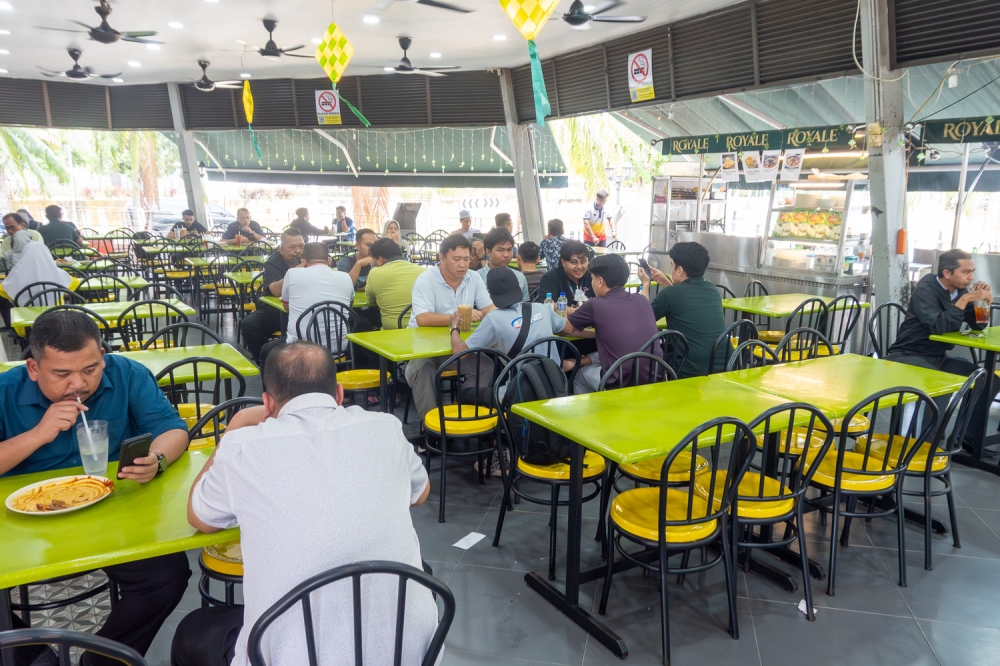
A report by the Khazanah Research Institute reveals that Malaysian households now spend more on dining out than on groceries, with eating out representing 16.2% of total household spending, a significant increase since 2016.
The rise in food expenditure has been notably higher among the bottom 80% of households.
This shift in lifestyle is linked to increased concerns about non-communicable diseases, as several states report elevated rates of diabetes, hypertension, and high cholesterol.
The report also highlights that over half of Malaysian adults are above a healthy weight, and physical activity has decreased in urban areas.
KUALA LUMPUR, Oct 23 — Malaysian households are now spending more on eating out than on groceries to prepare meals at home, according to a new report by the Khazanah Research Institute (KRI).
The report, titled “From Income to Wellbeing: The State of Households 2026”, found that Malaysian households spent an average of RM902.70 a month on eating out, compared with RM875.80 on groceries.
Eating out accounted for 16.2 per cent of total household spending, up from 12.6 per cent in 2016, and was the single biggest driver of higher household expenditure between 2022 and 2024, rising by RM78.20.
According to the report, the increase in food spending was more pronounced among the bottom 80 per cent of households, whose average food expenditure rose by nearly 1.5 times cumulatively between 2019 and 2024.
“For the top 20 per cent (of households), the increase (in food expenditure) was less than 1.3 times,” it said.
The shift in lifestyle has also contributed to concerns over non-communicable diseases, with several Malaysian states recording higher prevalence of diabetes, hypertension and high cholesterol than the national averages in 2023, the report said.
Diabetes was among the top five causes of death in most states between 2022 and 2024, it added.
More than half of Malaysian adults (54.4 per cent) were also above the healthy weight range in 2023, while physical activity declined in urban areas between 2019 and 2023, the report said.
Rafizi instructs lawyers to sue Ramanan, says minister’s graft claims crossed defamation line
Malaysians remain ‘happy’ as wages recover post Covid-19, but rising costs squeeze poorer households, says KRI
Tighter rules for Malaysian dealers, agents, and accountants? BNM to review money laundering risks next year
国库研究院的一份报告显示,马来西亚家庭现在在外出就餐上的花费超过了在食品杂货上的花费,外出就餐占家庭总支出的 16.2%,自 2016 年以来大幅增长。
食品支出增幅在收入最低的 80% 家庭中尤为显著。
生活方式的这种转变与人们对非传染性疾病日益增长的担忧有关,因为一些州报告称糖尿病、高血压和高胆固醇的发病率上升。
该报告还强调,超过一半的马来西亚成年人体重超标,城市地区的身体活动有所减少。
吉隆坡,10 月 23 日讯——据国库研究院 (KRI) 的一份新报告显示,马来西亚家庭现在在外就餐的花费比购买食材在家做饭的花费还要多。
这份题为《从收入到福祉:2026 年家庭状况》的报告发现,马来西亚家庭平均每月在外就餐花费 902.70 令吉,而购买杂货的花费为 875.80 令吉。
外出就餐占家庭总支出的 16.2%,高于 2016 年的 12.6%,并且是 2022 年至 2024 年间家庭支出增加的最大单一驱动因素,增加了 78.20 令吉。
报告显示,食品支出增长在收入最低的 80% 家庭中更为明显,这些家庭的平均食品支出在 2019 年至 2024 年间累计增长了近 1.5 倍。
报告称:“对于收入最高的 20% 的家庭来说,食品支出增幅不到 1.3 倍。”
报告称,生活方式的转变也加剧了人们对非传染性疾病的担忧,马来西亚几个州的糖尿病、高血压和高胆固醇患病率在 2023 年均高于全国平均水平。
报告还指出,在2022年至2024年期间,糖尿病是大多数州的前五大死因之一。
报告称,2023年马来西亚超过一半的成年人(54.4%)体重超标,而2019年至2023年间,城市地区的身体活动有所下降。
拉菲兹指示律师起诉拉马南,称部长的贪污指控已构成诽谤。
马来西亚人虽然在新冠疫情后工资回升时依然感到“满意”,但不断上涨的生活成本令贫困家庭倍感压力,KRI表示。
马来西亚将对经销商、代理商和会计师实施更严格的监管?马来西亚国家银行明年将审查洗钱风险。