Indonesia forest fire liability: Can multinational companies be held responsible for the haze?印尼森林火灾责任:跨国公司是否需要为烟雾负责?
BANGKOK, Oct 23 — After months of fires in Indonesia that have caused thick regional haze, attention is turning to whether companies can be held accountable for the blazes and...
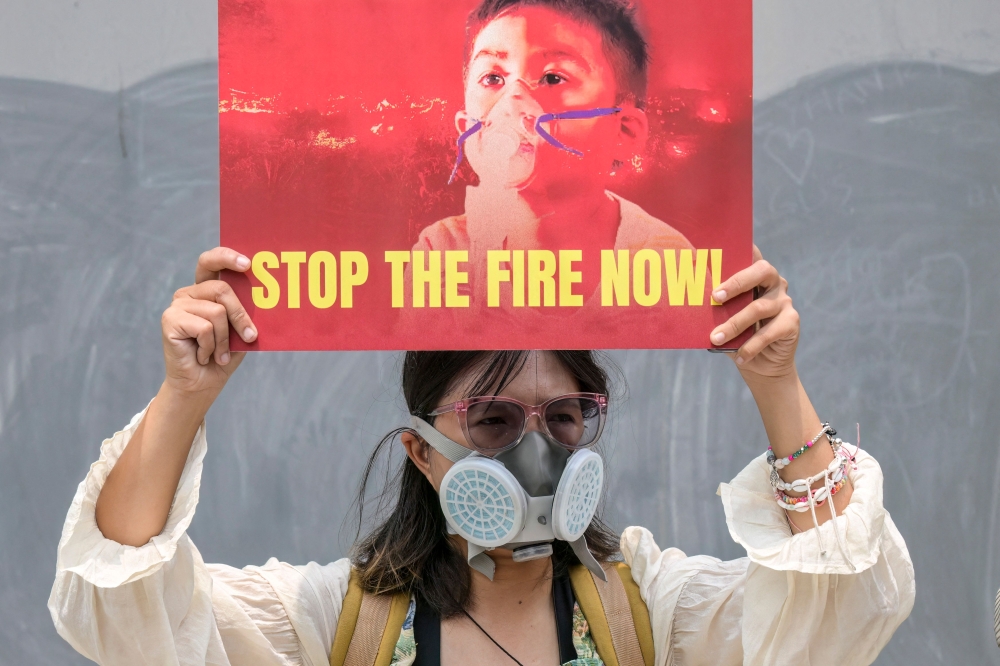
In light of the severe fires in Indonesia exacerbated by El Nino conditions, there is increasing scrutiny on the role of corporations in contributing to the widespread blazes and resultant air pollution.
Environmental and civil society groups have identified numerous "hotspots" within palm oil and timber plantations, implicating corporate entities in intentionally or negligently allowing fires to spread.
Despite denials of responsibility by some companies, both national and international pressures, including legal and governmental actions, are intensifying, aiming to hold firms accountable for adequate fire prevention measures.
While complexities in establishing direct culpability persist, the issue underscores the broader implications of deforestation and environmental management practices in these regions.
BANGKOK, Oct 23 — After months of fires in Indonesia that have caused thick regional haze, attention is turning to whether companies can be held accountable for the blazes and resulting air pollution.
Indonesia experiences fires regularly during its dry season, and experts say years of deforestation and the draining of peatland for cultivation have rendered previously fire-resistant landscapes vulnerable.
Driven by a strong El Nino cycle and resulting drought, this year’s blazes have been particularly severe, burning through nearly two million hectares, according to deforestation monitor Nusantara Atlas.
The fires have raged across forests and peatland but also palm oil and timber plantations supplying multinational firms.
Civil society groups have regularly accused companies of responsibility for the blazes, pointing to so-called “hotspots” in supplier plantations, sometimes called concessions.
Environmental group WALHI says it mapped “high confidence” hotspots across Indonesia using NASA fire data and found around 50 per cent were inside concessions.
In a report this month the group listed 40 timber and palm oil concessions by the number of hotspots detected.
“This is a structural issue... (that) happens because of the practices, the activities, of these companies,” WALHI forests and plantations campaigner Umi Ma’rufah told AFP.
Pressure is also coming from governments, including Singapore, which has issued 10 companies with “preventative measure notices” under its Transboundary Haze Pollution Act.
The notices urge them to fight fires on their land, prevent burning and submit action plans. Firms can face legal action including fines if they do not comply.
“We must also be clear about where the responsibility for this lies,” Singapore Senior Minister K. Shanmugam told reporters.
“This was not simply an act of nature, but a problem driven by companies pursuing profits.”
Several companies implicated have insisted they are not behind the fires.
“Fires originating outside our boundaries subsequently spread into areas under the Group’s management,” Singapore Exchange-listed palm oil company First Resources said after one of its concessions was listed in WALHI’s report.
Asia Pulp and Paper, a Singapore-registered firm, also insisted that fires in supplier concessions do not “necessarily mean that land was deliberately burned or that the concession holder was responsible for starting the fire.”
Satellite monitoring can sometimes show where fires started, said Nusantara Atlas founder David Gaveau.
“In some cases, the satellite photos clearly show that fire starts inside, but we cannot say whether it’s by design or whether it’s accidental,” he told AFP.
“In other cases it’s also clear that fire started outside and spread inside the concession.”
Experts say fire has been used in the past to illegally open up land for cultivation, including in large concessions, but also by smaller-scale local investors.
Parts of Indonesia also previously allowed smallholders to use fire to clear plots of land, though this year the government has cracked down on that practice too.
Even if fires begin accidentally or outside concessions, firms may have legal responsibilities, explained Azam Hawari, a lawyer with environmental law NGO ClientEarth.
“An external source of ignition or extreme weather does not necessarily absolve a company of civil liability,” said Hawari.
Companies are required to have sufficient fire measures, including personnel and equipment, and could also be liable “where activities pose a serious threat to the environment,” like peatland drainage, he added.
Indonesia has announced “administrative sanctions” against dozens of firms and criminal proceedings against 125 individuals and corporations.
But campaigner Umi pointed out that some previously prosecuted firms have failed to pay fines or carry out forest restoration.
“It’s about the will from the government to really do their (enforcement) task,” she said.
Some implicated concessions have ties well behind Indonesia’s borders, said Holly Yang, an accounting professor at Singapore Management University who teaches sustainability reporting.
After WALHI’s report, she and her student Ashmit Bansal mapped concession holders, owners, creditors, investors and supply-chain partners.
“The fires occur in Indonesia, but the ownership, financing and commercial relationships extend across borders,” Yang told AFP.
Yang noted that a connection “does not, by itself, establish responsibility for a fire”.
But mapping relationships “allows the public to ask informed questions and assess how those parties respond”. — AFP
Indonesian authorities seize US$192m ketamine haul from foreign vessel in Strait of Melaka
South Korea proposes military talks with North to ease border tensions after DMZ blast
Flights cancelled, homes evacuated as Typhoon Champi closes in on Taiwan
Abang Johari calls for Sarawak state assembly dissolution on Monday
Anwar says nationwide Waze ban needs careful study first
Anwar acknowledges complaints about Tuju, urges users to be patient
鉴于厄尔尼诺现象加剧了印度尼西亚的严重火灾,人们越来越关注企业在造成大范围火灾和由此产生的空气污染中所扮演的角色。
环保组织和民间团体已在棕榈油和木材种植园中发现多个“热点”,并指责企业实体故意或疏忽地放任火势蔓延。
尽管一些公司否认负有责任,但来自国内和国际的压力,包括法律和政府行动,都在不断加大,旨在让企业承担起采取充分防火措施的责任。
尽管确定直接责任仍然存在诸多复杂性,但这个问题凸显了这些地区森林砍伐和环境管理实践的更广泛影响。
曼谷,10 月 23 日——印尼持续数月的火灾造成了严重的区域性烟霾,人们的注意力开始转向企业是否应该为火灾和由此造成的空气污染承担责任。
印度尼西亚在旱季经常发生火灾,专家表示,多年来的森林砍伐和泥炭地排水耕作使得原本耐火的景观变得脆弱。
据森林砍伐监测机构努桑塔拉阿特拉斯(Nusantara Atlas)称,受强烈的厄尔尼诺现象和由此导致的干旱影响,今年的火灾尤为严重,烧毁了近200万公顷的森林。
大火不仅肆虐森林和泥炭地,还波及为跨国公司供应棕榈油和木材的种植园。
民间团体经常指责企业应对火灾负责,并指出供应商种植园(有时称为特许经营地)中所谓的“热点”地区。
环保组织 WALHI 表示,他们利用 NASA 的火灾数据绘制了印度尼西亚各地“高置信度”的热点地区地图,发现其中约 50% 位于特许经营区内。
该组织在本月的一份报告中,根据检测到的热点数量,列出了 40 个木材和棕榈油特许经营区。
“这是一个结构性问题……(这是)由于这些公司的做法和活动造成的,”WALHI 森林和种植园活动家 Umi Ma'rufah 告诉法新社。
各国政府也施加了压力,包括新加坡,该国已根据其《跨境烟霾污染法》向 10 家公司发出“预防措施通知”。
通知敦促他们扑灭土地上的火灾,防止焚烧,并提交行动计划。如果不遵守规定,公司可能面临法律诉讼,包括罚款。
新加坡高级部长尚穆根告诉记者:“我们还必须明确责任归属。”
“这并非单纯的自然灾害,而是企业追求利润所导致的问题。”
多家涉事公司坚称他们与纵火案无关。
“源于我们边界之外的火灾随后蔓延到集团管理的区域,”新加坡交易所上市的棕榈油公司First Resources在WALHI的报告中提及旗下的一项特许经营权后表示。
在新加坡注册的亚洲浆纸业公司也坚称,供应商特许经营地发生的火灾“并不一定意味着土地是被故意烧毁的,或者特许经营权持有人应对火灾负责”。
Nusantara Atlas 创始人 David Gaveau 表示,卫星监测有时可以显示火灾的起火点。
“在某些情况下,卫星照片清楚地显示火灾是从内部开始的,但我们无法确定这是人为纵火还是意外事故,”他告诉法新社。
“在其他一些案例中,也很明显火灾是从特许经营区外部开始蔓延到内部的。”
专家表示,过去曾有人利用火来非法开垦土地进行耕种,包括大型特许经营地,以及规模较小的当地投资者。
此前,印度尼西亚部分地区也允许小农户用火清理土地,但今年政府也严厉打击了这种做法。
环境法律非政府组织 ClientEarth 的律师 Azam Hawari 解释说,即使火灾是意外发生的或在特许经营范围之外发生的,公司也可能承担法律责任。
“外部火源或极端天气并不一定能免除公司的民事责任,”哈瓦里说。
他还补充说,公司必须具备足够的消防措施,包括人员和设备,并且“如果活动对环境构成严重威胁”,例如泥炭地排水,公司也可能承担责任。
印尼宣布对数十家公司实施“行政制裁”,并对 125 名个人和公司提起刑事诉讼。
但活动人士乌米指出,一些此前被起诉的公司未能支付罚款或进行森林恢复。
“关键在于政府是否有决心真正履行其(执法)职责,”她说。
新加坡管理大学教授可持续发展报告的会计学教授杨荷莉表示,一些涉事特许权与印尼境外有着千丝万缕的联系。
在 WALHI 的报告发布后,她和她的学生 Ashmit Bansal 绘制了特许经营权持有者、所有者、债权人、投资者和供应链合作伙伴的分布图。
杨告诉法新社:“火灾发生在印度尼西亚,但所有权、融资和商业关系却跨越国界。”
杨指出,有关联“本身并不能确定对火灾负有责任”。
但绘制关系图“可以让公众提出有依据的问题,并评估各方的回应”。——法新社
印尼当局在马六甲海峡从一艘外国船上查获价值1.92亿美元的氯胺酮。
韩国提议与朝鲜举行军事会谈,以缓解非军事区爆炸事件后的边境紧张局势。
台风“占比”逼近台湾,航班取消,居民撤离
阿邦佐哈里周一呼吁解散砂拉越州议会
安华表示,全国范围内禁用Waze需要先进行仔细研究。
安华承认收到关于Tuju的投诉,并敦促用户保持耐心。