Over $180,000 lost in phishing scams on Carousell since July: Police警方称,自7月以来,Carousell平台上的网络钓鱼诈骗已造成超过18万美元的损失。
Police warn of phishing scams on Carousell after at least $180,000 was lost to fake buyers since July. Read more at straitstimes.com.
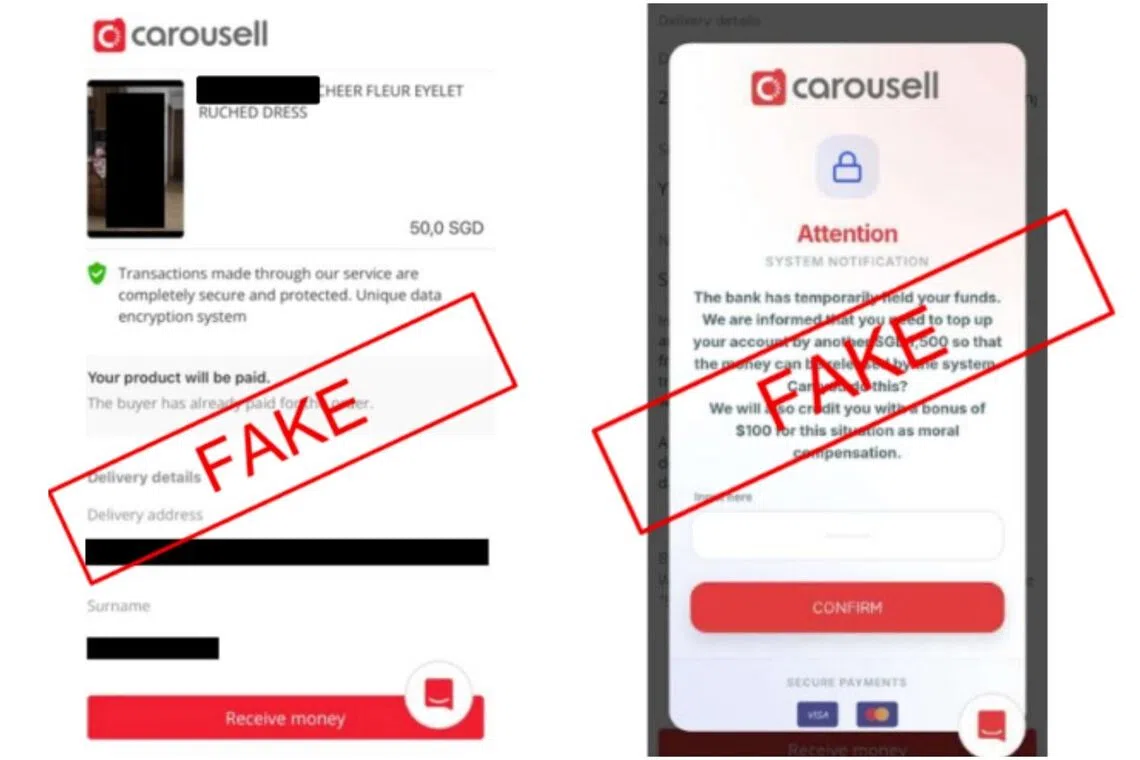
Victims were directed to a fake website mimicking Carousell’s official website, where a chatbot guided them through a supposed bank account verification process to receive payments.
PHOTOS: SINGAPORE POLICE FORCE
Published Oct 23, 2026, 06:55 PM
Updated Oct 23, 2026, 06:55 PM
Police said at least $180,000 was lost in 63 Carousell phishing scams since July, as fake buyers lured sellers off-platform and onto WhatsApp or Telegram.
Scammers sent PDF invoices, QR codes and links, then used fake Carousell and bank websites to steal banking details, one-time passwords and card information.
Police warned scams remain Singapore’s main crime type, and urged the public to call the 24-hour ScamShield Helpline on 1799 or visit www.scamshield.gov.sg.
SINGAPORE – At least $180,000 has been lost since July to scammers posing as interested buyers on online marketplace Carousell.
The police said in an advisory on Oct 23 that there have been at least 63 such cases reported in that period.
In this scam, victims were typically approached by scammers posing as interested buyers through Carousell’s in-app messages or via e-mail.
The so-called buyers then persuaded them to move communications off the platform and onto messaging apps WhatsApp or Telegram.
There, the scammers sent PDF files resembling a Carousell invoice, containing a QR code and link, purportedly to facilitate payment or confirm the transaction , said the police . In some cases, an additional link using the “carousell.app.link” domain was sent, which made the phishing links appear trustworthy.
After scanning the QR code or clicking the link, victims were directed to a fake website mimicking Carousell’s official website, where a chatbot guided them through a supposed bank account verification process to receive payments.
Victims were then directed to a phishing website mimicking a bank’s website, and were prompted to provide their internet banking credentials, credit card details and one-time password , and/or approve digital token notifications.
After this, unauthorised transactions were made from their credit cards or bank accounts, including transfers to overseas cards.
In releasing the mid-year scam statistics on Aug 26, the police said $410.6 million was lost in scams in the first six months of 2026, compared with $500.2 million during the same period in 2025.
They also warned that scams remain the dominant crime type in Singapore.
For more information on scams, members of the public may also call the 24-hour ScamShield Helpline on 1799 or visit www.scamshield.gov.sg
Internet crimes and scams
受害者被引导到一个模仿 Carousell 官方网站的虚假网站,该网站上的聊天机器人会引导他们完成所谓的银行账户验证流程以接收付款。
照片来源:新加坡警察部队
发布于 2026 年 10 月 23 日下午 6:55
更新于2026年10月23日下午6:55
警方表示,自 7 月以来,Carousell 平台共发生 63 起网络钓鱼诈骗案,造成至少 18 万美元的损失,虚假买家将卖家引诱到平台外的 WhatsApp 或 Telegram 上。
诈骗分子发送 PDF 发票、二维码和链接,然后使用虚假的 Carousell 和银行网站窃取银行详细信息、一次性密码和银行卡信息。
警方警告称,诈骗仍然是新加坡的主要犯罪类型,并敦促公众拨打 24 小时 ScamShield 热线 1799 或访问 www.scamshield.gov.sg。
新加坡——自7月以来,至少有18万新元被骗子在在线交易平台Carousell上冒充潜在买家诈骗。
警方在10月23日发布的公告中表示,在此期间至少报告了63起此类案件。
在这种骗局中,受害者通常是通过 Carousell 的应用程序内消息或电子邮件被冒充感兴趣买家的诈骗者接近。
所谓的买家随后说服他们将沟通从该平台转移到即时通讯应用 WhatsApp 或 Telegram 上。
警方表示,诈骗分子会发送类似Carousell发票的PDF文件,其中包含二维码和链接,声称可以用于付款或确认交易。在某些情况下,他们还会发送一个使用“carousell.app.link”域名的附加链接,使这些钓鱼链接看起来更可信。
受害者扫描二维码或点击链接后,会被引导到一个模仿 Carousell 官方网站的虚假网站,网站上的聊天机器人会引导他们完成所谓的银行账户验证流程以接收付款。
受害者随后被引导至一个模仿银行网站的钓鱼网站,并被要求提供他们的网上银行凭证、信用卡详细信息和一次性密码,和/或批准数字令牌通知。
此后,他们的信用卡或银行账户被未经授权进行交易,包括转账到海外卡。
警方在 8 月 26 日公布年中诈骗统计数据时表示,2026 年上半年因诈骗造成的损失为 4.106 亿美元,而 2025 年同期为 5.002 亿美元。
他们还警告说,诈骗仍然是新加坡最主要的犯罪类型。
如需了解更多诈骗信息,公众也可拨打24小时防诈骗热线1799或访问www.scamshield.gov.sg。
网络犯罪和诈骗