What 20 years of working with jade taught me about the changing Singaporean family与玉石打交道二十年,让我对新加坡家庭的变迁有了更深的了解
Younger Singaporeans are changing what it means to receive something from the generations before them, says jewellery designer Choo Yilin.
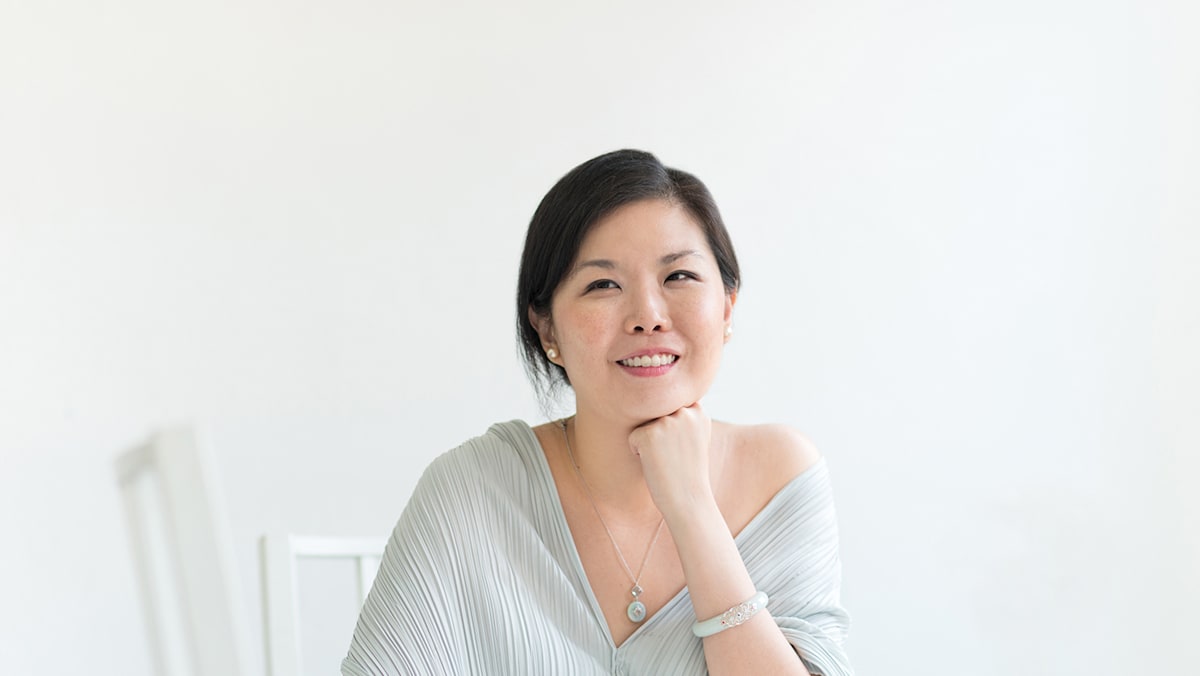
Younger Singaporeans are changing what it means to receive something from the generations before them, says jewellery designer Choo Yilin.
Jewellery designer Choo Yilin likes to work with some of the subtler colours of jade. (Photo: Choo Yilin)
This audio is generated by an AI tool.
When I began working with jade more than 20 years ago, I was drawn to it mainly as a jewellery designer.
Its soft lustre and subtle variations in colour offered possibilities I wanted to explore, particularly in pairing it with gold and diamonds to create contemporary heirlooms with an old soul.
My grandmother understood jade very differently. She owned several jade bangles and believed they were valuable.
When I began building my jewellery company in 2009, she offered them to me to sell.
It was a generous gesture, but I could not use them. My company works only with Type A jadeite, which is untreated, and her bangles did not meet that standard.
We found another meaningful purpose for them instead, incorporating the pieces into our educational workshops as samples for customers to understand the different treatments and qualities of jadeite.
For my grandmother, the technical classification of the bangles was beside the point.
She belonged to a generation for whom jade represented security. Jade pieces equated to wealth that could be worn on the body and, when necessary, sold to buy something useful.
Asking me to sell her bangles was one of my grandmother’s clearest expressions of love.
To her, their value ultimately lay i n what they could do for her granddaughter.
In Singapore, conversations about inheritance tend to centre on property, savings and how assets should be divided.
Yet families pass down much more than financial wealth. We inherit objects, expectations and ideas about what is valuable.
CNA Games Guess Word Crack the word, one row at a time Buzzword Create words using the given letters Mini Sudoku Tiny puzzle, mighty brain teaser Mini Crossword Small grid, big challenge Word Search Spot as many words as you can Show More Show Less
Jewellery handed down within families can have different significance for different generations, says the writer. (Photo: Choo Yilin)
WHEN GENERATIONS DISAGREE
Many women who came through our doors spoke about their mothers, grandmothers and great-grandmothers .
Some wanted a bangle because they remembered one on the wrist of a woman who had raised them.
Some inherited pieces they would never have chosen for themselves but could not bear to part with. Others wanted the jade reset into something they could actually wear.
The differences became especially apparent when several generations visited us together.
Traditionally, some of the most prized jadeite has been associated with rich, saturated green.
Yet those were seldom the stones that attracted me. I found myself drawn to pale greens, icy whites, greys, blues and lavenders, and began centring some of my designs around them.
Younger customers responded immediately to these colours, but their mothers and grandmothers not so much.
For some older Singaporean women, items of jade jewellery may be regarded as a financial asset, says the writer. (Photo: Choo Yilin)
If a piece was pale or lavender, an older woman might ask how it could possibly be jade.
On the surface, thes e disagreements appeared to be matters of personal taste.
Over time, I came to see them as something larger: disagreements about how value itself should be determined.
For many in the older generation, value needed to be recognisable.
A desirable piece of jade possessed qualities that relatives and the wider community could pick out immediately, including that saturated green hue.
When jewellery also functioned as security, private preference could not be its only measure of worth. Its value had to be legible to other people too.
The younger women I met were more willing to trust their own eyes.
They might appreciate what jade had represented to their grandmothers without feeling obliged to reproduce their grandmothers' taste.
I saw the same tension with brides. Many wanted jade that differed markedly from what their mothers or mothers-in-law would have selected.
The writer says that when it comes to choosing jewellery, tastes may vary greatly between generations. (Photo: Choo Yilin)
Their disagreements on pieces were not necessarily a rejection of tradition but often an attempt by younger women to find their own place within it.
I realised this change in perspective was a reflection of a broader change in where women sit within a Singapore family.
Marriage is no longer the only occasion on which a woman acquires something intended to last.
Many women bought jewellery without waiting for a wedding, birthday or older relative to give it to them.
As more women have their own incomes and the ability to buy valuable objects for themselves, they also have greater freedom to decide what those objects should mean.
Women brought inherited jewellery to us hoping to preserve the stone while changing its setting.
This isn’t an indication that younger Singaporeans do not care about inherited items. In fact, it’s the opposite: t hey often care intensely about what they are inheriting and want to know where it came from and what it meant.
What has changed is their willingness to accept inheritance without interpretation.
They increasingly expect some authorship over what they carry forward.
The passing down of heirlooms such as jewellery can be an expression of love, says the writer. (Photo: Choo Yilin)
WHAT WE INHERIT BEYOND MATERIAL SECURITY
Singapore has changed extraordinarily quickly within a few generations.
Many of us have grandparents whose lives were shaped by scarcity and parents whose priorities were security and social mobility.
The generation that followed inherited many of the benefits of that material progress.
With greater security, however, comes another question: not simply what we can preserve, but what is worth preserving and why.
But for those meanings to remain alive, the object does not necessarily have to remain unchanged.
A stone can be reset. A bangle can give way to a pendant. A colour once dismissed as unconventional can become the shade a granddaughter associates with her own family.
Eventually, I understood that working with an inherited material also meant participating in its evolution.
And what one generation passes down need not be preserved in precisely the form in which it was received.
My grandmother helped me understand this, although perhaps not in the way either of us expected.
To her, the bangles she offered me were valuable because they could be sold to help me. To me, their greatest value now lies in the story of that offer.
Neither understanding is less real.
One generation sought to provide security. The next, having inherited more of it, has greater freedom to search for memory, identity and meaning.
Traditions do not endure simply because the next generation is instructed to preserve them.
They endure when people continue to find themselves within them.
Choo Yilin founded her eponymous fine jewellery brand specialising in jade in 2009.
If you have an experience to share or know someone who wishes to contribute to this series, write to voices [at] mediacorp.com.sg ( voices[at]mediacorp[dot]com[dot]sg ) with your full name, address and phone number.
Get our pick of top stories and thought-provoking articles in your inbox
Stay updated with notifications for breaking news and our best stories
Join our channel for the top reads for the day on your preferred chat app
珠宝设计师朱怡琳表示,新加坡的年轻一代正在改变接受前辈馈赠的意义。
珠宝设计师朱怡琳喜欢运用一些颜色较为柔和的玉石。(图片:朱怡琳)
这段音频由人工智能工具生成。
二十多年前,我开始接触玉石时,主要是出于珠宝设计师的职业兴趣。
它柔和的光泽和微妙的色彩变化为我提供了想要探索的可能性,特别是将其与黄金和钻石搭配,以创造具有古典韵味的现代传家宝。
我祖母对玉的理解截然不同。她拥有好几只玉镯,并认为它们很值钱。
2009 年我开始创办自己的珠宝公司时,她曾提出让我出售这些珠宝。
这是一份慷慨的礼物,但我无法使用。我们公司只使用未经处理的A级翡翠,而她的手镯不符合这个标准。
我们找到了它们的另一个有意义的用途,将这些碎片融入到我们的教育研讨会中,作为样品供客户了解翡翠的不同处理方法和品质。
对我祖母来说,手镯的技术分类无关紧要。
她属于那个将玉视为安全象征的年代。玉器等同于财富,既可佩戴于身,必要时也可变卖换取所需之物。
奶奶让我帮她卖掉手镯,这是她表达爱意最直接的方式之一。
在她看来,它们的价值最终在于它们能为她的孙女做些什么。
在新加坡,关于继承的讨论往往集中在房产、储蓄以及如何分割资产上。
然而,家庭传承的远不止金钱财富。我们继承的还有物品、期望以及对价值的认知。
CNA游戏 猜词游戏 逐行破解单词 流行词游戏 用给定的字母组成单词 迷你数独 小小谜题,挑战你的大脑 迷你填字游戏 小方格,大挑战 单词搜索 尽可能多地找出单词 显示更多 显示更少
作者指出,家族传承的珠宝对不同世代可能具有不同的意义。(图片:朱怡琳)
当几代人意见不一致时
许多来到我们这里的妇女都谈到了她们的母亲、祖母和曾祖母。
有些人想要一个手镯,因为他们记得抚养他们长大的女人手腕上戴着一个手镯。
有些玉器是他们继承来的,他们自己绝不会选择这些,但又舍不得丢弃。另一些人则希望将玉器重新加工成自己真正能佩戴的饰品。
当几代人一起来拜访我们时,彼此之间的差异就显得尤为明显。
传统上,一些最珍贵的翡翠都带有浓郁、饱和的绿色。
然而,吸引我的并非这些石头。我发现自己被浅绿色、冰白色、灰色、蓝色和淡紫色所吸引,并开始以这些颜色为中心进行一些设计。
年轻顾客对这些颜色反应迅速,但他们的母亲和祖母却不太买账。
作者指出,对于一些新加坡年长女性来说,玉器可能被视为一种金融资产。(图片:朱怡琳)
如果一件物品呈浅色或淡紫色,一位年长的妇女可能会问,这怎么可能是玉呢?
表面上看,这些分歧似乎只是个人喜好问题。
随着时间的推移,我逐渐意识到它们背后隐藏着更大的问题:关于价值本身应该如何确定的分歧。
对于许多老一辈人来说,价值需要是可识别的。
一块令人垂涎的玉石应该具备一些特质,亲友和更广泛的社区成员可以立即辨别出来,例如那种饱满的绿色色调。
当珠宝也具备安全保障功能时,个人喜好就不能成为衡量其价值的唯一标准。它的价值也必须能够被他人理解。
我遇到的年轻女性更愿意相信自己的眼睛。
他们或许会欣赏玉对祖母的意义,但并不觉得有义务去复制祖母的品味。
我发现新娘们也有同样的困扰。许多新娘想要的玉器与她们母亲或婆婆会选择的玉器截然不同。
作者指出,在选择珠宝首饰方面,不同世代的品味可能大相径庭。(图片:朱怡琳)
她们对作品的分歧并不一定是对传统的否定,而往往是年轻女性试图在传统中找到自己位置的一种尝试。
我意识到这种观点的转变反映了新加坡家庭中女性地位的更广泛变化。
婚姻不再是女性获得一件旨在长久保存之物的单一途径。
许多女性购买珠宝并不等到结婚、生日或长辈赠送。
随着越来越多的女性拥有自己的收入和能力,可以为自己购买贵重物品,她们也拥有更大的自由来决定这些物品的意义。
女士们带着祖传首饰来找我们,希望在更换镶嵌方式的同时保留宝石。
这并非表明新加坡年轻人不重视继承的物品。事实上,情况恰恰相反:他们往往非常在意自己继承的物品,并渴望了解其来源和意义。
改变的是他们愿意接受不加解释的继承权。
他们越来越希望对自己的作品拥有一定的创作权。
作者认为,将珠宝等传家宝代代相传可以表达爱意。(图片:朱怡琳)
物质安全之外我们所继承的
新加坡在短短几代人的时间里发生了翻天覆地的变化。
我们许多人的祖父母都生活在物资匮乏的环境中,而我们的父母则把安全和社会流动放在首位。
后代继承了物质进步带来的许多好处。
然而,随着安全性的提高,又出现了另一个问题:不仅是我们能够保存什么,而是什么值得保存以及为什么值得保存。
但要使这些意义得以延续,对象本身并不一定要保持不变。
宝石可以重新镶嵌。手镯可以变成吊坠。曾经被认为不寻常的颜色,可以成为孙女用来代表自己家庭的颜色。
最终,我明白了,使用继承的材料也意味着参与其演变。
一代人传承下来的东西,不必完全按照最初接受时的形式保存下来。
我的祖母帮助我理解了这一点,虽然方式可能和我们俩预想的都不一样。
对她来说,她送给我的那些手镯很有价值,因为它们可以卖掉补贴家用。而对我而言,它们最大的价值如今却在于她送给我的那份手镯背后的故事。
两种理解都同样真实。
一代人追求安全感,而下一代人继承了更多安全感,拥有更大的自由去探寻记忆、身份认同和人生意义。
传统不会仅仅因为教导下一代要传承它们而得以延续。
当人们不断地在其中找到自我时,它们便能流传下去。
Choo Yilin 于 2009 年创立了以她名字命名的高级珠宝品牌,专门生产玉石饰品。
如果您有经验想要分享,或者认识有人想要为本系列文章投稿,请将您的全名、地址和电话号码写信至 voices [at] mediacorp.com.sg ( voices[at]mediacorp[dot]com[dot]sg )。
订阅我们的邮件,即可获取精选热点新闻和引人深思的文章。
订阅通知,第一时间获取突发新闻和精彩报道。
加入我们的频道,即可在您常用的聊天应用上获取当日热门文章。